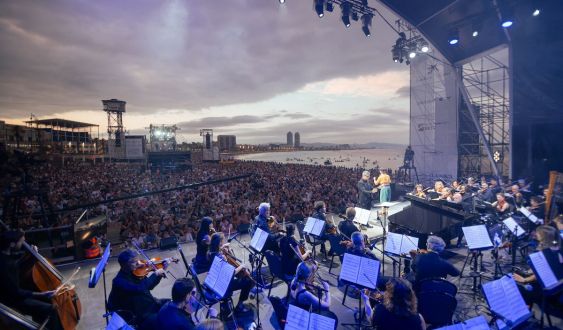
It was an evening of indirect light and summer crowds, Barcelona style, always a bit uncomfortable for regular auditorium-goers but always with that popular, democratic air, like when you run into your boss on a nudist beach and we admit we're all equal, not because it's true but to leave it at that. Going to the beach to listen to classical music, where have you seen that?... and, at the same time, it has been seen in Barcelona. It could only happen in Barcelona. Grand piano and sand, orchestra and saltpeter, flip-flop and blazer, sea and sky.
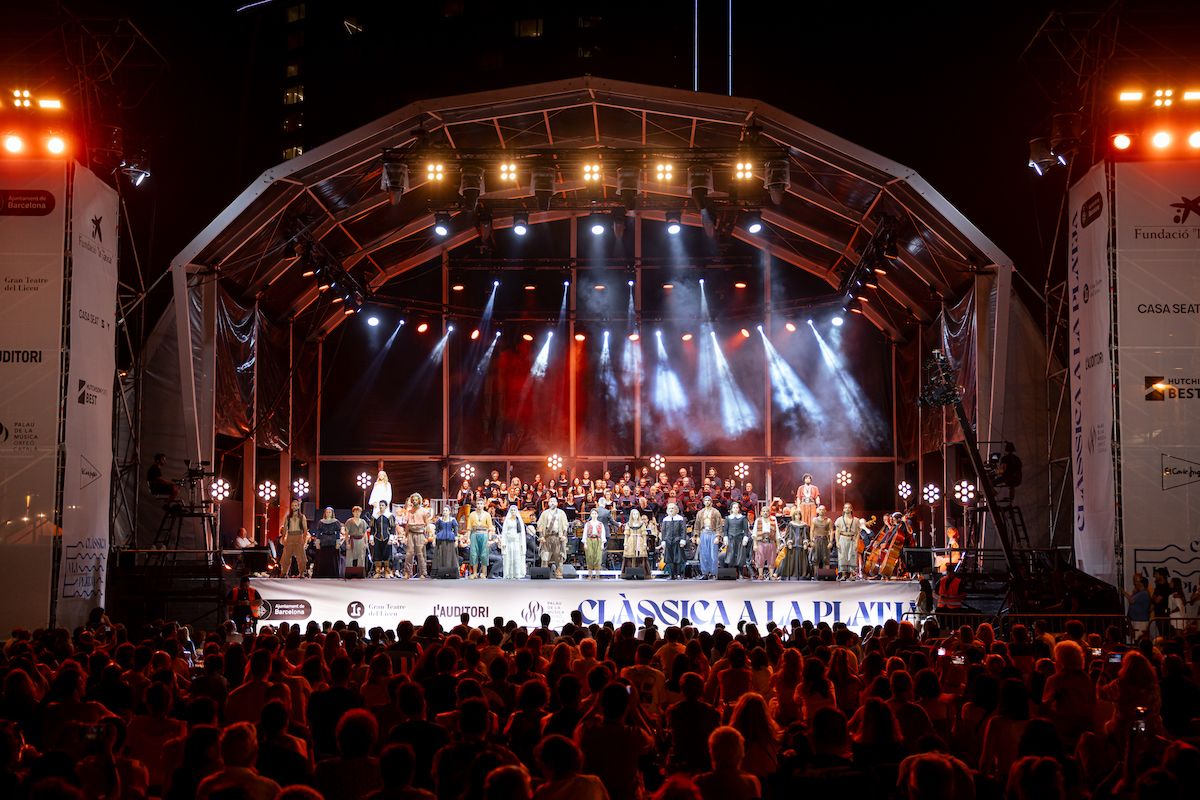
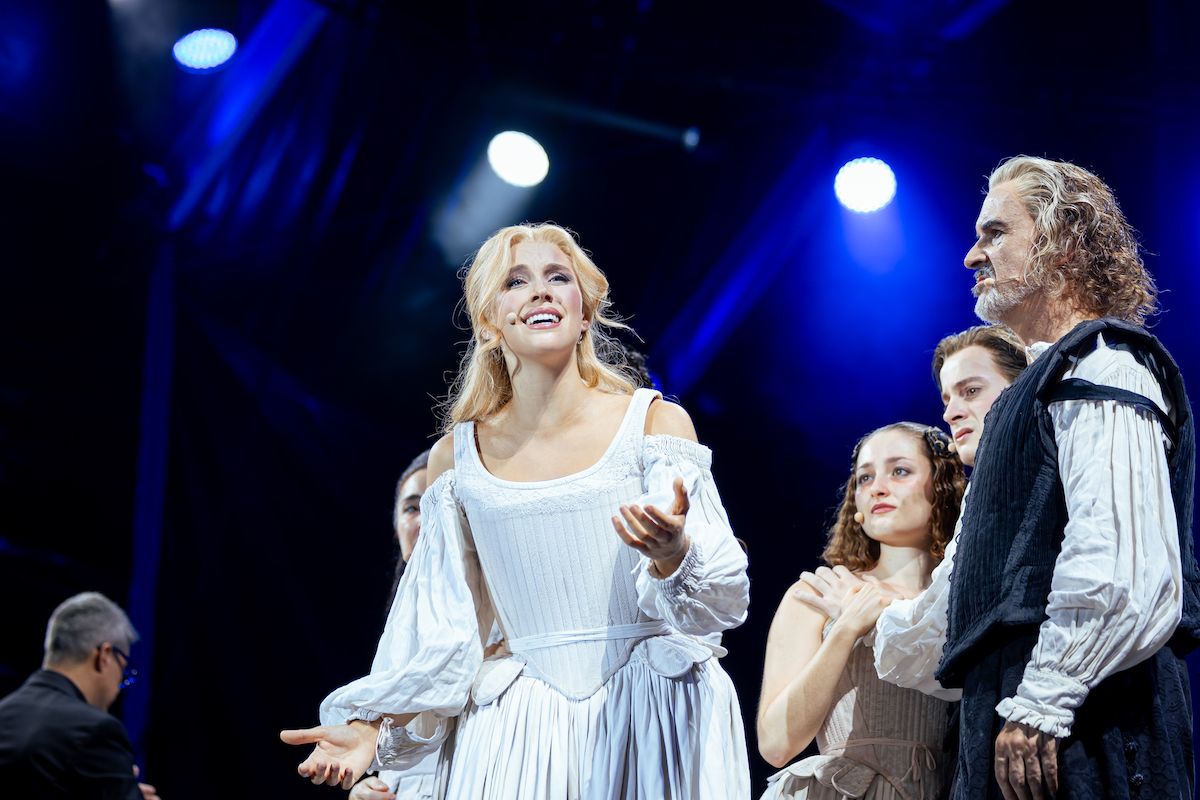
The first overture, an inspiring A Midsummer Night's Dream by Mendelssohn, functioned as a soft door to Guinovart's later world. The nocturnal atmosphere, the scent of the sea, and the dim light of the sky fostered a sympathetic, close, familiar symbiosis with the first notes. On stage, a 26 × 17 m dome-orbit dominated the scene, protecting the setup and creating a kind of "open-air cathedral." The orchestra, compact and precise, wove a dramatic thread between the human choirs and the narrative text. The soloists and the 2024 company of Dagoll Dagom ---with names like Jordi Garreta, Alèxia Pascual, or Clara Renom--- brought intensity and authenticity to the portrayal of impossible love and the conflict between Saïd and Blanca. Narrators Pep Cruz and Àngels Gonyalons acted as a common thread, a success that allowed the plot to be followed attentively, especially for those unfamiliar with the original work.
The technological challenge of sonorizing almost 700 meters of beach ---with towers, delays, and large screens--- and ensuring that all the music reached all the improvised seats clearly was a triumph of acoustic design. Furthermore, inclusivity was confirmed with reserved spaces for people with reduced mobility, devices for people with hearing disabilities, and subtitles in three languages. The Himne dels pirates especially elevated the collective communion, above all due to the work's plot, and ended up giving the sensation that the vast Mediterranean also participated in the story. The tonal balance and choral power managed to move, and a wall of respectful silence invaded the beach at the most appropriate moments.
Despite the magical atmosphere, I noticed a certain imbalance between spectacle and proximity: the screens and narrators were essential for those not directly in front of the stage, but this dependence detracted from the naturalness of the collective ritual. Perhaps, in future editions, hybrid formats could be explored that integrate narration and visuals without disconnecting the audience from the spontaneity of the music. There were also moments, especially in very dramatic passages, where the technical sophistication—though brilliant—overshadowed some vocal nuances: in such an expansive acoustic environment, instrumental power dominates, and that can eclipse intimate details like breathing or the most subtle linguistic nuances.
In any case, 'Clàssica a la Platja' with Mar i Cel was a declaration of love for democratic culture: quality music on the beach, free, accessible, and inclusive. It was a gesture—in the style of the Liceu, the Palau, and L'Auditori—of bringing the symphony to the people, breaking barriers and taking refuge under a summer night. I left happy for Guinovart, as we must admit that tourists don't go to the theater to see Mar i Cel, but for the first time, it could be explained to a varied and international audience. Sometimes you have to spread out the towel to avoid being confined within the walls of our audience, our imaginary, our own narrative. Where has that been seen, right? For better or worse, here. In Barcelona.
Add The New Barcelona Post as your preferred Google source for free
Stay informed with the latest news.
