
To promote the reuse of plastic containers through art and creativity. This has been the objective of Recicl-Art, promoted by Unilever's personal care unit together with the Viladecans City Council. The initiative has encouraged more than 200 secondary school students from four schools in the city to create sculptures with recycled containers, coinciding with the European Week for Waste Prevention. The first edition of the proposal culminated in a competition among the figures designed by the four schools. All with the aim of promoting the circularity of packaging and sustainability, while fostering the creativity of young people.
Plastic bottles, caps, containers, and bags form sculptures of a whale, a turtle, a jellyfish, a marine landscape, and the mammoth symbol of Viladecans. The figures welcome visitors to the Cúbic exhibition space. The hall is overflowing, filled with students from the four participating centers: Escola Teide, creator of the mammoth; Goar, which created the whale and turtle as symbols of the sea; Col·legi Sagrada Família, which also references the ocean with the jellyfish, and Col·legi Sant Gabriel, which opted to design various objects and models, including a maritime landscape. The students eagerly and impatiently await the announcement of the winners, seated on bleachers, reused, of course. The mayor, Carles Ruiz, explains: until now they were located in a sports center and, instead of discarding them, they were moved to the municipality's exhibition space. "We are moving towards a society where we have to think more about how we can reuse what we use," he proclaims. Viladecans, where Unilever's Spanish subsidiary is located, aims to become a carbon-neutral municipality by 2030.
The contest is part of the company's personal care business purpose We make it personal, which promotes the reuse of packaging, among other initiatives. Unilever has set a goal for its plastic product packaging to be 100% recyclable, reusable, or compostable by 2025, details Unilever's communication and sustainability director, Ana Palencia. She explains this to an audience eager to hear the jury's verdict. "We have allowed creative minds to awaken in the students and, while they were building their sculptures, to become aware of the importance of recycling and giving a second use to packaging," says Palencia. She has advanced the company's intention for this to be the first edition of many, responding to Unilever's desire to get involved in the community of the cities that host its facilities.
The four prizes of the contest total 6,500 euros, which the schools will invest in sustainability initiativesTo carry out their creations, the participating schools promoted in September and October a collection of plastic containers to convert them into sculptural material. Thus, the initiative reached not only the students, but also their families. Students from the four centers explain it, from the stage and before their classmates and opponents. "All the plastic that could have ended up in the sea, we have turned into works of art", celebrates one of them. Another participant emphasizes how easy it was to collect enough containers: in fact, "many were left over," which highlights the quantity of containers used in the domestic sphere and the magnitude of the problem.
And it is that, "the best waste is that which is not generated". Turning packaging into art is "the best thing that can be done to bring the problem closer to young people, but I wish it weren't necessary," environmental communicator José Luis Gallego tells the students. Capturing the attention of an energetic and restless audience from the podium is a complicated task, but silence falls when the journalist names the Pacific Plastic Island and rivers in Asia and Africa drowned in plastic. "The only answer we have to this is in our daily lives, and not just by recycling"; an integral commitment that includes waste reduction is required, warns Gallego, who was part of the competition jury.
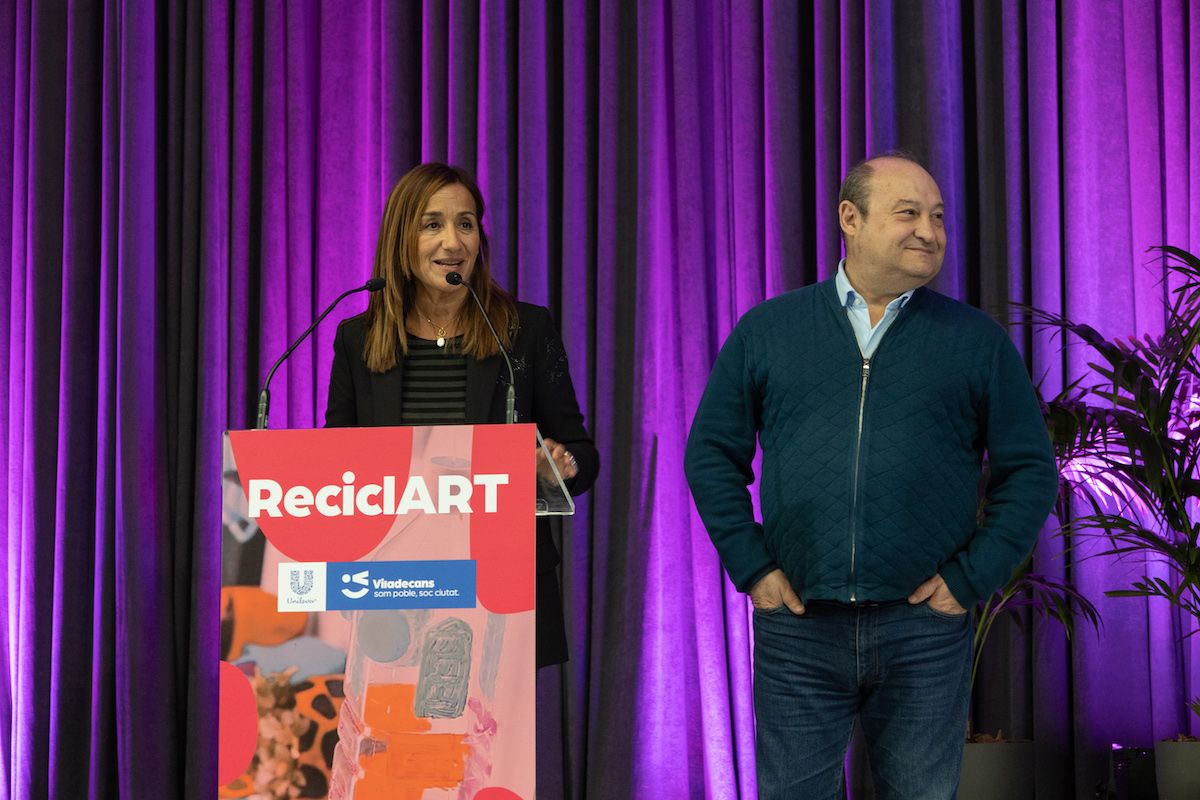
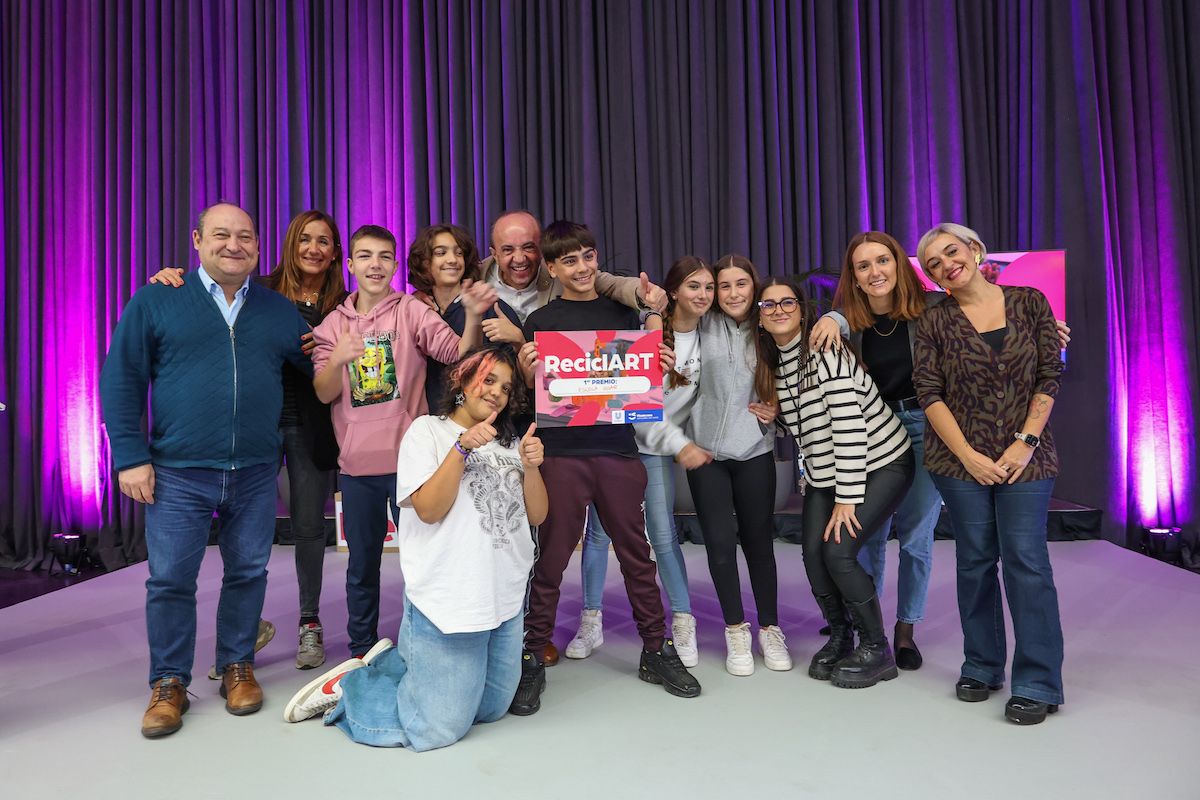
The competition and its resolution: that's what the students are waiting for. The silence through which Gallego's words penetrated transmutes into an explosion of emotion at the awards ceremony, from which all four schools emerge as winners. Three of them, with jury prizes and, the fourth, with the Unilever Award for the group that used the most of the company's packaging. Specifically, the whale and the turtle earned Escola Goar the first prize; the jellyfish from Col·legi Sagrada Família obtained the second; Escola Teide and its mammoth made of carafes achieved the third, and the creations of Col·legi Sant Gabriel obtained the special Unilever award.
The four prizes total 6,500 euros —2,000 for the first prize and 1,500 for the other three—, which the schools will invest in sustainability initiatives. Thus, it's about closing circles: a competition on sustainability with a prize to promote sustainable projects, in a society that must advance in the reuse of waste and reduce it to a minimum. Gallego warns: it is already "a health issue," and not just an environmental one.
Add The New Barcelona Post as your preferred Google source for free
Stay informed with the latest news.
