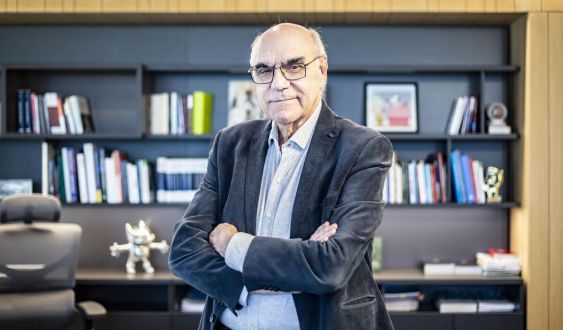
--- My father bought a plot of land in El Clot with the lottery money and took out a loan to build a small garage. People say we were lucky, but the real luck was my father's attitude and the sacrifice of the whole family to pay back the loan.
--- Why did you study Economics?
--- Days after finishing high school, I started working like the rest of the family. I started as a bellboy at the bankers' union, but I didn't like it. I enrolled and passed the entrance exam for industrial appraisal, but I had problems with technical drawing and switched to commercial appraisal. All this happened in just three months; I was a good student but, as you can see, very restless. I will always be grateful to my family for understanding my sudden attempts to find my way.
--- What was your path?--- Once the appraisal was approved, I started a mercantile professorship, which I did while working, as well as the competitive examinations for sworn auditor, the Degree in Economics, and the IESE management program.
--- He worked on one of the first second-generation computers.
--- In 1962, at 18 years old and in parallel with my studies, I worked in an English auditing firm and, after some courses at IBM, I joined Catalana de Gas as a computer programmer, working on one of the first second-generation computers to arrive in Barcelona. I continued in several IT services companies until 1975 when I joined Banca Mas Sardà as IT director. I became deputy general manager years before Mas Sardà integrated into the Banco de Bilbao Group.--- Saba's time has come.I continued at the bank and had an office in Barcelona and Madrid until 1987 when I joined Saba as general director. At that time, it was a relatively small company with 12 car parks. Today it is an international company with more than 1,000 car parks.--- In 1998 he received a call from Isidre Fainé.Without leaving Saba, which accompanied me within the Abertis group, I answered the call ofIsidre Fainéto go to Acesa, which belonged to La Caixa Group. That Acesa, with 600 kilometers of highways in 1998, became the world's first highway company with 3,500 kilometers on three continents.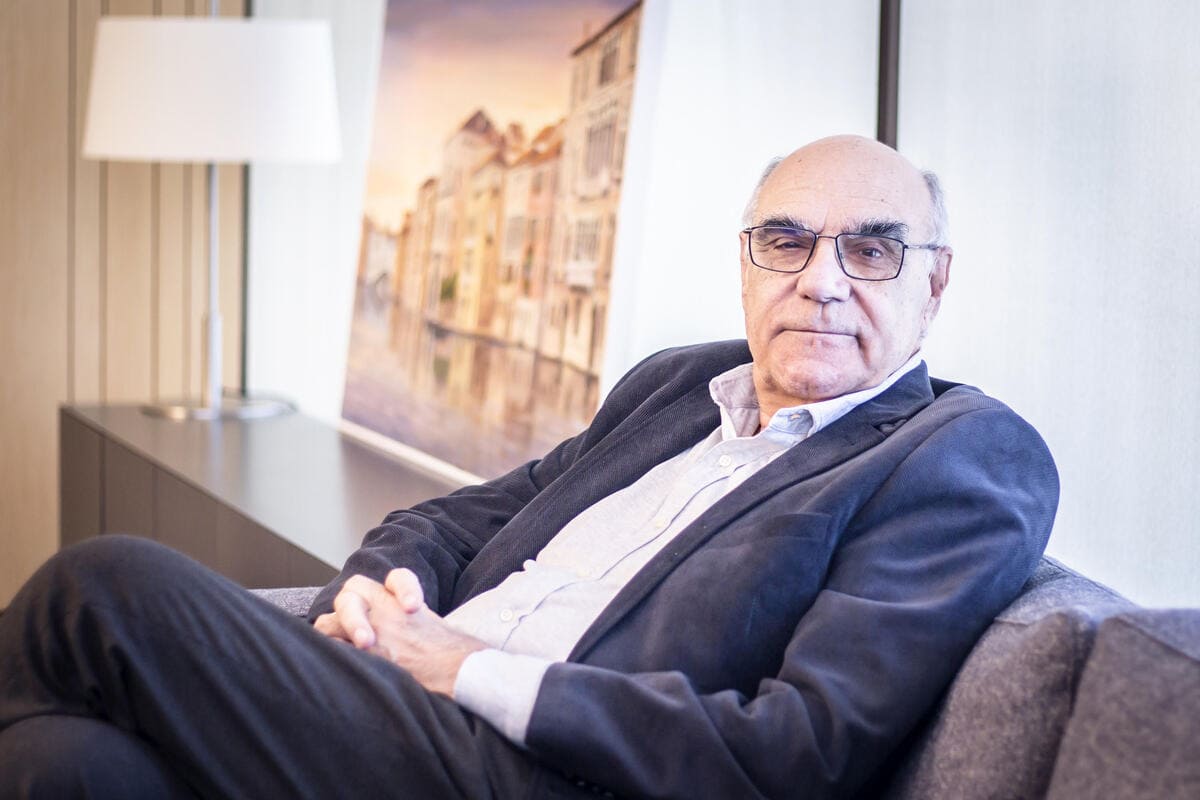
--- In 2018, the takeover bid for Abertis arrived.
--- The Atlantia/ACS takeover bid for Abertis--- The leader must have a careful and rational vision of reality, surround himself with good people, know who to listen to in order to build his own idea, make a decision, and convince his group.
"The leader must have a careful and rational vision, surround himself with good people, know who to listen to, make a decision, and convince"
--- And what if it's not the right idea?
--- It's okay to modify it, as long as the initiative is maintained. Colleagues should have no doubt that a decision will be made on time.
--- Every decision implies responsibility.
--- This is the essential question for the leader: having the capacity to decide and doing so in an orderly manner. Listening and convincing, without anyone feeling marginalized or disregarded.
--- Why did you decide not to be Minister of Economy of the Generalitat?
--- I have never said this, although I believe I had the opportunity to be a minister. But I think that, sometimes, politics forces the adaptation of one's own criteria beyond what I feel capable of doing.
--- What criteria?
--- Politics is subject to electoral demands when making decisions. I respect that, but I tend to maintain the direction I want to go and, if I were forced to change it too much… We wouldn't be doing well. I can change movements, but not easily the direction.
--- What was the direction?
--- I insist: electoral interests or party coalitions lead to paths where I know I wouldn't do well and it wouldn't be easy for me to want to continue.
"I had the opportunity to be a minister, but politics is subject to electoral demands when making decisions and forces one to adapt one's own criteria beyond what I feel capable of doing"--- "Destiny deals the cards, but we play the game," Arthur wrote Schopenhauer.
--- One goes through life and encounters what one encounters. You don't always find a future where you'd like, and circumstances are not always what you expected, but then is when you have to remember that you are the primary responsible for everything you do. Complaining won't help you.
--- Destiny or chance?
--- You play the game. A person can be born in a tribe in Tanzania or Nigeria with many difficulties accessing basic things, like water, but can feel happy fighting for their family, for their country, and for themselves. Similarly, a person from the Upper Diagonal, with all the means to be happy, may never achieve it. You can have bad cards and make them good. And vice versa.
--- What is a happy life?
--- I see happiness as the difference between reality and expectations. Who is unhappy? He who fails to meet his expectations. Expectations are dynamic and therefore, do not have to be the same in all circumstances. Your reality is what you encounter at each moment, and for which you must feel responsible. You always have to work with reality and decide whether or not to adapt your expectations.

--- Who has to deal the card of equal opportunities: the State or the market?
--- We all have to make the maximum effort to achieve equal opportunities that lead to a situation of justice and social peace. However, each person also has to do their part. The State has to ensure that everyone has access to education and the necessary protection guarantees to have a framework of opportunities and decent jobs, correcting the abuses of market actors who must avoid excessive inequalities for their own interest. From here, and whatever the level of success of public policies, let's listen to Schopenhauer.
"You are the primary responsible for everything you do. Complaining won't help you. You can have bad cards and make them good. And vice versa"--- "There is no favorable wind for one who does not know to which port he is heading," said Seneca.
--- It is a form of existentialism: assuming one's own responsibility. Everyone has to take responsibility for their life, knowing where they want to go, regardless of the cards they have been dealt. You cannot fall asleep, and if you decide not to play, then you will surely be left behind. Try to play by improving your cards and surrounding yourself with those who help you achieve it. This is not resignation or fatalism, on the contrary.
--- The power of attitude.--- The right attitude is not to wait for the future to arrive. Let's go find it! The possible futures are many and go beyond our neighborhood, our city or our country. Draw your north and find the way and surround yourself with people with whom you share a sense, values and ethics to achieve it.
--- "Man's primary concern is not to enjoy pleasure, or to avoid pain, but rather to seek a meaning to life," wrote Viktor Frankl.--- I will always agree with any philosophy that revolves around attitude and the assumption of one's own responsibilities.
"Happiness as the difference between reality and expectations. Who is unhappy? He who fails to meet his expectations. The right attitude is not to wait for the future to arrive"--- How do you define business intelligence?
--- I refuse.
--- He has written a book titled Business Intelligence.--- It's what worked well for my friend and great editor Jordi Nadal for his series of books on intelligence, and I accepted it. Business intelligence? One has to have judgment to manage. Any good executive has to be like a coach who is able to adapt to changing circumstances. There is no magic formula, other than overcoming the fear of losing, taking responsibility, and playing the game. Intelligence is not business, but general.
--- Is Ferrovial's decision to move its headquarters to the Netherlands intelligent?--- We are in the European Union and we start from the freedom of movement of people, goods and capital. This also applies to companies and you can think that an attitude is more or less supportive. It is quite absurd to criticize it if rules of coexistence are adopted within a political perimeter. I have never questioned what someone does within a legal framework, even though it may have a different moral consideration. In Catalonia, we experienced the departure of headquarters in October 2017.
--- How do you remember the corporate headquarters movements of October 2017?--- In a painful way, but I understand that everyone applies the criteria according to their responsibilities. I felt bad because it affected Catalonia.
"Any good manager has to be like a coach who is able to adapt to changing circumstances"--- How is the city of Barcelona?
--- To evaluate the future of Barcelona, I await the May elections.
--- The ProBCN report promoted by the Institut Cerdà pointed a way.
--- More than 100 representative entities were consulted, and a synthesis validated by all those who gave their opinion was made. It is a good contribution, and ProBCN's strongest argument is to ask for dialogue between the public and private sectors to make the best possible city and country, starting over in everything necessary to face new challenges.
--- Are we lacking more and better public-private collaboration?--- Public-private collaboration is the best way to move forward together in a formal democracy. Society does not develop well if there is a denial of the private sector due to excessive intervention by the public sector, but neither is justice guaranteed if the market is allowed to function without rules.
"I painfully recall the movement of headquarters in October 2017. It felt bad because it affected Catalonia"--- And civil society?
--- Everyone has to play the role they want and can. Civil society has to calmly analyze how it chooses its political representatives and respect them. If it seems to them that they are not doing well, it must be expressed freely to see if they correct it, waiting for the next elections to evaluate them with the vote.
--- Should public policies be evaluated?
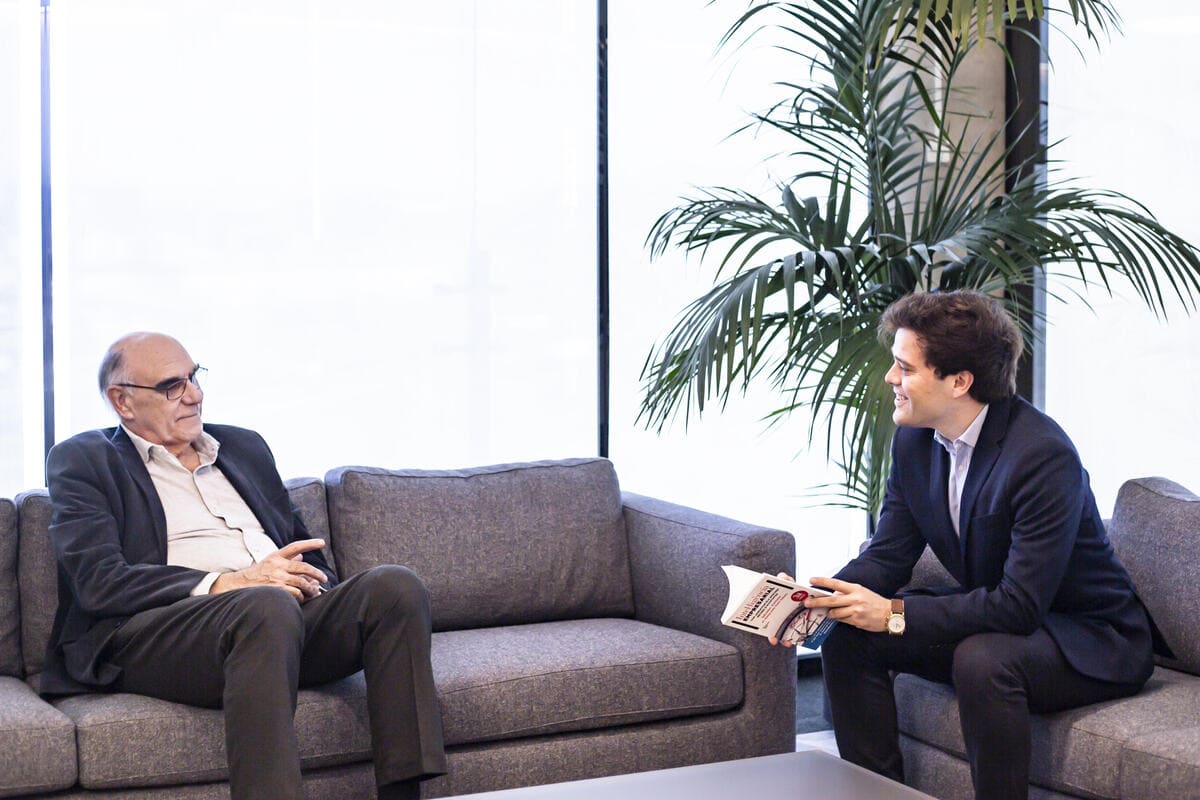
--- Right now, citizens' trust in politics is very low. This is one of the big problems. I am not too critical of politicians because I believe they are the result of society, just like doctors, engineers, economists, or any other profession, but I understand that the current forms of confrontation in the political sphere need to be improved.--- So, do we get what we deserve?It always is and always will be this way. We have the synthesis of what we do. Certainly, there is great distrust in the functioning of politics, but I believe that, in a democracy, we cannot criticize politicians without self-criticism.--- Criticism is vox populi on social media.Social media makes it more difficult to maintain a good image in a public position, because everything gets in there. One must read with discernment, and this is the challenge facing society worldwide."Public-private collaboration is the best way to move forward together in a formal democracy"---Do culture and business have to go hand in hand?Yes, but also hand in hand with the public sector. The author makes art with their head, their body, and their availability. The mission of the public sector is to foster creativity and culture, and the company can help rationalize the model. Even so, the market's mission is different, and therefore, the company has to find incentives to intervene through patronage laws, marketing, or recognition of its social responsibility.--- What kind of incentives?They are not always economic, but also social. Companies are commercial entities that apply the sensitivity of the people who run them.--- What does the Liceu mean for Barcelona?The Liceu is known as the first cultural institution in our country, although this is always subjective. It has a great international projection due to its eagerness in the research of total art and has the protection of both institutions and society. The Liceu is not only a place to have a good time, but also a space to experience the evolution of culture.--- As a child, were you proud of the Liceu?--- Of course!, but then I thought it only existed for the elites. --- And now?The Liceu is today a very open and progressively innovative institution aimed at developing the cultural sensitivity of the entire society.--- For example?We have created and performed in Catalan a debut opera The Lost Catwith the active participation of forty nationalities from Raval, who are neither musicians nor singers; the Under 35 sessions are exclusively dedicated to young audiences, at affordable prices, or the digital platform that allows following Liceu performances with a subscription at an almost symbolic price.--- What does Barcelona mean for the Liceu?Barcelona and the entire country must feel proud of its Liceu, and a significant effort will always have to be made to maintain its artistic and social growth, with economic balance. The Liceu will always be what Barcelonan and Catalan society wants it to be.
"As a child, I thought the Liceu only existed for the elites. Today it is a very open and innovative institution aimed at developing the cultural sensibility of all society"---- What have you learned from chess?I started playing when I was 15 years old. Chess teaches you to walk through life and make decisions. It presents you with a different problem at every moment and you have to make the best possible move with the pieces you have. It does not depend on external factors like the sun or rain, and with each move you either retreat or progress towards victory. It teaches you to respect an opponent who is also playing and to use time appropriately.--- Check and time.The great lesson of chess is that there is a time to think and a time to decide. You cannot think longer than you have, and if you don't get your decision right, you will be closer to losing. It also requires study and practice. Children, teenagers, and retirees play. Some time ago I taught my granddaughter to play, and when I'm on vacation, I play with the computer.
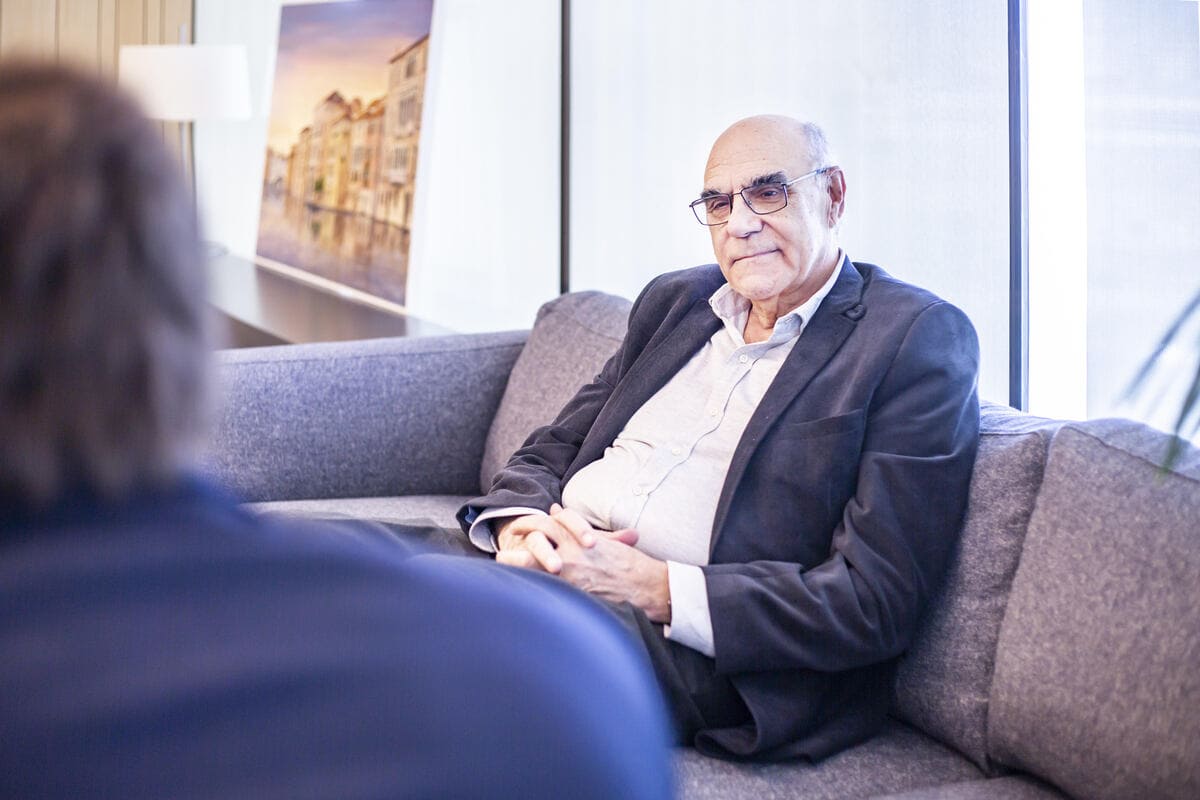
"Chess teaches you to walk through life and make decisions. There is a time to think and a moment to decide"--- The previous interviewee of Persona a Persona, Mar Alarcón, asks you the following questions: --- Is being an entrepreneur vocational?It is born partly from attitude and partly from vocation.--- What advice would you give to younger entrepreneurs who deal every day with environments of constant change?What characterizes the entrepreneur is their availability to risk and adventure, whether in a small company or a large corporation. In this second case, I am talking about the intrapreneur, who is someone who acts within their sphere of limited responsibility as if it were their own company. The entrepreneur is seen when it comes to taking risks.--- Take a risk.I recommend to young people that they try to act, grow, and behave like an entrepreneur, no matter what they do and whether or not they have full decision-making capacity. One must be able to take reasonable risks thinking about the good of the project one is working for.
SEVEN LIVES
1. Reference:Pere Duran Farell2. Book: The House on the Border. Rafael Vallbona3. Movie: A Late Quartet. Yaron Ziberman4. Song: In my country, the rain doesn't know how to rain. Raimon5. Favorite corner:La Cerdaña6. Life motto:Always be responsible for your future7. Dream:Maintain hope and the illusion of livingAdd The New Barcelona Post as your preferred Google source for free
Stay informed with the latest news.
