
That your name (your surname) forms a term in all the dictionaries of the world means that your imprint is indelible. Sade is extremely boring, repetitive, a mediocre writer to my taste, but his approach is so raw, goes so directly to the point, touches such a nerve and puts us so much in front of the mirror, that it is logical that his soul hovers every time we say that some event or someone is a sadist. The antagonist would be a masochist, a term that also exists thanks to a surname and that, even if it is from the weak side of the dominance relationship, from a literary point of view seems profoundly more interesting to me. But the style doesn't matter right now: the CCCB opens its doors to Sade, the marquis, until October 15, with a large exhibition accompanied by various events and conferences. And that is not exactly literature.
Yes, Sade is boring and monothematic, but he poses difficult questions to answer. Now that we are all worried about artificial intelligence, shouldn't we also be afraid of our own intelligence first? Because it's clear: is there anything more dangerous than a rational animal? A rational machine, at least, does not have animal instincts. But it turns out that we are animals and on top of that we are rational. The combination can lead us to a twisting, to a sophistication of evil, to a sublimation of pain and torture (right now in Valencia they will have a bullfighter culture chancellor), which is exactly where the acceptance of the term in the dictionary comes from: "sexual behavior in which excitement and erotic and sexual satisfaction is caused by inflicted physical suffering on others". For me the definition is inaccurate, but it serves to understand the concept: humans, sometimes, love (but we really love!) to cause harm.
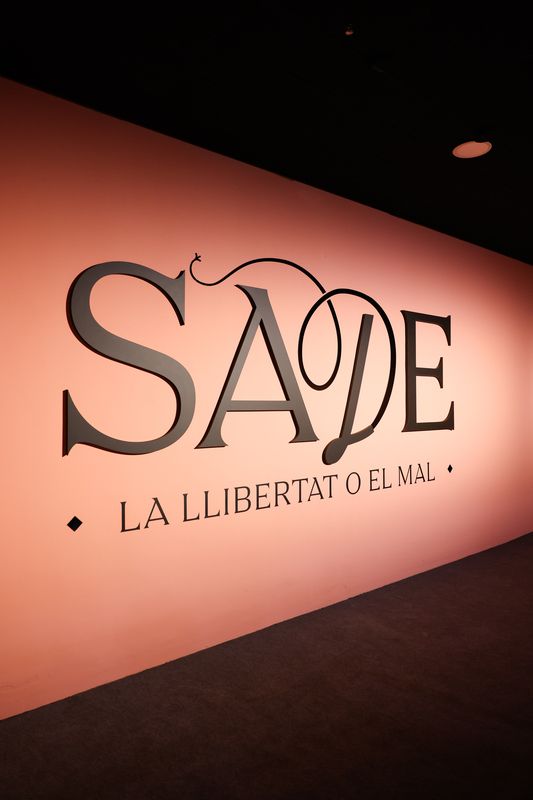
A rational machine, at least, does not have animal instincts. But it turns out that we are animals and on top of that we are rational.Freedom or Evil, is precisely the title of the exhibition. We will find several plastic artists who dedicated works to it, or almost their entire body of work, or almost their lives: Toyen, for example, the Swedish surrealist artist (and quite androgynous in appearance), concentrated a good part of her work on eroticism and illustrating a whole Justine (the Marquis's main book), and in this exhibition we see nightmares and dreams of the artist where desire and frustration delicately kiss. But we will also see obvious things (the part I find least interesting about sadism) such as handcuffs, immobilizing chairs, whips and all the carnival paraphernalia that can accompany a vulgar neighborhood dungeon.
This is the boring part of Sade (and perhaps of the exhibition), but it is nonetheless unavoidable: physical sadists repeat themselves like garlic and concentrate all their energies on the ñic-ñic on the nipples, as if they were small children, when if sadism can have anything interesting, it is mental domination and not the fifty or one hundred and fifty thousand shades of Grey. Thus, the eroticism of the art pieces is much more interesting than the Fisher Price for Adults utensils that the limited toolbox of the BDSM community has always seemed to me.
Sade goes much further than that: the exhibition also teaches us about the Marquis's political side, making us see that our sadism is present everywhere and also in institutions. We vote selfishly, sometimes sadistically, and rulers often behave with a cruelty and arrogance that makes it seem like they wear the wig inside. Freedom sounds like liberal, just as neoliberal can sound like libertine, and confusing freedom with libertinism can be more than a sister-in-law phrase to realize that it is exactly what we often desire in intimacy. Was Sade politically a libertine? Quite the opposite: as a contemporary of the Enlightenment era, he defended rationality and limits and condemned the violence and horror that followed the French Revolution.
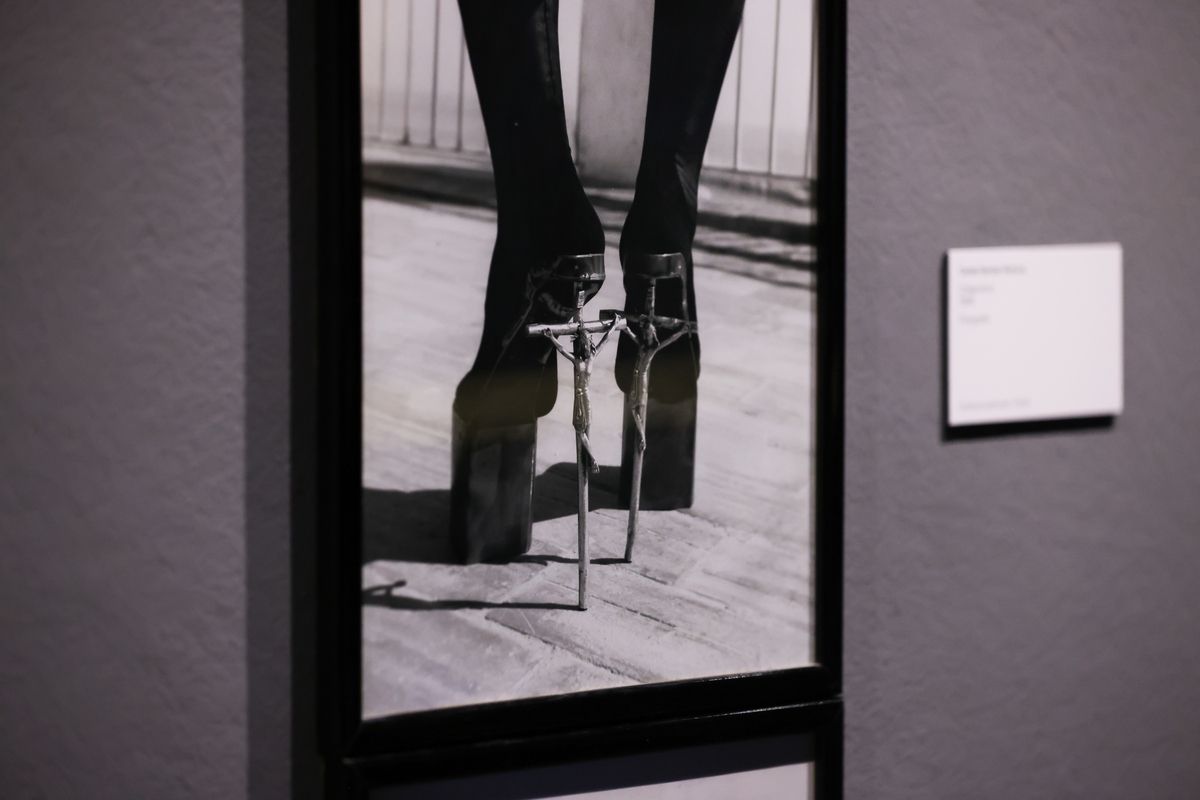
Sade does not invite us to be violent, but to check our violent impulse, which is very different. No matter how many in the dungeons have fantasies with Nazi uniforms, Sade points out the phenomenon before the phenomenon to warn that evil exists and that, much more than existing, it is an impulse. An impulse that he refuses to release on the collective or social level. This is what Andrés Serrano's photographs expose us to, mixing religiosity, politics, and sex to scandal and scatology. Perhaps the most sadistic artist among those invited to the orgy.
The exhibition also teaches us about the Marquis's political side, making us see that our sadism is present everywhere and also in institutionsBut also Joan Fontcuberta and his photo murals, in this case forming the sadistic figure, or a poster of Passolini's radical (and frankly insufferable) "Salò or the 120 Days of Sodom", as insufferable as (therefore) as suitable to our protagonist's style. Also present are Paul Chan, Guido Crepax, Juan Morey, Kara Walker, obviously Man Ray and the great sadomasochist Dalí, a good selection that could have been a little less obvious but perfectly fulfills the monotheistic, almost claustrophobic, intention of sadism: ñic-ñic-ñic. And also mass culture, Sade as a precursor of pop, of so many icons, as Jesus' cross already was (and forgive me): the great sadistic symbol par excellence.
Literature, cinema (unavoidable Albert Serra), comics, music (I would have liked more reference to music, so abundant in the theme), religion, politics, philosophy, theater (yes, the marquis also had a theatrical vocation). All this under the common thread of the word "passion" in each part of the journey ("Political Passions", "Perverse Passions", "Criminal Passions"), which almost inevitably leads us back to the "passion" of Christ and this charming ambivalence of the term. And a direct question for the times we live in: when abuse or slavery are consented to, are they still abuse and slavery? Think about the last employment contract you signed. Think about whether your superior abused you. And think about whether, after all, it compensated you for a good while. Of course, that's another term in the dictionary.
Add The New Barcelona Post as your preferred Google source for free
Stay informed with the latest news.
