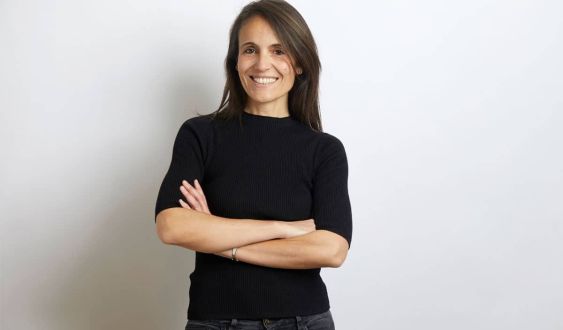
After 15 years in the Spanish market and traveling through Europe and Asia, Roll'eat's sustainable and reusable food wraps are now set to conquer the United States, entering the daily lives of American families. But for this, it has been necessary for the team of eight people led by entrepreneur Meritxell Hernández, in Barcelona, to assimilate American habits and customs.
The fabric rectangle of the Boc'n'Roll that the brand sells to wrap sandwiches measures 25 centimeters, and it was too small for the typical American sandwich, prepared with two or three slices of sandwich bread, tomato, lettuce, hard-boiled egg, bacon, and, perhaps, a small hamburger. Given this, there was no choice but to design and produce larger wraps and improve their closure with a wider and more resistant adhesive tape to better secure the contents of the package.
"It has been a product improvement job that we have also had to do with the Snack'n'Go, since Americans are accustomed to taking a sandwich to eat, but also a snack," explains the also founder and creator of the product and the company.
For now, half a year after Roll'eat's arrival in the US, "the reception has been favorable." The company has opted for direct sales through a salesperson who will establish a network of distributors and who has opened a warehouse in Pennsylvania. "We need someone in charge to work on the ground because it is the best way to receive consumer feedback and adapt even more, if possible, to their customs," comments Meritxell Hernández.
For now, sales are made in stores or chains that attract customers sensitive to the environment and sustainability, although a specific portal for that market has also been opened. The forecast is to bill one and a half million euros in the first year of activity, which will be added to the global sales of 2.2 million with which the firm closed 2021.
Roll'eat's ultimate goal is to raise awareness about reducing emissions, stopping the use of polluting materials to wrap sandwiches and other food products, and doing so also by conquering children. It should be noted that the company assures that a school consumes in six years an amount of aluminum foil equivalent to 48 soccer fields.
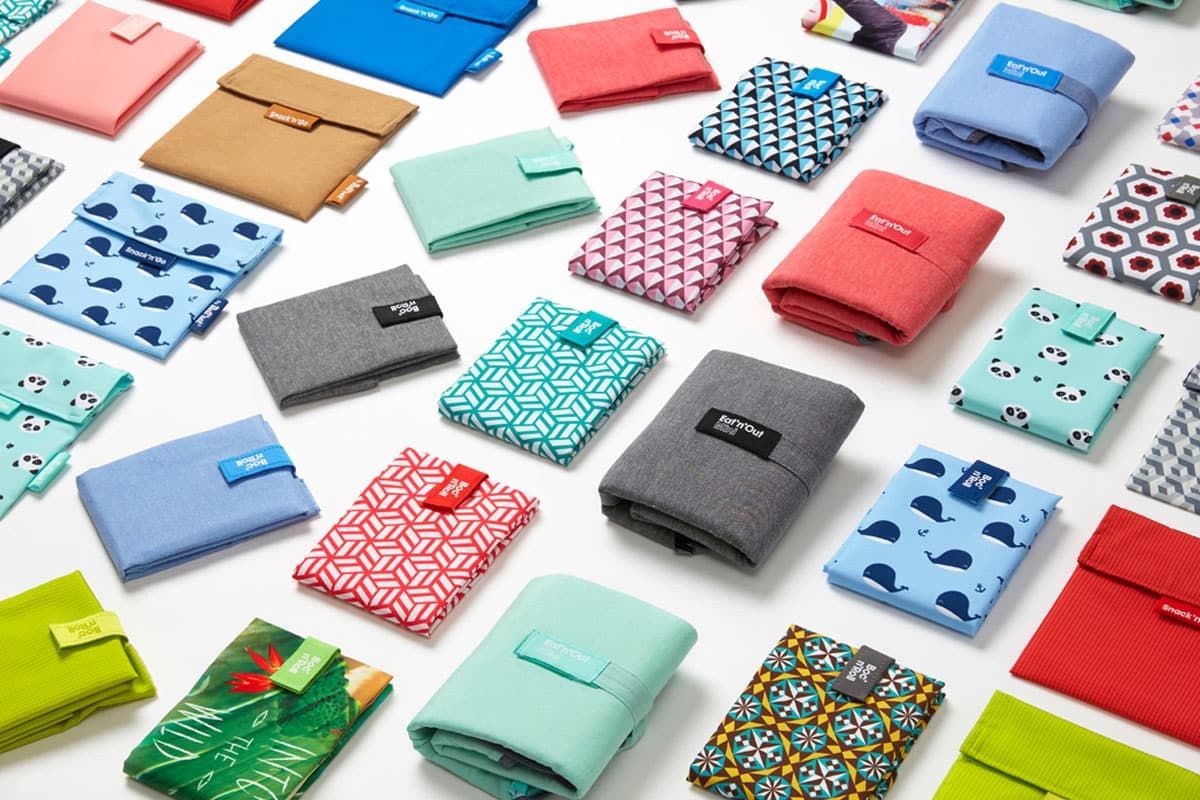
The designs, Roll'eat's hallmark
Roll'eat continues to boost the national market ---which accounts for 50% of sales---, European and Asian ---in Taiwan, Hong Kong and Singapore---, where products also need to be adapted. For example, to sell in Hong Kong, fabrics must be printed with different designs, according to Chinese preferences and fashion. "We must bear in mind that, as a company policy, we shy away from producing with or for licenses (Disney type, for example) because we would mask our own identity and originality," says the entrepreneur, who values how the company is responsible for the entire production chain.
Also as a result of a need that arose in Asia, where people put many liquid foods in their lunchboxes, a smart bag, Grab'n'Go, was incorporated into the product range. It is an ecological bag that isolates wet from dry parts and protects everything that can spill or drip, such as dishes with sauce or peeled fruit.
The fourth product they manufacture are the Eat'n'Out food bags, which replace plastic bags or large lunchboxes for carrying tupperware or serve as a bag for minimal daily shopping.
Since its beginnings in 2006, Roll'eat has sold more than 10 million products online and, in person, at more than a thousand points of sale where the product can be found, in a total of 25 countries. This has contributed, according to company data, to a saving of C02 emissions equivalent to those produced by a car if it goes around the world 20 times.
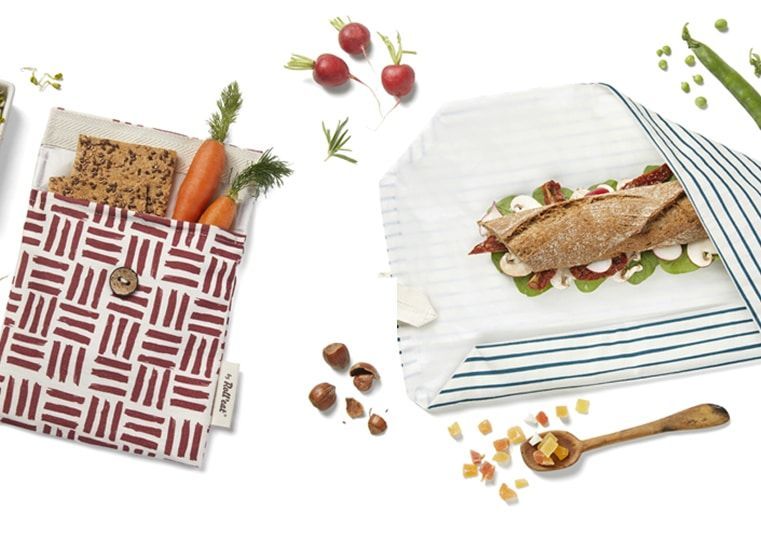
The new future bet, local production
In favor of sustainability, since the end of 2021, the Roll'eat brand also has a line of organic products, further minimizing environmental impact. "We could no longer reduce the amount of waste we saved with the use of our products, because with them we achieved zero waste. But we could improve their materials. And that is what we have achieved: a 100% biodegradable product, which is still reusable and durable," is the company's goal.
Local production has begun for a range of Boc'n'Roll and Snack'n'Go products ---until now the company only manufactured in China, through third parties--- which incorporates one hundred percent biodegradable materials, with a fabric called bio-based film and with a button closure, made from coconut shell. For this reason, the bio lines are manufactured in the municipalities of Deltebre (Tarragona) and La Fuliola (Lleida).
Add The New Barcelona Post as your preferred Google source for free
Stay informed with the latest news.
