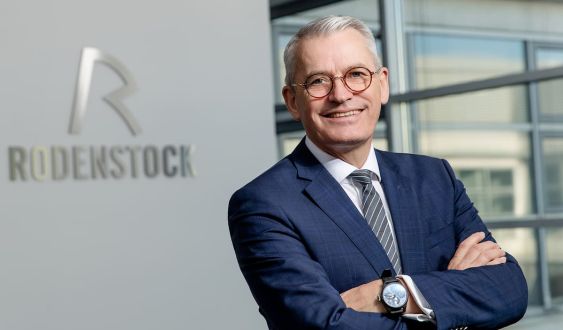
New owner for Indo, one of the oldest companies in the Spanish optical sector. The German multinational The Rodenstock Group announced this Thursday the acquisition of the company based in Sant Cugat, until now in the hands of the funds Ergon Capital and Sherpa Capital.
According to Rodenstock, the purchase is part of its strategy to gain market share and accelerate its growth in certain geographical markets such as Spain, where it previously had a very limited presence. In addition, the German group is especially interested in the growth potential of the ophthalmic lens business in Morocco, a country where Indo is a benchmark thanks to its factory in Tangier. "The Moroccan market is expected to grow with a CAGR (compound annual growth rate) of 10% between 2022 and 2027 and could become an important revenue contributor in the future," highlights the group, owned by Apax Partners.
"The acquisition of Indo Optical is a relevant step for our strategic ambition to increase Rodenstock's global presence and drive the transformation of our industry. Indo Optical's product offering fits perfectly with our new brand architecture and will allow us to increase synergies for the benefit of our customers," said Anders Hedegaard, CEO of Rodenstock.
Indo (the former National Optics Industry) was founded in 1937 by the Cottet family in Seville. Originally from France, the Cottets had arrived in Barcelona at the end of the 19th century and in 1902 opened their emblematic optical store in Portal de l'Àngel. The family, however, moved to Seville as a result of the Civil War and there they created Indo, although the company soon relocated to Barcelona and the optical engineer Cristóbal Garrigosa joined the shareholding. The first workshops were in the Poblesec neighborhood, but in the 1940s Indo launched a factory in L'Hospitalet de Llobregat that became the largest production center for glasses and lenses in Spain. Popularly known as Can Cottet, the factory was operational until 2007, when it was demolished and the plot gave way to a housing development. It was then that Indo moved its headquarters to Sant Cugat.
Under the presidency of Jorge Cottet, Indo underwent a great expansion and became an international company with subsidiaries in various countries and three major business divisions: ophthalmic lenses, frames, and machinery for optical stores. To finance its growth, the company went public in the 80s and came to employ more than two thousand people in L'Hospitalet alone. In line with the rest of the sector, Indo delocalized a large part of its production at the end of the 20th century and came to have factories and workshops in Morocco, Portugal, China, Chile, and Thailand.
After the closure in L'Hospitalet, the unstoppable globalization of the economy, and the rise of cheap optical products from China, the group began its decline, with continuous restructurings, layoffs, and debt refinancings. In 2010, it filed for bankruptcy, and in 2013, the fund Sherpa Capital, led by Eduardo Navarro, rescued the company in court by making an offer for the productive unit that allowed guaranteeing the bulk of the jobs. Sherpa managed to reencauzar the company and put it back on the path of growth. In 2018, Sherpa sold the majority of the capital of the Catalan company to the Belgian fund Ergon Capital, owned by the family holding Groupe Bruxelles Lambert.
Operation valued at more than 160 million
Now, Ergon, Sherpa, and other shareholders such as Oquendo Capital have agreed to sell 100% of Indo Optical to Rodenstock for an undisclosed amount that several sources consulted by Expansión estimate at 160 million euros. Recently, Ergon Capital sold another Catalan company in which it had invested, Palex Medical, which it transferred to Fremman.
Indo, whose CEO is Enric Florensa, no longer operates in the frames market and focuses its efforts on the production of "latest generation" ophthalmic lenses and on the commercialization of diagnostic equipment and optical instruments for opticians and ophthalmologists. Its annual turnover exceeds 55 million euros and currently employs 440 people in Spain and in its subsidiaries in Portugal, Morocco, and France. Indo has two production centers located in El Papiol (Barcelona) and in Tangier. "The company has a solid reputation in the independent optician channel, holds the third largest market share in value in Spain, and leads the market in Morocco, with strong and sustainable growth in recent years, even during covid-19," states the acquiring group.
Founded in Munich in 1877, Rodenstock is a manufacturer of high-end ophthalmic lenses, with a workforce of more than 4,900 people and a commercial presence in 85 countries, in which it has fourteen production centers in thirteen of them. A year ago, the multinational was acquired by the private equity giant Apax Partners. Previously, the group had belonged to other investment firms such as Permira, Bridgepoint and Compass Partner.
Add The New Barcelona Post as your preferred Google source for free
Stay informed with the latest news.
