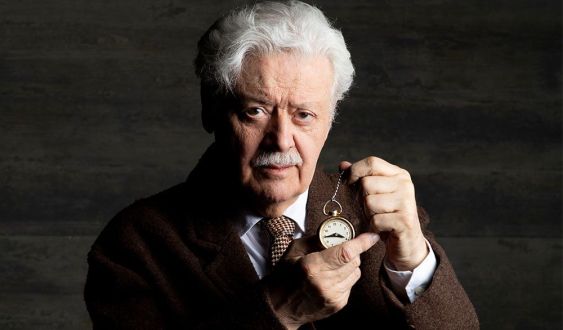
Joyful pessimism. This is the best definition for the show that Mario Gas performs at the Beckett. And it is that the actor gets under the skin of the Belgian pedagogue and anarchist Henrid Roorda, who decided to end his life, even though, apparently, everything was going well.
We are not dealing with a depressive person, nor a person who hates life; on the contrary: Roorda was a complete hedonist, he lived a lot and enjoyed even more. He liked music, wine, poetry, women, intellectual debates... A lively person, full of energy, explosiveness and dreams who, suddenly, decides that the time has come to die, to leave this world with all the dignity still possible for him.
This is how Joyful Pessimism (My Suicide) begins, a show based on the book My Suicide and which was written by Roorda just before ending his life. The title could not be better because, under all the discourse we hear on stage, we actually witness a pessimistic, but joyful vision of life; a vision that moves, precisely, in the chiaroscuro of the human condition. Because there is no beauty without ugliness, no pain without joy, no life without death. In these contradictions, the entire discourse that Roorda wrote to analyze society, try to understand the reason for his actions (and those of humanity) and to leave us an analysis of society that, even though 100 years have passed, remains as valid as the first day.
A hedonist who decides to end his life
Roorda was a mathematics teacher and a follower of libertarian pedagogy. He was not a depressed, sick person, nor did he have suicidal tendencies. He enjoyed the pleasures of life like no other, but one day he decided he had to commit suicide. On November 6, 1925, Roorda wrote a suicide letter addressed to a friend of his, explaining, very concisely, why he believed he had to disappear from the world. The reason was simple: he had hurt someone he loved very much and this pain had lasted for 25 years. A pain that, as he conceived it, was irreparable and, therefore, there was only one way out: to leave. The next day, on November 7, 1925, the professor committed suicide.
At the Beckett, we witness this impactful beginning. Mario Gas, clad in his trench coat and walking through a sky that never stops raining, sits at the table and begins to write these words. From this moment on, the monologue begins, showcasing Roorda's philosophy of life, a philosophy of "joyful pessimism": a man who moves between happiness and pain, a man who sees the darkness of our times, but also the beauty of a smile, a kiss, a hug...
But the hedonist has realized a truth that has broken him inside: no matter how much we try to be morally good, act with decorum, be good people, many times we don't succeed. And he, a decent, honest, and benevolent person in the eyes of others, has caused great pain to someone very dear to him. Hence the question arises: how can an honorable person, with a good education, concerned about the rights of the oppressed, end up becoming someone vile, someone capable of destroying another person's life?

The analysis of society is served
Gas (embodying Roorda's words) begins to address different themes that design and structure our lives. He starts by talking about love, that uncontrollable, passionate, pure, volatile, energizing feeling, which we end up compartmentalizing into an institution: the institution of marriage. We imprison our most primary feelings, our purest instincts to comply with social order: to marry and reproduce. And it is that, if we do not adhere to this structure, the machine does not work.
Society annihilates you. Because if you show yourself as you are, let your deepest nature surface, society punishes you, points you out. Human beings live with this inner duality, a double morality about what we really are and what we must be to fit in. It's not that we are vile or evil because loving, longing for tenderness and pleasure is not a negative appetite; but in the society we live in, these instincts can be detrimental to the world's future. Because without families, there is no offspring; and without offspring, there is no workforce for the future.
And it is that, if we do not adhere to this structure, the machine does not work.
Another of the great topics he talks about is about education, about how teachers inject this passion for life, for reading, for music... Thanks to teachers, children can learn to read and begin to discover the wonders of the world. But, it is these same teachers who, years later, will be in charge of educating you under the rigid rules of society. That is to say: they open the world of wonders to you, only to then close the door in your face. From creative freedom or thought, we move to a vital straitjacket: you have to study, you have to work, you have to produce and you must not stray from the path. Never.
In relation to this topic, another major pillar also appears: money, the new God of society. People have stopped believing in conventional religions to convert to a new faith: capitalism. Money is presented as the God with the most faithful and banks are presented as the new churches. But, no matter how much you want to avoid this new "religion", you cannot escape its clutches because, unfortunately, not having money in this world can end up being lethal.
In the end, being poor is the maximum condemnation to which society condemns you if you do not follow all its rules. If you reach old age without enough money to support yourself, you can die from lack of care; even, being poor can make you live in a marriage that doesn't work, just because you don't have money to separate. On the other hand, if you commune with society and its new God, you can have money and reach old age well "covered" (materially speaking, of course) and, even, if you lack love, you can always buy it. Money is essential to survive in the world we have created and, to be able to generate money, you must follow the rules that society has established; if you don't, you are a pariah.
Being poor is the maximum condemnation to which society condemns you if you do not follow all its rules.
At the end of the monologue, there is a defense of the passion for living, of the emotion that resides in small things, in the small details of life. A call is made to live life with passion, to get excited about the smallest detail of life because, if we don't live like this, what do we live for?, to watch life go by?, to accumulate goods, materials, kisses and dreams?
This final song to life is totally opposed to the act that, afterwards, he will commit: ending his life. But suicide is his punishment, he cannot live with himself having seen that ugliness also resides in him, that "the joyful pessimism" of society has penetrated his interior and has made him transform into a kind of social monster, a Frankenstein of modern times.

A theatricalized discourse
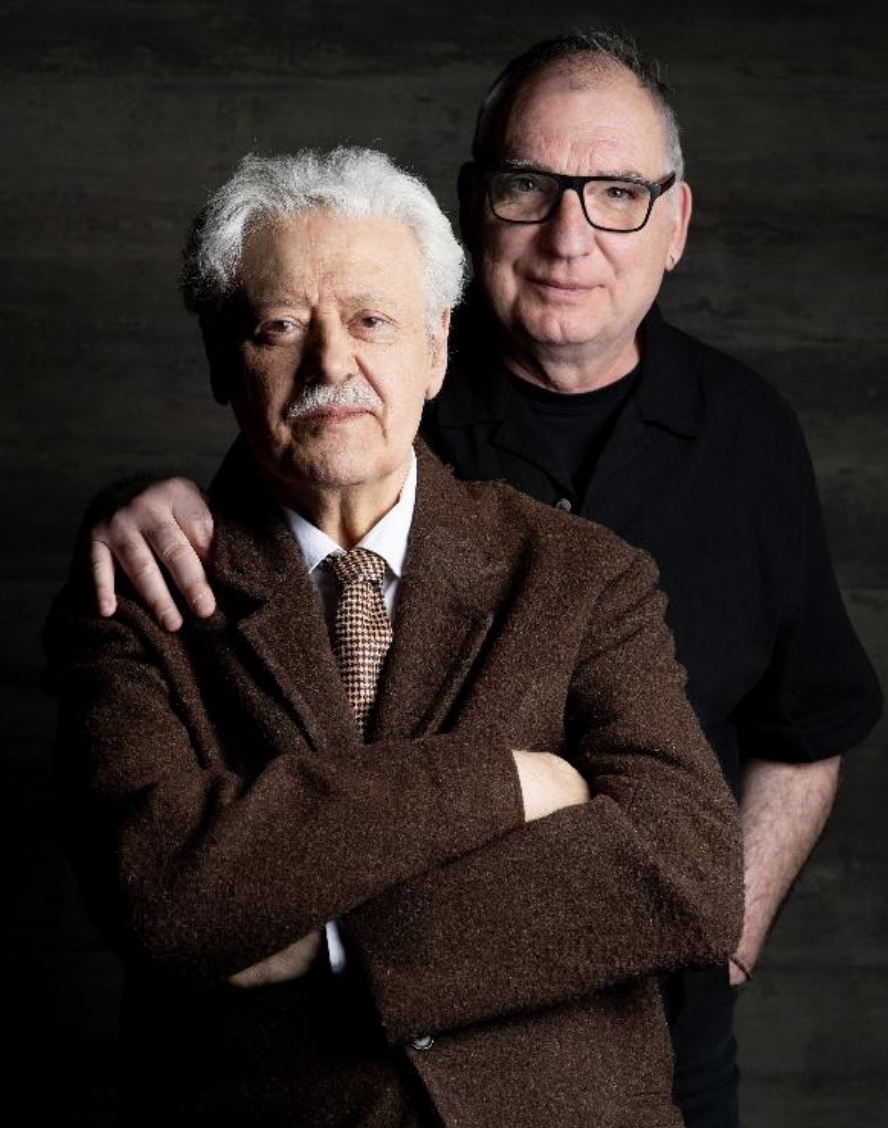
My joyful pessimism à la Beckett, more than a play, is a theatricalized discourse. On stage we see a Mario Gas totally dedicated, narrating the words written by Roorda, but with no other theatrical artifice than the word. Despite being a very interesting text with content that today seems contemporary, the truth is that the rhythm is affected at times and the audience feels overwhelmed by such a flood of ideas.
It is one of those works that you feel like reading, because, live, it feels like you lose some nuances or don't have time to mentally note everything. It is a text that I believe should be read and reread because it shows a very lucid vision of society. In theater, however, it does not work as well: the accumulation of ideas, the commitment to only one space and a single voice mean that theatricality resides solely in the act of interpreting the text, but it lacks action and a certain rhythm to keep the spectator in suspense during the hour that the monologue lasts.
It is a work that acts as a mirror of ourselves, both as a society and as complex, incoherent, and contradictory individuals.
Nevertheless, My joyful pessimism is a work well worth seeing. First, because in Barcelona we hardly ever have the opportunity to see a stage monster like Mario Gas acting two feet away from us; second, because Roorda's words show truths like fists that, today, still seem revolutionary (even if they are not): and, third, because it is a work that acts as a mirror of ourselves, both as a society and as complex, incoherent, and contradictory individuals that make us malevolently human.
Add The New Barcelona Post as your preferred Google source for free
Stay informed with the latest news.