For whom is a requiem composed? The question is as simple as it is hurtful: the deceased can hardly delight in the musical tribute, so, by elimination, we the living remain, projecting our own end in the celebration of another's death. In a particularly scandalous way, being a genre that should accompany the irreparable experience of loss, Verdi's Requiem knows passages of incontinent fury and gives new meaning to the Kantian question: what may I hope for? The work had been conceived as a tribute to Alessandro Manzoni, a pivotal figure of the Italian Risorgimento and the moral conscience of an entire generation, admired by Verdi to extremes close to veneration. In a letter to Countess Maffei ---a mutual friend, who had called him a "saint"--- the composer replied: "I would kneel before him, if we were allowed to adore humans. They say it should not be done."
The consideration is not futile, as Verdi recognized himself closer to skepticism than to Manzoni's spirituality, wielded for example in his Observations on Catholic Morality or his Sacred Hymns. Perhaps that is why the Requiem remains so disturbing: more than the expression of a religious certainty, it is intuited as an attempt ---sometimes subtle, other times tremendously anguished--- to approach it. The score opens from a disconcerting neutrality, with a minimal, contained enunciation; as if the work deliberately wanted to hide its true magnitude. Nothing yet in its first steps foreshadows the violence that will erupt: a storm unleashed with the medieval warning about the end of times and the imminence of Judgment. Verdi will not miss the ascendancy of his Dies irae ---he will repeat it up to three times, including the final section, Libera me--- to traverse the fracture inherent in the temporal experience that cries out for a return to consistency and spiritual peace.
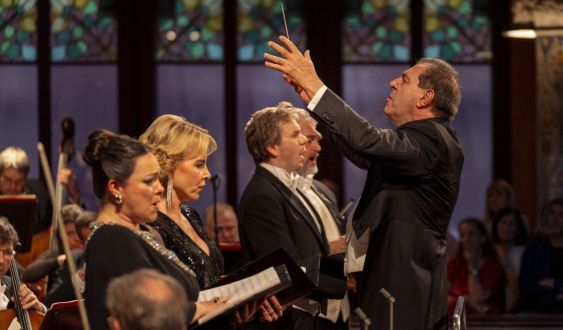
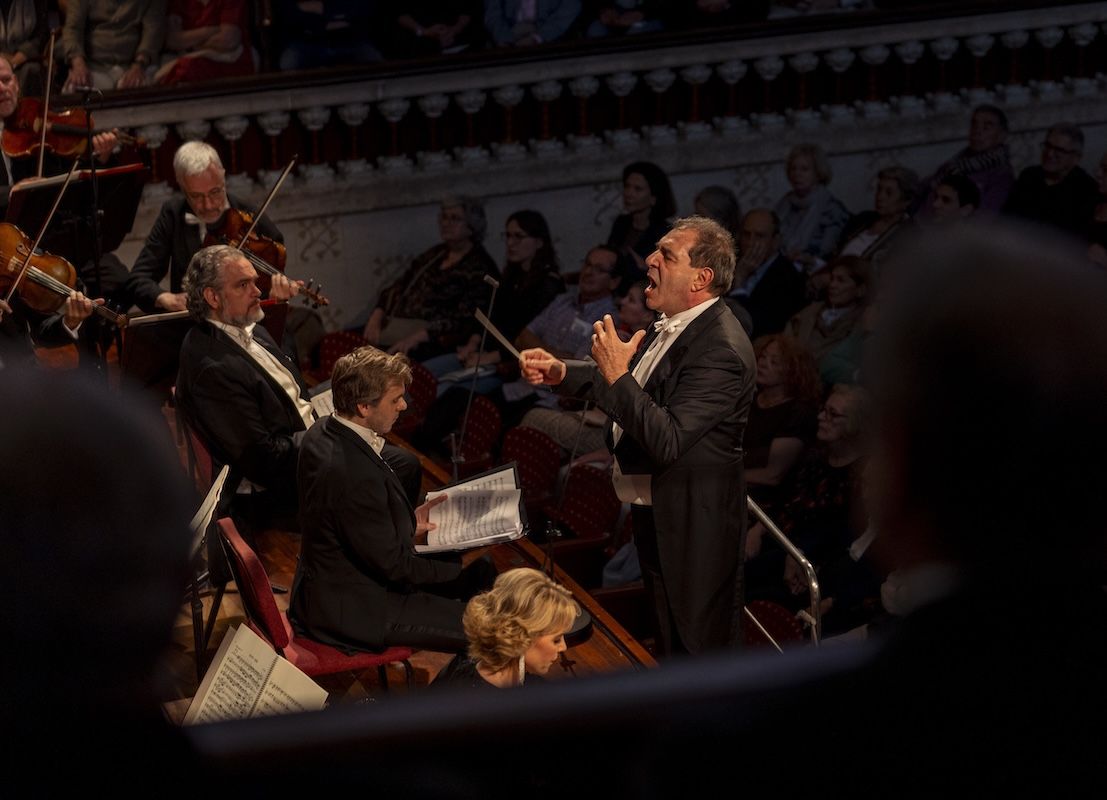
The alternation between corporeal urgency and longing for eternity was managed in a captivating way at the Palau de la Música Catalana by Daniele Gatti, leading the Staatskapelle Dresden, and with a simply extraordinary Orfeó Català and a vocal quartet of the highest level, composed of Eleonora Buratto, Elīna Garanča, Benjamin Bernheim, and Riccardo Zanellato. The fortunate ones who filled the concert hall were able to experience the sensation of attending a memorable musical performance, one of those rare occasions when a work seems to recover its timeless truth. Due to the sum of superb performances ---both by the orchestra and the choir and soloists---, the concert acquired the stature of an exceptional artistic document, and the truth ---a happy coincidence--- is that it was recorded by cameras and broadcast live for an international platform.
Verdi does not question whether God exists, but he does speculate about how human beings endure death when they cannot stop doubting, when the light longed for to repair affliction is invoked in darknessThe concurrence of an unusual number of people on stage ---Verdi proposed a hundred instrumentalists and a choir of one hundred and twenty voices--- produces something that, in any case, no recording fully restores:the vibration is perceived at different levels,in a strictly physical sense, rather than mystical or metaphorical. The body registers sound pressures even before being conscious and, of course, before translating them into emotions. Verdi seems determined to make this agitation explicit through a tremendous variety of instrumental and vocal registers. The brass section of the Staatskapelle Dresden contributed decisively, with delirious threats of rupture and sound saturation, reverberating off the external walls of the modernist venue. The trumpets located on both sides of the second floor of the Palau during theTuba mirumthey functioned not only as a theatrical effect, but as a threatening expansion of the acoustic field, so that the sound ceased to come from the stage to be felt everywhere, from oneself.
Verdi's Requiem is not built solely on the monumentality of the Last Judgment. It oscillates between ecstasy due to sensory overload, Stendhalian, and the oppression generated by the delicate staging of unanswered longings. The work is also traversed by whispered hesitations, or motifs that return like intrusive thoughts and that, at the same time, provide consistency to the whole. Instrumental figures make this requiem much more than a sacred composition, approaching for many commentators a theatrical staging. Thus, for example, the hypnotic motif of the bassoon in the Quid sum miser, or the accompaniment of low strings and flute in the Recordare Jesu pie, which brings peace after the strident plea launched in the Rex (Salva me, fons pietatis!). However, the truly admirable dimension is that which the voices enable and colonize; with a simply dazzling quality in the Palau's interpretation, culminating in the memorable Libera me, performed by soprano and choir.
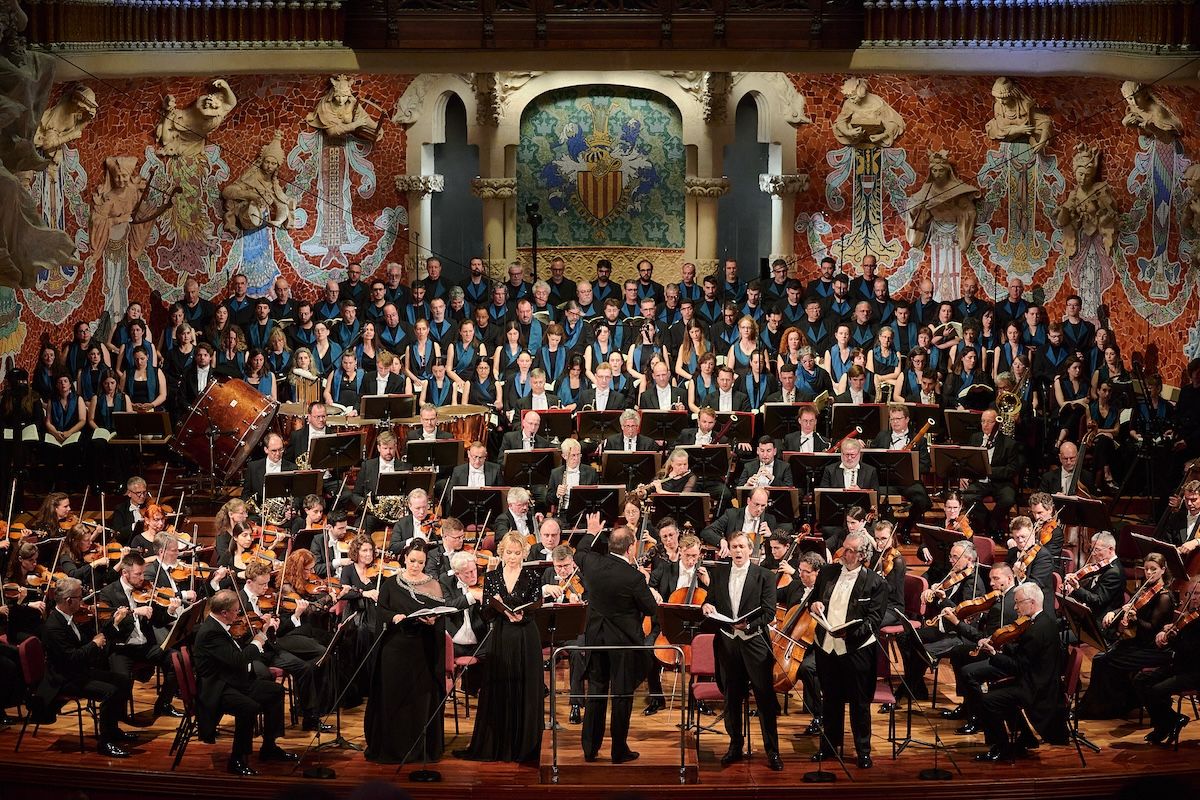
Eleonora Buratto sustained that closing movement with extraordinarily controlled tension, avoiding turning it into a grand operatic scene and working, instead, from an almost naked vulnerability. The mezzo Elīna Garanča had contributed from her first interventions a beautiful, sumptuous density that continuously stabilized the ensemble, while the tenor Benjamin Bernheim shone especially in the Ingemisco, disseminating a deeply captivating and unsettling lyricism, as if the vocal line doubted itself. Riccardo Zanellato, recovered from a recent illness ---information offered before the concert, via public address system--- completed the quartet with an effective gravity, without added theatricality. None of the solo voices played the card of individual brilliance, knowing themselves subordinate to a broader and also uncomfortable emotional reality ---the drama for the meaning of life, in the face of the limitation of death--- that excludes none of those present.
The Requiem makes at least audible the human difficulty of finding solace in life and ---why not--- makes visible the dignity that accompanies the Sisyphean task of continuing to tryVerdi does not question whether God exists, but he does seem to musically speculate about how human beings endure death when they cannot stop doubting, when the light longed for to repair affliction is invoked in darkness. As if resisting the light were a way to better accept the unacceptable, and to extend a precarious continuity over the abyss from hopelessness.Having converted a mass for the dead into one of the great meditations on fear, memory, and the need for solace is the fundamental merit of this work, which for many ---including some detractors, like Hans von Büllow--- occupies a place of privilege. Death is not invoked here as a merely biological end, but as an unattainable ---incomprehensible--- horizon that drives the creation of meaning in life. A fact charged with ambiguity, which perhaps theLacrimosareveals better than any other passage.
The most mythical mass for the dead, which imbues subsequent ones with mysticism, was interrupted precisely in that movement, in which the terms of the Dies irae are recalled with an antithetical, yet complementary, intensity and cadence. Since Mozart's opus 626, the European imagination seems incapable of separating this musical form from the underlying idea: the awareness of death inevitably infiltrating the very act of composition, without knowing for sure what to expect next, when there is no longer time, but eternity. Verdi may doubt as a believer, but he participates in transcendence through a vibration that persists, traversing uncertainty laden with mystery. He at least makes audible the human difficulty of finding solace in life and ---why not--- makes visible the dignity that accompanies the Sisyphean task of continuing to try.
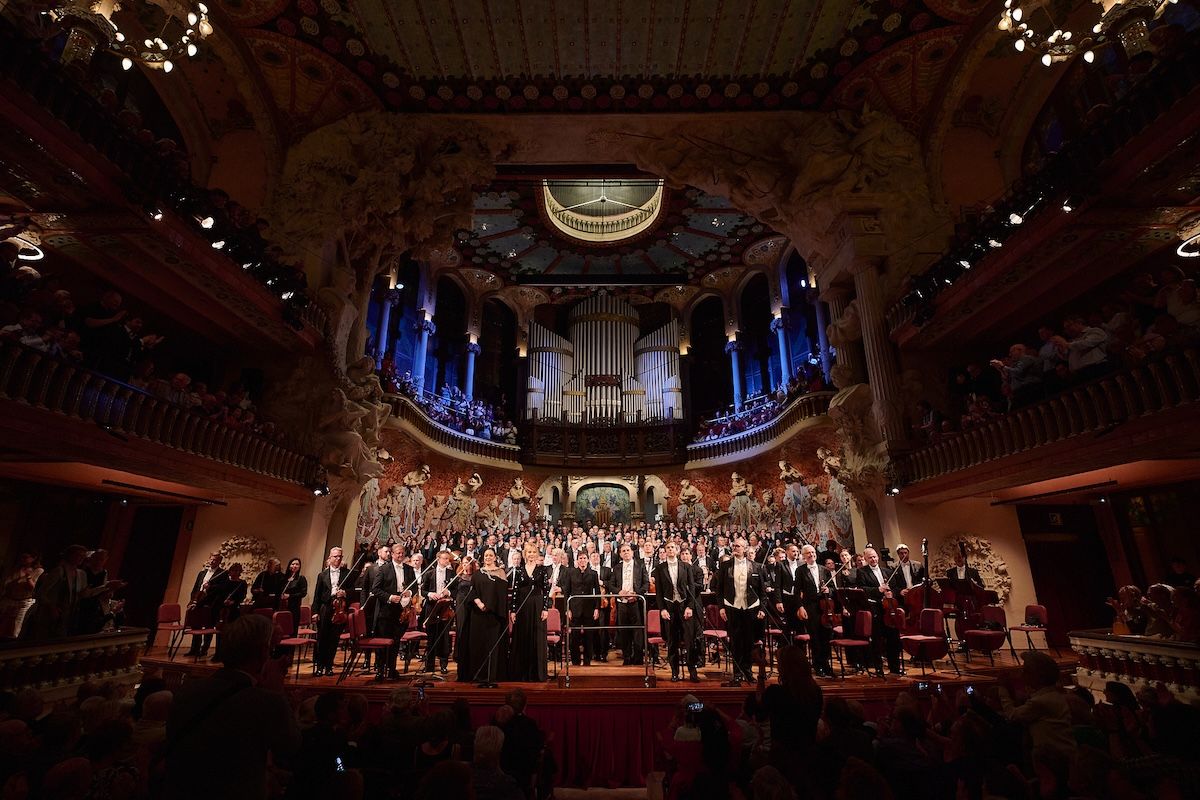
It is significant that the culmination of the Requiem ---the final Libera me--- even preceded Manzoni's death. Verdi had composed it years earlier for a collective mass in memory of Rossini that was never performed. As if the work had existed in a latent state, waiting for a definitive recipient... The initial question reappears: for whom is a requiem really sung? Only for the "saints"? Are we not rather the others ---the majority of the living--- the ones most in need of that spiritual compensation? "Deliver me, Lord, from eternal death, on that dreadful day when heavens and earth shall be moved." Almost out of time, at that last moment, a beautiful plea emerges which, however, avoids the tone of spiritual reconciliation or transcendent closure; a deprecation that does not ask for eternal rest but to avoid a second, definitive death. The music was losing matter in the Palau, as if reversing the initial declamation to slowly dissolve into a zone of uncertainty. It was not clear whether that was prayer, theater, collective memory, or the vibration that lives beyond all human certainty.
Add The New Barcelona Post as your preferred Google source for free
Stay informed with the latest news.