
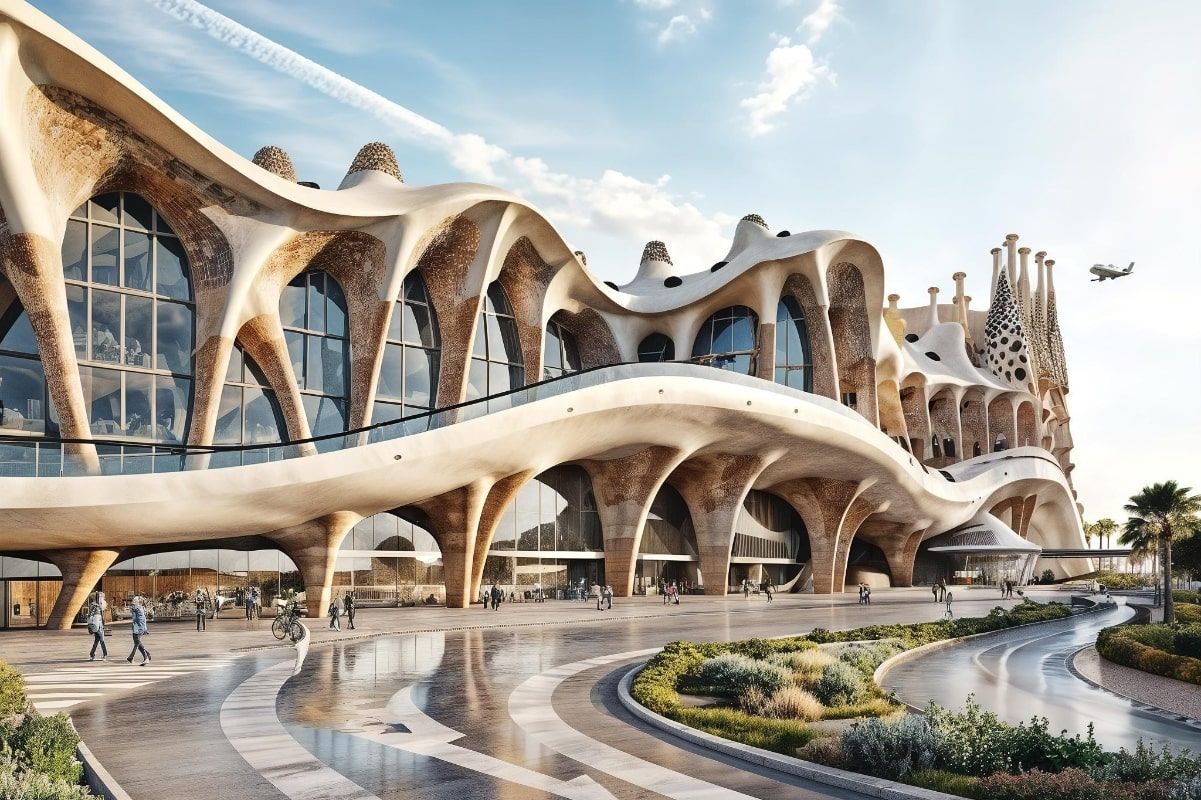
Trying to explain an interior or building design without graphic support can be a complicated task. With an image, everything changes, and architects and interior designers know this well. To illustrate projects that are yet to be materialized, professionals rely on renders, virtual recreations of their designs developed through digital tools. To these, Rendair has added Artificial Intelligence (AI). Driven by two young people from Barcelona, the technological startup launched its AI software in December 2023 and, since then, has grown from 500 users to more than 20,000.
With Rendair's AI technology, the platform generates renders instantly, which optimizes costs and image delivery times through an automated process. At the same time, it allows for repeated variations throughout the creative process, to visualize the project and design by modifying elements to test different alternatives, as explained by the company's co-founder Quim Civit.
Thus, through the platform, the user can generate and edit their renders instantly by giving instructions via text or through drawings, plans, and 3D bases. The platform also allows modifying images to eliminate or insert elements, as well as improving their quality.
The platform has gone from 5,000 renders per month to 200,000 in a few months"Now we are working to generate videos from an image, and on a space for the community, where professionals can share the projects they carry out through the platform to inspire each other," Civit remarks. The company, which also produces renders with traditional methods, also focuses on "explaining in a scalable way" the functioning and possibilities offered by the AI platform.
With these objectives on the horizon, Rendair is mainly targeting the Spanish market, despite being available globally and despite being based in Miami, where the other co-founder, Jose Fabregat, resides. "We have subscribers ranging from Korea to Finland, passing through South Africa," Civit emphasizes. The 20,000 users have been gained at an exponential growth rate over the last six months, a fact that "has exceeded expectations" and that will allow the startup to reach profitability presumably in December.
The growth is also reflected in the number of renders generated: in January, 5,000 were made monthly through its platform; in June, it was 100,000, and in July, 200,000 were reached. Although the company does not disclose revenue figures, Civit assures that they are tripling their income every month since January.
Since its creation, the startup has raised 2.1 million euros, through an investment round in September 2023, with 1.6 million, and another in September of the previous year, of 500,000 euros, from mainly American investors. The company, which now has 15 employees, offers various subscription plans to its users, ranging from 19 euros per month to 200 dollars, in a business plan that allows for several profiles under the same umbrella.

"AI has not arrived to replace traditional architects, but to give them tools; those who know how to use them will open up a world of possibilities," defends Civit, who began to develop the platform during the pandemic. The lockdown led him to seek ways to advance the digitalization of architecture, a sector that by definition requires in-person presence. Civit, who was then working as an architect, promoted during the lockdown the germ of the current Rendair: a company providing renders internationally.
After gaining the first clients, he opted to professionalize the project and give it shape through a startup with Jose Fabregat. A childhood friend and now a resident of Miami, Fabregat had launched several emerging companies before partnering with Civit, whom he has known since he was three years old. "We coincided in a startup where I was doing the renders. He saw the potential and we pushed the project," explains Civit. Thus, both set out to create the company, and the leap came with the incorporation of AI as the engine to elaborate virtual recreations: "2024 has been a boom."
Add The New Barcelona Post as your preferred Google source for free
Stay informed with the latest news.
