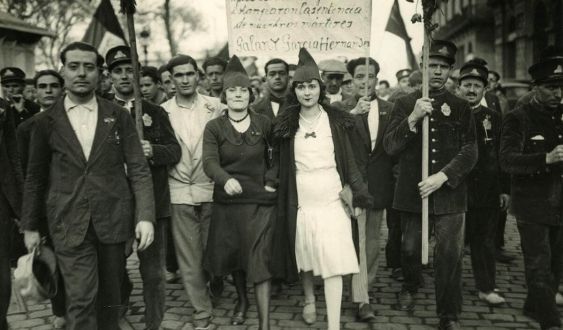
The cauldron lighting up in the Olympic Stadium is one of the images that many Barcelona residents have etched in their minds, whether they experienced it or not. The history of this place had begun at the turn of the century, but the 1992 Olympic Games gave it a prominent place in the city's memory. They were not, by any means, the first Olympics that the Olympic Stadium had wanted to host.
Barcelona's desire to host this sporting event dates back to the 1920s, when the city tried on more than one occasion. The 1929 Universal Exhibition served as a showcase to display the potential of the capital, which aspired to organize the 1936 Olympic Games. The decision of the International Olympic Committee (IOC) was made in April 1931, a few days after the proclamation of the Second Republic and the abdication of King Alfonso XIII, events that harmed Barcelona's bid and benefited Berlin's.
With dictator Adolf Hitler in power, these Olympics served as a propaganda loudspeaker for the Nazi regime, and Barcelona decided to counter-program them with a Popular Olympiad in the Montjuïc stadium. More than 5,000 athletes registered to participate in these anti-fascist Olympic Games, which were supposed to start on July 19, but the coup d'état of July 18 frustrated them. Despite this, many athletes who had arrived in Barcelona to compete decided to enlist in the militias. They thus became the first foreign militants who helped defend the Republic, before the creation of the International Brigades.
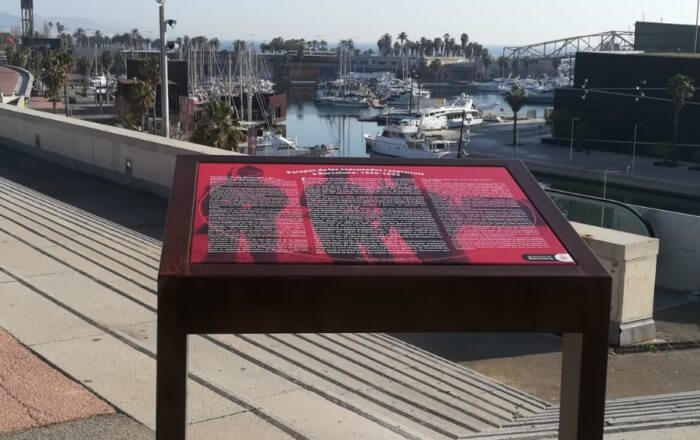
The complete history of the Olympic Stadium can be read on one of the lecterns that the Barcelona City Council will install in the city to commemorate the anniversary of the Second Republic, which turns 90 this Wednesday. A network of 30 lecterns timidly invades the city, with the aim of reminding it of a past that has often been hidden. They are not easy to find, even if the area is frequented regularly, as is the case with the one at the confluence of Diagonal Avenue and Passeig de Gràcia, which explains the history of Plaça del Cinc d'Oros, one of the other protagonists of the new edition of Primavera Republicana, the set of events that the consistory has programmed for this week in April and has been promoting since 2016.
Memory spaces throughout the city
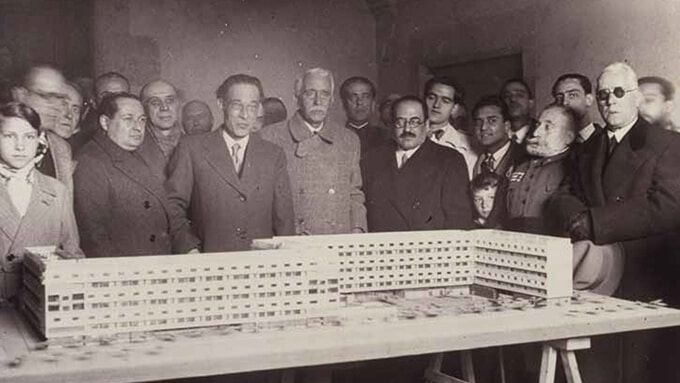
A total of ten spaces in the city will display their republican significance, one per district. They will do so both through the memory lecterns that the City Council permanently places and through informative panels that will be installed these days. In addition to the Olympic Stadium and the Plaça del Cinc d'Oros, the past of the Central Antituberculosis Dispensary of Ciutat Vella, the Women's Prison of Les Corts, the Plaça de la República of Nou Barris ---historically connected with that of Cinc d'Oros---, the Plaça Dones del 36 in Gràcia, and the Casa Bloc of Sant Andreu will be highlighted. The choice of places has also been linked to the values promoted during the Second Republic, such as public health, popular sport, or dignified housing, according to one of the curators of Primavera Republicana, Oriol López.
Wednesday, April 14, will be the highlight of the program, with events in all districts, which will include a dance performance by Brodas Bros. The score falls to Bàrbara Granados, granddaughter of the composer and pianist Enric Granados. Also noteworthy in the program is the dramatized reading of Doña Rosita la soltera, by Federico García Lorca, which will take place on Thursday, April 15, at the Born Centre Cultural i de Memòria. This work was performed in 1935 at the Teatre Principal de La Rambla by the actress Margarida Xirgu, who died in exile.
Add The New Barcelona Post as your preferred Google source for free
Stay informed with the latest news.
