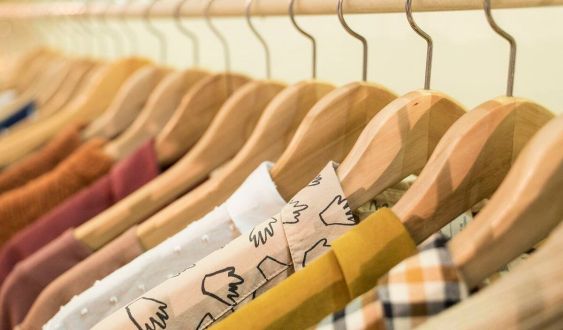
The fashion sector in Catalonia reaffirms itself decade after decade as a primary industry for the country's economy. Competitiveness and resilience, with constant adaptation to changes in the sector, and in consumption, in general, are the strengths of an industry that, with almost 800 companies, had a turnover of 14.5 billion euros and employed 64,500 people in 2019.
This economic activity is generated by more than 160 companies following a brand strategy and integration into retail, with a business volume exceeding 10.5 billion euros and an average growth in recent years of more than 4.5% annually. These companies account for half of the turnover, according to the study Nova Indústria: Nous serveis de valor afegit en les cadenes de valor industrials. El cas de la moda a Catalunya, from the Department of Business and Work and prepared by Cluster Development.
The report analyzes its transformation and explains how the leading companies have sophisticated their strategies to face advances and how around them the development of many value-added service companies and other technology-based companies has been promoted. The analysis makes it clear that half of the business volume comes from the sum of Mango and Inditex brands with operational headquarters in Catalonia and argues that "the big players end up leading to the transformation and generation of positive changes in the sector. They are the ones who initiate the changes, who prepare the chain and also the environment to face the challenges that the sector demands."
However, 50% of the remaining companies had a turnover exceeding three million euros and many of them, as in the case of the aforementioned chains, have an international presence.
Brand strategy, conversion into retailers, digital transformation and, more recently, sustainability have been the main levers of change to become a clear example of the new industry in Catalonia. But around them there is a much broader value chain that has also been adapting and specializing to increase competitiveness.
On the one hand, more than 300 productive suppliers (fabrics, yarns and dyes and finishes) that have opted for innovation in design and product specialization; and on the other hand, production and design managers (with about thirty firms) that concentrate a business volume of almost 700 million euros and register an average growth rate of more than 6.5% per year.
Among the conclusions ofNew Industry: New value-added services in industrial value chains. The case of fashion in Cataloniahighlights that changes in business ---especially those made in the last three decades--- have led to the development of a value chain rich in diversity and new company profiles, and that this has also meant the incorporation of new professionals more accustomed to technological and digital advances.
Large companies have acted as drivers for the entire value chain, which has diversified and become more technologically advanced.These strategies have led to the progressive appearance of new companies within the productive chain, which perhaps do not manufacture, but which provide high added value. On the one hand,online marketing and e-commerce agencies(more than a hundred working basically for SMEs given that large brands have their own structures or global suppliers), and on the other hand,technology solutions companies, which in Catalonia would be about twenty (most of themstartupscalls fashtechorretailtech) totaling 500 workers, 80% of whom are high-profile technology professionals.
The report also covers the digitalization process and how the emergence of e-commerce and the change in consumer culture towards more sustainable habits is transforming the sector. In this regard, it states that online sales have allowed companies to have more information about their customers and connect with their needs, so that, with data processing, it is also possible to better target and attract users, thus improving the profitability of omnichannel strategies and developing new markets.
The digitalization process has been key for development, and the omnichannel model is part of the futureIt also refers to how this industry is recovering after the pandemic and how the crisis derived from the coronavirus has placed the sector in a completely uncertain scenario in terms of consumption forecasts and customer habits. "In 2020, in just six months, the online channel experienced growth equivalent to six consecutive years, almost doubling its share in most markets. Andincreases of up to 20% or more are expected in fiscal year 2021", concludes the report.
In terms of sustainability, the study mentions that consumers continue to increase their preferences for products that have less impact on the environment and warns of the "pull effect of environmental regulations for the sector, as well as the Green Deal, are reinforced by the new Next Generation funds in the European sphere."
The study concludes that "the pandemic has opened an uncertain scenario" and that the key aspects to face the new context will be "the expansion of the omnichannel model, digital transformation in all processes, the search for more flexible supply models adjusted to demand, the restructuring of the physical sales channel, as well as the redefinition of the product assortment itself and the pricing strategy, according to channel, market and habit changes."
Add The New Barcelona Post as your preferred Google source for free
Stay informed with the latest news.
