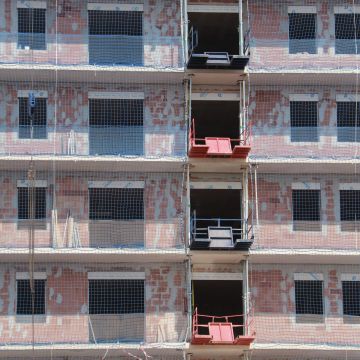
This Monday, Pedro Sánchez is visiting Barcelona’s Illa Sibèria affordable rental housing development in Poblenou, at a time when tensions over access to housing have once again spilled onto the streets. The visit comes amid negotiations over a new state housing decree, which the Council of Ministers is expected to discuss on Tuesday, and against a backdrop of growing mobilisation. In fact, coinciding with his visit, the Tenants’ Union has called a protest outside the Palau de Congressos de Catalunya. The demonstration will feature, in part, a prominent figure: Maricarmen, the 87-year-old woman who has become a face of the difficulties many people face in keeping or accessing a home.
The setting for Sánchez’s visit is precisely one of the responses being put forward by the public authorities to address this situation: Illa Sibèria. The project was developed through a delegated development model under which Barcelona City Council retains ownership of the land but grants the developer Coyoacan a 75-year surface right to build the homes, which are managed by Hàbitat3.
Located on Carrer de Badajoz in Poblenou, the development comprises 42 protected affordable rental homes. The keys were handed over last July, with monthly rents ranging from €429 to €502. The homes range from 61 to 72 square metres. Of the 42 homes, 30 were allocated to people registered with the Officially Protected Housing Applicants Register, while 11 were allocated to social organisations and are managed by the Hàbitat3 Foundation.
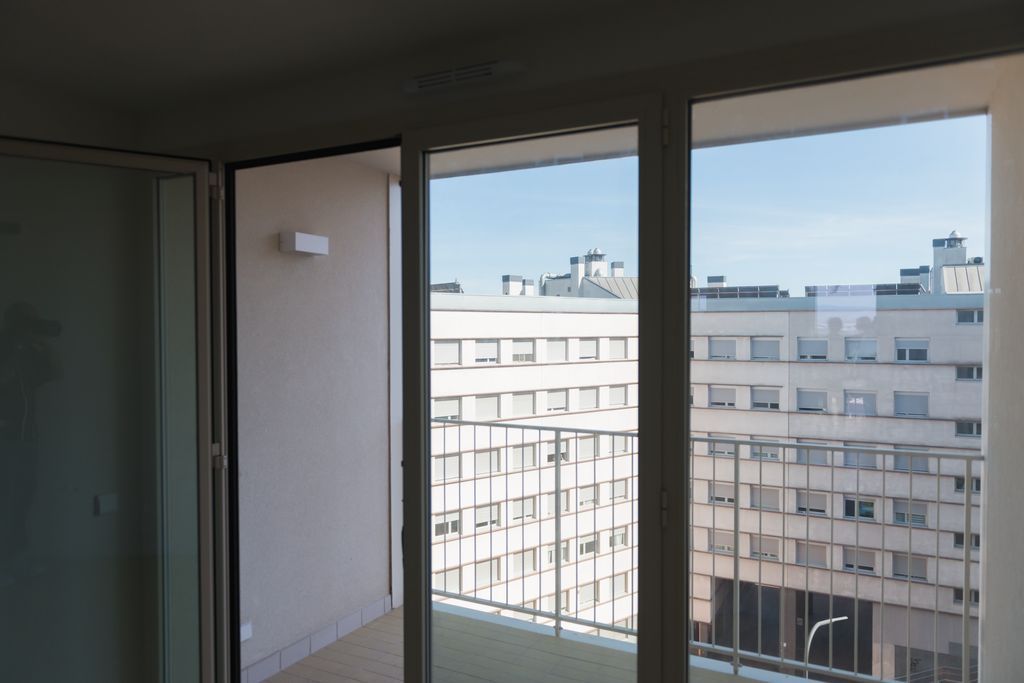
But 42 homes are just a small piece of a problem affecting hundreds of thousands of households. Barcelona's Pla Viure 2023-2027 aims to expand the city's affordable and social housing stock by 4,000 homes, reaching 15,000 public homes by 2027, with a production rate of about 1,000 new protected homes each year.
But between the Administration's objectives and the reality of households, there is a market that needs to be looked at closely. Because access to housing does not only depend on how many flats are built, but also on how much they cost, how many are actually available and enter the market, and what part of family income needs to be allocated to them. For this reason, during the coming weeks, Barcelona en xifres will dedicate a special series to housing. We start today with the basics: how people live in Barcelona, under what regime they live, and who owns the homes. And in the next installments, we will delve into the rental market, the buying and selling market, and finally, new construction.
Who lives in rented accommodation in Barcelona?
Renting is already the tenure regime for 43.6% of Barcelona households, according to data from the City Council's Pla Viure corresponding to 2024. These are 344,112 households, a proportion that has been growing in recent years, while the weight of home ownership has stood at 51.1%. One in three owner households, moreover, is still paying a mortgage. The remaining 5.3%, to reach 100% of households, corresponds to other regimes, such as room rental (2%), free cession, cooperative housing in cession of use and occupation, etc.
43.6% of Barcelona households live in rented accommodation
But this 43.6% is not distributed homogeneously throughout the city: the weight of renting varies greatly depending on the neighborhood, age, and even nationality. In Ciutat Vella and Gràcia, for example, renting is the majority regime. In Ciutat Vella, renting represents 59.7% of households and in Gràcia 53.6%. In Sant Andreu and Nou Barris, on the other hand, the situation is practically the opposite, with ownership as the predominant regime: it represents 64.7% and 61.9% of households, respectively.
Differences also appear when we look at age. 56.9% of people who live alone and are under 65 are tenants, while among single people aged 65 or over the percentage is reversed: 73.3% are owners.

And nationality also shows a wide gap: among households formed exclusively by people of Spanish nationality, 33.7% live in rented accommodation and 61.7% are owners. In contrast, among households formed exclusively by foreign people, three out of four live in rented accommodation (74.8%).
Let's put a face (and figures) to the owners: who owns the flats in Barcelona?
According to the Barcelona Metropolitan Housing Observatory (O-HB), in the data corresponding to 2025, 83.5% of Barcelona's owners only own one home. But these small owners concentrate 55.3% of the stock. At the other extreme, 2.2% of owners—those who own five or more—accumulate 22.8% of homes.
55.3% of Barcelona's homes are owned by owners who only have one home
And when we look at who is behind this ownership, the differences are even greater: natural persons represent 96.3% of owners and own 84.5% of homes, while legal persons are only 3.7% of owners but concentrate 15.2% of the stock. Companies, by themselves, accumulate 12% of Barcelona's homes.
And how many homes are in the public housing stock? At the beginning of 2026, Barcelona already exceeded 13,000 public housing units, and aims to reach 15,000 in 2027.

Of all the owned homes in the city, it would be good to know how many are empty and where they are concentrated, but the truth is that the currently available data do not allow for an updated picture. The municipal census of empty homes identified 10,052 homes with signs of being empty, which represented 1.22% of Barcelona's residential stock. But this is old data, as this census was carried out between 2016 and 2019, with visits to 103,864 homes, and therefore does not allow us to know how many empty flats there are in the city today.
This is the starting picture of housing in Barcelona. Now it's time to look at what happens when this housing enters the market. And the next chapter will be rent; next Monday.
Add The New Barcelona Post as your preferred Google source for free
Stay informed with the latest news.