
The difficulties in accessing housing represent one of the most complex handicaps for living in Barcelona. The diagnosis is clear and shared by the public and private sectors; the causes generate more debate and, the solutions, even more. Despite the diversity of points of view and prisms with which this challenge is approached, all entail a common starting point: the commitment to dialogue and public-private collaboration.
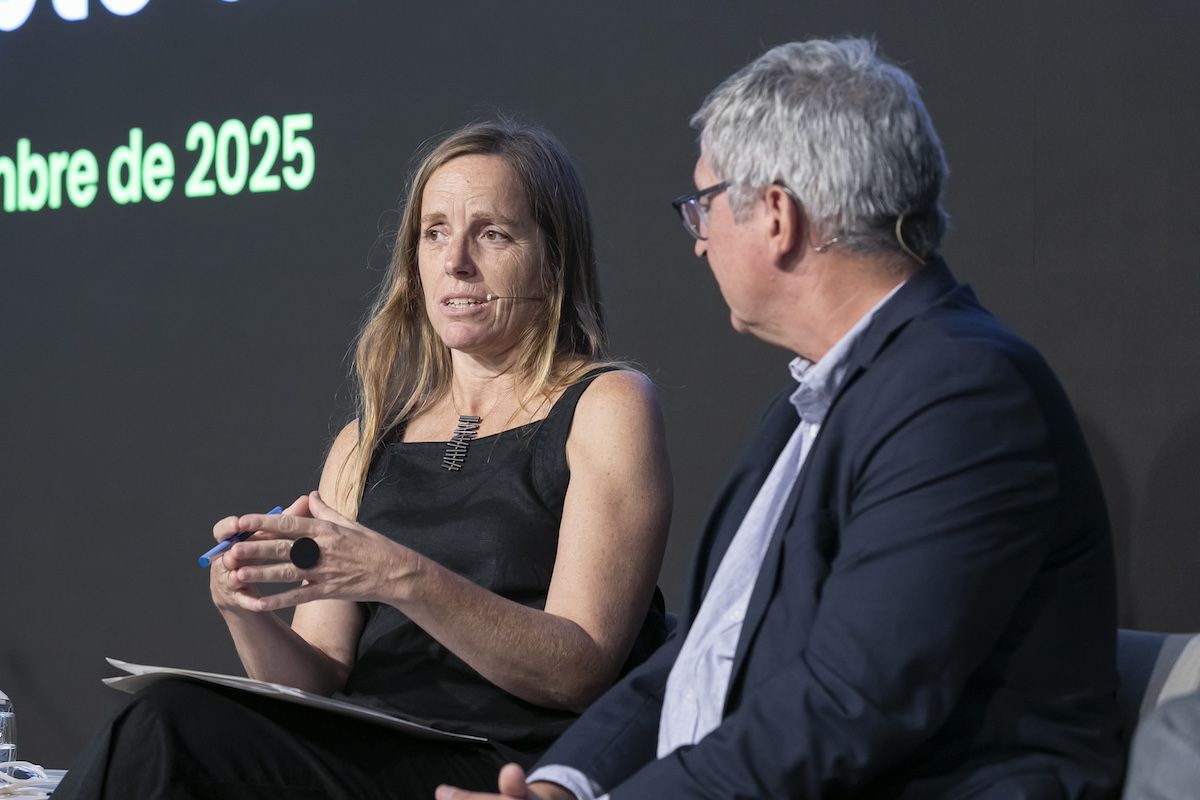
Representatives from both sectors have confirmed this in the first session of the new Eixample Talks cycle. Organized by The New Barcelona Post and Pimec, the debate featured Jaume Fornt Paradell, associate deputy general director of Protected Housing of the Agència d'Habitatge de Catalunya; Carles Sala, director of the Col·legi d'APIS and member of Pimec's housing working group; architect Blanca Noguera, head of the Housing and Innovation service of the Institut Metropolità de Promoció de Sòl i Gestió Patrimonial (IMPSOL), and Xavier Güell, director of CBRE Barcelona.
In a debate led by the director of The New Barcelona Post, Elena Busquets, the four speakers reviewed the causes of the housing situation, but they did not stop at the analysis; instead, they launched proposals ranging from building more housing to rethinking building spaces to make them shared. All from the willingness to collaborate from the public and private spheres, as also highlighted by the president of Pimec, Antoni Cañete, who opened the meeting together with the editor of The New Barcelona Post, Guillem Carol.
All of them stem from the need for the public and private sectors to go hand in hand: "We must seek the least common multiple, and sometimes some are interested in seeking the greatest common divisor," warned Sala, at a meeting that brought together representatives of the sector at Pimec's renovated headquarters. The session, which can be recovered in podcast format on Spotify or in video on Youtube, had the collaboration of the Generalitat, Bankinter, the Port of Barcelona, the Barcelona Metropolitan Area (AMB), Mustmedia and LLYC.
"A very important leap in scale is necessary in the promotion of protected housing, and we will not make this leap in scale without public-private collaboration," emphasized Fornt. And, as he highlighted, creating protected housing "is one of the few useful measures to get out of the current situation; there are other instruments, but this one is fundamental."
All of this within the framework of the Generalitat's plan to create 50,000 public housing units by 2030. To create this public housing, one of the first steps has been to mobilize public land on which to locate housing, and this is where the city councils have come in, since most of the public land is municipally owned.

As a measure to incentivize construction beyond the Barcelona metropolis, for developers it will be indifferent whether they build in Barcelona or in a small municipality far from the capital: they will charge the same price for rent. However, tenants will not pay the same: the rent will be 20% below the market price of each area. And the price difference? The Generalitat will subsidize it for 28 years, as Fornt explained. With this new system, he has pointed to the possibility that it will become "the beginning of a new dynamic of public-private collaboration."
Sala, who has applauded the 50,000 housing plan, has insisted that "public-private collaboration is indispensable." The also member of Pimec's Housing working group has launched a maxim: "Housing should move away from ideology" and, above all, seek avenues of collaboration.

Güell has also called for collaboration from the public sector, so that the private sector can be part of the solution, through dialogue: "The private sector can contribute to solving the problem, but it cannot be forced, it must be accompanied," he remarked. In fact, Güell has attributed the current housing situation precisely to the fact that "legislation has been made behind the back of the private sector," with measures such as the 30% reserve for protected housing in Barcelona and the regulation of rental prices.
The director of the consultancy has focused specifically on 22@, where he has insisted on asking for the regulations to be modified to allow more housing to be built. Moreover, Güell has guaranteed that numerous investors are interested in building in the city as soon as the regulations are more favorable to them: "There are billions waiting to come in and help solve the housing problem. All that needs to be done is to provide them with the landing strip to enter."
Housing from social innovation
From the public point of view of the Barcelona metropolis, Noguera has gone further, and has advocated addressing this issue by contemplating housing asan element "that helps to lock down the territory."The head of the IMPSOL Housing and Innovation Service has advocated for crossing the housing debate with social innovation systems, "addressing how society lives and what it needs, with issues such as loneliness and the reduction of economic resources, with proposals such as the creation of shared spaces in buildings."
Fornt has put another element on the table that can contribute to alleviating the housing problem: the industrialization of construction, with new techniques that accelerate it and can even make it cheaper. It is one more piece of a response to a challenge that must be multifaceted, attacking the problem from various angles precisely. And, as Sala has highlighted, housing is an issue that requires being treated with concrete measures traced with a scalpel: "It must be treated surgically, and not with an axe blow."

Add The New Barcelona Post as your preferred Google source for free
Stay informed with the latest news.
