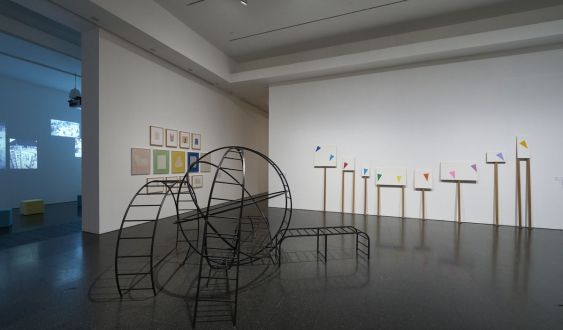
What would happen if we separated the works from the context of the museum that surrounds them? How would we see and interpret the works if their situation in the rooms were different? How would we visit the museum without a marked route, without a determined space? These are the questions raised by MACBA Collection. Preludes, based on the book Poetic Intention by Martinican author Édouard Glissant.
Glissant, a poet, novelist, and philosopher born in Saint-Marie, Martinique, on September 21, 1928, and who died in Paris on February 3, 2011, a staunch follower of Gilles Deleuze's ideas, was a defender of political, theoretical, and cultural miscegenation, as well as the creator of the term creolization, which refers to the defense of African art and the French Négritude movement.
Under the poet's premise, MACBA proposes an approach to recently acquired works, permeating their narrative and their time.
The works, exhibited on the first floor of the Meier building, are shown, this time, as an exercise in breaking with the established framework, giving space for reflection and criticism and reformulating the concept of art as a generative and emancipatory principle.
Taking things out of context always generates upheaval, contrast, loss, and discovery. The lack of dramaturgy in the works forces us to look back at the fundamental. It diverts the viewer from clichés, prejudices, and prose. The work speaks to us again on its own, and the narrative that usually burdens much of the value of contemporary art is completely cornered, despised, relegated to futility...
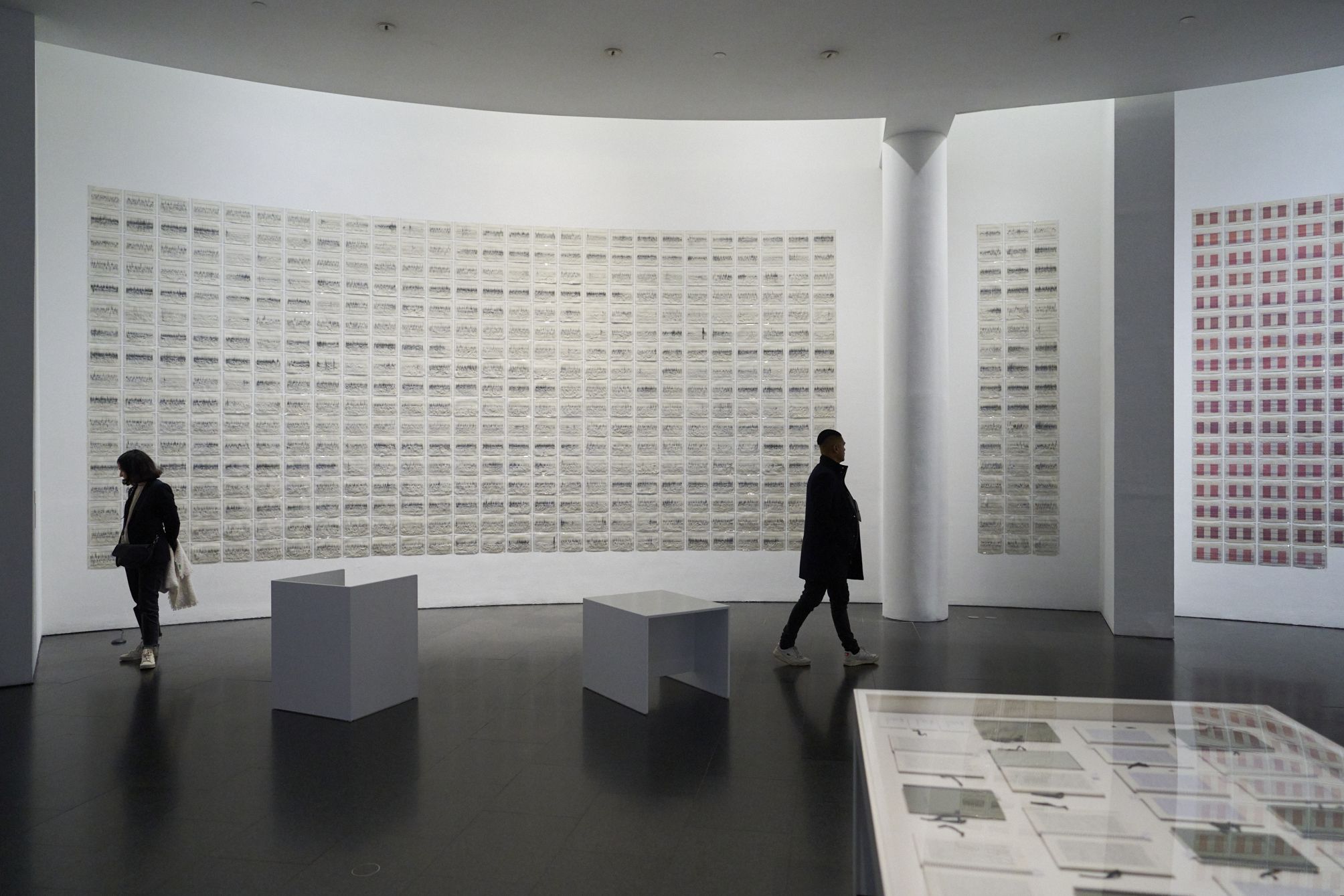
These types of exercises, far from being a new formula or merely intending to rejuvenate the museum's catalog, are the result of modern thinking. We are so accustomed to following, to nodding our heads in agreement with everything that conventional catalogs impose on us, that many times we do not leave space for our own opinion formation.
The MACBA collection serves to create new spaces for coexistence, a kind of contemporary move, in which we end up sharing an apartment with strangers, and these, end up seeming like fascinating beings.
The exhibition opens with a dialogue with the building itself. The material disruption of the museum's boundaries. The architecture, Luz Broto's pillars coexist with the daily life of the museum: construction, destruction, restoration, and permanent change. The work monumentally occupies the entrance, cutting off the light from the lobby to almost completely blind the access to the rest of the rooms. Pep Duran, on the other hand, proposes to place us in the middle of the work. The visitor is inside the work and is part of it. Our bodies, then, provide the indispensable human factor that completes the dramaturgy of the museum.
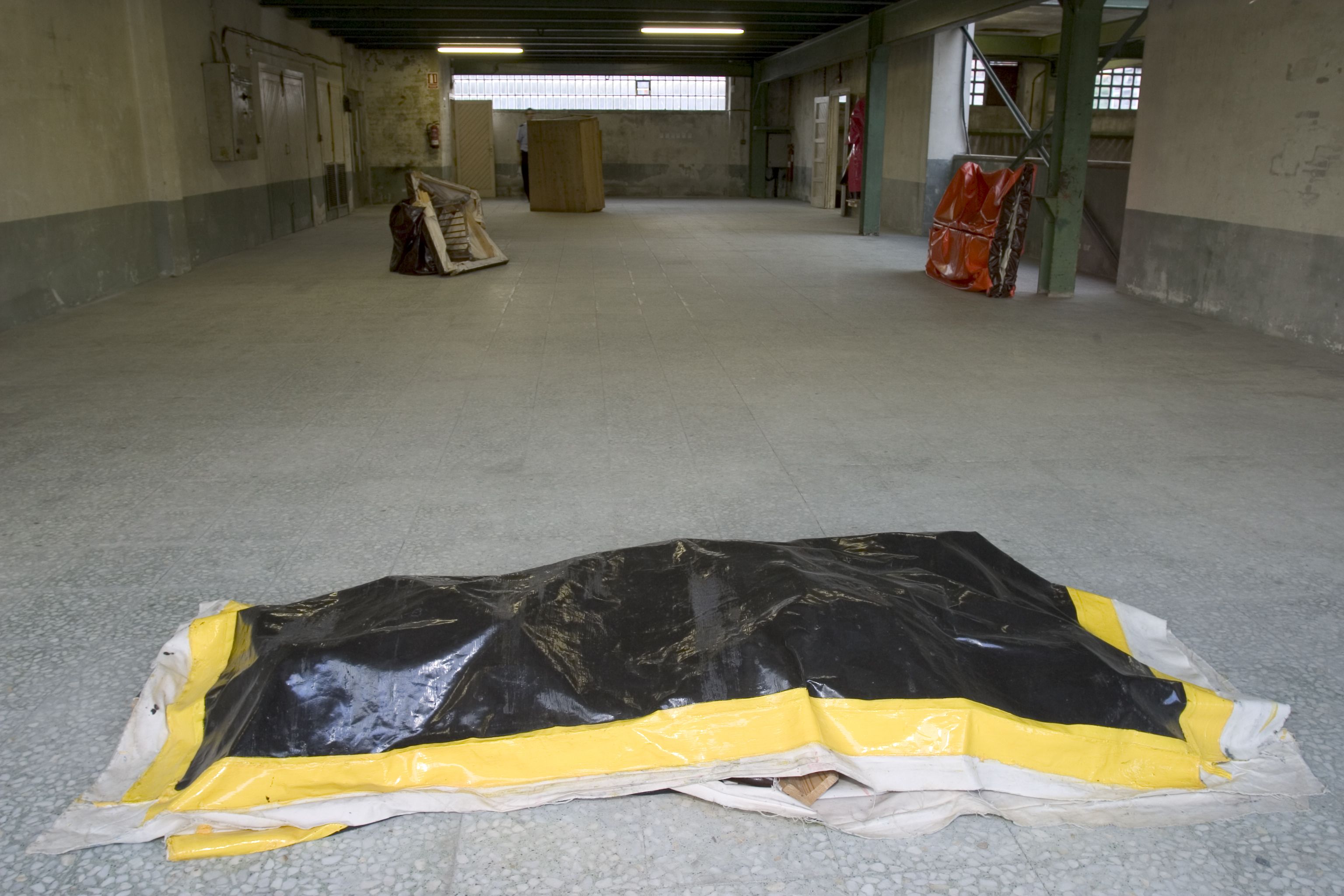
The tour continues reflecting on time. What is the time of the museum? How does time pass inside it? How do the works and the stories that make them up dialogue with each other? Contexts as great storytellers. The spectator, with their corporeality and physical disposition, is destined to transit. It is in this transit that we shape history, through narrative time, inevitably forming our own history through the relationship we perceive of the works. Metals remind us of apocalyptic landscapes, poems that shorthand the movement of the ocean, and a reflection on the continuous mutation of matter, along with the explosion of color as a map of sensations, make up this first part of the visit.
The next step leads us to reflect on language and poetry. Both terms share the same origin. Can art restore to us the poetics of the everyday, of what is habitual and often goes almost unnoticed? At this point, there is an attempt to reread language and its meaning, even when this language is replaced by silence. Hermetically or more openly, the works exhibited here trace lines of meaning about the act of naming, of saying, of enunciating... What is said and done with words marks that difference, again, non-existent and meaningless without the active presence of the visitor.
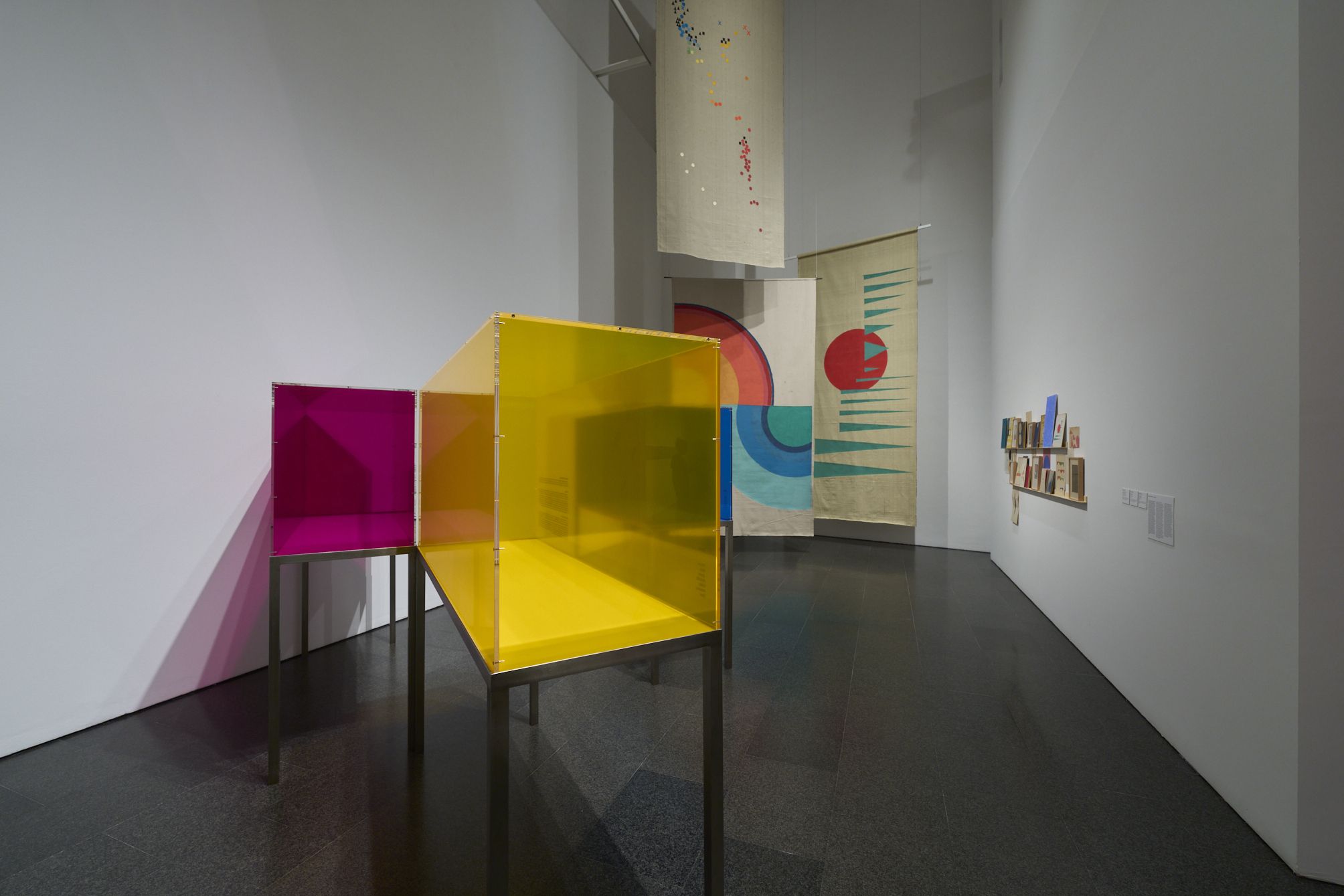
We close with a reflection on the proper function of the museum. The museum as an example of modernity, as an entity always in question, in permanent self-criticism, in constant reformulation. A museum aware of the problems that surround it and, increasingly distant from its history and its colonial heritage, to look at experimentation and reform itself as a laboratory of ideas. In recent decades, transformation has blurred the boundaries and established it in a scenario of independence from sociopolitical, artistic, cultural, or economic factors. A malleable entity with ideas and concepts that intertwine thanks to observation and participation.
The works, here, open dialogues with the linearity of a history from their own context and discuss it. There are also those that re-establish spaces of enunciation previously unexplored, with agents or episodes unprecedented in contemporary art. Attending to the works, then, means traversing architectures of deconstruction, completely canceling their working time, which until now, had occupied their lifetime. A return to collective power, to the liberation of the voice, to an exercise that seems a deserved rest for many works that, after years of struggle against their time, return to the innocence of their conception. There is space for protest, vindication, struggle, and the possibility of play and change. A future based on the idea of the nation-state is glimpsed. There is a return to the public square and the transformative power of collectivity. With a quote from Zoe Leonard, "-I want a president who...", the museum imagines a not-so-utopian reality to which it intends to open itself as an entity.
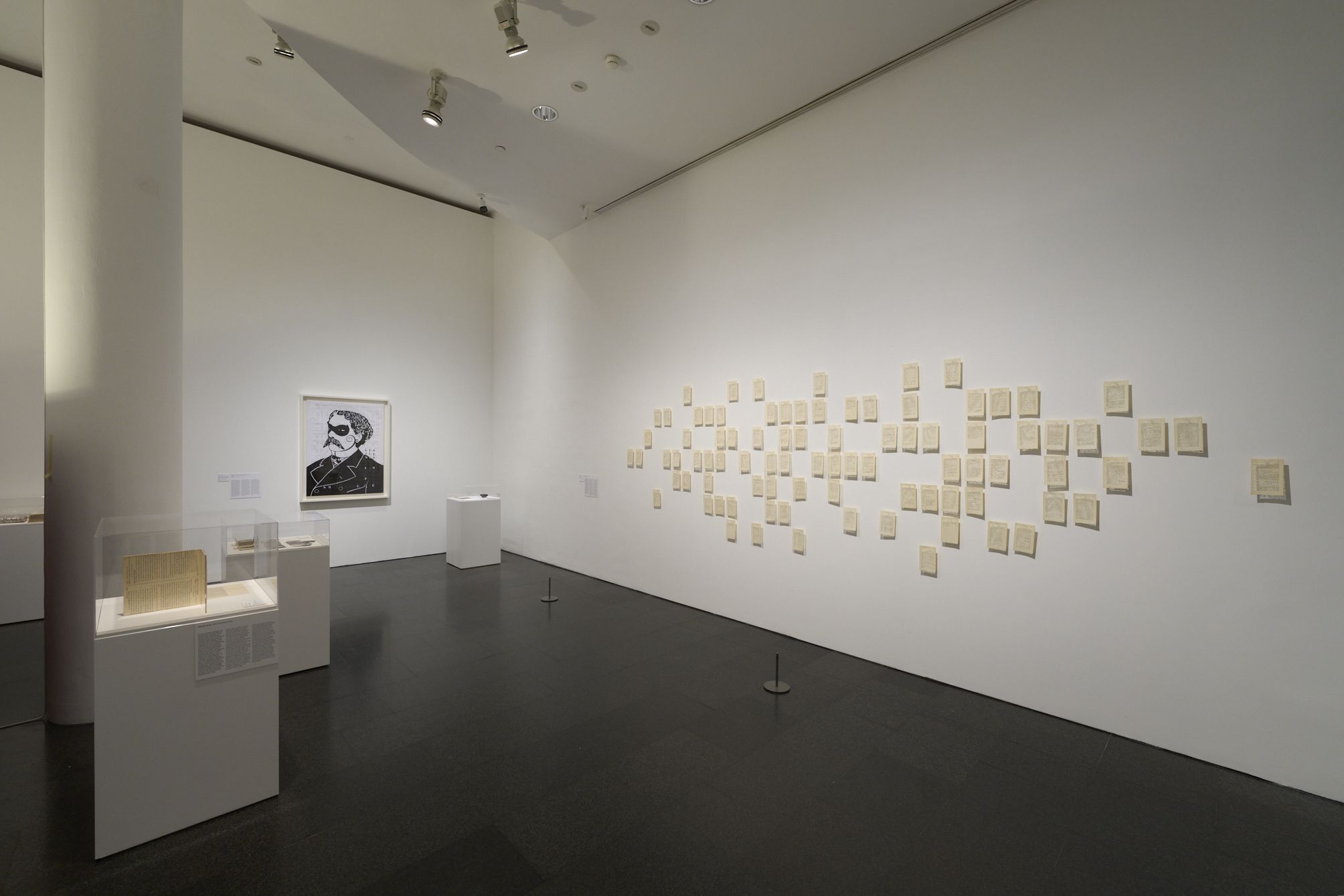
The MACBA exhibition, which will be on view until mid-2024, is curated by Elvira Dyangani Ose, Antònia M. Perelló Ferrer, Claudia Segura Campins, and Patrícia Sorroche. In it, we can see works by Etel Adnan, Jonathas Andrade, Iván Argote, Richard Artschwager, Mar Arza, Fikret Atay, Ursula Biemann, Stanley Brouwn, John Cage, Lúa Coderch, Octavi Comeron, Fito Conesa, Ángela de la Cruz, Ignasi Aballí, Bernat Daviu, Mirtha Demisache, Pep Duran, Laia Estruch, Ángela Ferreira, Peter Friedl, Sandra Gamarra, Dora García, Regina Giménez, Nuria Güell, Mona Hatoum, Marine Hugonier, Daniela Ortiz, Amalia Pica, Tere Recarens, Elena del Rivero, Tres, Isidoro Valcálcel Medina, and Oriol Vilanova, among others.
Preludi represents, precisely that, an advance, an entry into what comes to be an authentic declaration of intentions regarding the lines to follow this new season, and marks the path and the immediate future of the museum.
Add The New Barcelona Post as your preferred Google source for free
Stay informed with the latest news.