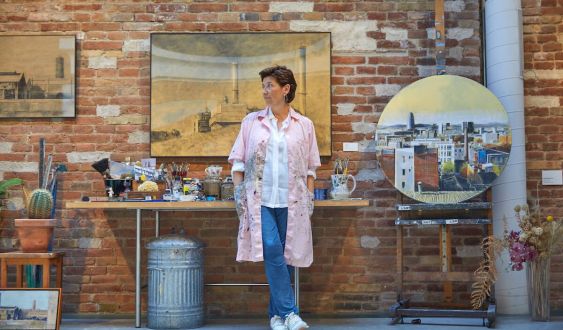
For the last 30 years, Neus Martín Royo (Barcelona, 1968) has dedicated herself to painting Poblenou, the neighborhood where she was born, grew up, and has always lived. The artist has experienced firsthand the profound transformation that has occurred in its streets, changing factories for technology companies, opening up to the sea, seeing prices skyrocket... But she has also portrayed the changes from her studio, where the views allowed her to observe the heterogeneous mix of past and present that characterizes the area, between abandonment and modernity. Until a new block of flats blocked her view.
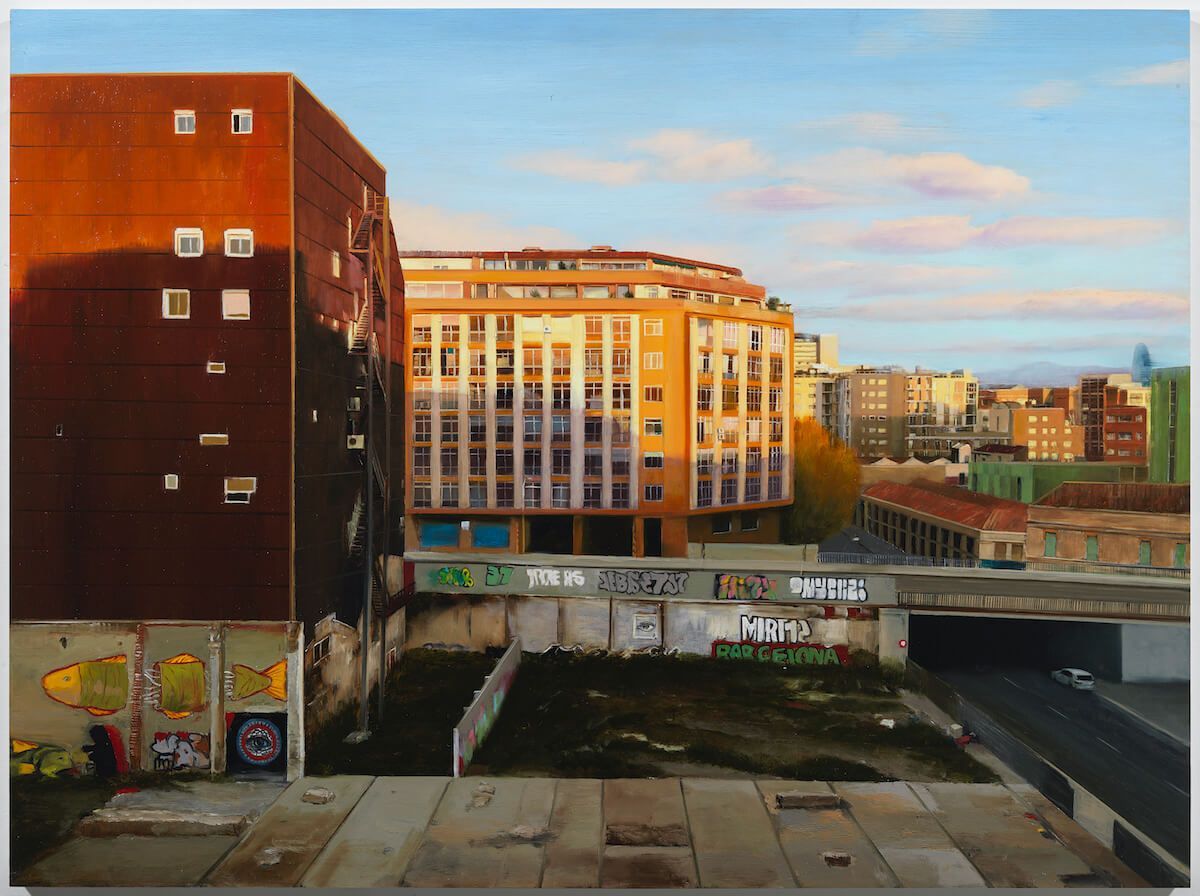
The exhibition Poblenou: la memoria pintada gathers Martín Royo's pictorial and historical testimony of many lost corners of the known Catalan Manchester, in a large anthology of 130 works, many from private collections, compiling all the paintings she has dedicated to her neighborhood since she graduated in Fine Arts in 1991. "I didn't expect that 30 years later I would still be painting," she says, looking back, when she finds a photo of herself from then, taken by her husband in front of the Torre de les Aigües, one of the icons most portrayed by the Barcelona painter, who defines it "as a lighthouse for Poblenou." Precisely, the current headquarters of the neighborhood's historical archive is one of the spaces where her creations are exhibited, along with the MUHBA Oliva Artés, with time to see them until January of next year. During the month of September, the Palo Alto foundation and the Can Felipa civic center also hosted some of her works.
The artist from Poblenou confesses that she would have liked to be an architect, but, since she couldn't be, she has become an urban landscaper, vividly portraying buildings, streets, cities, drawing from the influence of Edward Hopper's pictorial realism, but doing so without the human figure. Her native neighborhood has been the great constant in her work, but she has also traveled to cities like London, Paris, Montpellier, New York, and Havana to get inspired and let her brush immortalize them. She would spend a few months there, taking photos of their panoramas and capturing them in small paintings, only to return later and let herself go in her studio, painting larger format oil works. She admits that, when other cities are the protagonists, some infiltrated landscape of Poblenou always sneaks in. "It's very versatile," she justifies.
Her native neighborhood has been the great constant in her work, but she has also traveled to cities like London, Paris, Montpellier, New York, and HavanaSala Parés was her home for 20 years, recently replaced by Galería Jordi Barnadas, where she debuted at the end of 2020 with a selection of Barcelona facades, defined before the pandemic, although it captured a postcard much observed during lockdown.
Throughout these 30 years since she graduated, Martín Royo has combined painting with teaching. For most of her professional life as a high school teacher, part-time and painting in the afternoons, until she decided to make a change and started teaching drawing and painting classes in her studio, to students of all ages. That studio, on Pere IV street, is reproduced in the Torre de les Aigües, designed for schools visiting the exhibition, seeing firsthand the process followed by the Barcelona artist, starting with small sketches; continuing with a larger charcoal drawing and introducing waxes to start experimenting with color, until the last step arrives, when she paints in oil. "It's exactly like that," she remarks while pointing to the different tools she needs, organized and including a stained smock.
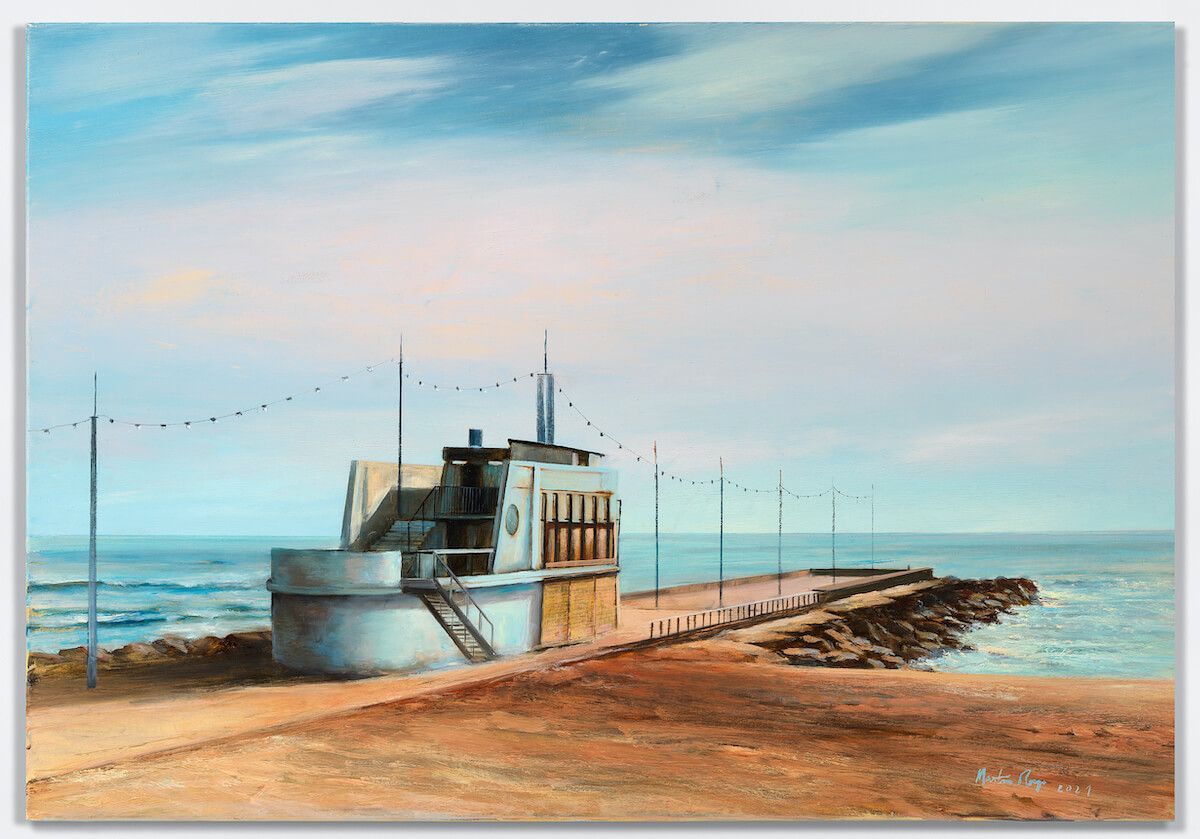
The Torre de les Aigües had been the only space where the exhibition was originally conceived, but the thing grew, to add three more venues. At the Palo Alto foundation, paintings were included about the change that the Barcelona coastline has undergone since the Olympics, with icons such as the Mapfre Tower, the W hotel, or the disappeared restaurant-boat on the Bac de Roda breakwater. There were also works dedicated to Palo Alto itself, its garden, and its old gasometer.
Meanwhile, at the Can Felipa civic center, there were the most costumbrista paintings, with the most everyday images of Poblenou, such as its main festival, the "caspolinos," the facades with the Letona and Cacaolat logos, the Sala Beckett, or the Padrós coach garages.
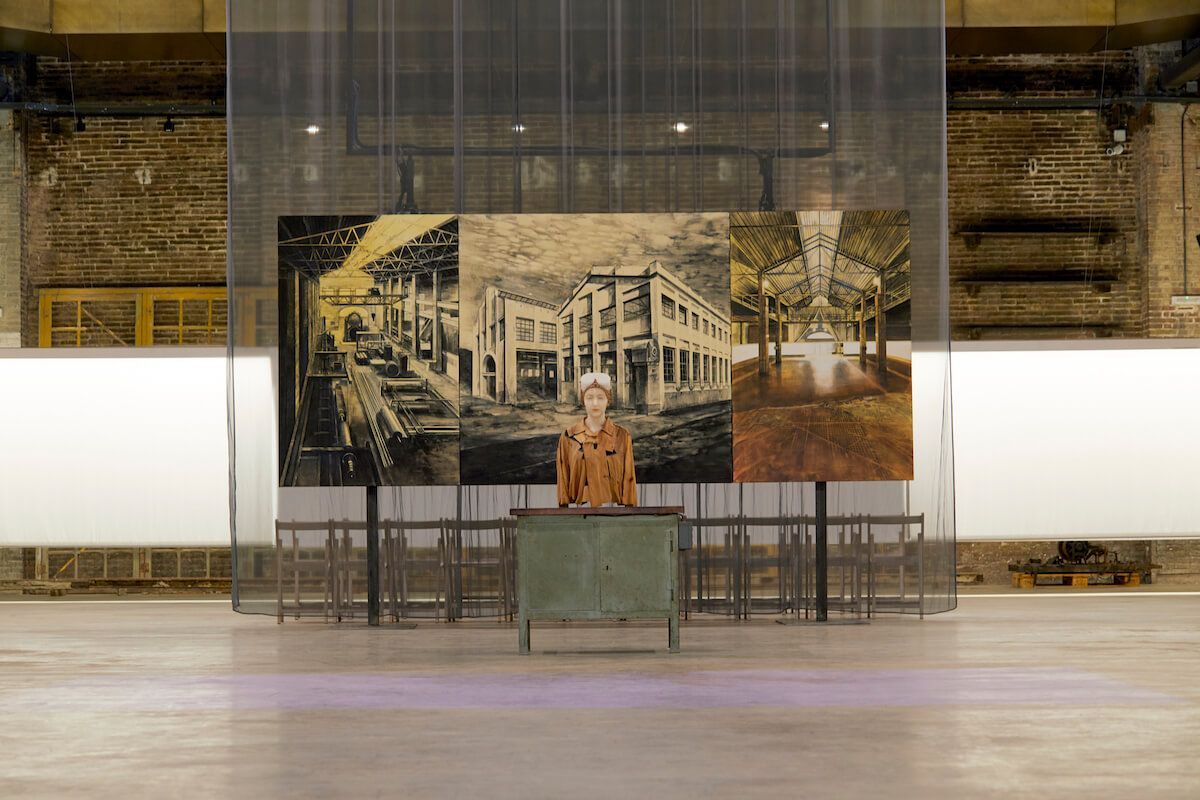
At the old Oliva Artés factory, one of the venues of the Barcelona History Museum (MUHBA), homage has been paid to Poblenou's industrial past, both with Martín Royo's paintings and with machines lent by the last family to own the metallurgical factory. The main piece of the exhibition is located in the central nave, as if it were "an iconoclastic altar," explains the painter, considering that the enclosure is known as the cathedral. The large-format triptych, 6 meters long, depicts the past, present, and future of the space and is the only painting created expressly for the exhibition.
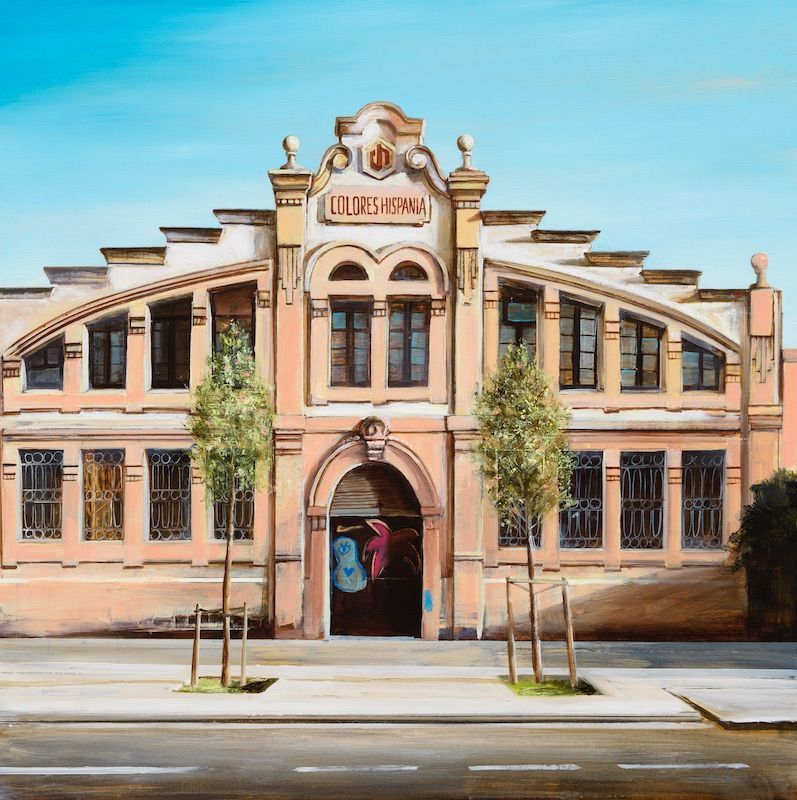
This central piece is followed by a set distributed along the 12 chapels that form the first floor of the museum, coexisting with its eclectic permanent collection. Highlights include the portraits of Casa Antònia Serra i Mas ---the work of the lover of verticality Ramon Puig i Gairalt that recalls New York's Flatiron---, Can Ricart, Unión Metalúrgica, or Colores Hispania, painted with brighter tones than, in many cases, those that neglect has given them. And Adéu Manchester, with pasts that were not preserved, or Metaformosi, among cranes, serve to put an end to the retrospective.
For the nostalgic, the curious, or those who simply enjoy walking, the historical archive of Poblenou has located all the paintings that Martín Royo has compiled for the exhibition on a map, proposing routes designed, like the exhibition, for the different audiences that now coexist in Poblenou. All of this, with the aim that "the old-timers can reconnect with lived landscapes and newcomers can get to know the spaces they now inhabit."
Add The New Barcelona Post as your preferred Google source for free
Stay informed with the latest news.
