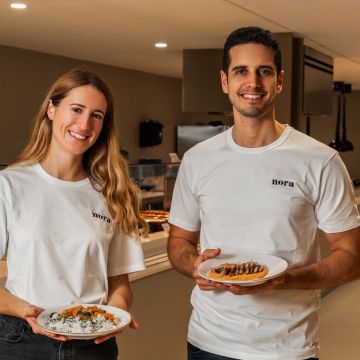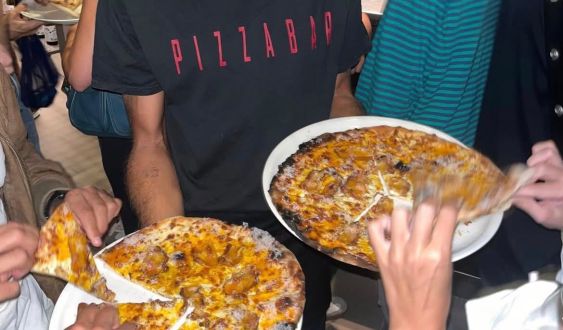
Pizza is already a universal staple. For years, this Italian speciality has slipped into every corner of the world in the form of a restaurant. It is hardly unusual to stroll through any city – especially Barcelona – and spot a pizzeria on every corner. Yet the presence of pizza on a menu does not make a place a pizzeria. That is precisely the concept brought to life by Rafa Blanc, José Bassols, Lali Rodellas, and Helena Rodellas with Pizzabar. The entrepreneurs first set up shop in Sant Feliu de Boada (Baix Empordà) and have touched down this year in Barcelona with crystal-clear intentions: running an elegant yet approachable dining room where pizza is a headline attraction, yet comes flanked by small plates, a thoughtful wine list, and tempting desserts. Everything is done a la catalana, championing local sourcing and setting aside the frantic pace of standard pizza joints in favour of a fresh gastronomic narrative.
"We have built a gastrobar centred around pizza," explains Rafa Blanc, the company's CEO, in conversation with The New Barcelona Post. For the team, pizza is a dish that manages to be both refined and accessible, proving that ambitious menus can be crafted at competitive prices. At the same time, the Catalan approach to hospitality is deeply rooted in sharing; accordingly, the restaurant incorporates a broad spread of regional tapas finished with an elevated touch. Theirs is no ordinary pizza: declining to follow passing fads, they steered clear of Neapolitan varieties with pronounced, doughy crusts. "We work with thin, crisp dough," notes the entrepreneur, who observes a distinct market shift towards the resurgence of this style, typified by the Roman tradition.
Pizzabar traces its roots to a village in the Empordà, the region where the founding partners first developed the venture now opening its doors on Carrer de París. The tempo and the crowd, however, differ markedly. "You see a lot of families there, and the setting is distinct," Blanc notes. In that sense, Barcelona represents the true test, characterised by a faster pace and fierce competition. Even so, the city is familiar region, with Blanc acknowledging that the Catalan capital is "well known" to the partners and provides an ideal setting "to cement the brand." While the Empordà site is tied to holiday living, rural retreats, and family tables, Barcelona brings a more urban, spirited, and dynamic edge – tailored equally to after-work gatherings, dinners among friends, and plans that stretch late into the night.
Steering clear of thick-crusted Neapolitan pizzas
Open seven days a week, Pizzabar aims to subvert the standard routine of grabbing a slice, ensuring diners can take their time and enjoy their meal unhurried. At the same time, the founders were determined to remain affordable, adopting keen price points that distinguish them from conventional gastro-lounges. "Our aim is to bring guests back through the door," says Blanc. The ambition is not to stage a one-off novelty, but rather to combine high-quality ingredients, an inviting atmosphere, and fair pricing so patrons want to return. It is why the menu evolves continuously and the dough recipes are refined over time: "We are constantly innovating," the entrepreneur concludes.
A pizza joint without being a pizzeria
Pizzabar’s offering revolves around a thin, crisp, and airy dough crafted with its own distinct identity. The toppings mirror classic combinations, but showcase Catalan provenance. That choice was entirely deliberate: Blanc points out that if they simply wanted to churn out standard fare, they would have relied on an Italian importer and consolidated their orders. Instead, they work ingredient by ingredient with producers across the territory, guaranteeing peak freshness, fair pricing, and zero-kilometre sourcing. The sole exception are the tomatoes, which are brought in from Italy.
Alongside the signature pizzas sits a selection of gourmet tapas, similarly built on local produce, offering inventive reinterpretations of classic Catalan cooking. The menu includes touches such as capipota wontons and oysters with leche de tigre – traditional recipes reimagined to dismantle the notion that guests visit Pizzabar solely for pizza.
Inventive flourishes on time-honoured Catalan classics
While they do not operate as a traditional pizzeria, nor intend to become one, they have adopted one fixture of the trade: takeaway pizza. At present, their pizzas and desserts are available through on-demand delivery apps operating across the city. Blanc clarifies, however, that they intend to go further: "we are currently running trials to include small plates" on the takeaway roster.
Pizzabar sets out to be a social hub, particularly for a younger crowd. "Dinners with friends, couples, or even families," Blanc notes. Their Empordà venue, which remains open, fills almost daily with a mix of regulars and newcomers. The Barcelona wager follows the same philosophy: a meticulous menu featuring food prepared on-site from locally sourced provisions, framed by an original dining concept. Pizza may already be a fixture in local life, but approaching it from this angle feels entirely new. Guests at Pizzabar are not forced to compromise between their favourite comfort food and an unhurried evening out with friends. Pizzabar has landed in the Catalan capital to turn the formula on its head – doing so without losing touch with the native ingredients that shape Catalan culinary identity.
Add The New Barcelona Post as your preferred Google source for free
Stay informed with the latest news.