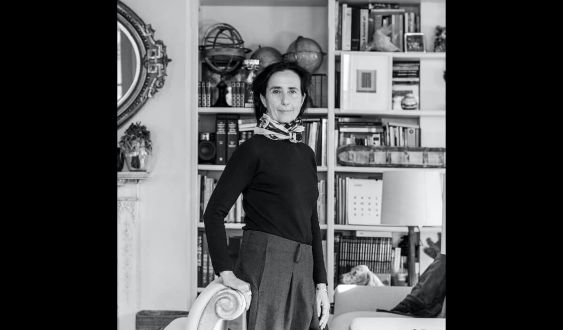
Her new studio in one of the royal estates of Plaza Villa de Madrid in Barcelona's Gothic Quarter distills everything she offers her clients. A huge charcoal-painted Buddha welcomes visitors: "This piece has been in all my offices," Pilar tells us, remarking that there is so much sun in the main room of the office that they have to close the shutters. "I have created a team. I am not Pilar Líbano, it is Pilar Líbano's studio. We are five people and sometimes six. And many times we collaborate with my partner's team, Jaime Pons, who are also five. When we join forces, we are a bigger team."
[subscribe_newsletter_esp]
Talking to her is a pleasure because she is calm, moves her hands delicately, and has clear preferences. Has interior design changed much in the 21st century? "More than a change in tastes, it's an adaptation to new times, to new trends. As for the technical part, projects are increasingly demanding."
What are her preferences in terms of materials? "I have always tried to work with noble materials that age with time. My intention is to create timeless homes and spaces where the soul of the person living or working there is visible, rather than seeking very avant-garde trends. Furniture has evolved a lot. A brutal evolution. The way of living has changed, and so has furniture. Now people live in small places. Classic furniture is no longer used; there is a clear preference for lighter furniture. But I always try to find a piece of furniture with personality that I buy from an antique dealer or in dévalage. I am aware that antique shops are no longer fashionable, but there are still some open. And I am a fan of dévalages; I frequent those in Avignon, Beziers, Montpellier, or even some in Holland. I have contacts in several places and also in some antique shops here. Clients really like to participate in the design of their home, and I like homes to speak of those who inhabit them."
Range of clients
One of her first clients was her friend Antonio Miró. She designed his stores in Barcelona and Bilbao and created the Hotel Miró, which years later has become one of the good neighbors of the Guggenheim. Since then, she has left her mark on so many projects, such as the interior of the Real Club de Golf El Prat in Terrassa, whose building was designed by Carlos Ferrater, or the Restaurant of the Círculo Ecuestre.
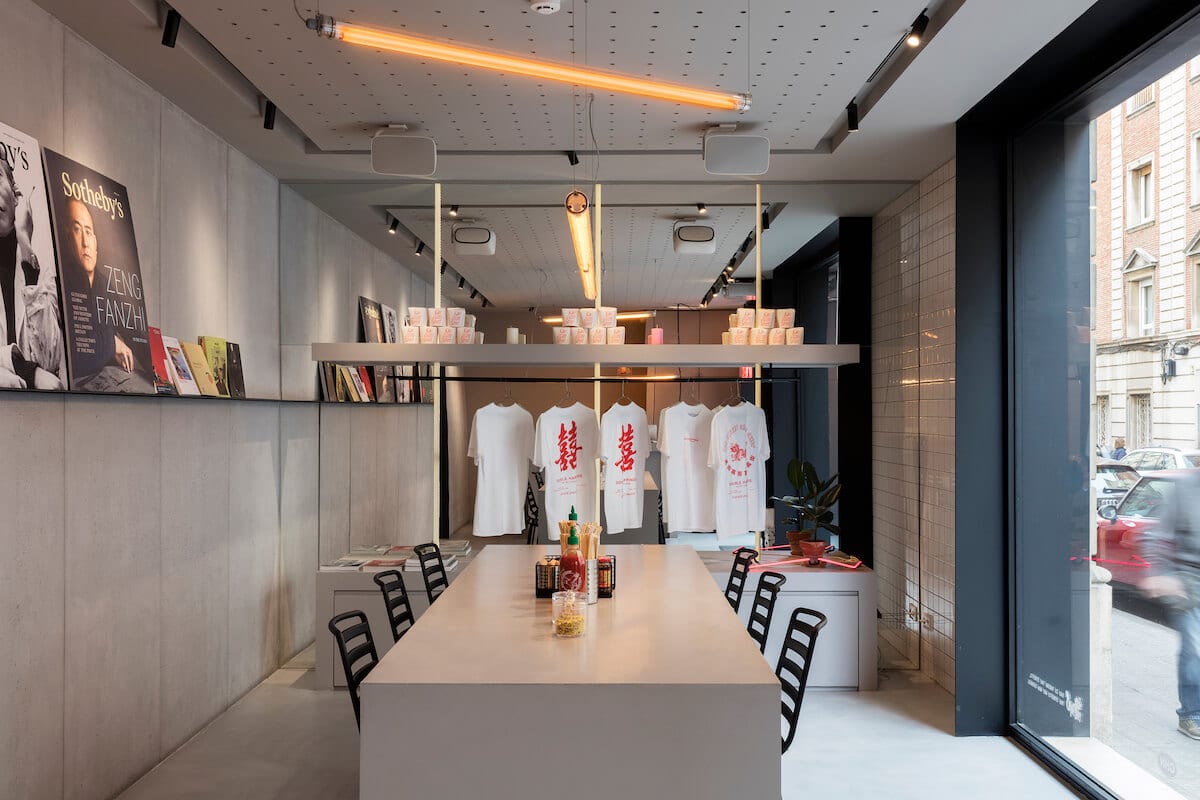
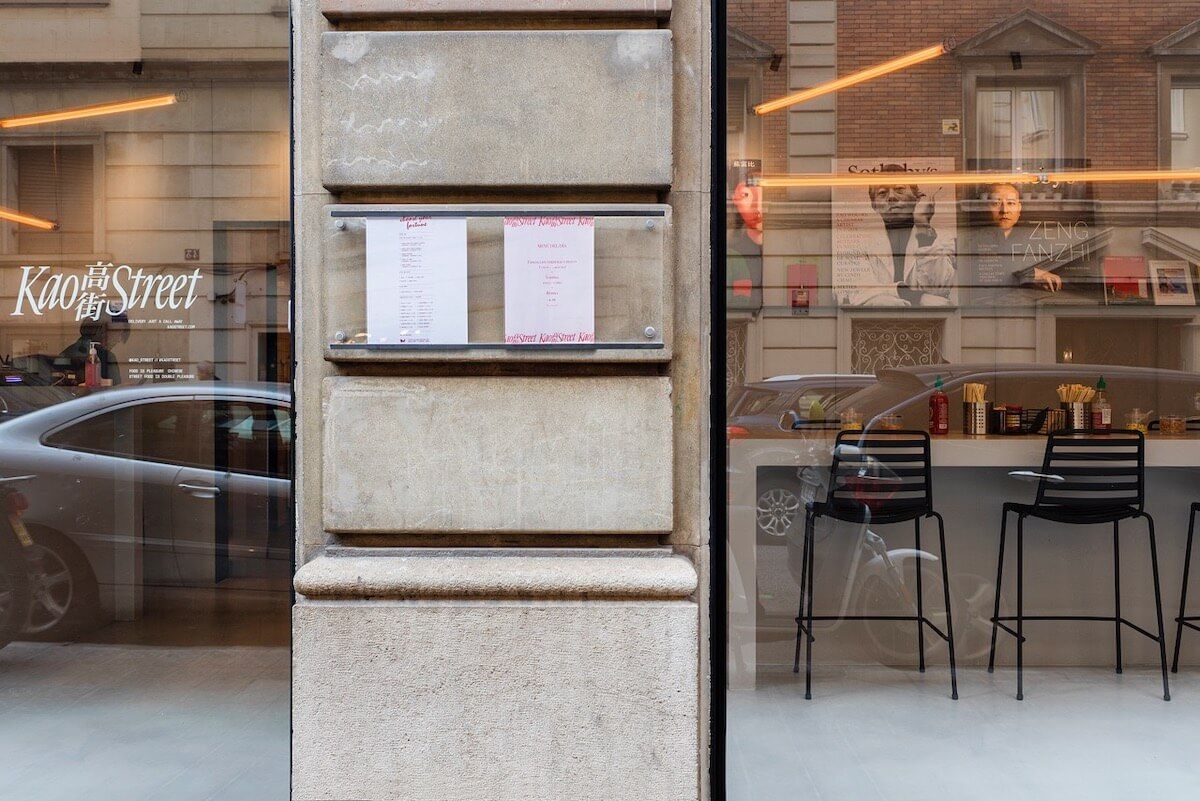
The lockdown fully caught the inauguration of the take away El Kao Street, on Bisbe Sivilla street in the Sant Gervasi neighborhood. "I had already worked with the Kao family in their hotel in Andorra ---explains Líbano--- and they asked me to make a place in Barcelona to serve their orders with a modern aesthetic that would be in line with the Kao restaurant. It was closed, but now the concept is perfect because they serve home delivery meals." Another of her catering commissions were the Mexican restaurants Hoja Santa and Niño Viejo, by Albert Adrià and Paco Méndez, two independent but neighboring businesses on Avenida Mistral, whose furniture was entirely designed by Líbano's studio.
She also has extensive experience in the hotel sector. "Now I am doing a hotel in Porto and an agritourism in the North of Menorca, and I continue to take care of the renovation of Hostal Empúries, which we are doing in parts so as not to close the establishment ever."
Although commissions pour in from all over Spain, she has always preferred to have her base camp in Barcelona. "We have been in this apartment in Plaza Villa de Madrid for a year and a half and I can say that it is much quieter than the previous office on Rambla Catalunya, where we were for twenty years. I am clear that I always want to work in Barcelona and in a small studio. I like to collaborate with other people but without losing the essence." What can she say about the differences between Madrid and Barcelona? "They are two architectural speeds; when I work in Madrid I have to change my mind. It's totally different."
Gaudí and Coderch
Barcelona cannot be understood without Gaudí and Coderch. How does she define these two great creators? "Gaudí was a very important figure for Barcelona, modernity at the time, an extraordinary man and craftsman at the same time. He had the gift of craftsmanship, of know-how. And Coderch is the world of ideas, the world of spaces. Everything that has come after has been a copy of Coderch." Can she name any other reference architects? "I love Portuguese architects like Álvaro Siza and Eduardo Souto de Moura or the Brazilian Isay Weinfeld."
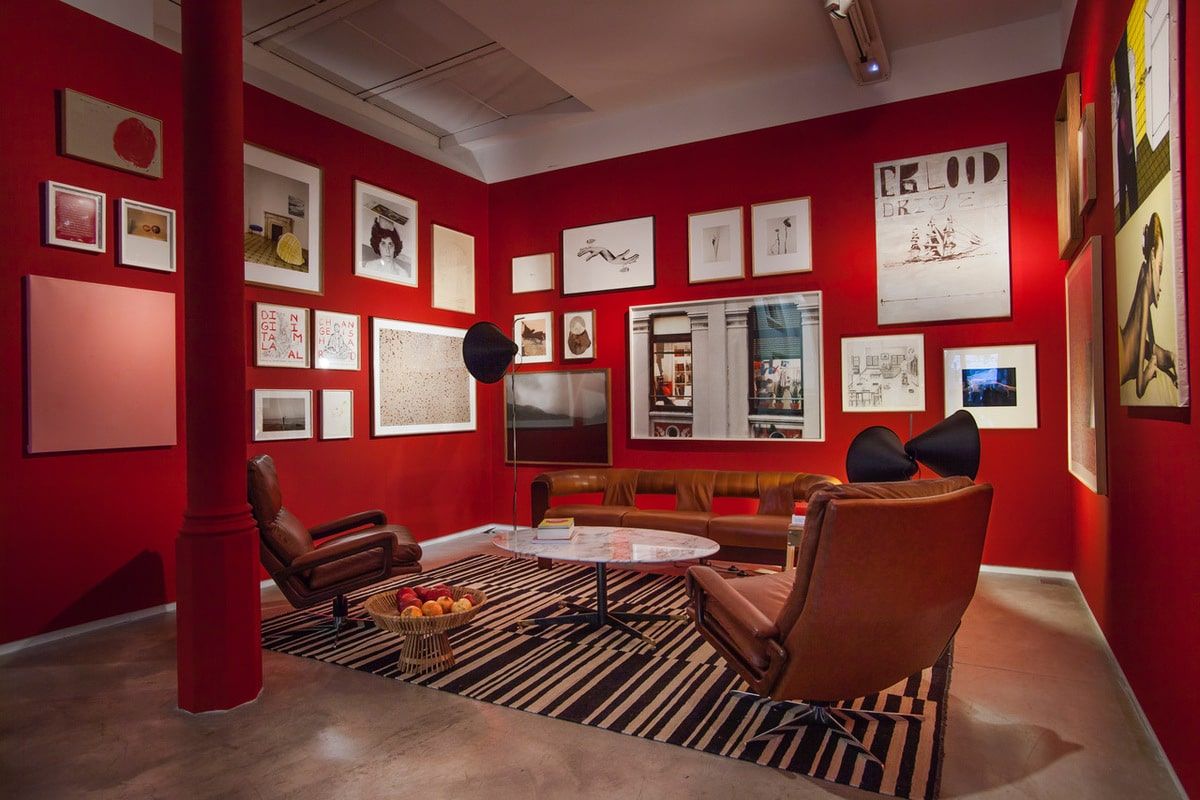
Art surrounds her, and we contacted her for this interview precisely because she has returned to Galería Àngels Barcelona, a space she designed thirteen years ago, to present an exhibition-tribute to the domestic space. The Àngels Barcelona premises on Pintor Fortuny street was previously a car repair garage and, in 2007, it was transformed into a gallery with two exhibition spaces and interior offices.
"Gaudí was a very important figure for Barcelona, modernity at the time, an extraordinary man and craftsman at the same time. He had the gift of craftsmanship, of know-how. And Coderch is the world of ideas," says the interior designer.Two spacesis a curious exhibition because it presents two spaces with the Lebanon seal. "I wanted to show the relationship between art and everyday life; works leave the gallery and arrive at homes. In the living room, I propose a dialogue between a photo of a window by Mabel Palacín with a snapshot from the seriesHerbariumof Joan Foncuberta with theHomage to Boschof Esther Ferrer, among others. The idea is a large composition as if it were a cabinet." And in the dining-office there is also a dialogue between the works of art and the furniture. "The walls are mirrors and we have chosen works such as the photograph by Peter Downsbrough who studied architecture and presents a work of reflection on geometry, Esther Ferrer's intertwined prime numbers or the texts by Pep Agut and Daniel G. Andujar." The dialogue works.
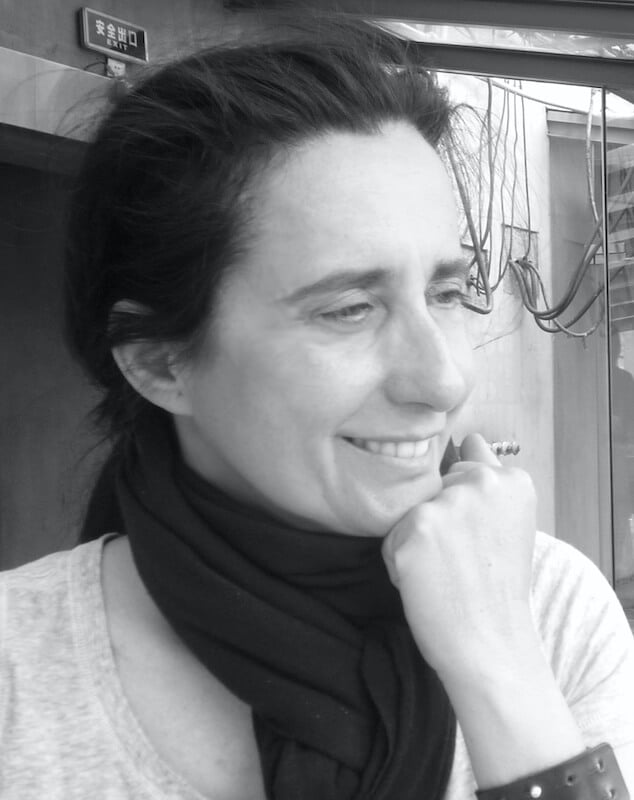
The home office
Now everyone is considering their home's needs to adapt to the new reality of teleworking and many of her clients are calling her again: "Hey! I want an office, I want a dining-office or I want to see myself reflected in a fresh room ---these are the most common requests---. They also care about the kitchen, they want a very lived-in kitchen. I love it when people I've built houses for call me to change something for them… I work a lot on the relationship with the client."
If someone contacts her studio to redecorate their house… "The first thing I ask them is to do their homework: What do they like? Where do they feel most comfortable? I start with where they feel comfortable, where they are at ease. That's where the relationship begins. It's a two-person job."
Add The New Barcelona Post as your preferred Google source for free
Stay informed with the latest news.