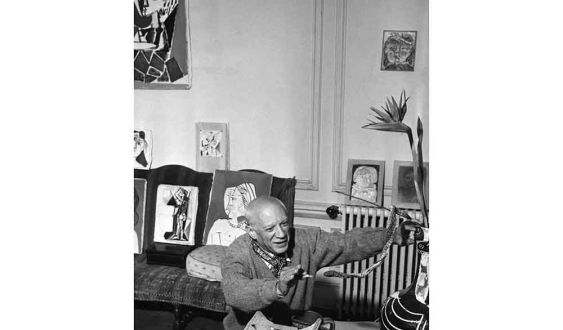
If I were asked to choose my favorite rock star, it would undoubtedly be Pablo Picasso. With Dalí's permission, the painter of Guernica was a demigod, canonized in life: if he were still alive, Picasso would have a pile of paparazzi permanently parked in front of his studio on Rue des Grands-Augustins in Paris or at the villa La Californie in Cannes, informing us live of the latest young woman he had charmed.
The Picasso myth is like the Minotaur, which he often painted: it requires sacrifices and fodder to keep it at bay. In exchange for offering us astronomical prices at auctions and millions of visitors to museums, the beast demands new exhibitions and unprecedented approaches. That is why, while we await the highly anticipated exhibition on the underwear he painted in, "Picasso's Kitchen" has just opened at the museum on Montcada Street, where we will learn everything about his relationship with food, except the name of his cook.
Curiously, the cliché of Picasso's voracity, of the eagerness with which he devoured pictorial styles—he is estimated to have more than 50,000 works, which is no small feat—clashes with the apparent frugality with which he ate: he ate little and healthy, and rarely drank alcohol. Broth for dinner, and at midday he made do with an omelet and seasonal vegetables: leeks, cauliflower or radishes in winter, cucumbers, peppers and tomatoes in summer. Also rabbit and botifarras, and when he was near the beach, grilled octopus, anchovies and sardines: I imagine that the espetos from Malaga must have been his Proustian madeleine.
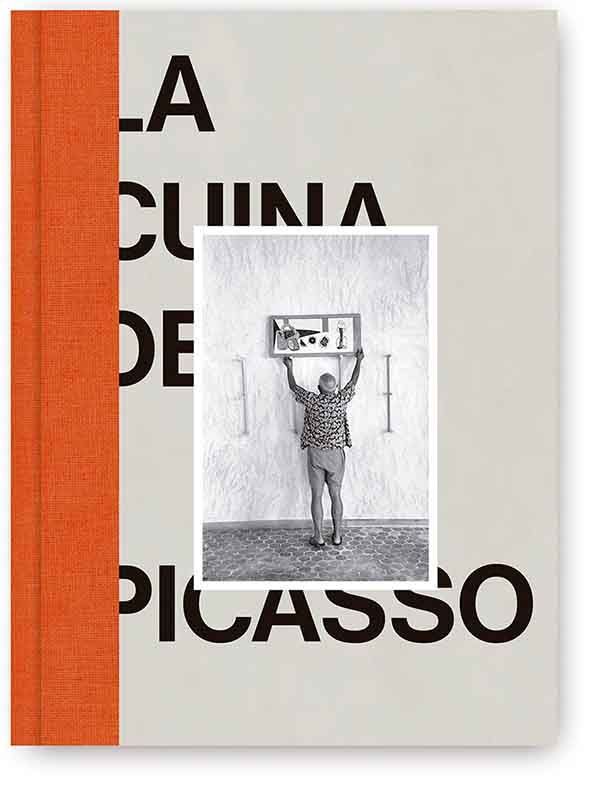 The exhibition is full of still lifes that reflect these very meager tables, with fruit, crusts of bread and a glass of wine, in a realistic, cubist or literary style, because shopping lists from the Montmartre grocery store are also exhibited. Masterpieces such as the Boy with a Lobster, a grand Picasso at a major festival, are on display, and one can see how food has always been present in his career: there is the kitchen of Malaga painted by the 15-year-old child prodigy, and a few meters away, the sculpture-assemblages from the Vallauris period, where a sexagenarian Picasso turned clay plates and attached ceramic fish, sole or fried eggs with botifarra.
Bars and restaurants also make an appearance, with special attention to the Quatre Gats in Barcelona, where, in addition to holding gatherings, the very young Pablo Ruiz designed a menu, the daily special sign, and a propaganda flyer, one of those "drinks-and-food-served-at-all-hours" kind. Of course, at Quatre Gats everything must have been about drinking and chatting, because they say the food was inedible, and Josep Pla even wrote that "the portions were always a pure illusion of the spirit." In Picasso's Kitchen there is also talk of Cal Tampanada in Gósol, the mythical Berguedà hostel where, while the artist reinvented himself in the spring of 1906, poor Fernande survived on potatoes and vegetables, because she couldn't stand the hare civet or the mountain stews. "There is nothing in this region," she wrote distressed to Apollinaire, "neither pastry chef, nor confectioner, nor baker, nor haberdasher: nothing at all."
The exhibition is sponsored by Ferran Adrià, because in Barcelona it is impossible to talk about cuisine and art without mentioning our great genius of today. It doesn't matter that Picasso, a lover of simple cuisine and an opponent of artifice, would have frowned at the hyperbotifarra with spherified secas: the curators consider that the same revolution that the Demoiselles d'Avignon caused in painting, the Bullinian vegetable minestrone in textures provoked in the gastronomic world. To clear up any doubts, those who want to try Picasso's cuisine can do so in several Barcelona restaurants, such as the one at The Sierras hotel, where chef Marc Gascons has prepared a five-course Picassian menu, including a cubist apple.
Featured images: 1. Pablo Picasso at his home in Cannes. Photo by Pictorial Press Ltd / Alamy Stock Photo 2. Catalog of the exhibition "Picasso's Kitchen".
Add The New Barcelona Post as your preferred Google source for free
Stay informed with the latest news.