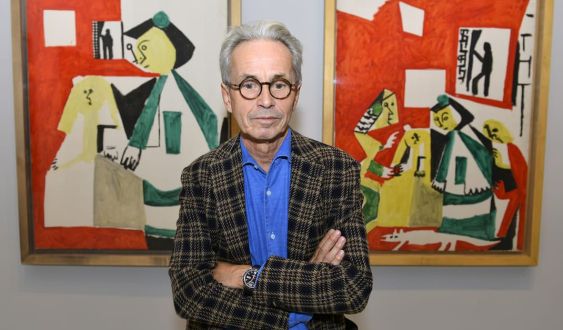
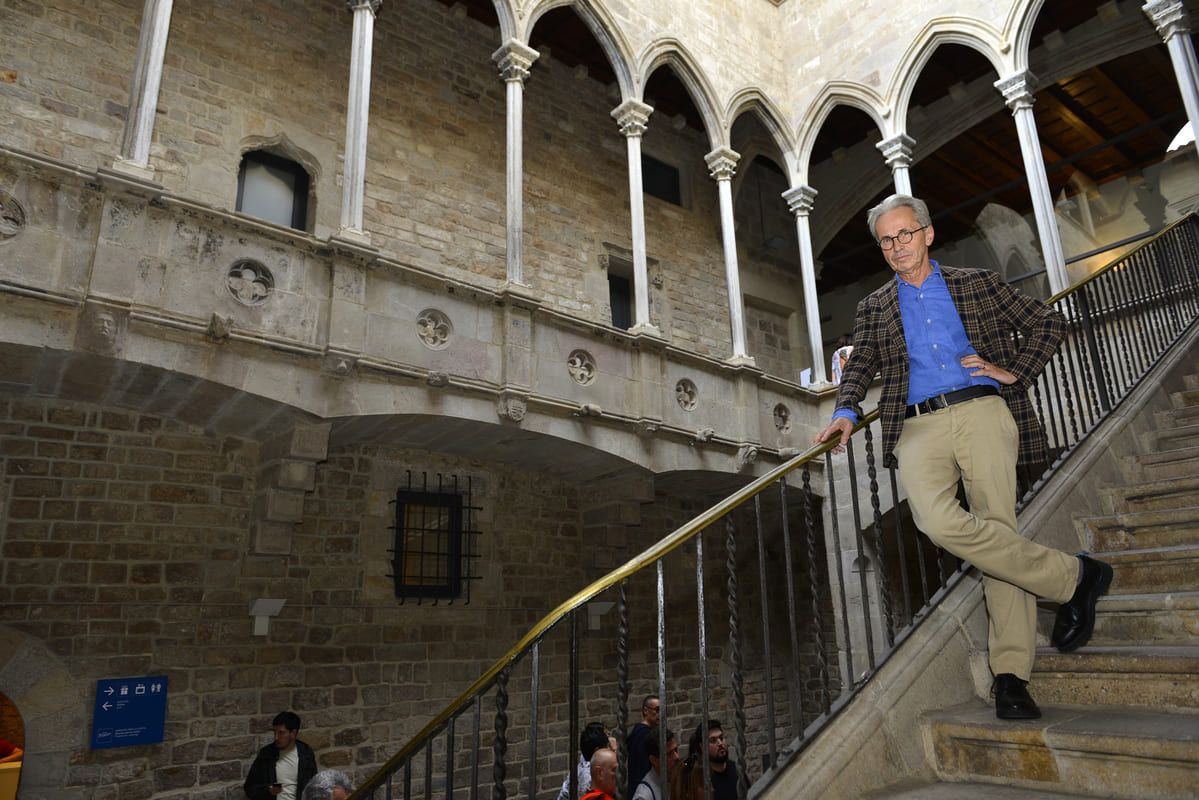
In each answer, he asks himself new questions, he speaks as if he were writing a book or treatise. Picasso was a genius, Emmanuel Guigon an expert. Picasso had more than one nationality, Guigon too. You never finish with Picasso, nor with Guigon. Their proximity is total, even in language, also in the humble arrangement of the office, but he gets straight to the point so much that it's hard to catch him.
For him, 2023 has already begun, just as for Picasso, Cubism had already begun without him expecting it. It will be 50 years since his death and it's not just about celebrating Picasso, but about understanding him a little. Surely the painter would not agree with this, it's not about understanding anything but about feeling. Okay, so we won't try to understand everything Guigon says. But without a doubt, we come to feel him.
--- Why will the commemoration of the 50th anniversary of Picasso's death be important?
--- The year 2023 will be an important year in relation to Picasso, but also for Barcelona, for Catalonia, for Franco-Spanish collaboration... The signing between Macron and Sánchez gave an international character to the celebration, through the creation of monitoring groups, an international commission and, of course, the collaboration of the Picasso family. This without forgetting the Ministry of Culture, the Ministry of Economy, the Ministry of Tourism, the Generalitat at the communication level, everyone has pitched in. There are many delicate aspects still to be defined, or that make the project more expensive, such as the transport of the works, which is very costly.
--- Excuse me, and the City Council?
--- Oh, of course: the Barcelona City Council must be at the neuralgic center of all this, in this case also represented by myself. And I also don't want to forget the patronage of Telefónica, and being an event declared of national interest, with the tax advantages that this entails for sponsors. We presented the Picasso year this summer, in the presence of the kings of Spain, at the Reina Sofía. There will be more than 50 exhibitions and events, for example, we now have in Madrid the exhibition on Julio González, a disciple of Picasso and master of forging, thanks to the support of the Mapfre foundation.
--- And the presentation in Barcelona?
--- We will carry it out around his birth date (October 25), or in any case before the first exhibition in Barcelona, which will be in November. Barcelona has a central position in this commemoration for being a Picassoesque city. We are the museum about the artist with the most visitors, over a million, the first in the world, but we are also a great center of cultural activity in Barcelona.
--- And artistic cradle of the master.
--- Barcelona is where Picasso develops intellectually, where he begins to be aware of everything he will be capable of. Everyone knows about his time at Quatre Gats, his friendship with Nonell, with Sabartés… After his first trips to Paris (1900-1903) he still returns to Barcelona frequently, in '17, for example, he takes advantage of the interpretation at the Liceo of the ballet Parade by Diaghilev's Ballets Russes (with whom he collaborated for the costumes and the stage curtain), and he will come often until the Civil War. Barcelona for Picasso means formation, but it also means a constant link with his adopted city. That the museum is here by his will is clear proof of this affection.
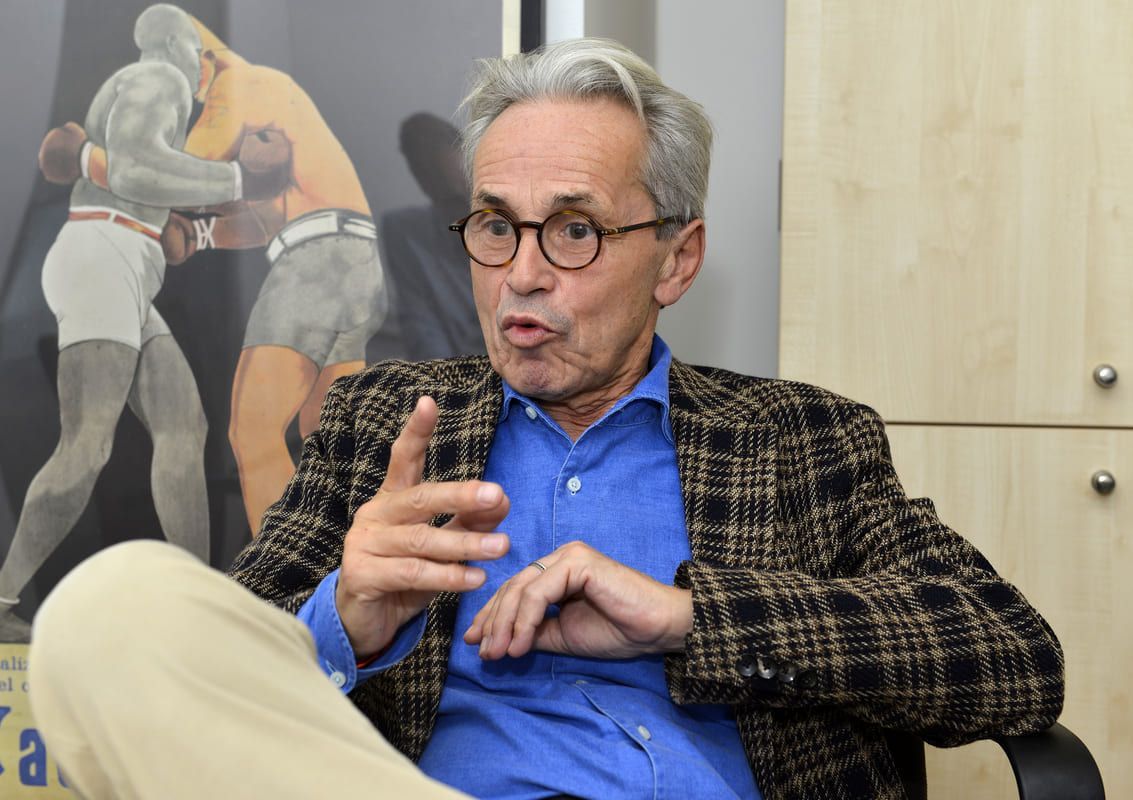
--- A Museum aimed more at the international public than at the local one?--- To both equally, I think. We have his first painting exhibited in a public room, the Harlequin from 1917, exhibited at the Art Exhibition in 1919 and donated to the city the same year. But what we have, apart from the collection itself, is above all the privilege of having the Sabartés archive (sculptor, writer and Picasso's personal secretary during the 30s in Paris), given to the city on the occasion of the museum's foundation, or the Vilató archive, or the donations from Picasso's sister, Lola, especially during the 70s. When he dies, Picasso asks a notary to make an inventory of all his work, photographed. And when in the early 60s Sabartés wants to make the donation to create the Museum, Picasso designates that it must be based in Barcelona and, above all, from the Sabartés collection. Apart from that, he later gives the city, in memory of the death of his friend Sabartés that year '68, a unique and incomparable work: the Meninas, whose complete series is unique to this museum.
--- Therefore, the Barcelona museum is not only the young Picasso.
--- Not at all. Picasso had a relationship with the city until his death, and this is reflected in this museum. Besides, this is not a museum that just exhibits works; it's a museum with a soul. When it was inaugurated, the then-mayor Porcioles invited everyone, but Picasso said it was better for authorities not to attend: it was his way of protesting the sentences handed down during the Burgos trial.
--- A very politically committed figure.
--- "You did this!", he told a Nazi when asked if he was the author of Guernica. Picasso lived off the black market then because he couldn't exhibit. He helped many people escape, gave money to many exiles from the Civil War. Among them, Salvador Dalí.
--- The museum's task is not just to conserve and exhibit, then, but to explain.
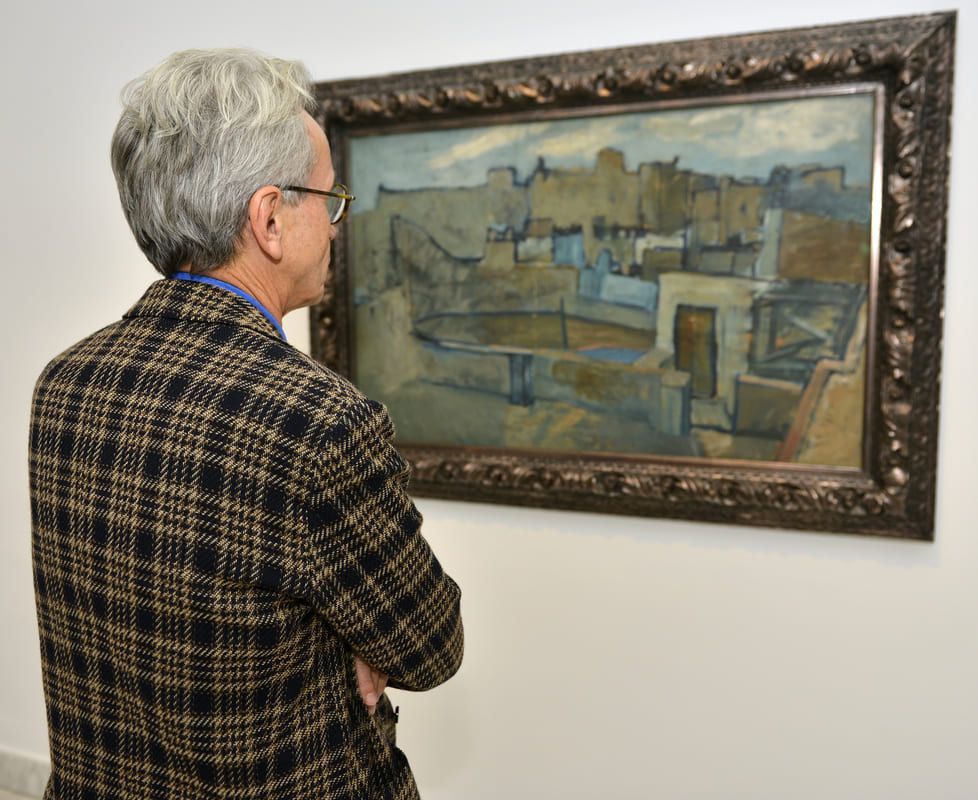
--- A museum must have a natural and meaningful project. There is a part of heritage management, conserving it, disseminating it, but we also have another part consisting of a public policy. Energizing activities, and making them for everyone, not just for experts. Right now, we are exhibiting the artist's engravings, those that Sabartés kept giving to the Museum until his death, and it is having spectacular public success. However, Barcelona must make a greater effort to communicate that the best of Picasso is found here and not elsewhere.
--- About next year.
--- Two major exhibitions: the first (scheduled for November) in collaboration with the Centre Pompidou and the MNAC (among others) on Daniel Henry Kahnweiler, a great art dealer related to Picasso during the Cubist era, a great friend of his, biographer and all, godfather of Manolo Hugué and Josep de Togores, and who also came to Barcelona a lot: in fact, thanks to him, Sala Gaspar was able to exhibit Picasso in the midst of the dictatorship. And the second major exhibition, scheduled for October 2023, an exceptional exhibition: loans of Picasso's works from all over the world, from MOMA, from Pompidou, from the family, to explain Picasso's relationship with Joan Miró.
--- Picasso and Miró. Where do they connect?
-- In '17, they meet at the Liceu. It's clear they have a different language, there's a ten-year difference, but they have many things in common: to begin with, Barcelona, obviously. And their universal Catalanism. Both helped with the costumes for the Ballets Russes and those of Monte Carlo, and both often illustrate the same poets. I would also highlight their use of the "found object," that is, taking painting as a challenge not only for the brush but also for objects found in the street. Both also reinvent ceramics, so that popular and high art are united (they have Artigas as a common friend). Both create public works (the facade of the College of Architects, Picasso; La Rambla or the airport, Miró) and urban monuments. And both have an intellectual and political commitment during the Civil War, participating in the Spanish pavilion at the 1937 Paris Universal Exhibition (where Picasso exhibited Gernika and Miró The Catalan Peasant in Revolution). We will talk about all of this in this exhibition, in collaboration, of course, with the Miró Foundation also in terms of spaces, catalog, and events.
--- Ambitious, all of it.
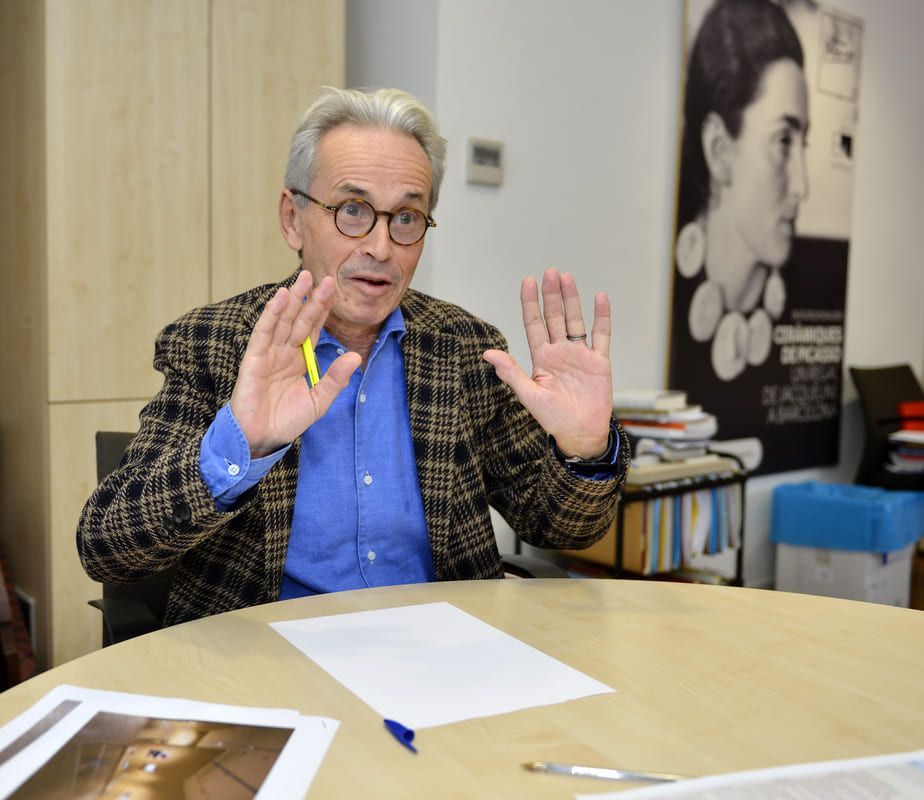
--- And more things! Between the two exhibitions, we will have several artists (Toguo, Calvo…) dialogue about exile, Africanity, post-colonialism, refugees… We will also feature the traveling exhibition by Bernard Plossu, a French photographer very influential in Spanish photography of the 70s, with all his Picasso-esque landscapes of Catalonia: Gòsol, Horta de Sant Joan, Barcelona, Cadaqués… And we will also publish, in four editions for four languages, the cartography Picasso and Barcelona. Not to mention activities at fairs, senior centers, the Grec Festival, the Jazz Festival…
--- But honestly: don't you think Barcelona has gotten stuck on Gaudí, Picasso, Miró, and Dalí?
--- Except for Gaudí, who is already an open-air museum, the vital relationship of Miró, Dalí, and Picasso is as intense with Barcelona as with Paris or North America. The Adlan Group (Friends of New Art), created by Sert, Gomis, Prats, and Sindreu, disseminates the work of the three worldwide, and Picasso, for example, presented cubist and avant-garde works. For me, Modernism represents eternal Catalonia and, at the same time, its vocation for modernity; Torres Garcia (whose first exhibition at the Museum I curated, when I was not yet director), re-situates Catalonia in new currents, and even during Francoism, Dau al Set appeared here, the informalism of Tàpies… The trend towards modernity has been constant, but what happens is that today the art world has changed a lot. The market is more international, there are foundations that sell a lot of work, the movement is there, of course. There is less here than in New York or Paris, but there is. But there is less connection between intellectuals, painters, poets, and, on the other hand, one of the main interlocutors is the market.
--- Finally: what is Picasso, still today?
--- Picasso doesn't exist: he has a thousand faces. He is an almost impressionistic painter, with his particular blue period, inventor of cubism, revolutionary of art… The 20th century is born in 1907 with the Demoiselles d'Avignon, and in '32 Picasso already has very deconstructed paintings and at the same time many classical landscapes… But he is always a Picasso! He is a very productive artist, so much so that he is uncataloguable. Besides, he was also a great poet, especially during the years of the Civil War, and author of several plays. We will publish his complete theatrical work!
--- Picasso, playwright?
--- Exactly. Not to mention that he evidently revolutionized sculpture, building through objects, cardboard, absinthe bottles… Picasso changes everything, influences Russian constructivism, but also surrealism. He learns to make wrought iron thanks to his friendship with Julio González, ends up influencing all of Europe and all of America…
--- Which Picasso do we keep?
--- None. All of them. Picasso is of such enormous richness that, yes, it is impossible not to have a view on his work.
Add The New Barcelona Post as your preferred Google source for free
Stay informed with the latest news.
