The neighborhood of Farró owes its name, like so many others, to the farmhouse that existed there in ancient times. It's one thing that there was a small Puig, or Putxet, and quite another is Can Farró at its foot, in the "cassola" of Sant Gervasi. And it is here that in a short time one of the most stimulating laboratories of Barcelona theater has sprung up. Away from the noise of the center, with a program that combines risk, proximity, and an artisanal attention to detail, Farró has managed to build an intimate, coherent, and demanding space that prioritizes quality over media noise. There are small venues that program small works; Farró, on the other hand, programs large works in a small space.
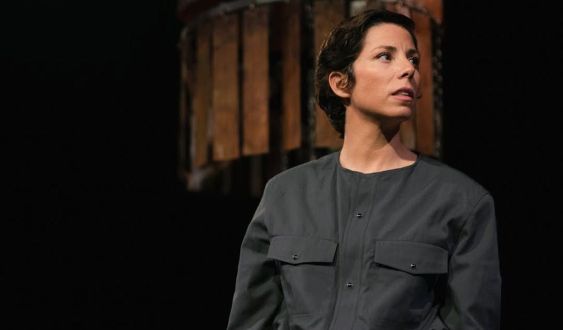
Pentesilea, directed with surgical precision and interpreted with unusual intensity, is perhaps the most refined example. We witness a tragedy that is breathed, both by the physical proximity of the audience to the actors and by the spiritual closeness of the atmosphere and the interpretation. It is not a text interpreted, but a story by the fire almost transmitted from generation to generation.
In fact, Heinrich Von Kleist's text (fierce, lyrical, contradictory, obsessive) finds here a kind of natural space that fits with Feliu Formosa's verse translation, which includes details such as making us confuse kisses with bites. The story of love and destruction between Pentesilea and Achilles is expressed with a physical force that does not need grand scenographies, but rather the human scale of the room itself creates a kind of emotional precipitation chamber.
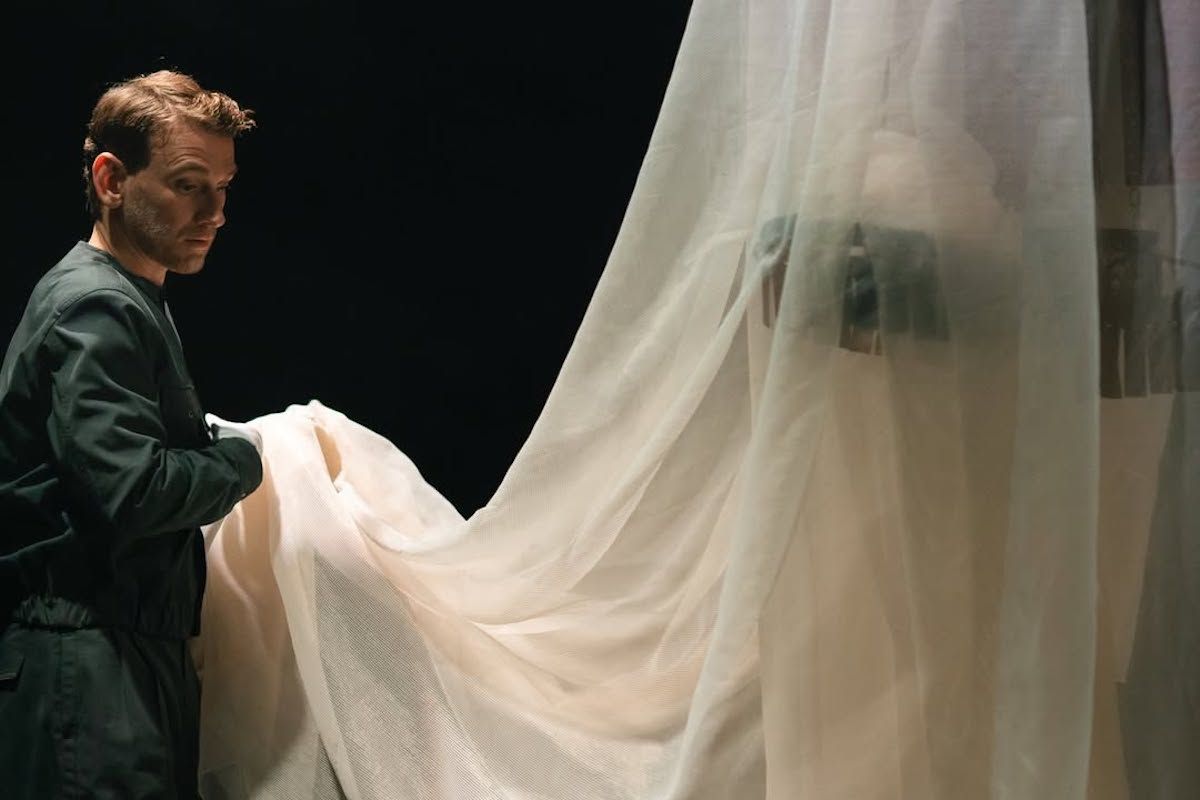
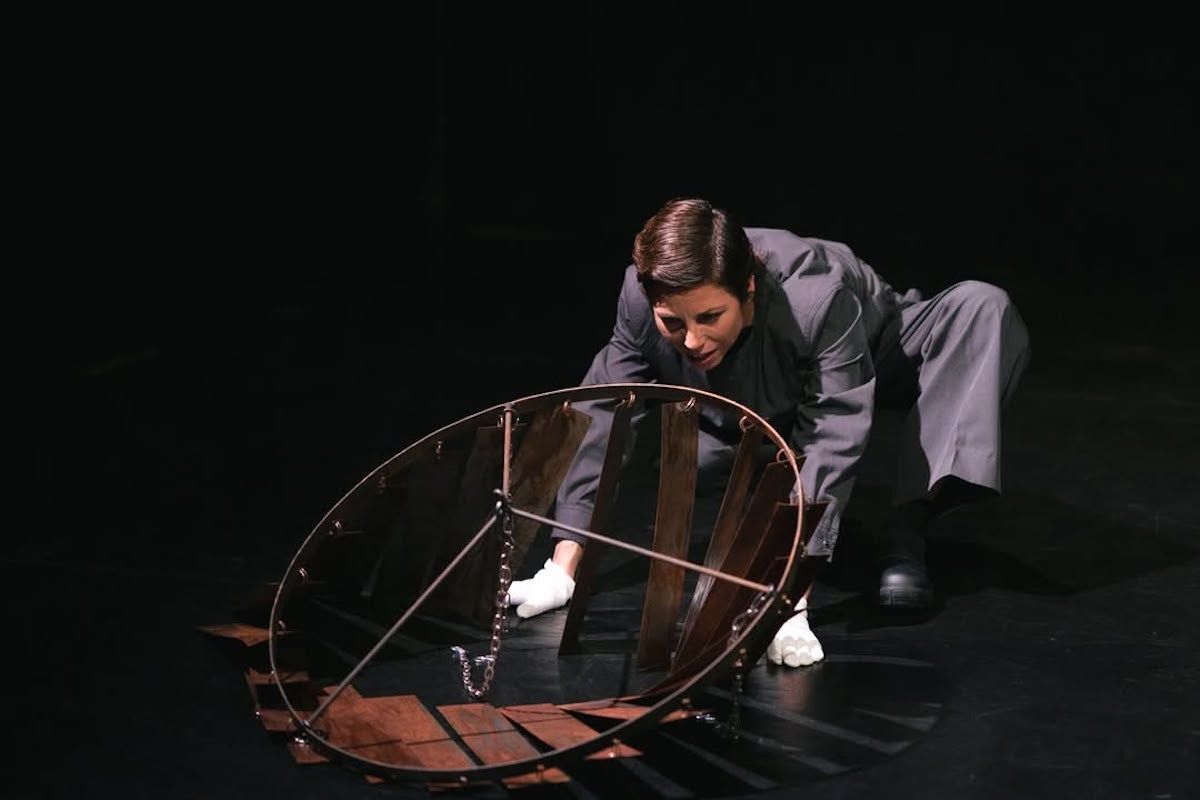
The most striking element of the production is the interpretive work: Paula Blanco and Ramón Pujol build a duel of continuous tension, an emotional combat in which every word and every pause acquires an uncomfortable and exciting dramatic weight at the same time. There is no relaxed moment, no superfluous resource, nor any missing. The text is unhurried, and perhaps for this reason the silences vibrate like well-tensioned bowstrings. The chemistry between them (destructive and fragile, but also passionate) is the backbone of the show, and it is this constant electric current that prevents the work from flagging.
The scenographic minimalism works perfectly, in fact it almost seems absent, as if nothing more than two bodies and a conflict were needed. The light, contained, delimits mental rather than physical spaces. This formal containment allows the drama to explode solely from the word and the body. The textual adaptation achieves a language that maintains the echo of the myth, but at the same time speaks with contemporary urgency. The Amazon queen and her rival, the Greek hero, are not idealized figures or distant myths: they seem like characters who descend from Putxet to Can Farró, in a serious conflict of which all the neighbors are spectators. Violence and love are confused, as always, here and on the other side of the Mediterranean.
Penthesilea, in short, more than village theater, is theater of the people in capital letters. A type of production that justifies, by itself, the existence of a space like Teatres del Farró. A monumental tragedy that demonstrates that grandiosity is not needed to make great theater, but rather a community of artists who believe in it and are willing to go all the way.
Add The New Barcelona Post as your preferred Google source for free
Stay informed with the latest news.
