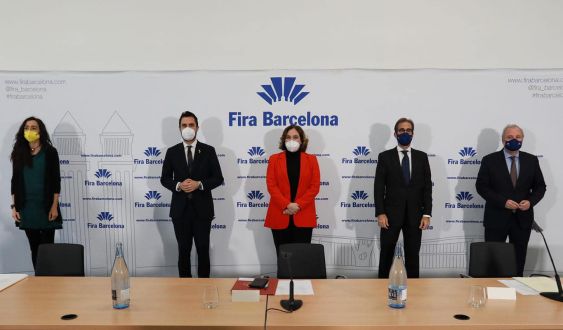
Bittersweet feeling on the part of Fira de Barcelona officials when it comes to evaluating the 2021 financial year, which will surely go down in history as the most unfavorable for the entity, with minimum revenues of 60 million euros and losses or negative EBITDA of 10 million euros. Even so, the year that is about to conclude must be valued positively for the great effort made by the fair institution to maintain its activity and continue organizing fairs despite the difficulties caused by the pandemic.
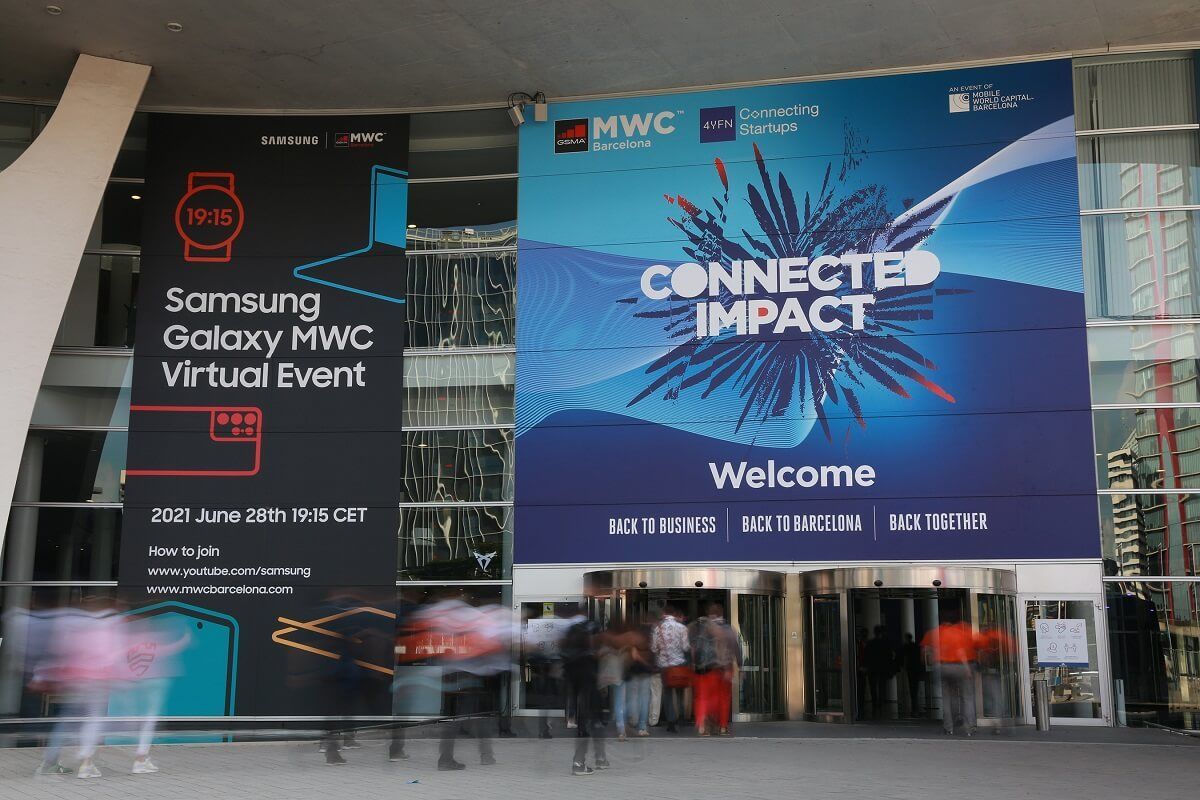
It should be remembered that fair activity was suspended until last May and it was from June when events such as the Mobile World Congress (MWC) could be organized again, albeit in a very reduced format. In September, Automobile Barcelona was held, the first exhibition open to the general public, and then other fairs such as Expoquimia, Smart City, Salón de la Piscina, Náutico, Foro Gastronómico or Caravaning would follow, totaling more than 50 in-person events.
"In this difficult context, we have prioritized our mission more than ever: to act as a key agent of economic revitalization and reactivation. Our objective is not to make profits, but to be an economic and social engine for Barcelona," emphasized this Wednesday the president of Fira de Barcelona, Pau Relat. The executive has shown himself "moderately optimistic" regarding the year 2022, which will start with a first half full of major international reference exhibitions, such as MWC, ISE, Alimentaria or Seafood, which will be held for the first time in the Catalan capital after leaving Brussels.
According to Relat, the fact that Fira de Barcelona has maintained its activity and demonstrated that fairs can continue to be held in a very adverse context and with reduced international mobility shows that the institution "has its long lights on" and that it works with a vision of the future, with the challenge of recovering at some point the 4,700 million of annual economic impact for the city.
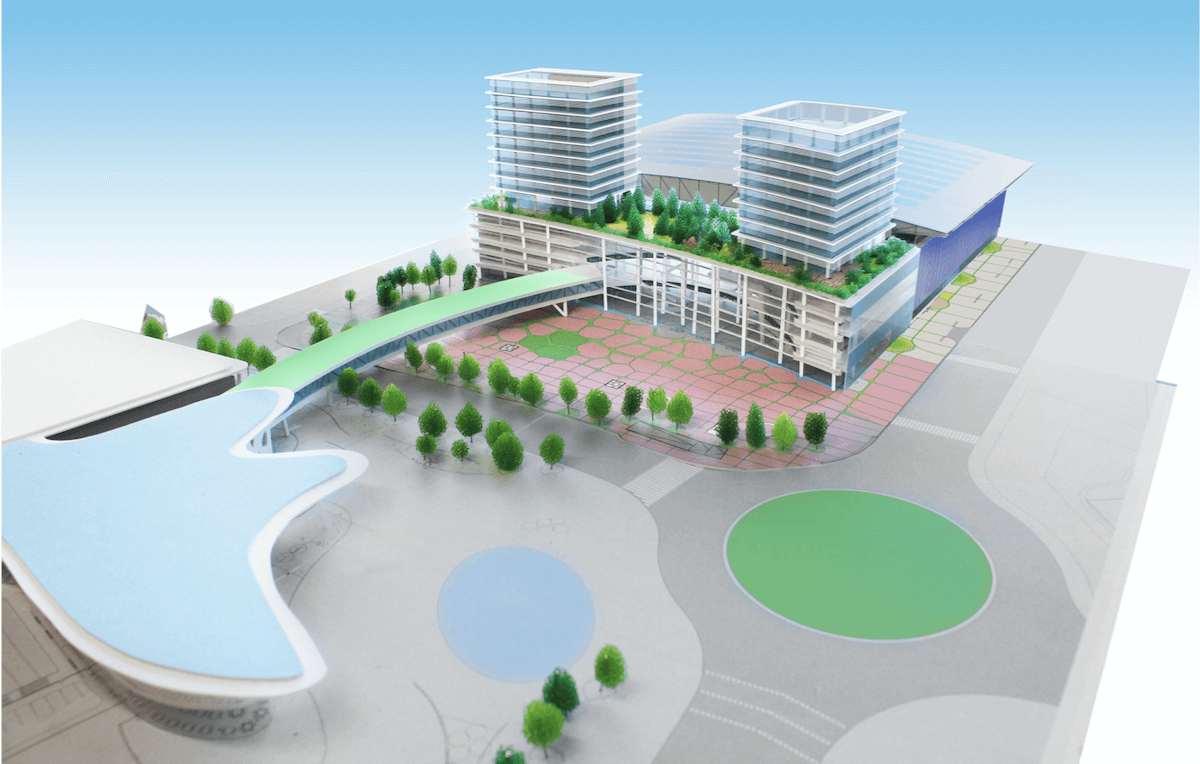
Asked whether the project to expand the Gran Via exhibition center is still going ahead, Pau Relat was very emphatic: "The expansion project remains intact; I want to reaffirm that today the expansion is more relevant and makes more sense than ever, because it will help us in the economic reactivation and in our long-term commitment," he asserted.
In this vein, the general director of Fira de Barcelona, Constantí Serrallonga, explained that they are "following the timeline" and that the expansion project already has urban planning approved, although the expropriation phase is still to be concluded. "As of today, we still cannot set a date for the start of the works," he explained.
Serrallonga admitted that the budget they made a year ago for 2021 was too "expansive" and that the harshness of the pandemic reality ended up prevailing. Thus, a turnover of 125 million was foreseen for 2021, but in the end, revenues have been less than half: 60 million euros which, according to the executive, "have more value than ever" because they are the result of a collective "colossal effort." "We have worked very hard and have shown that in this context we can organize fairs and that they are more necessary than ever," Serrallonga reflected after asking that these results not be compared with those of other years, since "it's like comparing apples and oranges."
In a normal context, the year comparable to 2021 would be 2019, a record year in the history of Fira de Barcelona, with revenues of 220 million euros. Therefore, the 2021 figure, 60 million, is almost four times lower (-72%). This figure is 27% below the 2020 turnover, which was 82 million, also far from the 2019 record.
Serrallonga is also optimistic about the 2022 forecasts, with a budget of 170 million that they aim to achieve thanks to the celebration of 130 events and the incorporation of a third exhibition venue, the Barcelona International Convention Center (CCIB), in the Forum area, which Fira de Barcelona has managed since last November by decision of the Barcelona City Council. The CCIB is expected to generate 17% of Fira de Barcelona's global turnover, with revenue generation of about 29 million euros. 80% of CCIB's activity is international.
Constantí Serrallonga: "We have worked very hard and have shown that in this context we can organize fairs and that they are more necessary than ever"Unlike what happened in 2020, this year Fira de Barcelona does not expect to receive extraordinary aid from the Barcelona City Council and the Generalitat, which contributed 10 million euros to close the year in balance. "This year we consider that this extraordinary support is not necessary and that these 10 million in losses are digestible taking into account the activity we foresee for 2022; now we have more visibility than a year ago," Serrallonga argued.
According to the general director, in 2023 Fira de Barcelona could recover pre-covid levels and once again exceed 200 million euros in turnover. "There are good expectations and we have a very important product portfolio," he stated.
Regarding the future of the urban fairground of Montjuïc, the mayor of Barcelona, Ada Colau, recalled that there is currently an open participatory process that is yielding good results. "We cannot advance anything yet, but it seems that there is broad consensus on maintaining urban fair activity, but combining it with other uses," said the mayor, who did not specify whether part of the current venue will be used for housing construction.
Colau praised "the capacity for adaptation and innovation" of the Fira de Barcelona team and thanked them for the effort made and their "capacity for resilience."
Social commitment and 2022 calendar
The president, Pau Relat, also wanted to highlight the "social commitment" demonstrated by Fira de Barcelona during the pandemic, first by making its pavilions available to house homeless people and now with the main vaccination center in Catalonia.Of the 130 events planned for 2022, some 50 will be held at the CCIB, many of them important European and global medical congresses. In parallel, at the Montjuïc and Gran Via venues, Fira de Barcelona has already planned a calendar of 80 fairs and congresses. Highlights include the MWC (at the end of February); the ISE, the world's most relevant trade show for the audiovisual industry; Alimentaria & Hostelco (May), Barcelona Wine Week, Gastronomic Forum Barcelona, Hispack, Graphispag, Smart City, IOT Solutions, Barcelona Bridal Fashion Week, Salón de la Enseñanza, Náutico, Liber, BizBarcelona, Salón del Empleo and B- Travel. Among the major congresses planned, a very significant one stands out: the European Congress of Cardiology (ESC Congress).
Add The New Barcelona Post as your preferred Google source for free
Stay informed with the latest news.
