
"We were in the midst of a crisis and I thought I could quickly meet the Foundation's objectives. It was a big blow, I realized that you can't ask for money in exchange for nothing tangible"---A goal for a lifetime.We had a very direct relationship with Chantal Cruyff, who was then director of the Foundation. The differentiating factor of a bank is its dealings with people. Chantal invited me to theOpen Dayand he proposed that I work on fundraising for the Foundation.---Did you like football?---At home, we were Barça fans and I had always liked football. Johan Cruyff was Johan Cruyff. Before, working in a bank was a life insurance, today young people change jobs a lot. At home, we were very much about finding a good job, making a career, and earning a good salary. A good friend suggested I take a leave of absence.---In the summer of 2009, she began working at the Johan Cruyff Foundation.We were in the midst of a crisis and I thought I could quickly meet the Foundation's objectives. It was a big blow, I realized that you can't ask for money in exchange for nothing tangible. We had a very powerful name that overshadowed the project.---The name does not make the thing... Or it does.Nobody knew what the Cruyff Foundation was or what it did. It will soon be eight years since Johan died and the Foundation awakened an interest that until then had been more football-related than social.---Let's talk about leadership.It seems that those of us in the third sector are the good guys and those in the business world are the bad guys. This is not the case. Each one has a purpose and a mission. The mission of the third sector is to try to make a better world, to understand the shortcomings of society and, in our case, to help young people through sport.---Mission: to help.Not everyone has to do it. There is a misunderstanding in thinking that large companies with profits or people with a lot of money should give it back to society. This is a very fashionable phrase.
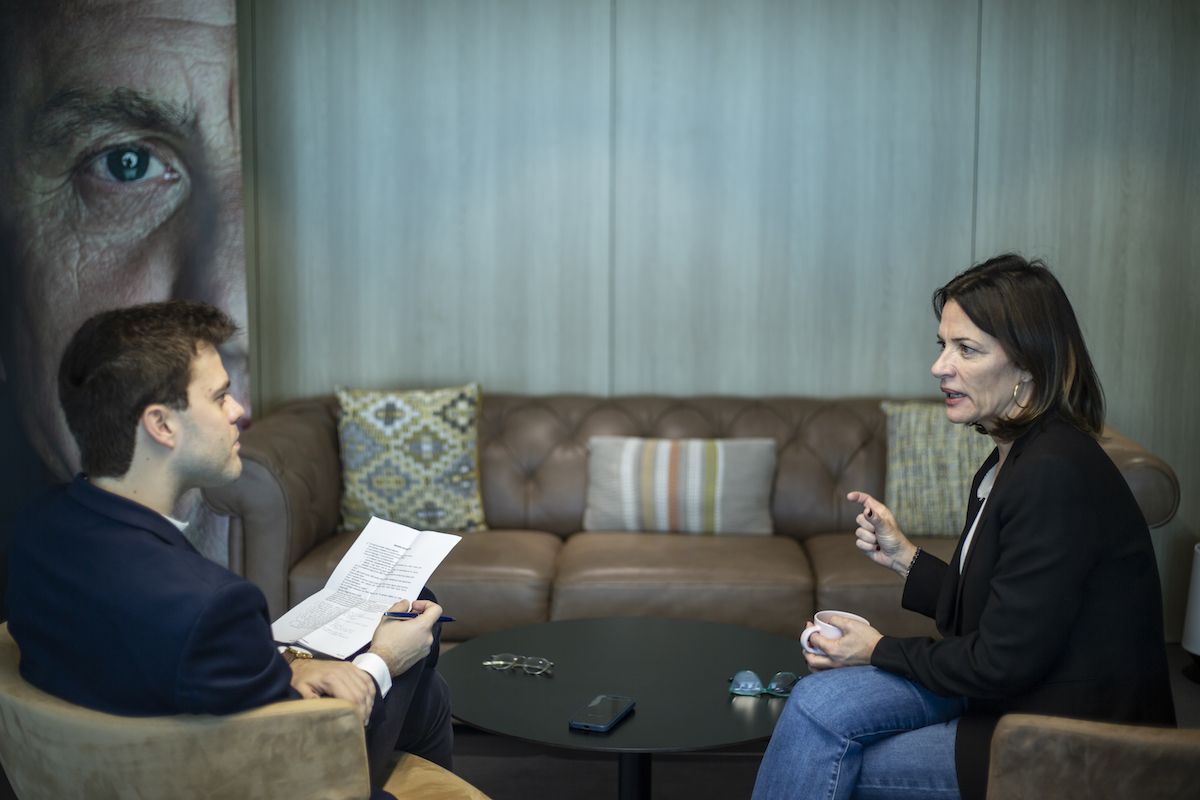
"Johan managed to make the most complicated things easy with a few words. You would leave a meeting with him wanting to conquer the world"---The Cruyff method.Making the complicated easy with few words. Johan was a very advanced man in everything, but he never told you what you had to do. You would leave a meeting with him wanting to conquer the world. Everything changed when he died.---Coach on and off the field.Everyone who has a family member with a disability knows the Cruyff Foundation because we are a benchmark in adapted sports. Anyone who had a problem would tell Johan, and he would ask us to help them. After a few days, he would come back and follow up on how the matter was progressing.---Give me a concrete case.I remember the case of a Colombian man who had lost his job during the real estate crisis and asked Johan if he could buy him a plane ticket to return to his country and be with his family. We checked that he was notfakeand we bought him a ticket to Colombia.---The small details make the big difference.Danny and Johan asked me to look for group homes and orphanages at Christmas. They didn't just buy necessities like sheets or beds, but brought toys with the names of each boy and girl. They separated the gift from the basic need.---The Cruyff Foundation was created on April 25, 1997.When Johan created the Foundation it was not by chance, but because he had the values of helping others. He has done so all his life. Susila Cruyff ---the middle daughter--- often recalls that they spent many Christmases distributing food in soup kitchens.---The Cruyff Foundation as a result of Johan's most charitable philosophy.---Exactly. In fact, Johan decided to create his Foundation when he lived in the United States and had a neighbor who was a child with Down syndrome. He took him to the Washington Diplomats' training and the child returned to his neighborhood as a hero. Johan had a close relationship and collaborated with the Kennedy family, who organized the Special Olympics.
"Johan was charisma, vision, sincerity, and inner peace. His non-verbal communication was much better than his verbal language. He created empathy to make people understand that one must do good"---A very powerful relationship.He wanted everyone to have the same opportunities to play sports and understood that barriers were more a matter of adults than children. He created the Foundation in Barcelona to give structure to his values.---Let's go back to that precise moment.I had a great friendship with Jaume Roures, who often explains that one of the happiest moments in Johan's life was when he created his Foundation in Barcelona. He gave 6 million pesetas (approximately 36,000 euros) "in exchange for nothing." And that made him very happy.---The rest is history.Finding a sponsor with Johan was easy. He was charisma, vision, sincerity, and inner peace. He owed nothing to anyone and felt he simply had to do it. His non-verbal communication was much better than his verbal language. [Laughs].---"If I had wanted you to understand me, I would have explained myself much better."He created empathy to make people understand that good must be done. Like an angel with very positive energy. I never saw Johan faint, not even with cancer. I remember one day he was coming from a test at Teknon and they had just found a tumor in his spine. He told me it was good because they had already found it and, therefore, they already knew how to attack it. He turned everything around.
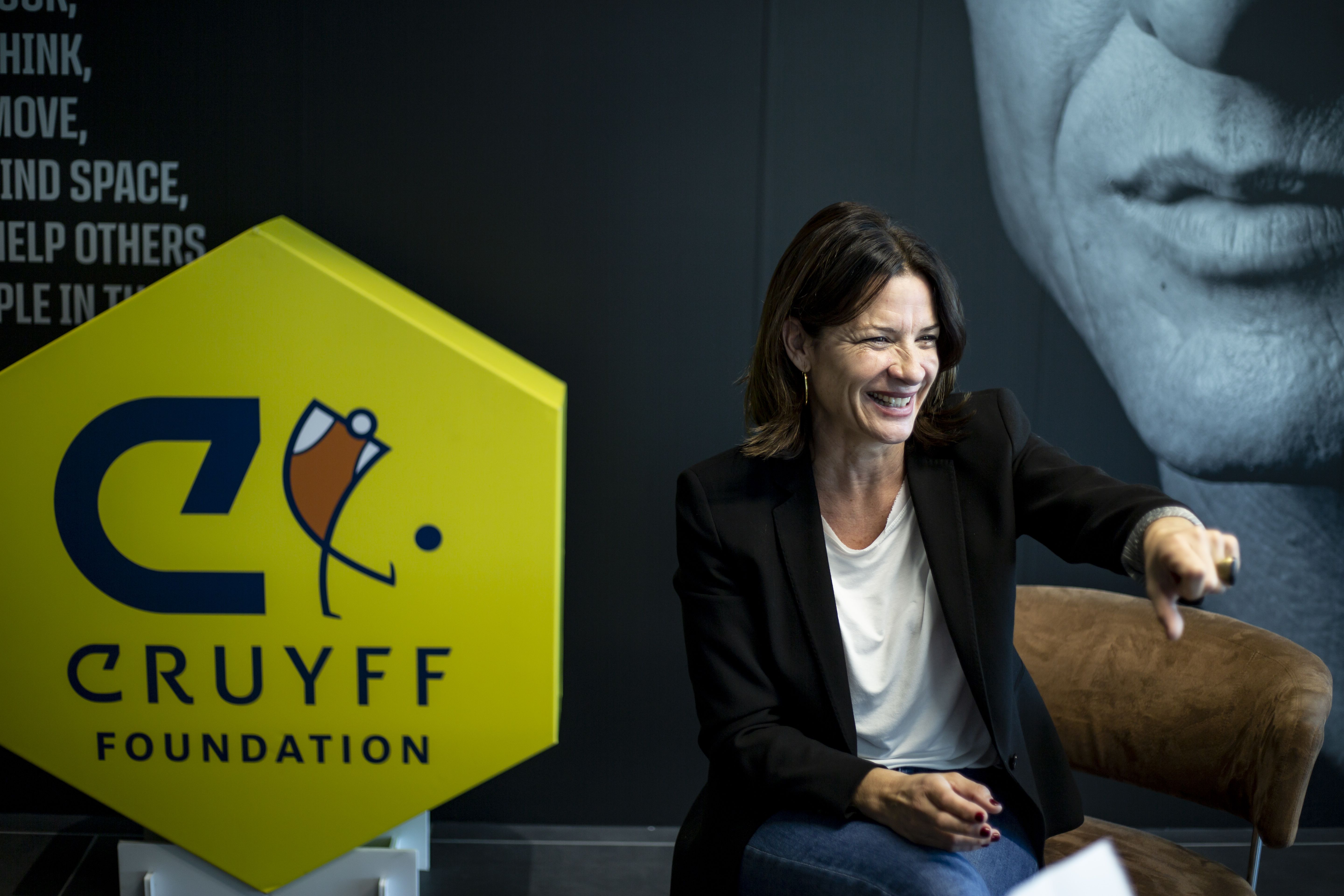
"The mission of the third sector is to try to make a better world, to understand the shortcomings of society and, in our case, to help young people through sport"---How is the business model?We have an agreement with the Public Administration, that is, the Generalitat, the City Councils and the Provincial Councils. However, our major sponsorships come from private companies that have a larger budget. We create alliances with sports entities to ensure that a child with functional diversity has the opportunity to play sports like any other.---It must not be easy...---There is a lack of supply, especially if we move a little away from the metropolitan area. We want to normalize and regularize that all these children can carry out their adapted extracurricular activities. Unfortunately, not all activities can be inclusive and the world is not wonderful. However, we have managed to ensure that 200,000 boys and girls have had the opportunity and space for sports.---The Heart of the Foundation: "Alone we cannot do it, we have to do it together."Johan played as a child in the street and saw that there were fewer and fewer spaces to play. He was an orphan at 12 years old, his mother cleaned the Ajax facilities and he played there. From there comes theCruyff Courtand the opportunity to have a safe space to play when leaving school.---And the other pillar of the Foundation?We work with two pillars: social transformation and the inclusion of disadvantaged children, and normalizing sports for children with functional diversity. That is, theCruyff Courtsand adapted sports projects. This way everyone can try which sport suits them best according to their personality or ability.
"The reality of the two offices in Barcelona and Amsterdam and of who Johan Cruyff is in each country is totally different"---The pandemic was a sudden stop.Everything stopped with the children at home and us not making more fields… We recovered Johan's mentality, always positive, and gave more visibility to theCruyff CourtsWe started looking for sponsorships to give continuity to the project. The pandemic allowed us to stop, decide, and work more on the training of young people and the needs of each locality.---"Every disadvantage has its advantage."We also created the adapted sport project of kilometer zero to leave the Metropolitan Area and reach where there are not so many opportunities. We dedicated ourselves to structuring ourselves, to making an alliance with the Pep Guardiola Foundation and abusiness planfor each project.---I suppose it won't be the same in Barcelona as in Amsterdam.The budget for the Barcelona and Amsterdam offices is one and a half million and seven million euros, respectively. The reality of the two offices and of who Johan Cruyff is in each country is totally different. The cultural and economic situation is also different. The luck we have here is being able to create alliances and shake hands. We have manysponsors in-kindwith services and products.---For example?We have sign-written cars and they are a concession. We don't pay for premises and the office is also a concession. TheOpen Dayit is a big party in which almost a thousand children with disabilities participate, spending a day of leisure doing sports in Mar Bella, Barcelona. Everyone cries with happiness and it's all smiles. Children have their reality which is not ours and live with their condition. There is an energy that makes it seem like Johan is still alive. An experience like this is worth more than any management program.
"Johan has helped a lot with people's mentality, especially in being brave and not being afraid. He crosses borders with a country and victory mentality"---David Carabén (Mishima) says that "Barça is full of heroes and stars."They live things that others have not experienced. I see many parents take their children to the Barça school and the expectations are very high, but only 0.01% reach the top. However, whoever reaches it has a talent or a capacity that the average citizen does not have.---For example?Fernando Torres, for his way of speaking and delving into his origins: "If you have a dream, you have to pursue it, but without getting lost along the way." The vast majority of footballers come from a middle or low socioeconomic situation, especially those who are from outside. Iker Casillas, Ander Herrera, and Artiz Aduritz are also phenomena. All of them have surprised me in a positive way.---Why?They are elite athletes and it's no coincidence. And then there's also the famous environment that Johan always talked about and which is very important. They earn astronomical amounts and the real world is not like that. The difficult thing is for them to reach forty years old with their feet on the ground. Sport gives you discipline, teamwork... Life experience helps you be who you are.---What is Johan Cruyff's legacy?Those of us who lived it day by day demystified the person. His impact on society surprised us a lot. People get emotional talking about Johan and maybe they had only met him once or shaken his hand. His legacy goes, of course, much further than football and his Foundation. Johan has helped a lot in people's mentality. Do you want to do something?---Do you want to do something? Do it.Johan has helped us to be brave and not to be afraid. His is a fearless legacy. Johan flew instead of walking because nothing weighed him down. Johan is a before and after in the lives of many people. He is a benchmark and an icon.---What did Cruyff do for Barça, Barcelona, and Catalonia?It changed the mentality of the member, of the Barcelona fan, of the Catalan and of Catalonia. He came to Catalonia during the dictatorship when Franco had not yet died. Johan was a rebel who named his son Jordi. He projected Catalonia to the world. During the procés, they asked us what Johan thought.
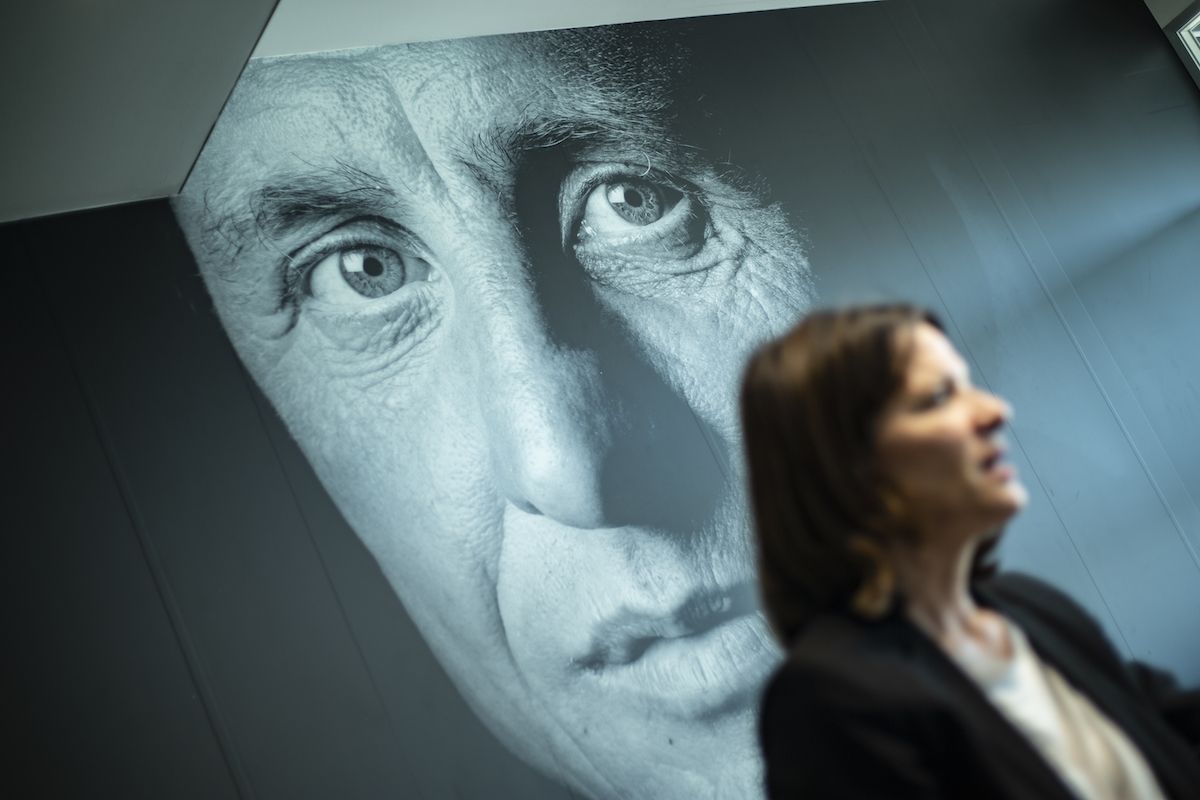
"To do a solidarity action, you don't have to donate money to an NGO, you just have to help your neighbors"---Joan Laporta says that "Johan's legacy is three-dimensional. He made us winners through generosity. He has a social, supportive, and humanist legacy. He created a current of thought both in football and in life."The people cried, and some had never even seen him. Johan has had an influence on us because of his way of being, doing, and speaking. I really like reading the comments on his videos that circulate on social media, and everyone speaks well of him. Messi is the best player in history, but Johan transcends the borders of sport with a mentality of country and victory.---The previous interviewee, Ada Parellada, asks you the following questions: Should the economic and resource contribution to the third sector be exclusively from the Public Administration, or is it important for individuals and companies to be the guarantors that everyone has the same opportunities regardless of income, education, or social situation?It is everyone's responsibility as a society because you never know what can happen. Public administrations have the obligation to help this niche of society, but in general, this makes us better people. To take action, it is not necessary to donate money to an NGO; it is only necessary to help neighbors. We can all do things to build a better world. I care about the comfort of my home, my neighborhood, my city... It's the onion effect.---The onion effect?We are very dehumanized. The public administration has the duty and society must think about how it can help. Are there no economic resources? It doesn't matter, but let's go back to the origins and think about others. How to help?---What values do we learn and apply when we contribute to the social well-being of all people in our environment? That is, do we give back what we receive?It is a natural learning for those who come. Values improve a society. Children should be taught the nature of helping others. You are not special for helping, but you must do it. A positive mindset of global collaboration. Values contribute to a better society.
SEVEN OF LIFE
- Role Model: Johan Cruyff.
- Book: The Little Prince by Saint Exupery.
- Movie: A Few Good Men by Rob Reiner.
- Song: El meu país by Lluis Llach.
- Favorite Spot: Sant Jeroni in Montserrat.
- Life Motto: "Alone we cannot do it, we must do it together."
- Dream: To be a mother. I have two children.
Add The New Barcelona Post as your preferred Google source for free
Stay informed with the latest news.
