
Not a single painting or sculpture by Picasso directly dedicated to Miró. Conversely, I have counted at least eight. Seeing this imbalance of attitudes has nothing to do with a greater friendship of one towards the other, or less of an imbalance of fascinations, but it does make one think about the idea of friendship that both must have had. Rather, it makes one think about how the way of managing friendship portrays personalities with a precision that is anything but abstract.
It reminded me of the cosmic difference between the friendship (more than friendship) that Lorca felt and exercised towards Dalí compared to its return in reverse: Dalí was clearly fascinated by Lorca, but he had much more fascination for himself or much more haste to be a giant, a colossus so golden, hyperbolic and unattainable that it was difficult to fit into mechanisms as human as friendship: friendship is egalitarian, democratic, free and almost socialist, while Dalí was too angelic to be human, too much a believer in individual monarchy to be a democrat, too concerned with the world's debt to him and with an ego too comparable to Picasso's to be socialist or communist. That is: Miró was a good friend, Picasso was not either.
Orson Welles portrayed them, unknowingly, in the famous interview where he differentiates between those artists who put art above all else, who would be the examples of Dalí or Picasso, for example, from those artists who put friendship above all else. Which would be the case of Miró or Lorca, and surely that is why they are more vulnerable, that is, stronger.
The creation that emerges from this exhibition is a duel of virtuosos waiting downstairs, having a drink, dirty with paint, while we still try to catch them.The exhibition ofMiró-Picassoof the Picasso Museum is above all an exhibition of characters, of two personalities, two cosmogonies not antagonistic (not at all) but rather opposing, which show more than ever, with unique and exceptional clarity, the different gaze we already knew they had. You see them dialoguing in the infinity of rooms that have been arranged,a truly essential and unrepeatable tour that no one should miss because it will be once in a lifetime, and you can imagine Joan's eyes giving away the entire Universe to Pablo, as he also gave it back to the entire Universe, while Pablo responded with a more masturbatory tone, more self-satisfied, more in need of leaving his mark, look what I can do.
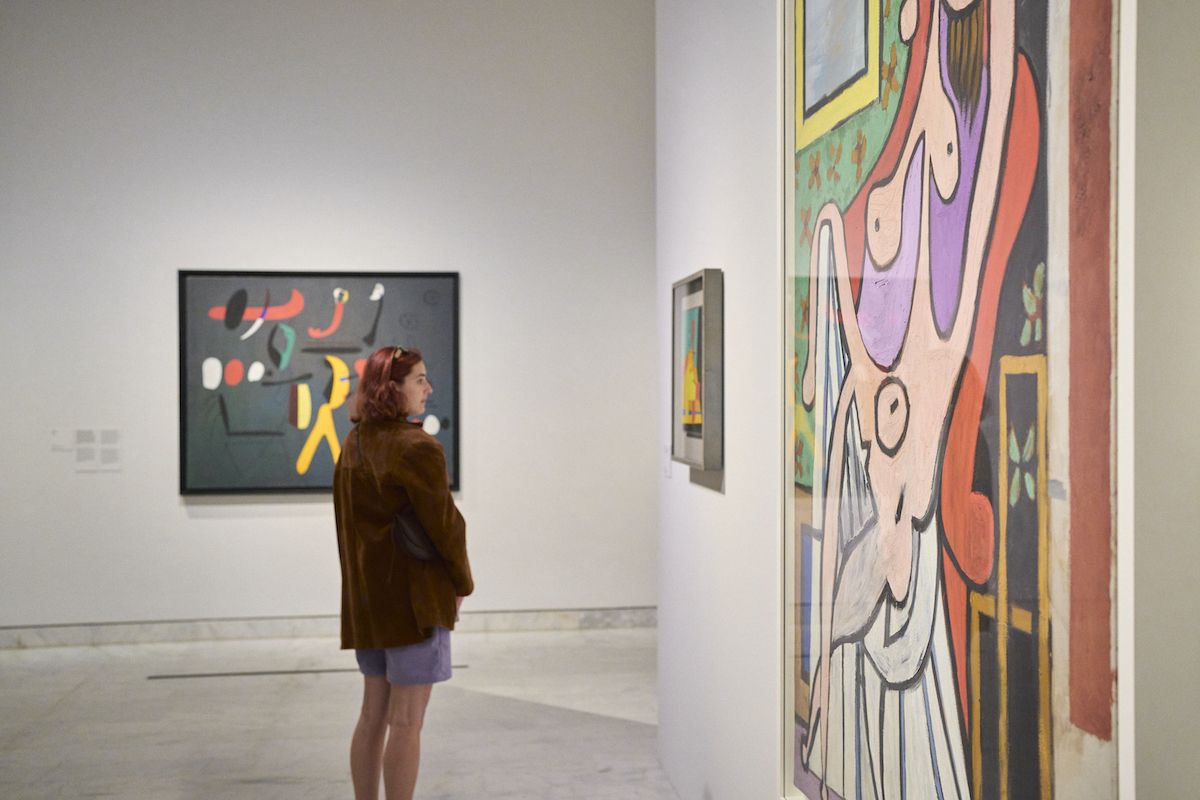
They love each other, that's clear. And they live together, and they respect each other, and they influence each other. The similarities between some works are indeed surprising, as in the parallel arrangement of Picasso's Large Nude in a Red Armchair and Miró's Flame in Space and Nude Woman, because they show how from time to time two brushes can involuntarily touch like two boxers in the locker room. Especially when they live together so much and when the works are from such close dates, the atmosphere of the early 30s where everything seemed as possible as painting these two works so similar and so different, and both so groundbreaking.
Picasso breaks with everything, Miró breaks with everything and nothing, and between the two, united by Paris and Barcelona, they break the idea of reality. "I don't paint anything I haven't seen," Picasso says in a revolutionary way, and Miró doesn't paint anything he hasn't created before. Copying a tree is the opposite of painting reality, certainly, and neither of them paints to be understood but to progress. They both tell us at the same time that, when we observe them, we should also create. And seeing them today, in this exhibition in Barcelona, the creation that emerges is a true duel of virtuosos who wait downstairs, having a drink, dirty with paint, while we still try to catch them.
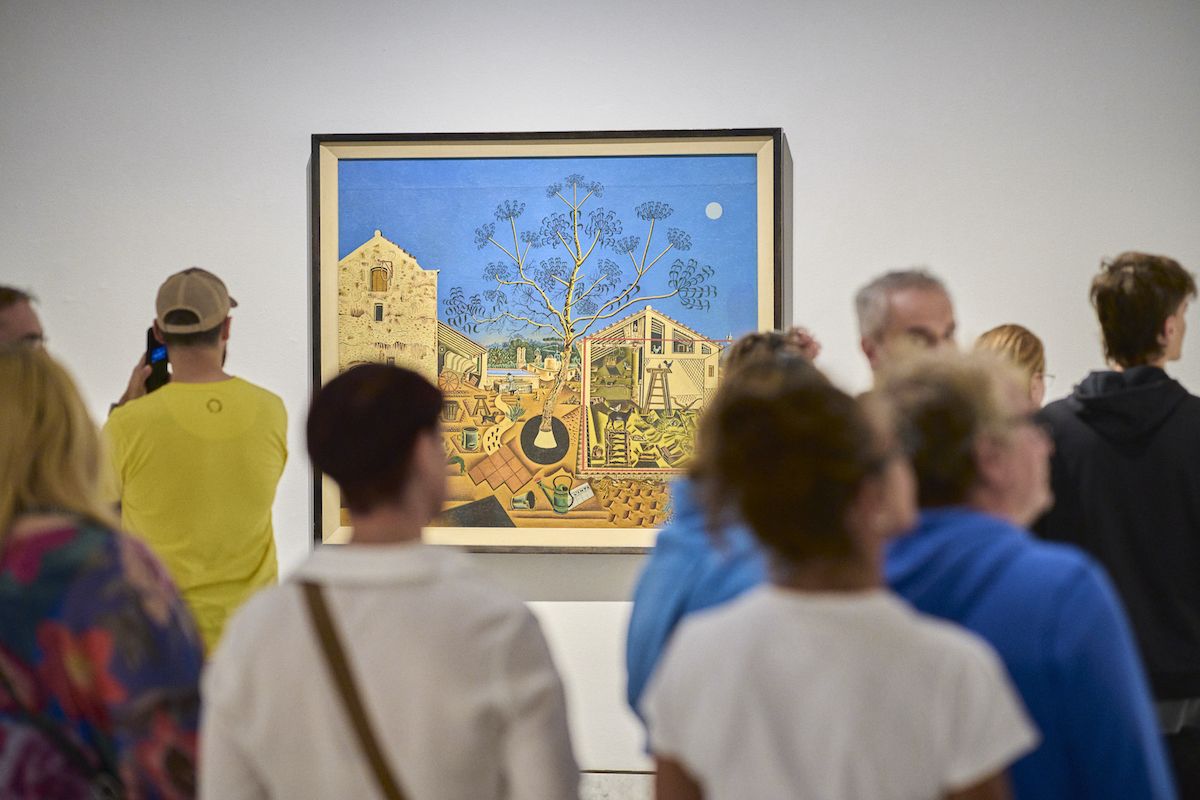
At the beginning of everything, Miró's La Masia. The iconic painting that we never get to see, the one that Joan said summarized the whole world around him, and that Hemingway bought in Paris (before Picasso took it to the bullfights in Pamplona). This is the summary of Miró's temperament, leaving nothing out, creating works that explain everything, that look from above and upwards (hence why he deserves to have the airport named after him). Picasso's temperament, on the other hand, is dry, tense, more focused on forcing a judo hold on reality than on looking at it from afar. As he himself said: "If you want to discover what an artist is like, have him draw a perfect circle. The circle will not be perfect, but we will be able to know his personality and his temperament." Miró and Picasso, two imperfect circles fitted into a single portrait, in a work, in a single exhibition.
One might say that Barcelona still clings too much to these two myths, that it doesn't move beyond them, also as if in a circle of nostalgia and outdated avant-garde. Perhaps so. But perhaps it is our, also imperfect, way of drawing a circle. Our temperament. It's not about shying away from the circle: it's about not making it smaller. Exactly what these two perfect friends and imperfect temperaments managed to do, at the same time.
Add The New Barcelona Post as your preferred Google source for free
Stay informed with the latest news.
