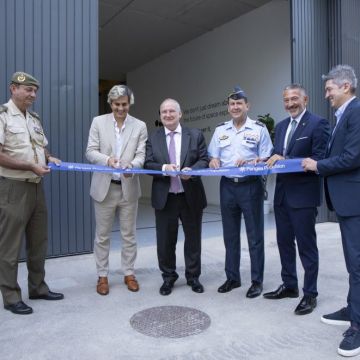
The Catalan space ecosystem takes a new leap in scale. Open Cosmos, a space company founded in Barcelona in 2015 by Rafel Jordà, has raised 300 million euros in one of the largest funding rounds in recent years by a company emerged from the Barcelona technological ecosystem. Although the company's current corporate headquarters are, in fact, in the United Kingdom, Barcelona continues to be one of Open Cosmos's main industrial centers, with a large plant where it develops, manufactures, and integrates satellites. For this reason, the magnitude of the round not only gives the company muscle to expand its manufacturing capacity and grow internationally, but also reinforces the role of space as one of the emerging sectors of the Catalan economy.
For decades, space activity was dominated by governments, large agencies, and scientific missions. In recent years, however, satellites have ceased to be merely tools for exploring space and have become a key economic infrastructure. Satellites are already essential for the functioning of many economic activities: their networks enable communications, navigation, and Earth observation, and provide data used by companies and administrations to make decisions in strategic sectors such as agriculture, energy, defense, and emergency management.
It is in this new context that Open Cosmos wants to go a step further than satellite manufacturing. With four production plants in Europe —in Barcelona, the United Kingdom, Portugal, and Greece—, the company already has the capacity to manufacture up to one satellite a day. Now it wants to leverage this capacity to manufacture and put large groups of satellites —the so-called constellations— into orbit and, from there, offer Earth observation, connectivity, and communications services.
To make this possible, the company needs to gain scale and, for this reason, the new capital injection will allow it to expand manufacturing capacity and accelerate the development of new constellations. An expansion that, according to its founder and CEO, the Mallorcan Rafel Jordà, also responds to a broader need. "Europe needs to strengthen its technological and spatial sovereignty, and Spain must play a leading role in this challenge," he pointed out, considering that the investment will allow Spain to consolidate itself as "one of the main poles of innovation and space manufacturing on the continent."
The dimension of the round, moreover, can not only be observed in the 300 million euros raised —which make it one of the great mega-rounds of the Catalan ecosystem in recent years—, but also in the investors who have decided to enter. The operation has attracted European and international capital, with the participation of firms such as Lightrock and ETF Partners, two important international pension funds and the Catalan Institute of Finance (ICF). Investors such as A&G Global Investors, Santander Alternative Investments, Trill Impact, Phoenix Court —home to LocalGlobe and Latitude— and the National Security Strategic Investment Fund (NSSIF), among others, have also entered.
The combination of financial investors, public capital and funds specialized in technology and infrastructure gives a clue about the scale that Open Cosmos' business is acquiring: it is no longer just about financing the development of a space company, but about putting capital into an infrastructure that aspires to play a relevant role in the new European space economy.
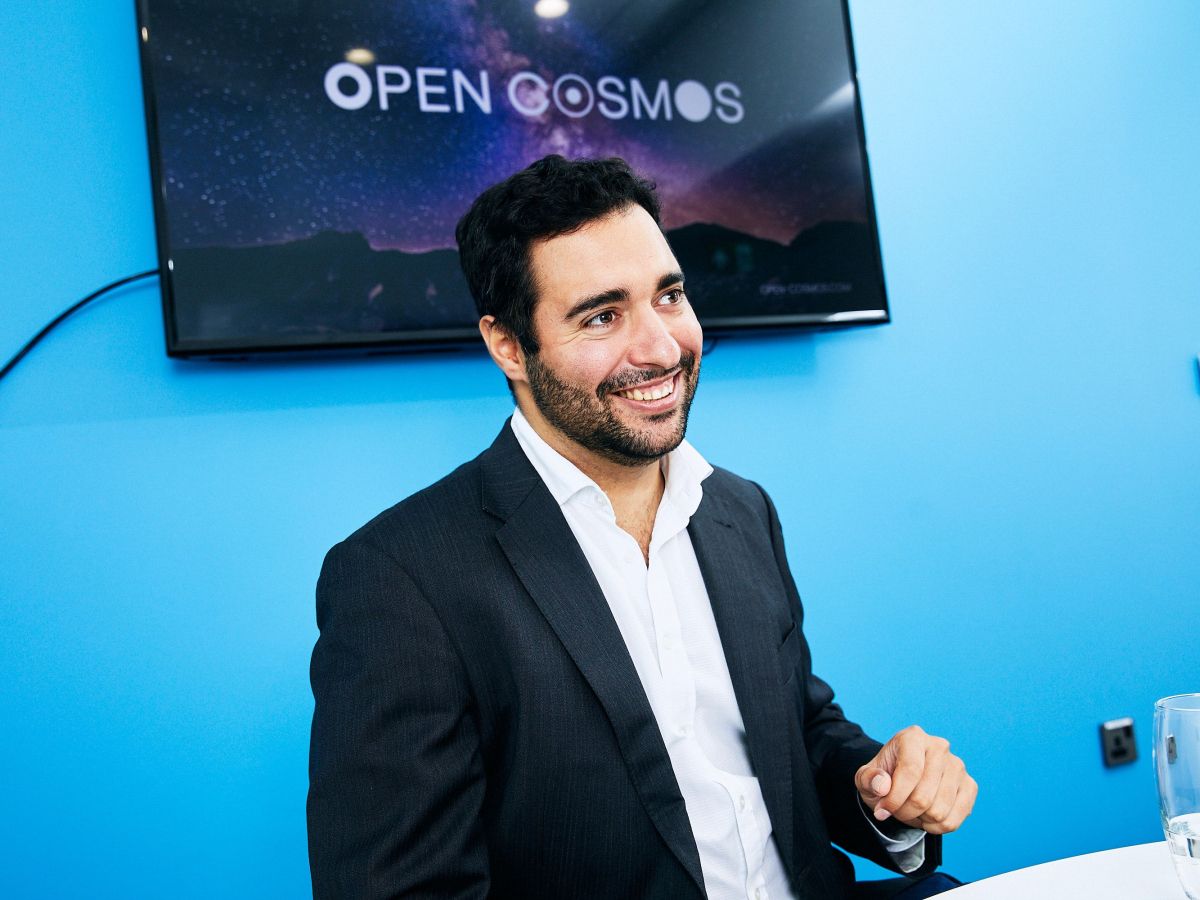
Observe, connect and convert data from space into information on Earth
To understand what Open Cosmos does exactly, beyond manufacturing satellites, it is necessary to understand what happens once they reach space. The company's model combines three elements: observing the Earth, transmitting the information obtained by the satellites, and converting this data into useful information for decision-making.
This is the logic behind OpenConstellation, the company's Earth observation satellite network. The goal is to have several satellites working together to obtain images and data of the planet more frequently and quickly. Part of this information, moreover, can be processed directly in orbit, so there is no need to wait for all the data to reach the ground to start analyzing it.
For this information to be truly useful, however, it must be possible to transmit it. This is where ConnectedCosmos comes in, the company's communications infrastructure, designed to connect satellites with Earth and ensure secure and resilient communications. The system takes on special importance in areas where terrestrial networks do not reach or in situations where these infrastructures may be affected.
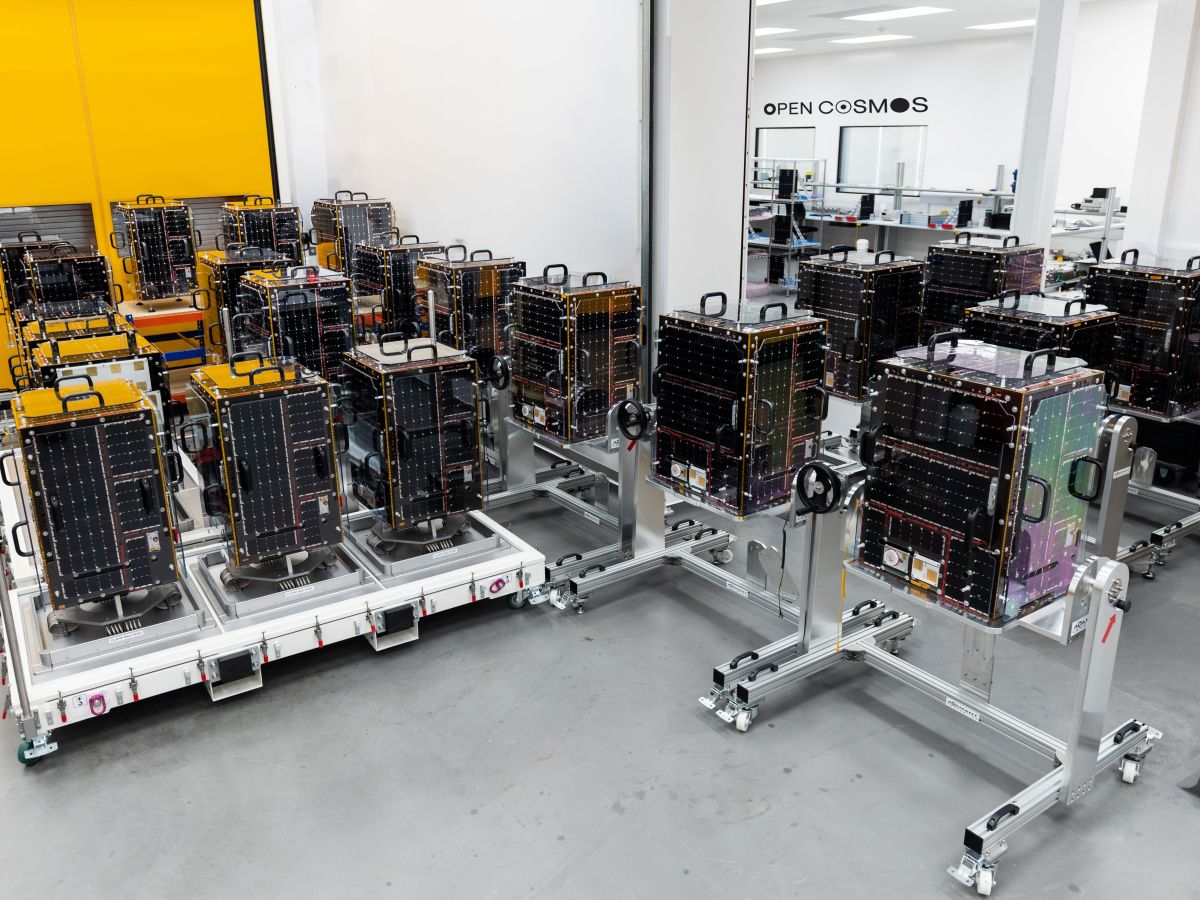
The company's third piece is DataCosmos, which seeks to give utility to all this information. Instead of merely offering images captured from space, the company wants to analyze them and convert them into indicators that allow knowing what is happening on the ground. An example is the detection of a possible forest fire. A satellite can identify an anomalous temperature increase, process this information, and transmit an alert to emergency services.
This triple model already has a commercial translation. According to the company, Open Cosmos has signed new contracts worth about 320 million euros over the last three and a half years. The new capital injection is precisely intended to scale this triple model: manufacture more satellites, deploy new constellations, and expand connectivity and data processing capabilities.
The challenge of growing the Catalan space industry
The growth of Open Cosmos has also occurred in parallel with the consolidation of a Catalan space ecosystem that has gained dimension in recent years. Around space, a business fabric has been built that includes the design and manufacture of satellites, communications, sensors, Earth observation, and data processing. So much so that Catalonia already concentrates 83 companies dedicated to space technologies —more than triple that in 2019— which collectively invoice 237 million euros.
The challenge for these companies, however, is now to make the leap in scale: grow, increase their industrial capacity, and achieve enough dimension to compete in the international market, dominated by powers such as the United States or China. Open Cosmos is precisely one of the companies that is trying to make this leap and gain weight in this new space industry. Founded in Barcelona in 2015, the company maintains significant industrial activity in the city and contributes to strengthening the Catalan space ecosystem.

The company, for example, was responsible for manufacturing and putting Menut, the first nanosatellite of the Generalitat, into orbit, and currently participates in projects such as 6GStarLab, developed together with i2CAT to research the integration of satellite communications with future 5G and 6G networks. Its activity, however, already goes beyond Catalonia. Open Cosmos leads the Spanish Atlantic Constellation, an Earth observation project that will deploy a network of satellites to obtain data on the territory and use them in fields such as agriculture, environmental management, or emergencies.
Add The New Barcelona Post as your preferred Google source for free
Stay informed with the latest news.