Spanish consumers are becoming aware of the need to preserve the planet, and a change in mentality has been generated as a result of the pandemic, but they are still reluctant to assume the costs derived from improving sustainability. This trend extends to the market in general and, specifically, to online purchases. According to the first Veepee-IESE study on The future of e-commerce in Spain, only one in three (36%) online shoppers is willing to assume the price increase that accompanies sustainable products and their distribution under criteria of respect for the environment.
The aforementioned report determines that this third of consumers predisposed to pay more, would in no case accept increases greater than 30% over the original value of the purchased items. And the percentage of users who would spend up to 50% of surcharge is reduced to 0.4%.
The problem of so-called green costs is one of the trends registered in the e-commerce sector and which determines part of the commercial policy of brands. "We must assume that one hundred percent sustainability is very difficult to achieve and companies have to be very responsible and scrupulous when using this term," said the general director of Veepee in Spain, Albert Serrano, who defends that brands carry out initiatives related to reducing their carbon footprint in favor of sustainability.
Serrano believes that technological advances will contribute in all sectors of the economy to reduce environmental impacts by producing in a different and more sustainable way and at the same time reducing the costs derived from it.
The head of Veepee also highlights that consumers prioritize multi-brand platforms, flexible deliveries, and simplified payments when making their online purchases and that they are increasingly demanding with the agility of the purchase and the protection of their data. According to the study, 62% of users show their concern about the security of their data on the network.
Regarding purchases on multi-brand platforms (marketplaces), the trend is to increase because 80% of customers seek the widest offer at a very competitive price. "For this reason," explains Serrano, "the profitability of brands is given by a large volume of sales or by specialization as formulas to achieve the necessary commercial margin." Respondents also consider it important to be able to buy products from different categories at the same time (49%), as well as the ease of comparison (48%).
The consumer prioritizes multi-brand platforms, flexible deliveries, and simplified payments when making online purchasesIn Spain, one in four digital consumers—regardless of age—already shops once a week, and 40% do so at least once a month. This growth and consolidation of ecommercehas been driven, in part, by the pandemic, as six out of ten online consumers confirm that they have increased their purchases in the last year.
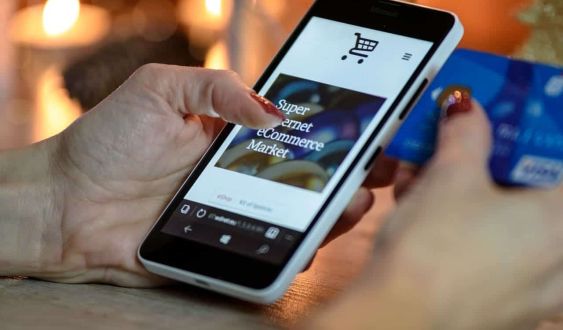
During the presentation of the study, Íñigo Gallo, Professor of Commercial Management at IESE, explained that "the golden age" of online consumers is in the age range from 35 to 54 years old, "because they are buyers with a high level of purchasing power and have incorporated digitalization". In fact, 75% of users use their mobile phone to make purchases, and 48% use a laptop. "Higher value acquisitions are still made with larger devices because the user feels more secure," specified Albert Serrano.

In turn, this older age group is also the one that uses Facebook as a source of information to weigh their consumption preferences, a social network widely used by brands for the promotion of their products. In general, the Spanish consumer is still guided by the advice of other buyers, rather than by the recommendations of, for example, influencers.
Delivery conditions for orders also weigh on buyers' decisions: half do not purchase a product if it has shipping costs and 40% abandon the purchase before payment if the delivery time is not specified. In this sense, 1 out of 5 online consumers considers it a priority to be able to choose the delivery date and time slot, while 1 out of 4 prefers to go to a physical point to save costs, ensure order delivery, and be more sustainable.
Half of buyers do not purchase a product if it has shipping costs and 40% abandon the purchase if the delivery time is not specified"Millennials are the most demanding buyers in terms of speed and economy of deliveries," specified Albert Serrano, but he admits that "this trend could vary in the coming years because, after all, what ends up being valued most is the overall shopping experience."
Likewise, 71% of Spanish online shoppers want simplified payment services and, for the most part, continue to use credit or debit cards as a means of payment. While digital wallets are the option especially used by those under 34 and shoppers who purchase products and services online weekly.
Add The New Barcelona Post as your preferred Google source for free
Stay informed with the latest news.
