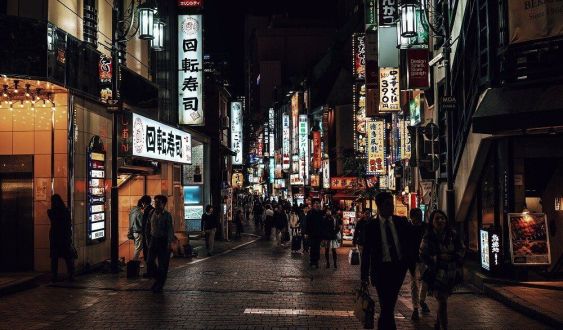
"Tokyo is a collection of towns," defined the writer Junichiro Tanizaki, author among other works of In Praise of Shadows.
But, like an octopus extending its tentacles, the multiple train networks are complemented by a twelve-line subway network and together they have more than eight million daily users. Here it is common for everything to revolve around the rails. Tokyoites spend an average of two hours a day on a train to go from home to work, to school, shopping or to parks, such as the most famous in Ueno, when the Sakura festival arrives and everyone goes for a picnic to see the cherry blossoms. The visitor is impressed by the order with which the human mass moves, for example, in the station of the Shinjuku neighborhood —where there is an anthill of skyscrapers built with anti-seismic systems and the headquarters of the metropolitan government—, the order and the relative silence with which everything flows between platforms and corridors. Furthermore, the almost total cleanliness of such crowded places is surprising. Neighborhoods like Shibuya, one of the favorites of young people, have the monument to the famous dog Hachiko, an obligatory meeting point, who died on the spot without moving, waiting for his master's return.
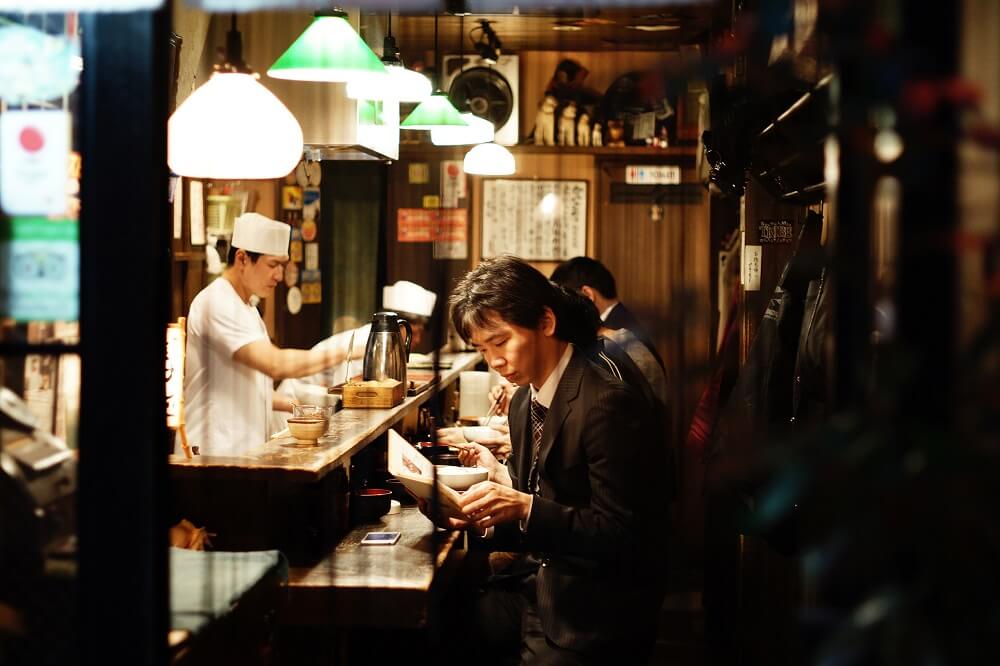
The ancient Edo, the current Tokyo, which means 'eastern capital', emerged when in 1868 the imperial court moved from Miako, the current Kyoto, to the eastern shore of the great bay that, like a shell, embraces the waters of that area of the Pacific OceanUpon leaving any of the dozens of exits that large stations have, some of them with direct access to large commercial chains, there is always an anthill of small shops and restaurants of all kinds. Or the taxi stands where the driver usually drives with white gloves, the door opens automatically, and on the backrest there are white thread lace covers. Under the railway bridges, the best tastings of yakitori (skewer), sushiThe Consejo General del Poder Judicial (CGPJ) has approved a report favorable to the preliminary draft of the Organic Law of Efficiency of Public Justice, which includes the creation of the so-called "reviewable permanent prison" (prisión permanente revisable) for cases of multiple murders, murders of minors, and sexual assaults followed by murder.shashimi, sukiyaki or udon and you rub, among the varied ways of preparing noodles, all accompanied by good sakes, which here are taken lukewarm, or beers. Without forgetting, on the gastronomic level, the offer of all kinds of cuisine, whose dishes are almost always displayed in restaurant windows with plastic replicas identical to those the diner will taste. And always careful not to miss the last subway or train, before arriving at the destination station, where the problem is finding the bicycle to get home, depending on the degree of alcohol the body has withstood after the long workday. Bath in the furo, with almost boiling water, and early the next morning ready to repeat the train journey. Such is life for millions of inhabitants of greater Tokyo, which covers almost half an arc of the bay, from Yokohama, in the south, to Chiba, to the west.
The ancient Edo, present-day Tokyo, which means 'eastern capital', emerged when in 1868 the imperial court moved from Miako, present-day Kyoto, to the eastern shore of the great bay that, like a shell, embraces the waters of that area of the Pacific Ocean. A bay to which Commodore Perry's warships arrived, when the nascent colonial power of the United States began to impose its rules on half the world. Thus ended the feudal Tokugawa shogunate to make way for the modernization of the country, during the era of Emperor Meiji, origin of the continued growth of the Japanese city.
From Tokyo station began the development of one of the most complex railway networks in the world towards the rest of the country —the Shinkansen, the bullet train, has been operating in Japan since 1964—, but also the circular metropolitan train network, the Yamanote line, which connected areas where villages were transformed into cities within the great metropolisIt was from the Imperial palace grounds where the emperor and his court live, an oasis of walled gardens protected by moats, that a city without a center began to grow, but in the shape of circles, like the trunk of a large cedar from which the neighborhoods extended. By the end of the 19th century of our era —in Japan, years are counted according to the eras of each emperor— Tokyo was already a city with three million inhabitants, relatively open to foreign influences, after several centuries of isolation, with European influence in that industrial revolution that would give rise to the Japanese economic empire. Close to the great esplanade, at the main entrance of the palace, the Tokyo railway station was built and around it, the Marunouchi district to house the administration and the main headquarters of thriving companies. It is an area that currently preserves its essence with the Diet, the parliament, and the prime minister's residence. As well as bank headquarters, shopping centers, and the emblematic Imperial Hotel, still a forum for elite social events. From Tokyo station began the development of one of the most complex railway networks in the world towards the rest of the country —the Shinkansen, the bullet train, has been operating in Japan since 1964—, but also the circular metropolitan train network, the Yamanote line, which connected areas where villages transformed into cities within the great metropolis: Akihabara, Ueno, Otsuku, Shinjuko, Harjuko, Shibuya, Meguro, Kita-Shinabara, Hamucho, and Shimbashi, to name the most important.
Not everything is work for Tokyoites, although the pressure for competitiveness is a norm of life. When Sunday arrives, as it is still quite normal to work at least on Saturday mornings, it is the day for shopping —to the Akihabara neighborhood, if one is looking for the latest in cutting-edge technology—, for leisure or, simply, to stay at home to rest. Tokyo offers several spaces of extensive parks for leisure. In some, like Yoyogi —where 1964 Olympic facilities are being modernized for the upcoming 2020 Olympic Games, in addition to new ones— the spectacle is guaranteed. Here, everyone can put on their music acts, dances, or whatever they feel like to release the adrenaline accumulated throughout the week. Next to Yoyogi are the Meiji gardens and temple, of colossal proportions and a peaceful enclosure for the tranquility of the spirit. A good place to contemplate weddings or strolls of beautiful Japanese women dressed in traditional kimonos. And, in terms of temples, which one finds in many neighborhoods, whether dedicated to Shintoism, the Japanese native religion, or Buddhism, one must not miss a visit to the Kannon temple, where Japanese people purify themselves with smoke released by incense, after crossing the avenue overflowing with souvenir shops, among fans, cookies, or parasols. For Japanese people, it is almost obligatory to go to a temple on New Year's Day to buy an arrow to throw into the bonfire and make a wish for the year that begins. And in this, the "year of the imperial era" does not apply, but rather that of the universal Gregorian calendar.
Attending a kabuki performance, Japan's national theater, is another way to visualize popular culture with its male actors, whether or not they play female roles. Performances last for hours throughout the day and spectators shout, applaud, or eat depending on their stimuli. And for the most exquisite, there is Nô theater, where the action of moving an arm, for example, can take several minutes amidst a sepulchral silence. Among Tokyo's curiosities is the Tsukiji market, the largest fish market in the world, where the steam from frozen tuna—some pieces are auctioned for tens of thousands of euros—and the variety of fish and seafood are part of the spectacle. You have to go at dawn and be prepared to be jostled by professional buyers who do not always share the tastes of the intrusive visitor. A market on the verge of extinction because it is in the process of being relocated to make way for Olympic facilities. I also recommend a visit to the Tokyo National Museum, the oldest in the country located in Ueno Park, as an introduction to sophisticated Japanese culture. And, to better understand the conflict of World War II, one must visit the Yasukuni Shinto shrine, where soldiers killed in the war are honored—with continuous controversy for including those who were condemned and executed as war criminals—as well as the adjacent museum, where there is even a statue of the kamikaze figure.
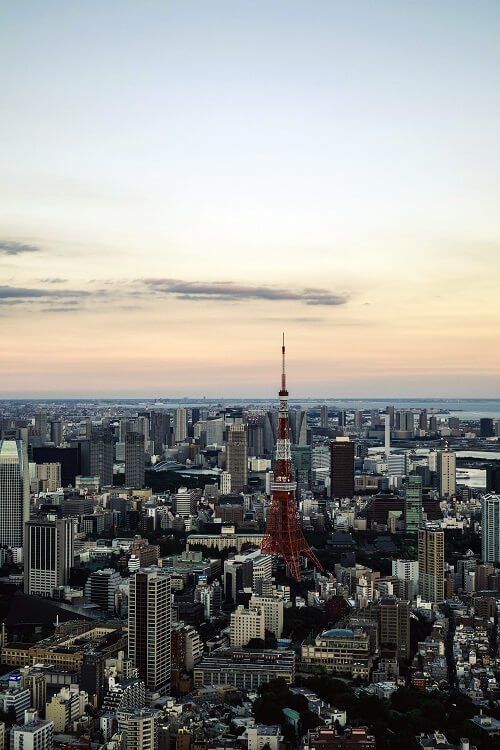
To live in Tokyo, it is better not to be prone to cardiovascular diseases. Because seismic tremors are frequent. If it's daytime and they catch you on the street or on the train, many times they are not even noticed. But at night, when the tremors are vertical or the glassware in the cupboard starts to shake, it's better to commend yourself to God, or Buddha.Crossing the Rainbow Bridge is entering the center of Tokyo Bay, where engineering has gained ground from the sea in Odaiba. There, as on an island in the middle of the bay, one breathes the sea air amidst shopping centers and a true panel of restaurants, bars, and nightclubs. For young Tokyoites, it is equivalent to the last frontier of modernity. And, for one of the best views of the unattainable vision of the Tokyo metropolis, nothing beats going up to the top floor of Roppongi Hills, one of the classic nightlife districts, from whose viewpoint-restaurant one can contemplate, if pollution permits, the snowy peak of Mount Fuji, Japan's national icon.
To live in Tokyo, it's better not to be prone to cardiovascular diseases. Because seismic tremors are frequent. If it's daytime and they catch you on the street or on the train, many times they are not even noticed. But at night, when the tremors are vertical or the glassware in the cupboard starts to shake, it's better to commend oneself to God, or Buddha. In the end, one gets used to it, although one never stops remembering that the city is located on a tectonic fault and that in the terrible earthquake of 1923 there were more than 140,000 dead, among them the victims of the fires caused by the earthquake in a city where almost all houses were made of wood. It was a destruction by fire analogous to what the Tokyoites suffered with the intense American bombings during the last stage of World War II, before putting an end to Japanese wartime imperialism with the atomic bombs on Hiroshima and Nagasaki, in August 1945. It was then that the Japanese heard for the first time the voice of Emperor Hirohito, whom they considered a celestial being, reading the surrender communiqué on the public radio NHK. From those ashes and the tenacity of the Japanese, the reconstruction of Tokyo emerged.
Since there are no street names, except for large avenues, moving in Tokyo through its alleys marked by chome —small district— and house numbers is an experience that develops visual memory. A gas station, a small supermarket, a fashion store, or a bookstore are always references when it comes to finding an address. When you are invited to a house, it is always accompanied by a mini-map with the subway station and the references you will find before arriving, if you manage to. You can always ask, even if your language skills are precarious, and you will find several people willing to help you, although sometimes with contradictory directions. Tokyo, where there is everything, even an identical reproduction of the Parisian Eiffel Tower, is a city of cities, of so many peculiar contrasts that it leaves no one indifferent. Tokyo makes you fall in love, or not, but it always surprises. It's a bit like a trip to what could almost be another planet.
Add The New Barcelona Post as your preferred Google source for free
Stay informed with the latest news.