
For a few weeks at the Palau Robert, in Barcelona, an exhibition (from February 14 to May 19, 2024), more than notable, has been held, dedicated to the figure and professional career of the singer and performer from Sants ---one of the city's most dynamic districts, both in terms of neighborhood and culture---, Núria Feliu (1941-2022). Erroneously reconverted into the hallmark of a concept coated in who knows what substance known as the tieta.
Finally, someone felt free to identify the simple fact of feeling Catalan and Catalanist as an everyday act. Feliu did not aspire to be Barbra Streisand or Aretha Franklin. Her piano studies allowed her to identify the rhythm and the way to interpret song, cuplé ---which was revived in the seventies on her initiative and that of Guillermina Motta---, sung sardana, soundtracks, musicals up to jazz and pop, applying one of the greatest virtues of the singing profession: expressive naturalness.
Núria Feliu ---also known as la Feliu--- for her voice and her way of interpreting. She was guided by a clear and resounding idea: any genre can be sung in Catalan. The dazzling appearance of the performer in 1965 caught more than one off guard. In 1966 she recorded an immaculate album with Tete Montoliu. A small, brilliant success, but sabotaged by the short-sightedness of some businessmen who prioritized their respective record contracts over both musicians continuing to work together. As explained in the exhibition book, Núria Feliu, supervedet, which is discussed at the end of these lines.
Two decades later, the performer, who remained active for two more decades, lost some of the popular interest that turned in another direction. The singer returned to her beginnings. To sing in the street, in the marquees, at local festivals. Always close to the ordinary citizen who considered her one of their own. But large theaters became less and less frequent in her agenda. In contrast, her television appearances were common, her music was rarely heard. Many changes of record label, an overused repertoire, little innovation. Other rhythms, other fashions left her aside. However, the memory remained. Then, no one championed her, nor did she reinvent herself. The Creu de Sant Jordi awarded in 1985 did not improve things either. In this century, her activity gradually spaced out until she left the stage. She passed away in 2022.
The exhibition Núria Feliu en el Palau (Robert) ---one of the best shows in recent times dedicated to a figure of musical culture--- had the good sense to recover her name not as a museum piece, but as an illustrious worker of popular, modern, and counter-current culture; that is, it turned her name into a contemporary element. That aroma, which is practically the heritage of the Nova Cançó and a few other names, like Carles Santos, another free spirit, caused Feliu to go in just one night ---to the other Palau, the Palau de la Música Catalana--- from being a reference to being treated as a museum piece. A crude attitude. A woman drawn and wrapped in camphor. A glaring mistake.
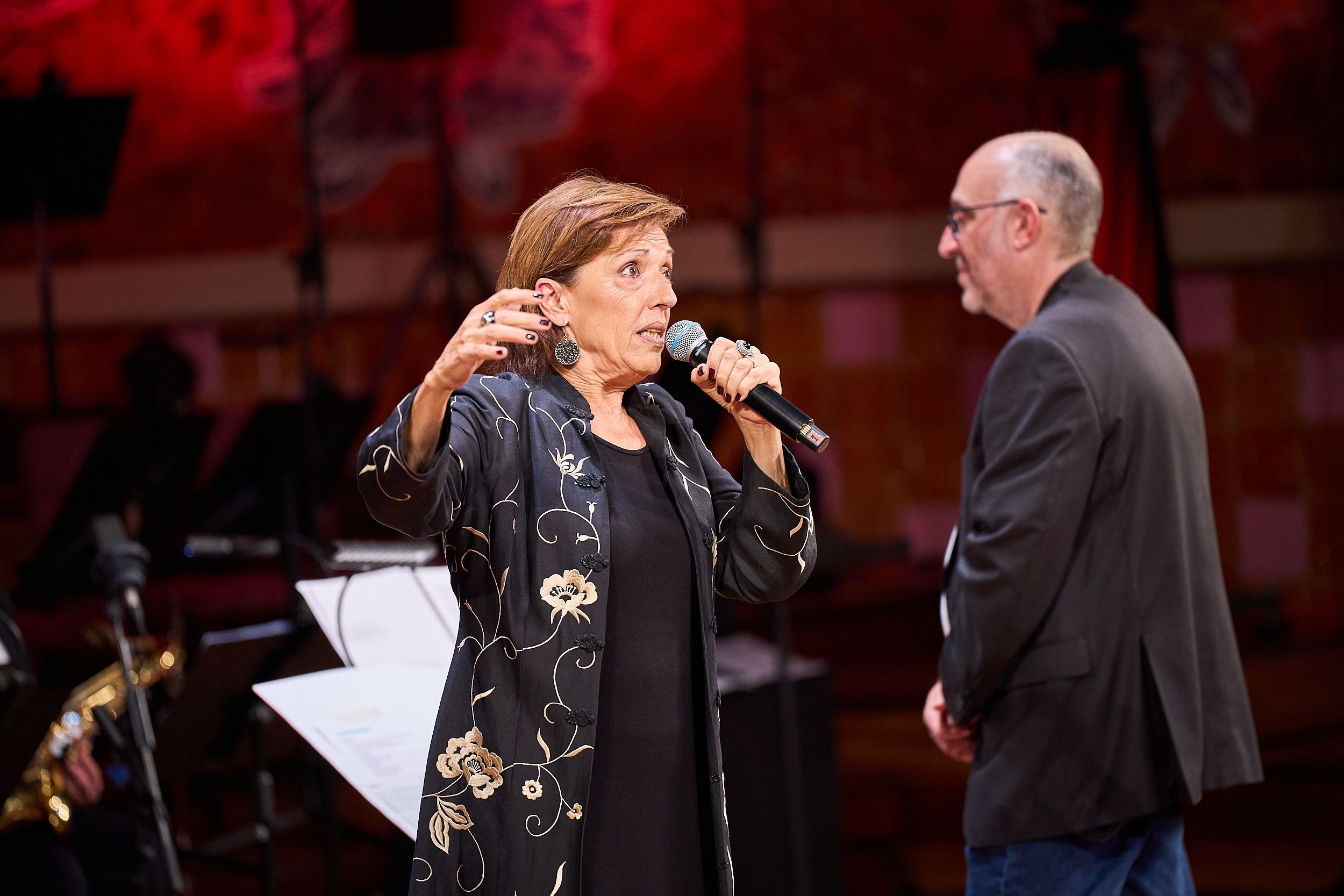
The result of the concert Núria Feliu al Palau. Acte d'homenatge adhered to a very common premise. From the selection of performers, establishing a strange relationship between the selection of the repertoire and the guest singers. The common thread of the evening was a disjointed script, full of clichés. Not an ounce of imagination. The jokes, the nonsense, and the commonplaces marred the hosting by the presenters, TV personalities Helena Garcia Melero and Òscar Dalmau, who also curated the exhibition, changed like a sock. The modern flair of the Palau Robert flew out the window. Really, it's not understood. Nor is the omission understood, among the many names cited around Feliu, of producer and music journalist Albert Mallofré and pianist and composer Lucky Guri, who are indeed included in the book and the exhibition.
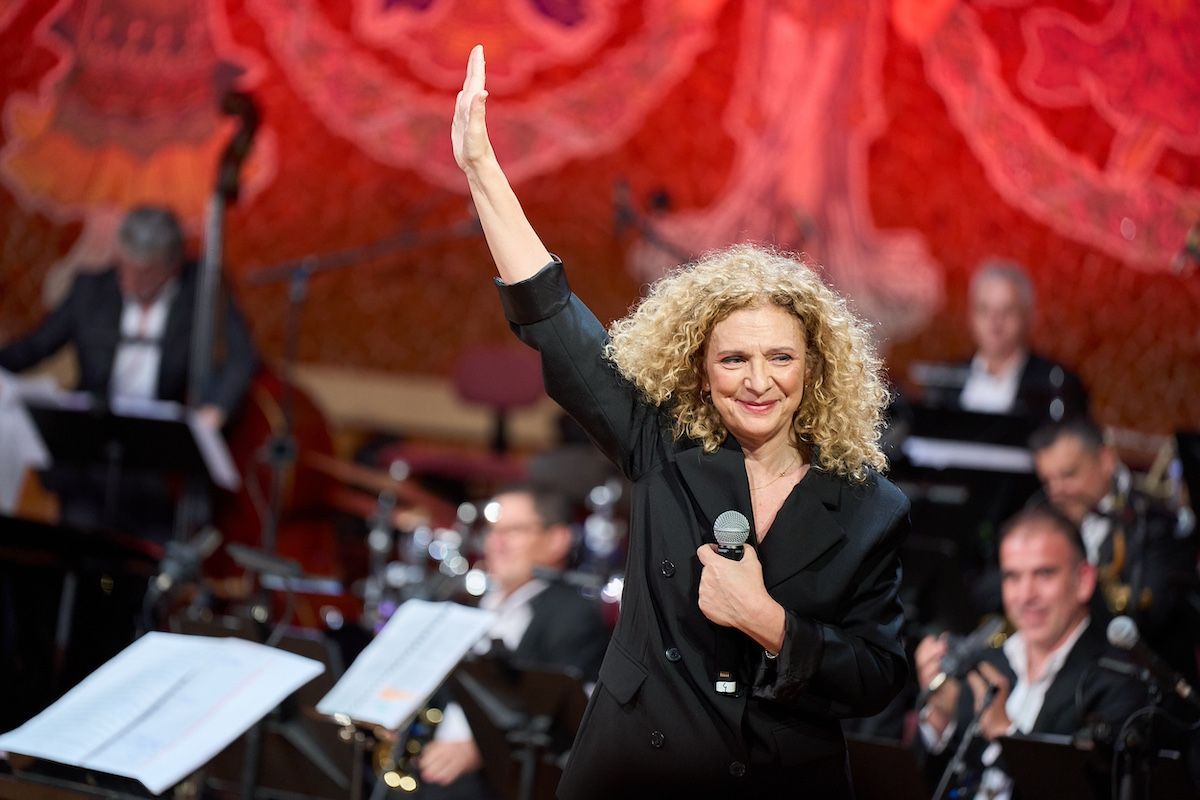
Although swing was doing its best to emerge. On stage appeared two ladies, two singers. Laura Simó, who also worked with Tete Montoliu, opened the tribute. She was splendid in a jazz key. Past the halfway point of the night, Carme Canela performed a bolero remarkably. Her elegance in voice, interpretation, and manner of being on stage deserve more recognition and visibility.
Also noteworthy is the couplet by Els Catarres; the recitation by Lali Feliu; Marina Rossell's chanson accompanied on piano by Antoni Ros-Marbà; the sardanas by the Cobla Ciutat de Girona. Plus, the roots music of Carles Belda and Joan Garriga and their accordions. All ills disappeared at the last moment, when Núria Feliu's 1965 promotional image emerged from the stage to rise towards the sky, as the orchestra bid her farewell. We will always have "Què n'ha quedat del nostre amor".
Núria Feliu, supervedette
In parallel to the exhibition Núria Feliu al Palau (Robert), which is the result of a proposal by the Department of Culture and the Palau Robert, a magnificent book of more than 200 pages is published, which documents the spirit, career, and influence of the performer in Catalan society from a transversal perspective ---it only leaves out the singer's most private and personal sphere---, based on Núria Feliu's personal archive and other contributions from collectors. The information details a myriad of documents that the exhibition has presented in different formats and media.
The volume, which can be interpreted as an ad hoc catalog, goes further, as it is a detailed study of the singer's life and work. It includes many album covers by herself and by vocalists that interested the Barcelona native; as well as reviews and performance venues of Feliu, as indicated by the chronicler of the Nova Cançó Fermí Puig, also a family friend, in the interesting prologue, Arxiu, memòria: vida. The audiovisual communicator Òscar Dalmau shows himself to be passionate in his text Aplaudiu la Feliu, whom he describes with big letters as singular, pioneer, entrepreneur, and media-savvy, concluding that we are facing a supervedette.
The performer was always interested in documenting her career. The volume is divided into five main areas: Sants, el primer escenari; Jazz, jazz, jazz!; Musicals i cinema, Els gèneres populars and Diva i icona. The third prologue is by journalist and writer Julià Guillamon, a devoted admirer of the singer, who explains the search for texts, like a vitalistic journey, to accompany Feliu's photographs and portraits, in his essay, Aquesta dona ens enterrarà a tots. From all the information gathered, a careful and elegant hardcover edition has been produced, presented with a dynamic, modern, and balanced design between image and literature that favors clear reading. In short, a necessary document to get to know one of the best exponents of popular and roots music, in Catalan. The book can be requested at the Llibreria de la Generalitat de Catalunya.
Add The New Barcelona Post as your preferred Google source for free
Stay informed with the latest news.