What do Reykjavik and Viladecavalls have in common? At first glance, not too much, but both cities share a close bond with the Iceland Seafood International group. The conglomerate, specialized in processing and commercializing fish ---mainly cod---, has its headquarters in the Icelandic capital and in the city of Vallès Occidental it has a factory, in addition to the headquarters of the Spanish subsidiary of the company. The history of the Icelandic parent company dates back to 1932, when various producers organized themselves under the umbrella of The Union of Icelandic Fish Producers with the aim of boosting exports of salted fish. Almost 60 years later, in the 90s, the Viladecavalls plant began operations.
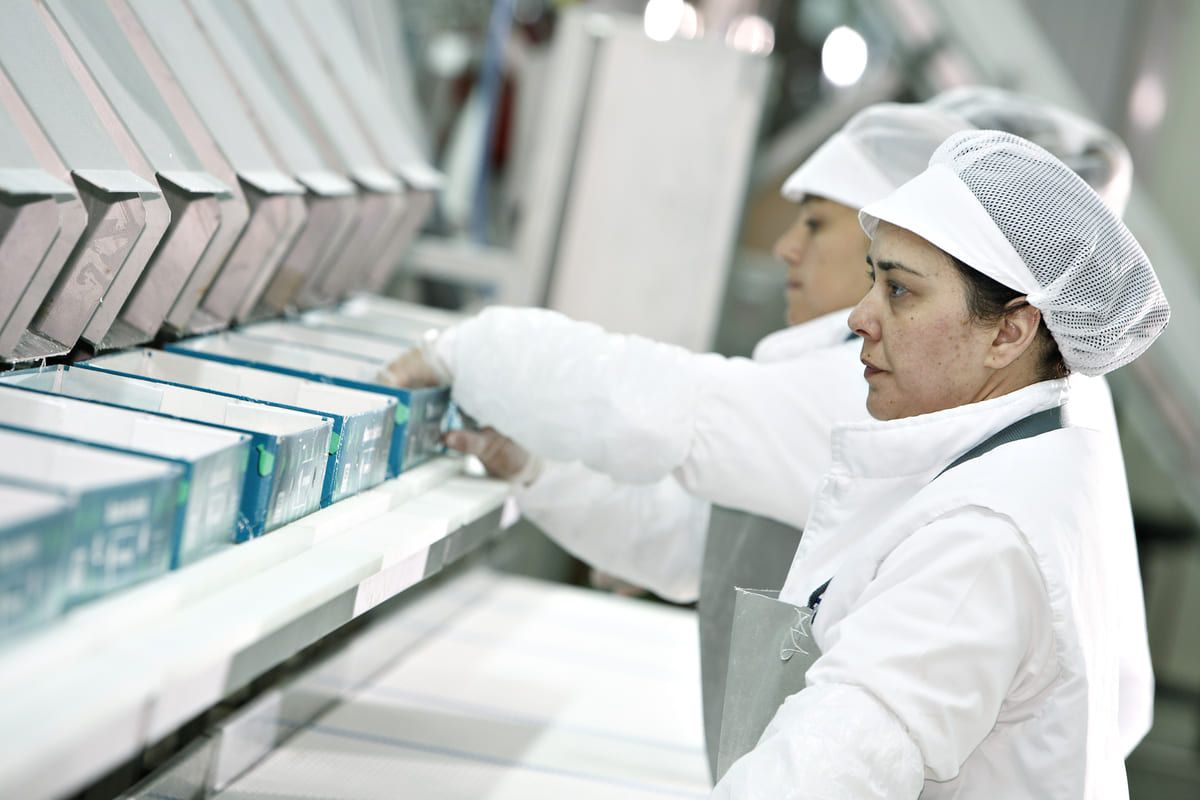
It is precisely in the Catalan factory where the company has carried out one of its latest investments. The project has consisted of increasing the plant's production capacity while diversifying its activity. More specifically, the investment has been three million and has involved an expansion of the factory from 4,825 m² to 6,738 m² of frozen cutting capacity and the reorganization and optimization of the packaging and packing lines with the acquisition of different machinery and equipment. The Nordic company has had the support of the Institut Català de Finances (ICF) to finance the improvements in its facilities.
"All of this we have done with the aim of consolidating our leadership in the Horeca sector and, above all, of strengthening our role as retailers," says Karl Hjálmarsson, an executive with more than a decade of experience in the company and who is currently the marketing and communication director of Iceland Seafood International. In the renovated factory, mainly cod will be processed, which is the company's star product and represents 63% of the business of the company's Catalan subsidiary, followed by Australian shrimp, which accounts for 16% of revenues.
Evolution of a Nordic company in Catalonia
Iceland Seafood Ibérica is a merger of two companies: Icelandic Freezing Plants Ibérica, which was founded in 1996 in Barcelona to sell frozen cod at the point of salt in the Spanish market and was part of the Icelandic Group, born in 1942, and Iceland Seafood (formerly SÍF Spain) which was created in Spain, also in 1996, and was part of SIF Group, founded in 1932 in Iceland. The effective union of the two companies was achieved in 2019.A year later, in 2020, one of the toughest moments for the company arrived. The closure of restaurants led to a sales drop of about 50 million euros, 30% of the total. However, having completed the merger in 2019 allowed the company to face this moment with guarantees and managed to save the financial year without losses. This year, turnover in Spain will be around 200 million euros, with a workforce of 170 employees. Globally, the group's sales figure is about 500 million and it has 700 employees.
"Our current strategy is based on organic growth in the markets where we are already present and on strengthening our main product lines, highlighting the Icelandic seal and origin, but also boosting references such as the Patagonian red shrimp from our plant in Argentina. In terms of sales channels, the goal is to consolidate our leadership position in the restaurant segment and grow as retailers, where our presence is still scarce. In any case, we are always attentive to possible inorganic growth opportunities," Hjálmarsson states in reference to what will be the group's strategic growth lines in the coming years.
A sustainable approach to fishing
Iceland Seafood International processes and markets more than 70,000 tons of fish annually and, to minimize its environmental impact, has set the goal of sourcing only from fisheries that are managed in accordance with the FAO Code of Conduct for Responsible Fisheries and that have adequate fisheries management systems.The group is also making progress in renewable energies and greenhouse gas emissions. In this regard, as part of the expansion project, the company has installed solar panels in its Catalan plant that will produce 540,000 kWh, close to 30% of the entire factory's consumption.
This part of the investment is one of the usual projects financed by the Institut Català de Finances (ICF) since it approved its strategic plan for the 2022-2025 period, which establishes as a priority its action in environmental projects, especially those aimed at mitigating the effects of climate change, as well as social and governance projects. The objective of the new roadmap is that, at a minimum, 35% of the new activity be considered sustainable. In 2022, the ICF financed more than 470 companies, for a global amount of 479 million euros. Of that volume, 159 million euros were allocated to finance projects that promote energy efficiency, the green economy, and sustainability; 38 million euros in financing for social rental housing projects and 2 million euros for projects related to culture, health, people care, and life sciences.
Add The New Barcelona Post as your preferred Google source for free
Stay informed with the latest news.