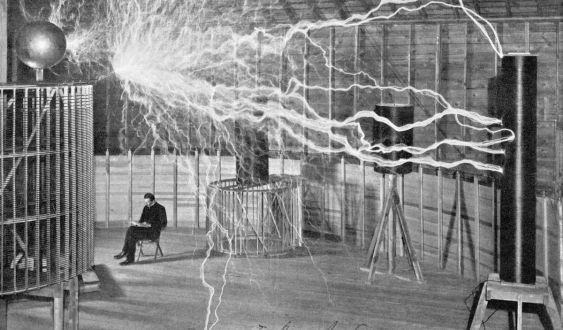
The fog and legends surrounding many key figures in our history have meant that they have remained hidden from our eyes or that, simply, we have preferred to believe those stories fueled by popular culture, literature, or cinema. But in some cases, we are lucky to have initiatives that focus on the person behind the character so that we can discover their achievements, and how these have helped us achieve many of the things we enjoy today, without giving them much value. This is the case of the exhibition that CosmoCaixa offers us about the Serbian scientist and engineer Nikola Tesla, in a chronological journey where we can discover all his scientific feats and the vicissitudes he suffered to achieve them.
Legend has it that Nikola was born during a summer lightning storm in 1856, a fact that some interpret as a premonition of his future life. Although his father was an Orthodox priest, it is known that the person who most influenced his childhood was his mother, a woman of extraordinary intelligence who, despite being illiterate, was capable of making small homemade devices that made her daily life easier. Probably, from her he inherited his incredible photographic memory and his facility for mathematics that would later serve him to develop his inventions. But what sparked his curiosity happened when he was very young, when stroking his cat he discovered static electricity through the friction of his hand.
From that moment, his interest began to take focus and shape, and despite not finishing his studies at the Graz Polytechnic School, it was during that stage that he conceived one of his first great inventions, the magnetic induction motor, developed and presented 12 years later, when he had already started working at the European subsidiary of Edison's company ---the Continental Edison Company--- and which was also his first failure. But as the saying goes, "when one door closes, another always opens" and it was at that moment that he made the leap to America, where he managed to develop his full potential.
What sparked his curiosity happened when he was very young, when stroking his cat he discovered static electricity through the friction of his handIt is through a circuit in six areas that the visitor can enjoy the exhibition conceived by CosmoCaixa in collaboration and co-production with the Nikola Tesla Museum in Belgrade, both theoretically and practically, assome operational electromechanical modules have been built that allow visitors to reproduce the functioning of the devices and contraptions devised by Tesla, and most of them are reproductions of the originals provided by the Museum. There are also self-produced modules, developed to show in a didactic and clear way some of the physical principles behind Tesla's creations, such as electromagnetism.
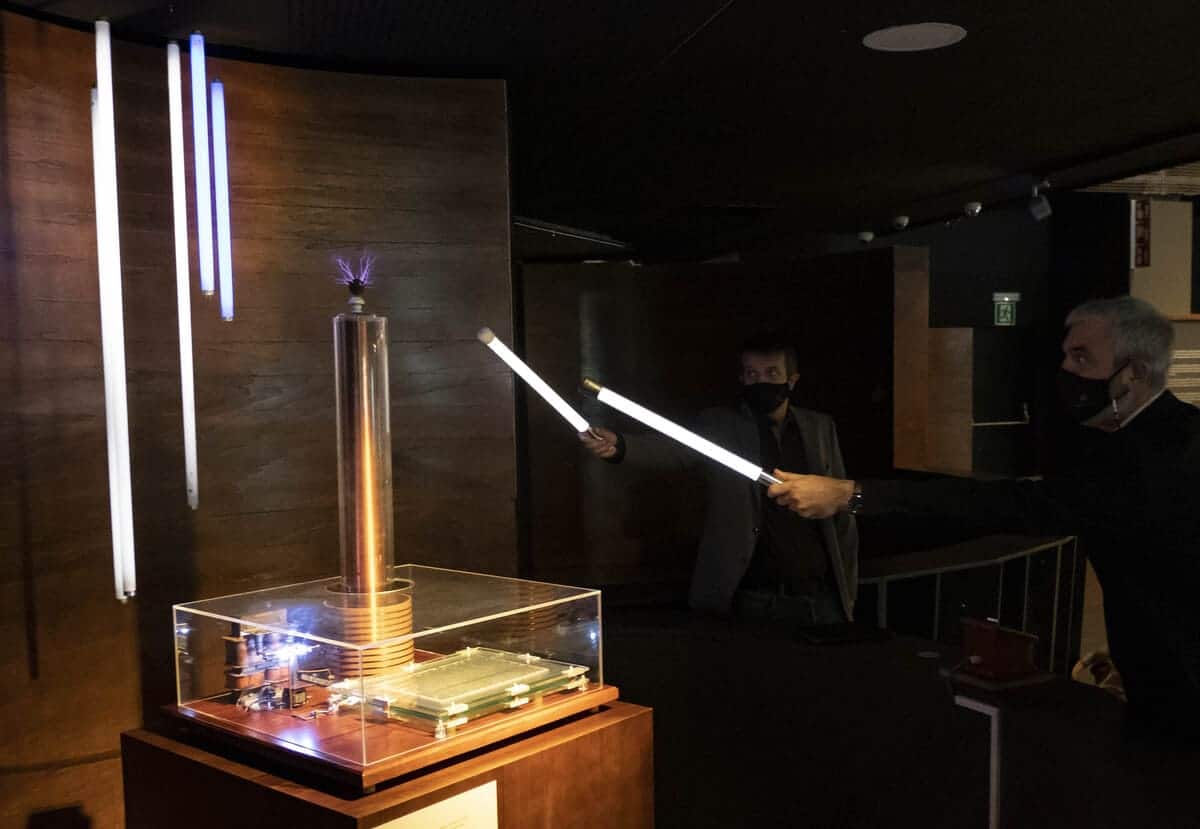
We spoke with one of the minds behind the design of this exhibition, astrophysicist Jordi Aloy, who tells us about the challenge of maintaining the experimental spirit of the CosmoCaixa visitor by adapting the activation of the electromechanical modules to the current pandemic situation, thus ensuring that they can be turned on without having to touch any button.
This is the third biographical exhibition that the center dedicates to a scientific figure, after the past ones dedicated to Charles Darwin or Albert Einstein, and as Aloy tells us, "the objective is to shed light on the scientist and his achievements beyond the legends that surround his life, and to do it in an attractive way for the public, in addition to the surprise that it can be for many of our visitors to discover that some elements of our daily lives we owe to Tesla's mind."
There are self-produced modules, developed to show in a didactic and clear way some of the physical principles behind Tesla's creationsNikola's move to America meantthe encounter with the inventor Thomas Alva Edison, with whom he maintained an unconventional relationship of mutual admiration and competitiveness, which led them to confront each other several times, being the one named by the newspapers of the timeWar of the Currentsthe fiercest. As explained to us during the tour in an environment that is presented as a board of theRisk, this war ended with Tesla's success intwo important projects which were the electrical supply for the World's Columbian Exposition in Chicago in 1893, as well as the two-phase alternating current generation system at Niagara Falls
The projects he developed from that moment on were as varied as they were futuristic, so to speak, since they were related to issues such as x-rays, radio broadcasting, wireless energy transmission, his studies on the conductivity of the Earth's atmosphere, or the development of Tesla coils that allow the creation of electric fields powerful enough to make current flow without the need for wiring.
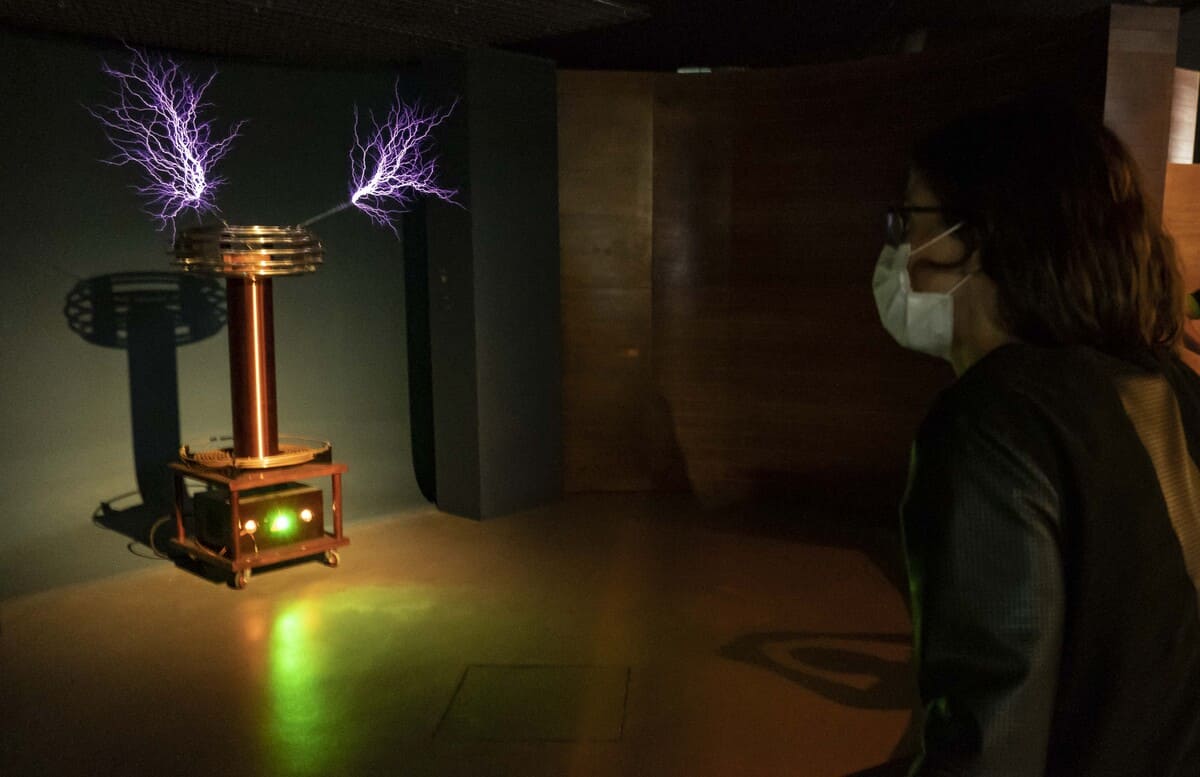
Nikola Tesla was a man of his time, but a very open-minded man, as we can see by reading his interesting statements at the end of the exhibition. His legacy has reached our days, as happens, for example, when we flip a switch to turn on the light, or in songs like the one the Icelandic singer Björk composed using giant Tesla coils.
But Tesla's genius was always overshadowed by the nervous breakdowns and depressions that accompanied him in his failures throughout his life, and turned him into a solitary and eccentric character towards the end of his days. Nikola Tesla's light went out in the solitude of a New York hotel room on January 7, 1943, bringing the fog of legend over the scientist and his inventions.
Add The New Barcelona Post as your preferred Google source for free
Stay informed with the latest news.
