
At the age of twelve, in a burst of clairvoyance, Neus Arqués wrote in her diary that when she grew up she would be a writer. "After that, I spent the next thirty years distracting myself and trying to forget that determination, that at twelve I had decided I would be a writer. Not so much for the act of writing itself, but for the prospect of making a living from it." The change came with her debut novel. "I always write things to answer questions I ask myself, and one day, with some friends, we asked ourselves what we would do when no one looked at us anymore." Thus was born Un hombre de pago.
--- And what happened? Did you hit it big with it?
"The truth is, not at first. I self-published it because, as I explained what it was about, friends and acquaintances kept asking me to pass it on to them to read, because the story intrigued them." But in addition to printing those copies for close friends, some others were distributed among readers she knew and respected. "There was no Internet, there were no influencers, but I ran a campaign that is quite similar to any of those done today to launch a book." And so she ended up being interviewed in several media outlets, including El País and La Contra of La Vanguardia. "And that was indeed the beginning of what has been my career, because now I dedicate myself to that and to teaching classes," she explains, leaning on the bar, enjoying a Dry Martini and savoring the ambient silence of an afternoon that has just turned into twilight.
--- Was that when you remembered that promise you made to yourself to be a professional writer?
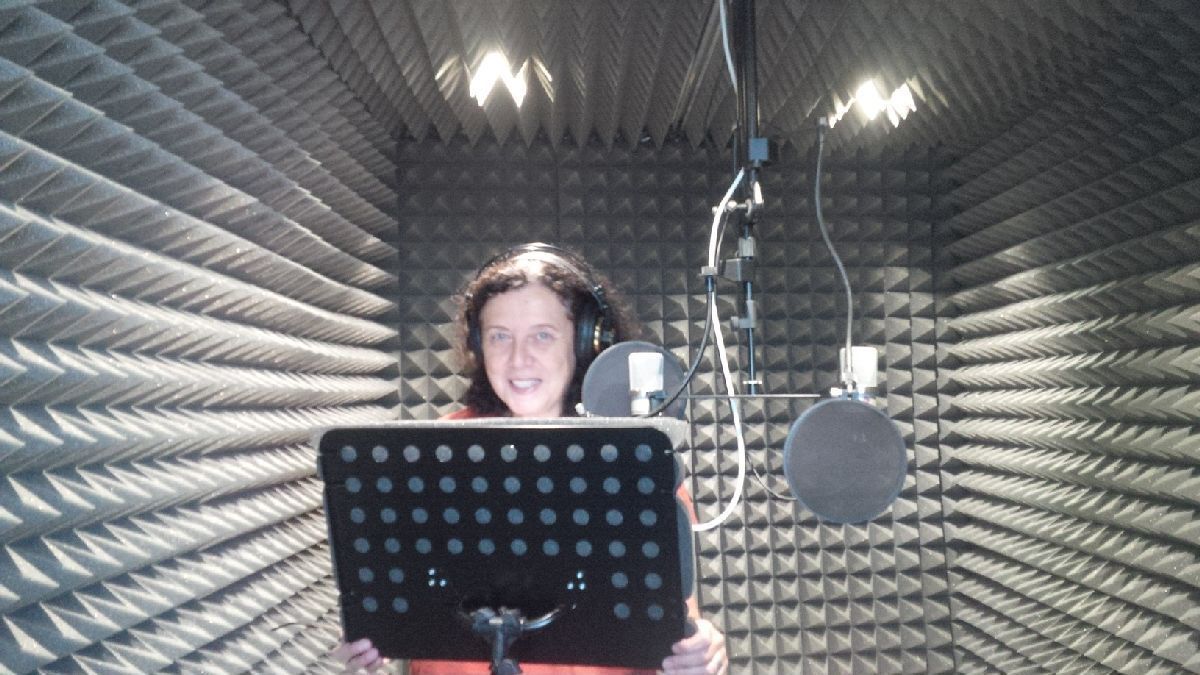
The patroness prints a crooked and cunning smile on her face. "Don't believe it. It took me a while to be able to call myself a writer. It's a very big word that perhaps today has been trivialized. But I keep writing, both essays and fiction, with the enormous luck of having some loyal readers who follow me on any adventure." To date, she has seven essays, six novels, three biographies, one short story, and two screenplays, one audiovisual and one audio fiction. And there's more to come, because she assures she is fully immersed in "a new novel, an essay on the craft of writing, which I believe needs to be dignified more, and an audiovisual project that I will announce soon." Definitely, she now feels comfortable with that big word and can call herself a writer, with all the vowels and consonants.
One hundred kilometers around
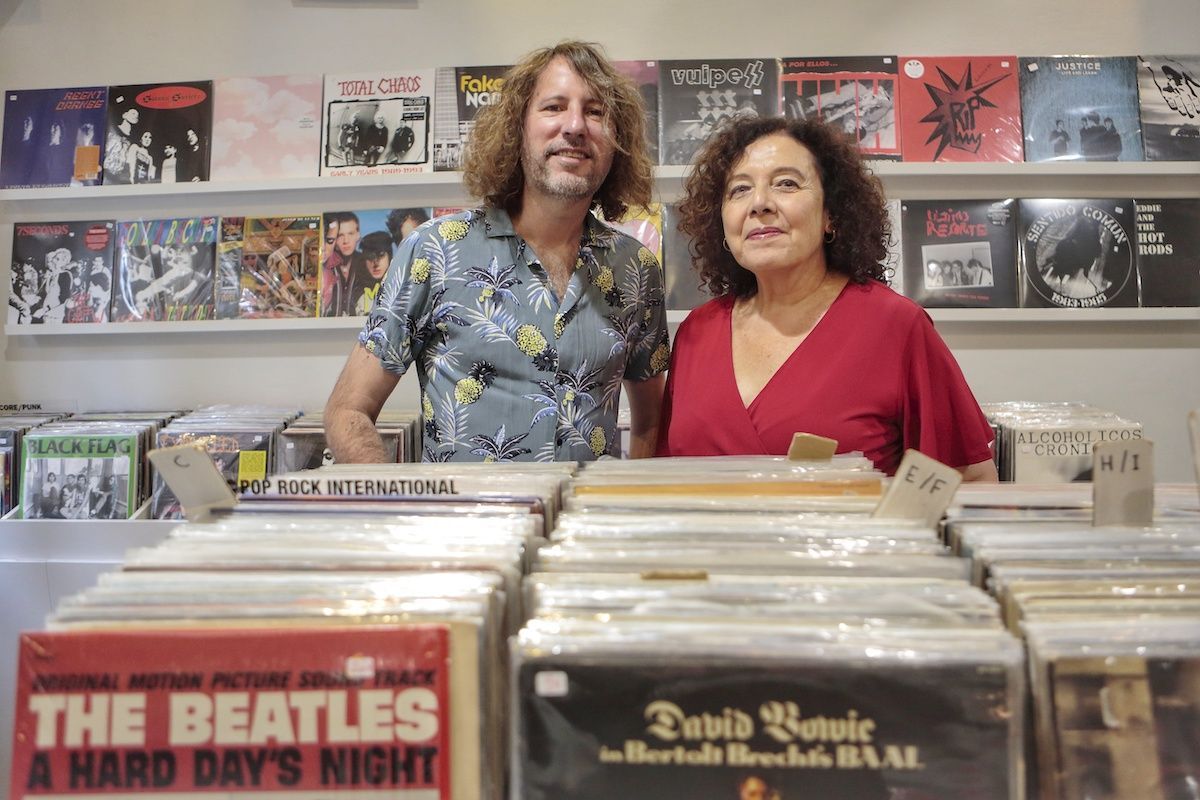
In 2020, in the midst of lockdown, searching through the proverbial trunk of memories, Neus stumbled upon the songbooks of her childhood, "which were notebooks where I wrote down the lyrics of the songs heard on the radio that I liked the most." Who knows if moved by a sudden burst of nostalgia, or wondering how she could have had the perseverance to write down the lyrics of all those songs, attentive to filling in the gaps every time they played, she realized a curious aspect. "The most successful artists at that time, in the early 70s, were five names: Nino Bravo, Juan Bau, Juan Camacho, Bruno Lomas, and Camilo Sesto. They were the masters of the Spanish charts, and I noticed that they all came from the same place. All of them had been born within a hundred-kilometer radius in Valencia. Investigating further, I discovered that the similarities in their lives didn't end there. Just to give you one example: of those five artists, three died in car accidents. Again, I had many questions and saw that there was a story to tell there."
From those questions arose the series Mítics 70 which can be seen these days on the Valencian channel À Punt and on Movistar+. But there was more to dig into. "Those lives were truly extraordinary," so, in a collaboration with music journalist Jordi Meya, they have penned the recently published novel Veu de foc (AlRevés), which explores, through the fictional figure of the musical glory seeker Juan Vicente Llorens, the intricacies of a ruthless bygone music industry blossoming in a country still afflicted by provincial idiosyncrasies, ingrained fears, and a generalized intellectual lameness. A true Wild West of light music.
The question of integrating
"Barcelona is my city, but there are moments when I don't recognize it, when I have the feeling that it is being plundered, sold in pieces, succumbing to a tourist pressure that brings money that I don't believe fully reverts to the city, and which in return makes us lose it," laments the writer, in love with a Barcelona that borders the sea, "which is the possibility of everything" and where perhaps one night she can be enchanted "strolling through a completely empty and silent street."
--- Are tourists driving Barcelonans out?
"The problem is that, in the end, the city is so strained by these tourists that we end up lumping everyone who isn't from here into the same category: the tourist who comes to visit, the expat who stays for two years and only interacts with others of their kind, and the one who comes from outside to settle and work here. And it ends up costing us to integrate all the people with whom, for better or worse, we share urban space." And he sips the last breath of his Dry Martini. "But it's not impossible," he continues, and to support this assertion, he exemplifies it with a case close to him. "In the Gracia festival committee of Joan Blanques de Baix street, we coexist graciencs of a lifetime with other neighbors like a Japanese woman who has lived in the neighborhood for many years or my husband, who is American. And together we form social fabric."
--- In this Bar, something similar happens. A broad social fabric is created by people who converge here, attracted by our succulent gastronomic offer. I say this in case, after that Dry Martini, you feel like having dinner. There's a set menu, combo dishes, à la carte, tapas… all exquisite!
Neus Arqués smiles broadly and frowns, directing an intelligent, maritime blue gaze at the gastronomic offer.
--- I prefer à la carte, ---she replies.-- I like to be able to choose, and for it to end with a good dessert.
--- Well, no place more suitable than this!
Add The New Barcelona Post as your preferred Google source for free
Stay informed with the latest news.
