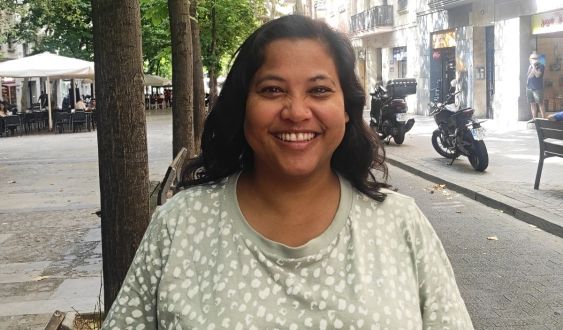
In a small village in eastern Nepal, named Jaljale, Chandra Kala was born. It was October 10, 1992. She was the third child of parents who, shortly after the birth of their fourth child, died of illness, with little time difference. With no one to take care of the two youngest children, they were taken in by an orphanage in the capital, Kathmandu.
Only a few months passed when they were adopted by two families from Barcelona who, before traveling to Nepal to meet the children, did not even know each other, nor did they know that the child they had been granted had a brother or sister in the same orphanage. Geno and Juan had completed all the procedures to adopt a Nepali boy or girl and Chandra, at five years old, was chosen.
She was too young to realize what was about to happen: leaving the orphanage, a few days in a hotel having the first cohabitation with new parents, a plane trip and the arrival in a distant and new city. Her new country awaited her with a new language to learn, a school with boys and girls who would welcome her, relatives, friends, neighbors in a large apartment building, the Mediterranean Sea nearby... Chandra was practically experiencing everything for the first time.
It was February 1998 and two months earlier, at Christmas, another couple from Barcelona had traveled to Nepal to meet the child they had been granted, Chandra's brother, Cesc. Chance had it that the two adoptive couples met because Chandra's father, at work, noticed a wooden photo frame typical of Nepali craftsmanship that a colleague had brought, showing interest in that souvenir, it turned out that that colleague knew of a family that was in the process of adopting a child from Nepal from the same orphanage where Chandra was. The two couples got in touch and met in Kathmandu, Christmas 1997.
"In fact, my parents met my brother before me, because he left the orphanage first and, two months later, I left," explains Chandra. She remembers that, inside the orphanage, there were older boys and girls who talked about adoptions. It was one of the ways to leave the orphanage, "we knew there were white, rich people who came to look for children and, some who were already seven or eight years old, wanted some of those people to come and get them."
"The contexts of origin are vulnerable to families and countries that have more resources"Son recuerdos pequeños de una Chandra menuda que, con cinco años y una bolsa con poquitas cosas,boarded a plane to start living in a family home in another country."I was fascinated to see the ships from above, when we were flying over the city of Doha ---where they made a stopover on the way to Barcelona---. The planes were going very slowly, and I thought the plane we were on wasn't moving and, on the other hand, I remember the taxis in Nepal that went very fast." This is one of the anecdotes she always brings up from that first trip with her new family. Upon arriving in Barcelona, family, friends, neighbors, everyone wanted to visit the new Barcelonan. And her parents agreed with the adoptive parents of Chandra's brother, that they would keep seeing each other.
Looking back
Chandra acknowledges that she was very lucky with the parents who adopted her, but she feels that, generally, "there is a lack of effort, in our society, to think about the needs of adopted children". And she explains: "At the time, people wanted to help children, but when was it decided that moving a child from their context is better for them? The contexts of origin are vulnerable to families and countries that have more resources." That is why she believes that "we must look for other ways to help. As for families and professionals, I think more formal and informal training is needed on the real implications of adoption."
One of the implications that, at least a priori, may be relativized, has to do with this look back that the adopted person takes at one time or another: What is the place where I was born like? Who were my parents? Do I have more family in the place I come from?
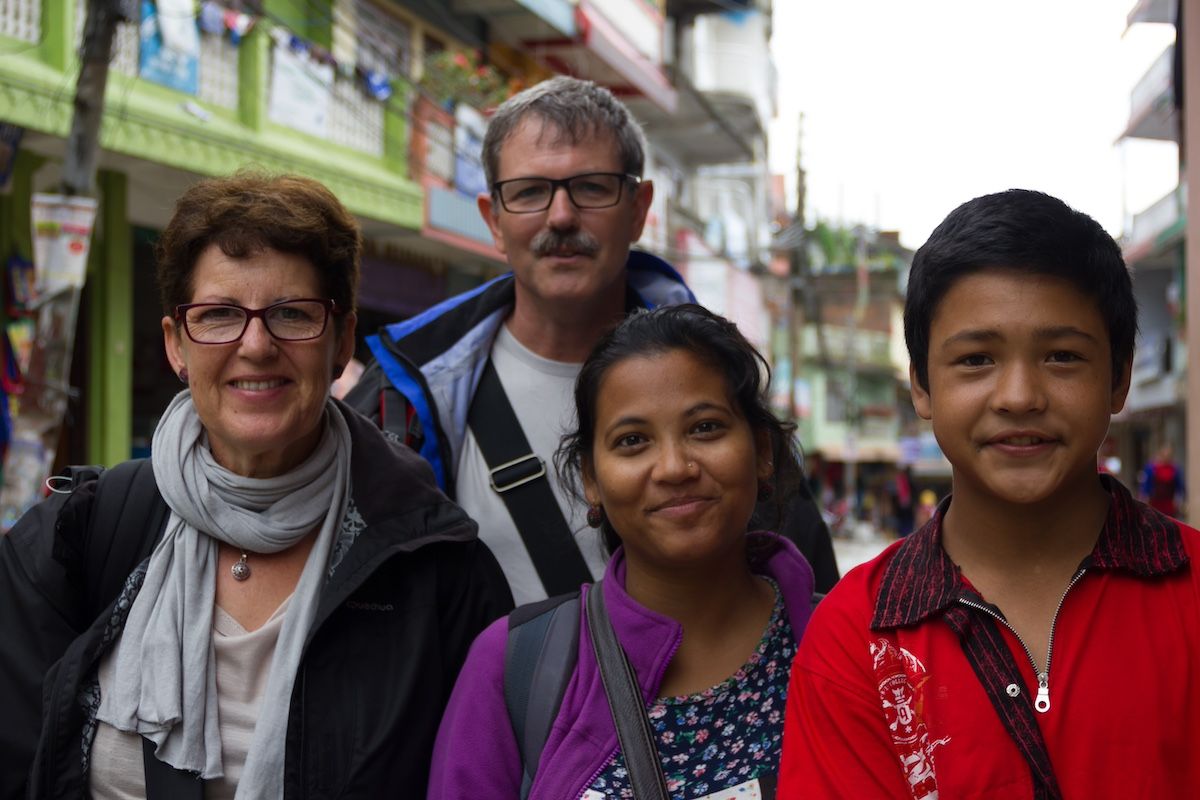
Since she arrived in Barcelona, Chandra's Barcelona parents always contextualized where she came from and how her adoption had been. "There was never a day of revelation," she says, "because I experienced everything from the beginning with all the information and with naturalness. I have memories from before coming to Barcelona and I knew that they were not my biological parents. As a child, we talked about Nepal and the orphanage. It is true that until I was older I did not know the legal meaning of adoption, but there was never a need for a day to tell me: You are adopted."
Now Chandra is 32 years old. She got her doctorate in Anthropology, because "I was already very connected with issues of cultural diversity, and anthropology connected with me. I have always wanted to know and understand people. The methodology motivated me to arrive at a perspective from knowledge." From the degree, master's and doctorate, "the most important thing I take away is another way of looking, a discipline with methodology, but the essence, above all, of looking at people from another perspective, not by inertia, a more reflective look, in which the person's context, their history, in the social dimension and as a system, a richer way of looking, is taken into account."
Chandra has created the Association of Adopted People in Catalonia as a meeting place for adopted young peopleEven started a researchpostdocat the Universitat Autònoma de Barcelona (UAB), but she soon realized that academic life was too hard for her. "I wanted to do something applied in real life," she says. And now she does.Carries out the training actions of the municipal program Barcelona Acció Intercultural, of the Barcelona City Council, on cultural diversity, "and so I can apply anthropology to everything we do," she comments. These are training courses offered to citizens, to work and delve into the relationships between different cultures.
And she gives us an example: an anti-rumor course, which is a first step to undo stereotypes, stigmas about skin color, religion, and is aimed at everyone. Chandra feels very involved in this mission. She explains that "the program arose because there were many people from outside and a lot of discrimination and racism, misleading news and derogatory comments. Now we have taken another step to help reflect on how we have built ourselves as a community and how we are looking at the other. This affects in terms of rights, opportunities, work, privileges, relationships, it marks everything. We know that a white person has more opportunities."
Visit to her country
In 2016, Chandra returned to Nepal to do her doctoral fieldwork there, an ethnographic investigation that aimed to unite the three points of an adoption: adoptive families, adopted people, and biological families. This dialogue interests her greatly because of everything she has personally experienced. She accompanied some young people from here who traveled to Nepal to look for their family and she did the observation.
For her, it was also a reunion, she returned for the first time to the village where she was born. She was going to meet her brothers, uncles, and cousins. "It was very beautiful. I slept between four wooden walls. And one thing that caught my attention and makes me reflect is that everyone remembered me, they knew me. They knew I was the daughter of so-and-so. Friends and family recognized me, but I didn't remember anyone. A girl approached me to say that, when we were little, we had been friends, but I didn't remember that either, nor her name, nor anything."
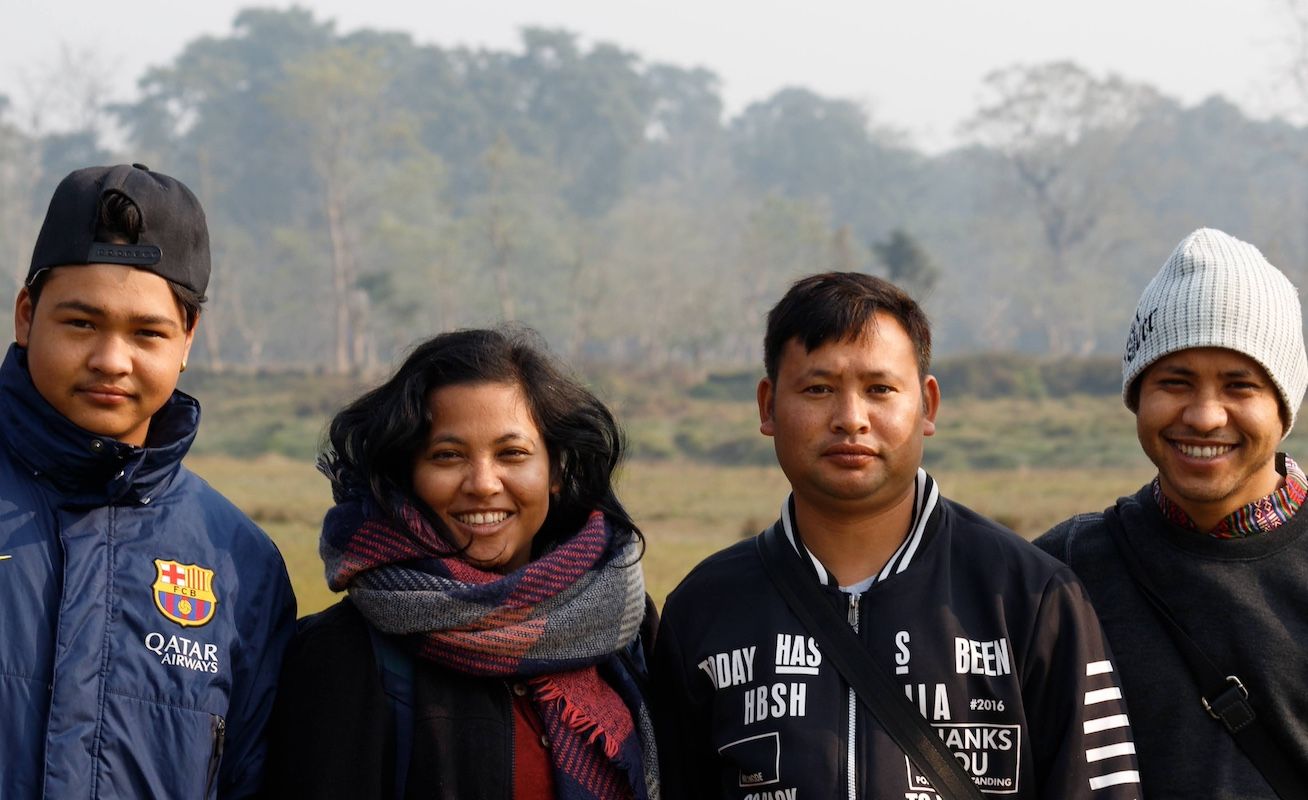
On that trip, she learned that one of her brothers was in the village where her parents were from and went to see him. She also located the person from the NGO who took her and her brother to the orphanage, who showed her photos from those days. She still needs to meet her older sister, which will be a mission for a future trip.
Meanwhile, with other adopted people she knew from meeting at events on topics such as racism or adoptions, she has created the Association of Adopted People in Catalonia, from all over. On the board of directors there are six people born in Nepal, Spain, Ethiopia, Brazil, and the Dominican Republic. They present themselves as "an association dedicated to claiming, promoting, and raising awareness about the rights of adopted people." And Chandra adds that, "although the public administration helps you search for your origins, the technicians have their framework of action and regulations, and sometimes you need alternative routes."
"Institutions and families cannot close their eyes to the country where the adoption was made"In addition, "we missed a meeting space for adopted young people, and now we have it. We organize artistic creation workshops with methods such as thecollageor photography."They meet once a month to do creative and participatory dynamics.For now, they have done three, with about fifteen attendees, and are already preparing more. They also hold talks for adoption family associations and film forums. "These are our spaces for awareness and guidance, moments of reflection," says Chandra.
And one of these reflections also involves raising awareness about the needs of the countries of origin. "Institutions and families cannot close their eyes to the country where the adoption was made, the bond with that place and with its needs and, above all, those that have led to children being in orphanages; it should not be broken, but quite the opposite." Thus, adoptions should be "channels to improve things in the country of origin, to make problems known and to get involved in some way," thinks Chandra, very aware that the separation from family and country has consequences in all areas: "Many think that with adoption everything ends. But, in reality, that's when everything begins. Because this fact marks us, in different degrees and forms, our whole lives."
Add The New Barcelona Post as your preferred Google source for free
Stay informed with the latest news.
