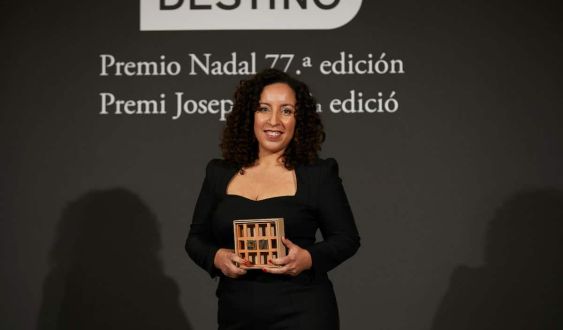
Next September will mark one hundred years since the birth of the writer Carmen Laforet, the first winner of the Nadal prize, in 1944. Nada is a novel where it seems that nothing happens, but where dirt, hunger, and misery describe the reality of the post-war period in Barcelona, disagreeing with official discourses. Najat el Hachmi recalled Laforet's denunciation after collecting her Nadal, defending that literature is one of the ways to articulate those alternative stories that often remain relegated and invisible.
[subscribe_newsletter_esp]
From Andrea, who lived on Aribau street and arrived in Barcelona with a suitcase full of books, to two girls who live "on the periphery of the periphery" of Barcelona and seek to conquer their freedom "having almost everything against them," conditioned by their gender, origin, and socioeconomic position, just as the protagonist of Nada did. El Hachmi dedicated the award to all women who still believe today that freedom is too far away and assured them that there are possibilities to get ahead and have a minimally dignified life: "To the brave women who strayed from the straight path to be free."
El Hachmi won the Nadal prize with El lunes nos querrán (On Monday They Will Love Us), her first novel in Spanish, although she also wrote and presented it in Catalan, in a complicated writing process where one language fed the other ---she only submitted it to the Nadal prize thinking of Laforet---. Based on the principle that two different novels would not come out, El Hachmi has been a writer and translator at the same time, enjoying her passion for language, with linguistics being her frustrated profession.
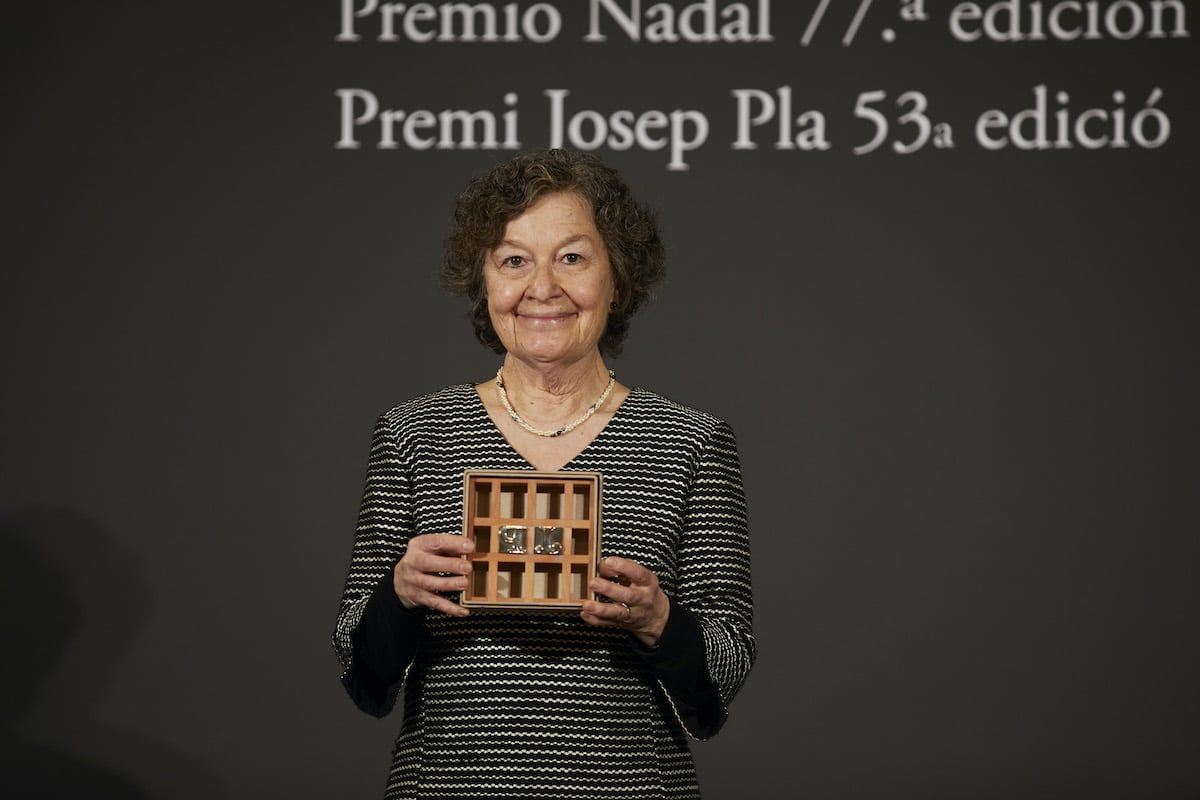
El Hachmi won the Nadal prize with El lunes nos querrán, her first novel in Spanish, although she also wrote and presented it in CatalanMaria Barbal's novel also speaks of freedom, Tàndem, which has won the 53rd Premi Josep Pla for narrative. Through "a story of happiness",Barbal wanted to talk about those people who, when they reach a certain age, stabilize and stop living, forgetting to enjoy life to the fullest.A woman and a man meet inTàndemand they realize everything they are missing and choose to start over.
Barbal has submitted to the Pla after many years without participating in awards. There came a time when she really felt like it, after denying it to herself for a long time, and she allowed herself to do it. "It makes me very happy," she acknowledged, feeling as free as her protagonists.
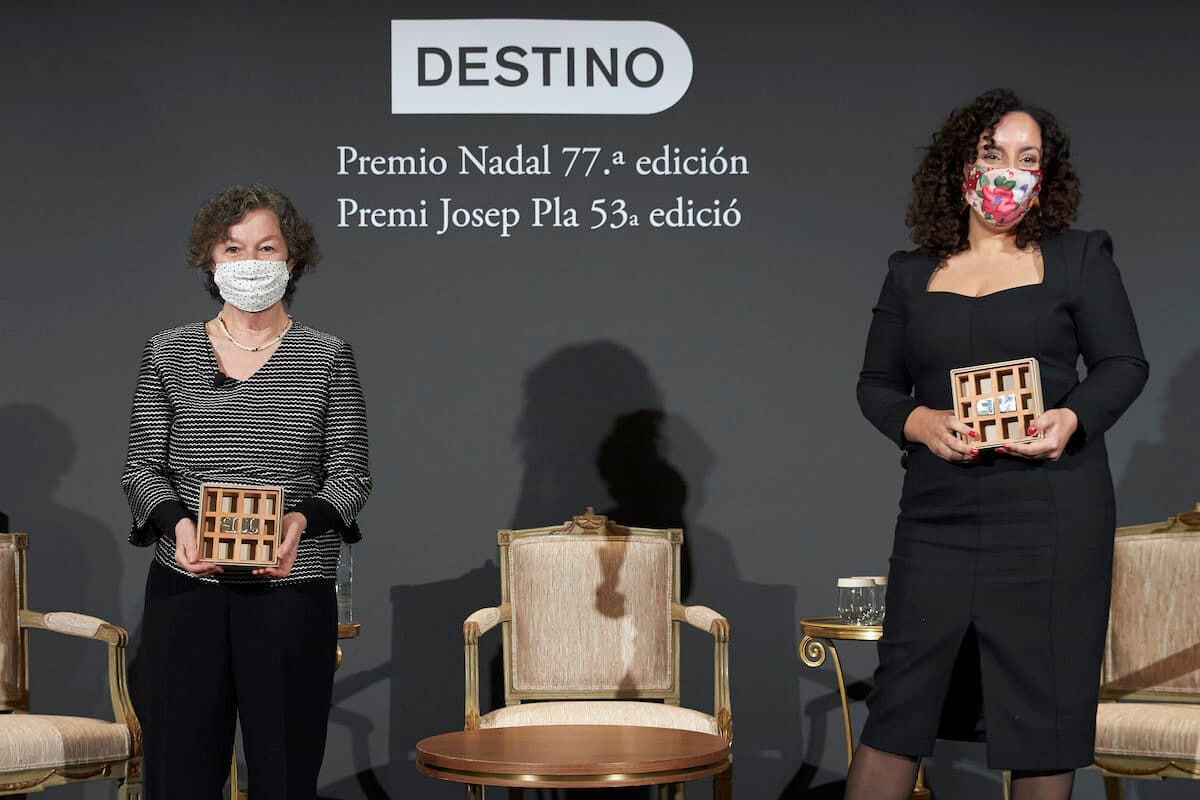
The Nadal and the Pla with masks and distances
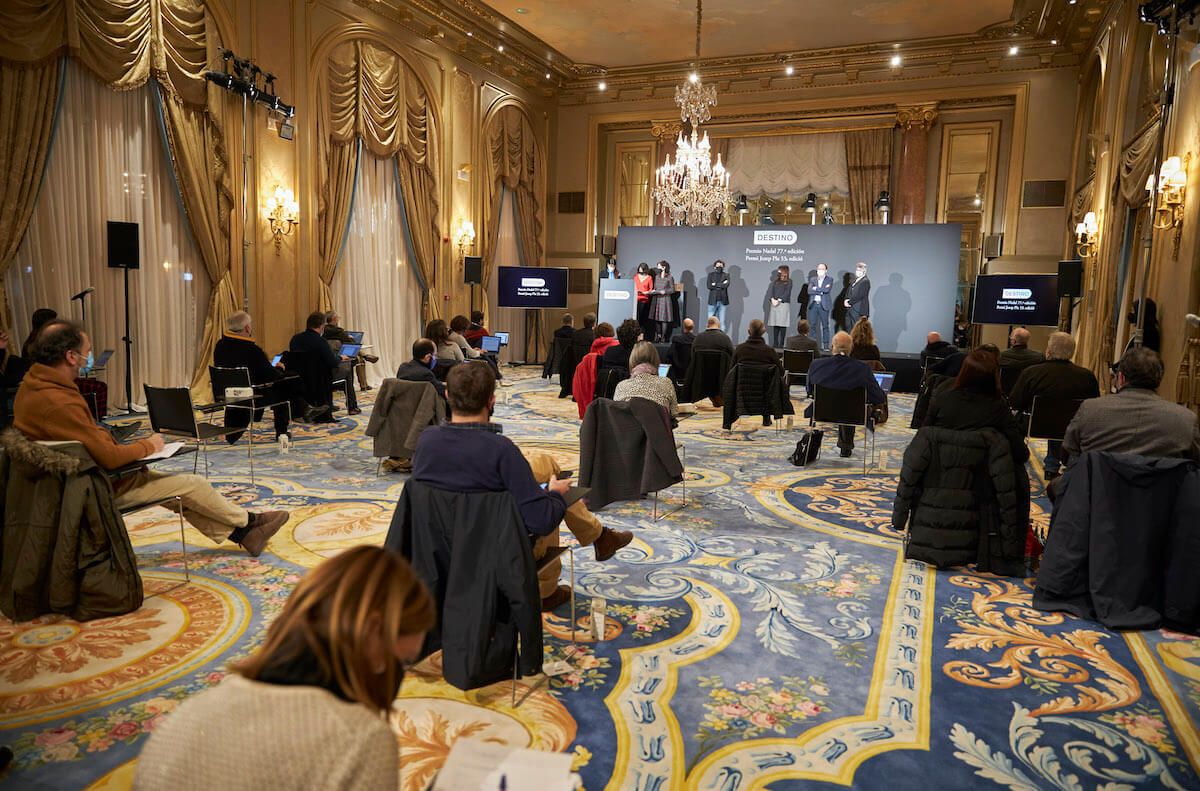
This year's awards ceremony has been marked by the pandemic: masks and distances have become the new guests at the Hotel Palace, where there has been neither the traditional dinner nor the cava toasts on Three Kings' Day. The ceremony has been transformed into a brief event where the two juries announced the winners, who had to collect their award without anyone handing it to them.
Distances had to be maintained so strictly that, even when El Hachmi dropped one of the parts of her award after collecting it, no one could technically help her. This was reminded by the presenter, journalist Lidia Heredia, who at all times kept saying that only the winners could touch the awards and no one could hand them over. El Hachmi, who needed help because she couldn't remember the initial position of the piece that had fallen, fortunately found support in Lorenzo Silva, one of the jury members.
Record edition of the Nadal Prize
The call for the Nadal Novel Prize 2021 has achieved a very high participation, with a record number of 1,044 manuscripts submitted. The jury, formed by Alicia Giménez Bartlett, Care Santos, Lorenzo Silva, Andrés Trapiello, and Emili Rosales, unanimously chose El Hachmi's story, presented with the title Intrusas and under the pseudonym Cristina López.
The Nadal Prize was born in 1944 when the writer Ignacio Agustí wanted to discover authors who had not yet become known during the post-war period. Laforet's manuscript arrived at the Destino newsroom on the last day of the admission period and Agustí was impressed by the narrative style of the young Barcelona writer, who would end up being proclaimed the first winner.
The Premi Josep Pla for narrative was created years later, in 1968, with Terenci Moix as the first winner with Onades sobre una roca deserta. This 2021 it has reached its 53rd edition, with Laia Aguilar, Antoni Pladevall, Marc Artigau, Montse Barderi and Glòria Gasch as the jury and the reception of 60 manuscripts, among them Barbal's, presented under the pseudonym Lluís Coves and with a plot far from Tremp and Pallars, so much so that the jury did not suspect that behind it was the writer of Pedra de tartera, the story that her elders left her as a legacy and opened her way in the world of literature.
Add The New Barcelona Post as your preferred Google source for free
Stay informed with the latest news.
