
Fictional recreations have a part of play and, necessarily, also a good dose of reality. The one Wolfgang A. Mozart (1756-1791) had to live through at the end of his existence was surely more terrible than what Milos Forman recounts in his Amadeus, echoing the not entirely unreal rivalry between the genius from Salzburg and Antonio Salieri based on Peter Shaffer's work, which in turn was inspired by Aleksander Pushkin's (1799-1837). There were possibly jealousies, given the incomprehensible arrival of a "chosen" composer, partaker of the divine flame, but no poisoning with acqua toffana. Nor was there an encounter on his deathbed, with the archrival fruitlessly trying to follow instructions for the sick man to complete a score symptomatically interrupted in the Lacrymosa. With a disconsolate cadence, that movement will accompany the images of the deceased ---in the referred biopic--- being buried in a common grave in Vienna, ignored by most of his fellow citizens.
In one of his most appreciated essays on Aesthetics, Eugenio Trías developed, with examples from the field of artistic creation, and eventually with psychoanalytic tools, the hypothesis that not only is the uncanny the limit of the beautiful, but ---much more unsettling, as well as revealing--- also its condition. The appreciation of beauty in the form of attraction, disinterested experience, or erotic impulse ---sublimated or not sentimentally--- would fulfill a reparative function, a way of suggesting the completion of the split unity that platonically could be said to be us. The hybrid being critically alienated from itself since birth, who seeks and obtains ---or simply fosters in others--- aesthetic pleasure as a form of recreation or consolation never entirely trivial, symptomatic of that foundational crack. Only thus, from a metaphysical conception of beauty, can we begin to understand how in a context of weakness and illness, such an impactful and, ultimately, transcendent work could be born.
Mozart agreed to undertake a commission shrouded in mystery: a mass for the dead that was not to bear his signatureWolfgang A. Mozart was pressed by debts, and not only by the life of dissolute that has been attributed to him, but also because of the stays in spas that Constanze needed to recover from childbirth. Surely for this reason he agreed to undertake an unusual commission, full of mystery: a mass for the dead ---in the style of Jean-François Gossec's Requiem (1760) or, closer in context, that of his friend Michael Haydn (1771), brother of the celebrated composer--- which should not bear his signature. For, the one who commissioned it, who had lost his wife, supposedly wanted to pass himself off as the composer. A situation no less sinister than that of the Pushkin-Shaffer-Forman plot, with a similar result. Mozart could not not feel that this work could mean also its end. A terrible end, and who knows if a saving one from the point of view of transcendence, like that story of the Oriental Novels by Marguerite Yourcenar (How Wang-Fô Was Saved) in which the protagonist finds a way out of the fatality of his condemnation in the work of art that he goes on to compose.
Currentzis officiates a memorable evening
Mozart's life hardly left subsequent generations indifferent, interpretable as it is in a romantic key: that of a misunderstood genius mistreated by fate, who leaves the world too soon and in obscene conditions. However, it is evident that his name has transcended mainly because of the music he left behind:operas of an ingenuity unmatched in their context, piano concertos that anticipate the passionate condition of the nineteenth-century subject, and a symphonic triptych of no less untimely flights. Also a huge and unfinished mass ---in C minor, Kv 427--- and of course, as an unusual culmination, that hisRequiem in D minor, Kv. 626. Currentzis's staging at the Auditori in Barcelona abounded in the solemnity of the occasion, with a semi-dark atmosphere ---the lighting, similar to that of candles, from the music stands--- and an introduction to the subject starting from the surprising ---unprogrammed---Funeral Music for a Mason, Kv. 477.The onslaughts with which the musical text by Mozart advances, like waves of destiny, embody a desire for transcendence inherent in every living beingA solemn march that begins ex nihilo with the subtle and cosmogonic timbre of the clarinet, and which grows in intensity, as if facing destiny with admirable dignity and musically conveying that experience of the end – "key to true happiness" that Mozart had expressed in a letter to his father. After the music he composed for the Masonic lodge, which he had entered with him, a truly unusual scene would be witnessed: in total darkness, except for a candlelight, four individuals sang a cappella an archaic version of the requiem, after which ---now yes--- the final work of art could begin. The onslaughts with which the musical text by Mozart advances ---that requiem aeternam dona eis, which will complete the request and may perpetual light shine upon them--- not only resonate in the consciousness of music lovers, but also embody, like waves of destiny, a desire for transcendence inherent in every living being from its biological immanence, and which here is formulated as a desire for spiritual health, beyond the lifespan. The position of an isolated subject, in need of solace against the inclemencies ---that furious Dies irae--- which Mozart not only anticipates with his final work.
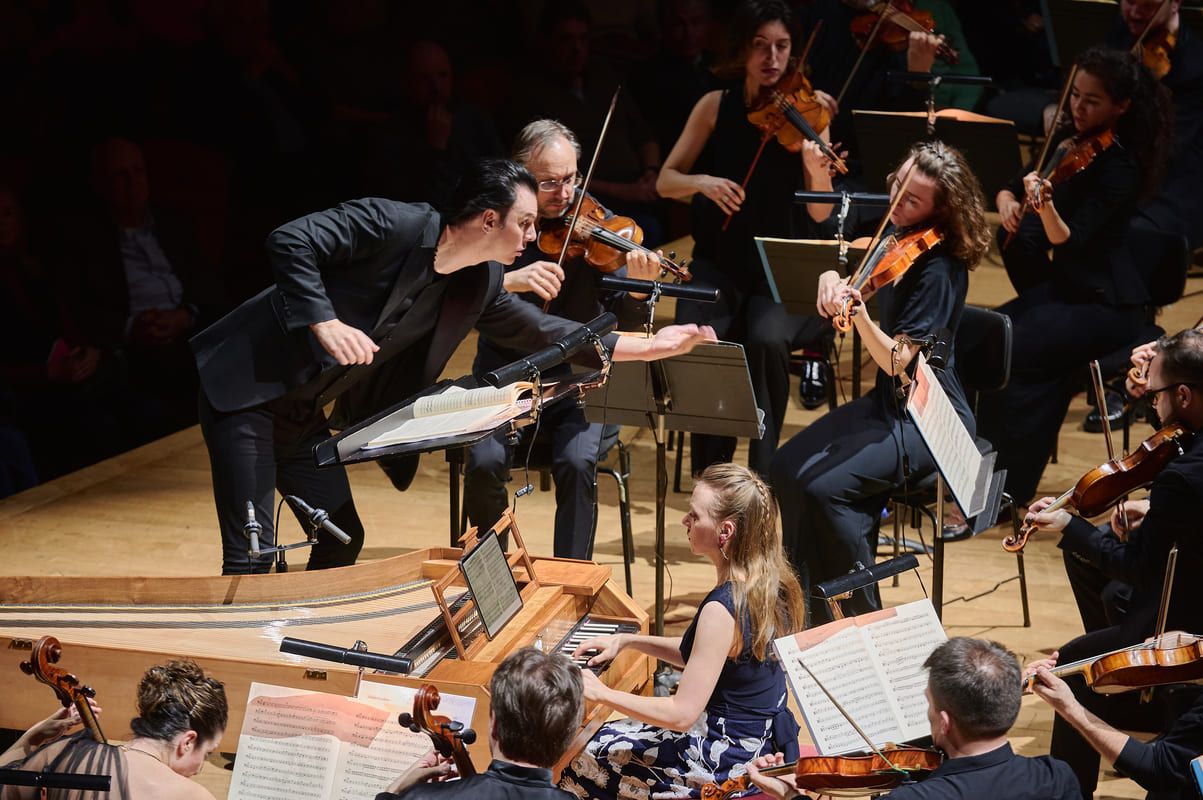
Some piano concertos, specifically the two he composed in a minor key, are a faithful reflection of the struggle of an anguished conscience, and it is no coincidence that Beethoven wrote the cadenzas for the Concerto No. 20 in D minor, Kv. 466, his favorite. On the occasion of this generous concert organized by Ibercamera, Mozart's other great pre-romantic declaration of intent ---the Piano Concerto No. 24 in C minor, Kv. 491, from 1786--- could be heard in a version starring Olga Pashchenko, who played a copy of the 'Walter' that Mozart himself had used at that time. The sound of the pianoforte, more delicate and agile ---though with less amplification than modern pianos---, conveys the fragility of the protagonist, powerful precisely from the awareness of his ambivalent privileged position: at the center of everything and able to cease to be at any moment, meanwhile delighting in melodies that in the Larghetto the soloist rendered with inspired variations, as would be the cadenzas of the tempestuous outer movements.
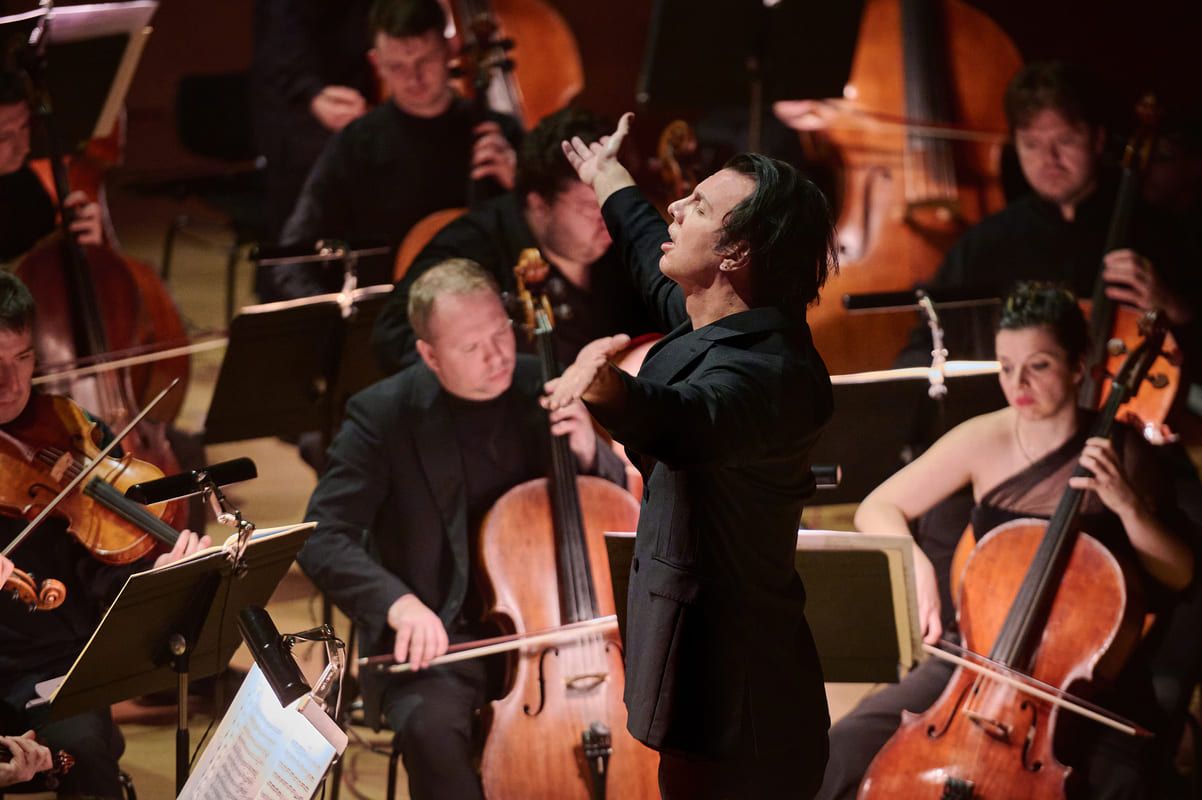
Teodor Currentzis placed the orchestra at the service of the soloist, achieving an organic sound, integrating the abundant timbral and rhythmic contrastsThe interpretation, almost as an encore, of the brief Concerto for Harpsichord in D Major by Dmitro Bortniansky (1751-1825) once again evidenced the enigma of beauty. How, through a musical grammar similar to that of his contemporaries, Mozart distances himself abysmally, pointing to the new airs that the soloist would concretize -now yes- with a paradigmatic encore: the third movement of the sonata Moonlight of Beethoven, in which the vehemence of the summoned affections seems to require an instrument with greater reverberation. As the guiding thread of the generous evening organized by Ibercamera, Teodor Currentzis knew how to put his orchestra at the service of the soloist, achieving an organic sound, in which the abundant timbral and rhythmic contrasts were integrated into the whole and not disjointed, as sometimes happens. Even in the star piece, Currentzis would reject the spotlight ---at the foot of the stage, without a platform or podium--- knowing himself vehicle of a music that connects material and immaterial reality, through an invisible but determining vibration. Masterful in the management of intensities, in the clarity and distinction of a choir horizontally ordered behind the orchestra, he also knew how to extract the best version of the four soloists ---soprano Elizaveta Sveshnikova, countertenor Andrey Nemzer, tenor Egor Semenkov, and bass Alexey Tikhomirov--- with the effective novelty of including a countertenor in place of the usual mezzo.
Coda
In the beginning is vibration, a wave-like movement that establishes rhythmic patterns and adopts colors or tonalities, when it does not unfold in a fascinatingly unpredictable way. In the version by the Greek-Russian director Teodor Currentzis, the Requiem of Mozart does not merely narrate the end; it transcends its condition as a mass for the dead, it asserts itself as open door to another dimension of the same reality, enhancing the recognition in life of the subtle energy that perpetuates musical vibration. A version to remember, which the audience knew how to appreciate with uproar, having remained with bated breath, in eloquent silence, after the final and first note of the Lux Aeterna.
Add The New Barcelona Post as your preferred Google source for free
Stay informed with the latest news.
