[dropcap letter="E"]
he caravaning sector has consolidated in Spain and is beginning to slightly approach important international markets such as the French, German, or Dutch. This is according to the latest report by the Spanish Association of the Caravaning Industry and Trade (ASEICAR). The same study indicates that the sector's annual growth in the next five years could exceed 30%. Proof of this upward trend is that the number of registrations of this type of vehicle in the last five years has increased by 347%, and the sector's annual turnover in 2017 exceeded 477 million euros.
A clear example is that the last edition of the International Caravaning Show held in Barcelona, after 33 editions, has been the most successful edition, growing by 43% in exhibition space. "The sector is going through a sweet moment after years of recession," explains Ramón Nuez, President of the International Caravaning Show. And within this sector, the rise of motorhomes and campers stands out especially. Campers, conventional vehicles transformed into homes, are experiencing great growth, especially among young people, and in our country, as in many other regions, they are living a glorious moment.
CLASSIC BRANDS AND LOCAL ADAPTATIONS
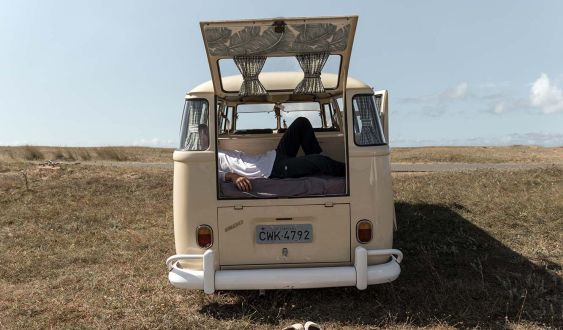
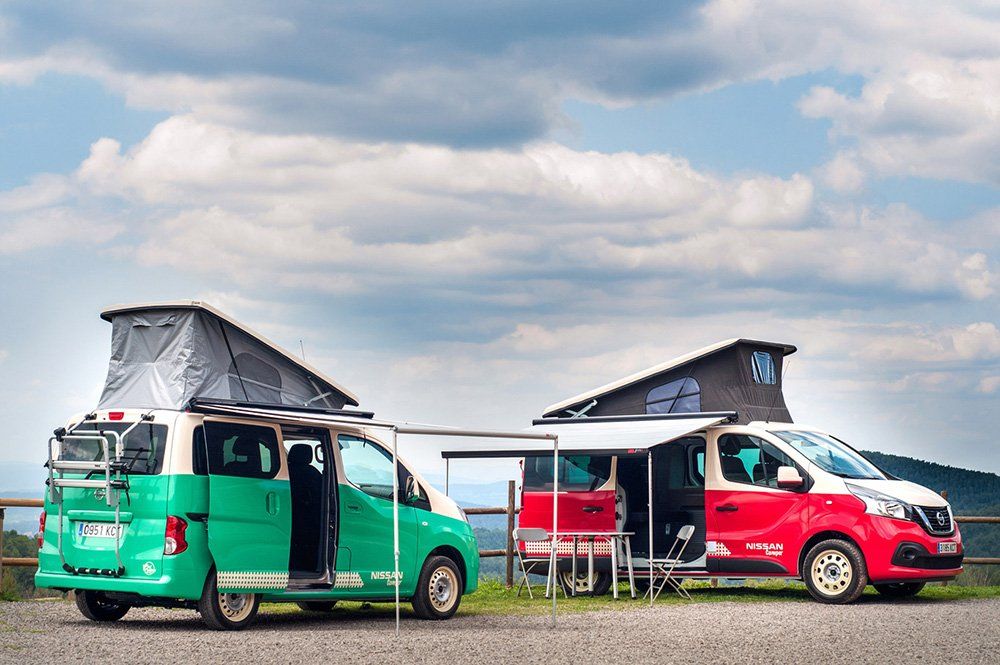
Within this modality, there are classic brands such as the German Westfalia and Volkswagen, which allied more than fifty years ago to create vehicle-homes. But currently, brands like Nissan have joined the trend and adapt their Evalia and Combi van versions with the help of Bram Tecnologies -a company located in Gironella (Barcelona)- to manufacture campers with pop-up roofs, bike racks, and even a 140-watt solar panel and side awning.
In other countries, for years, recognized brands have allied with other transport brands such as Fiat, Ford, or Citroën, to create authentic motorhomes with all the comforts. This is the case of Pössl or Karmann. Here, we find companies like cat|van|go, Camper Diem or Bivac, which adapt van models à la carte for all tastes and needs.
It's not all about buying: vehicles like motorhomes or campers intended for rental also have an upward trend. In Catalonia, there are companies that rent campers like the Wolkswagen Ocean T6 or the California Beach model for 250 euros a weekendTHE IKEA OF THE CAMPER
But the adapted van sector goes far beyond camperization. Around it, proposals as interesting as Nest by egoé have been created, the proposal created in 2016 by a brand from the Czech Republic that, in the purest Ikea style, creates detachable modules that include a folding bed, a water module, a cooking module, a refrigerator, a folding table, and a luggage bag for common vans such as the Renault Trafic, the Volkswagen Multivan, or the Renault Kangoo. The kits, depending on the van model and the modules included, can cost between 2,100 and 3,600 euros. From the companies that market it in Catalonia, such as Dream Fontanilles or Blacklabeltrade, they guarantee a delivery time of between 6 and 8 weeks. "It's a very good option to quickly have a work van during the week and on the weekend adapt this same van to use it for travel," explain Dream Fontanilles. "In addition, the module folds down to a quarter of its size, which allows you to store it perfectly when not in use."
At another more basic level, Solovan, a company located on the slopes of Montseny, manufactures, among other things, mattresses exclusively for vans of different thicknesses, sizes, colors, and number of folds. Prices range between 200 and 250 euros. With a mattress, then, it can already be considered that we have a camperized van.
GENERAL PURCHASE AND RENTAL
Despite what it may seem, there are many prices for campers depending on the facilities and installations they offer, but fully equipped and finished, they cost on average between 40,000 and 55,000 euros. For this price, traditional motorhomes can also be found, with more capacity but possibly not as easy to park anywhere. Classic caravans (those that are towed and do not have the automobile vehicle part) continue, however, to decline in sales, as indicated by ASEICAR.
But not everything is about buying, and vehicles such as motorhomes or campers destined for rental also have an upward trend. In Catalonia, for example, companies like Vantrip, rent campers such as the Wolkswagen Ocean T6 or the California Beach model for 250 euros for the weekend.
With the data in hand, then, it can be said that vacation trends are changing and that there is a clear commitment to enjoying nature without schedules or prior reservations. Perhaps we can say that caravaning is already a lifestyle. Instagram accounts such as Vanlife Diaries, Van Clan or Van Life District, among many others, attest to this, with thousands of followers.
Add The New Barcelona Post as your preferred Google source for free
Stay informed with the latest news.