
A library with volumes predating the year 1500. A dance school, and a music school. Theater classes, language classes, and seminars. An exhibition hall, and a reference meteorological station. All of this, in a single facility: the more than centenary Centre de Lectura de Reus.
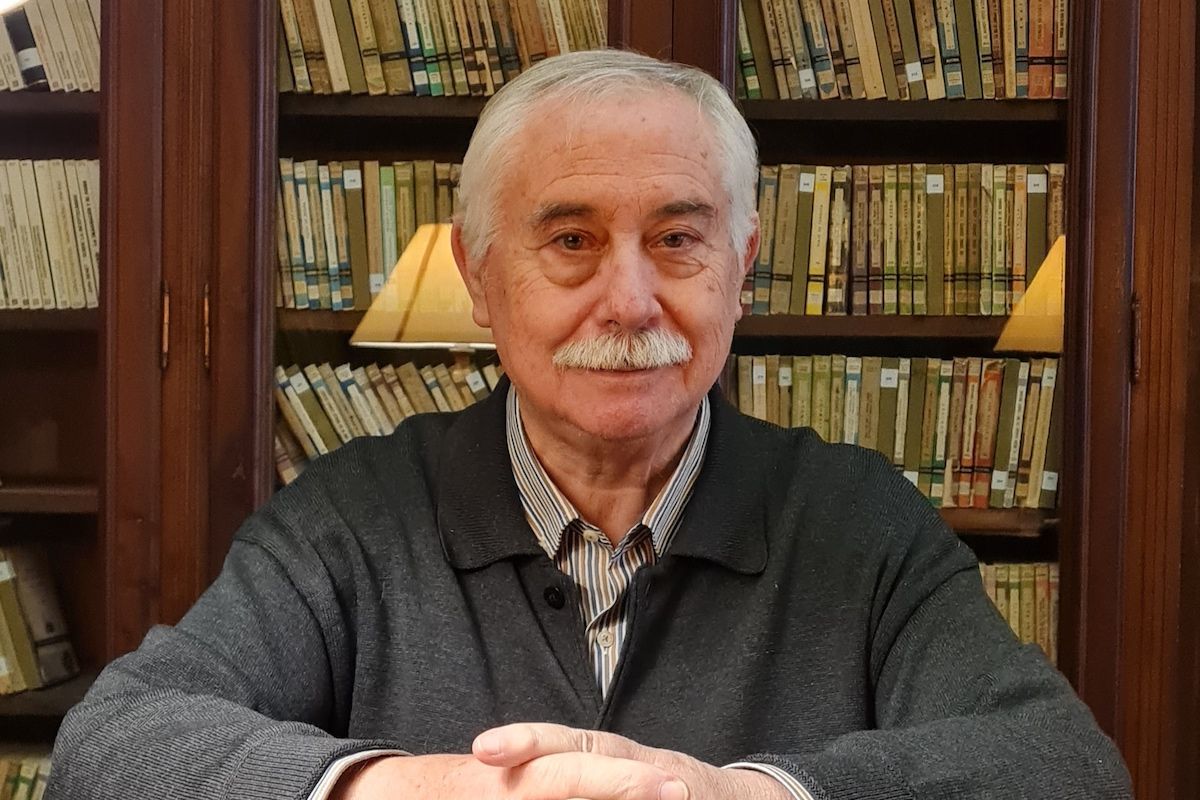
Located in an old Noucentista building, the center is a "conventional multitasking athenaeum" and versatile, with its library as its emblem. Lluís Miquel Pérez, president of the center, explains it. He comments that it was founded in 1859 as one of the first athenaeums in Catalonia, with a main objective: "to bring culture to all social classes."
Now, 165 years later, it brings this culture to the citizens through courses and workshops on various subjects that include languages such as Italian and German. Not only that, but the entity has been articulating stable offerings that have consolidated into projects with their own identity, such as its dance school, which has turned 75, and its music school, with four decades of history.
The eclectic cultural center could not complete its varied and heterogeneous offer without a theater and without a renowned exhibition hall. The Teatre Bartrina, built by the center itself in 1905, and the Sala Fortuny, especially focused on contemporary art, are also protagonists of the facility. However, the jewel in the crown of the center is, without a doubt, its library, and the treasures that fill its shelves.
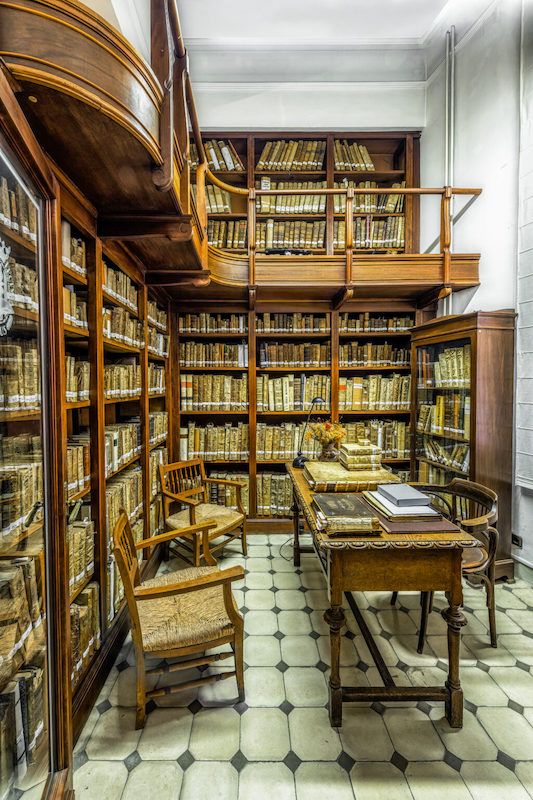
The center's library is one of the most imposing heritage libraries in Catalonia, with more than 320,000 documents. Among them, the more than twenty incunabula preserved by the athenaeum stand out especially. These are volumes printed before 1500, mostly bound in parchment, without a title page or pagination. Sins in Lent are the protagonists of the oldest volume kept by the center. The document El Sermonarium de peccatis per adventum et per dues quadragesimas was printed in Venice in 1476 by German typographers. The valuable catalog of the Reus center also includes books from the 16th, 17th, and 18th centuries.
Only researchers can consult these historical jewels. The equipment transports them back in time through these ancient volumes and period furniture. Its halls, classrooms, and transit spaces preserve the aura of the years that saw the birth of the cultural center. Its atmosphere persists while its uses have evolved to adapt to a changing society.
To this end, the center has added proposals to its cultural offer to such an extent that "activities overlap, it's non-stop." The profile of its members has changed over the years, which has led to diversifying the offer. In this context, the center has about 1,700 members, while it has more than 460 enrolled students.
Given this situation, the Centre de Lectura has made a commitment to expand its facilities, by constructing a new building. The new property, whose structure is already built, is awaiting a second phase to finalize the adaptation of facilities.
In this scenario, the center has had the support of the Institut Català de Finances (ICF) which, through its Crèdit-Inversió line, has granted a loan of 500,000 euros to the historic entity. Thus, it has advanced resources to the institution to cover subsidies granted by the Reus City Council, the Tarragona Provincial Council, the Generalitat, and the Ministry of Culture, some of which are pending collection.
The president of the institution anticipates that the center's intention is to be able to start the next academic year with the new building operational. The expansion, with a budget of 1.5 million, will add 1,000 square meters to the nearly 5,000 available to the Centre de Lectura. More space to continue the work of bringing culture closer to citizens from all its angles and conceptions.
Add The New Barcelona Post as your preferred Google source for free
Stay informed with the latest news.
