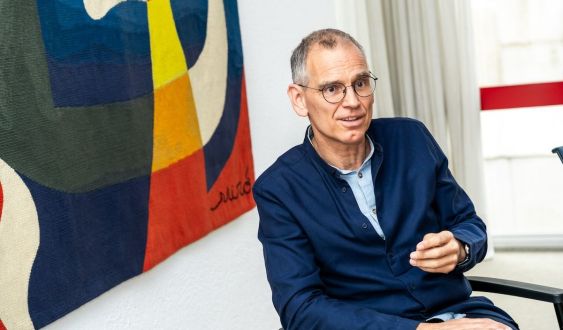
Marko Daniel (Aachen, Germany, 1964) was already interested in Joan Miró when he studied Art History at University College London, but it was with his doctoral thesis that he fully encountered the Catalan artist. He was writing about the cultural heritage of the Civil War and came to Barcelona to do fieldwork.
Some time passed until that curiosity narrowed even further. He worked at the Tate Modern in London and curated an exhibition on Miró, Joan Miró: The Ladder of Escape, a major retrospective with more than 150 works that was shown in 2011. For Daniel, it meant a total immersion in the figure of the painter for four years. And he got to know the Joan Miró Foundation, as well as the artist's family in Mallorca. "I totally fell in love. Both with Miró and his work and with the foundation," he says. In early 2018, he became its director, replacing Rosa Maria Malet, who had been at the helm of the institution for almost 40 years.
--- With the celebration of its 50th anniversary, what does the Miró Foundation want to be?
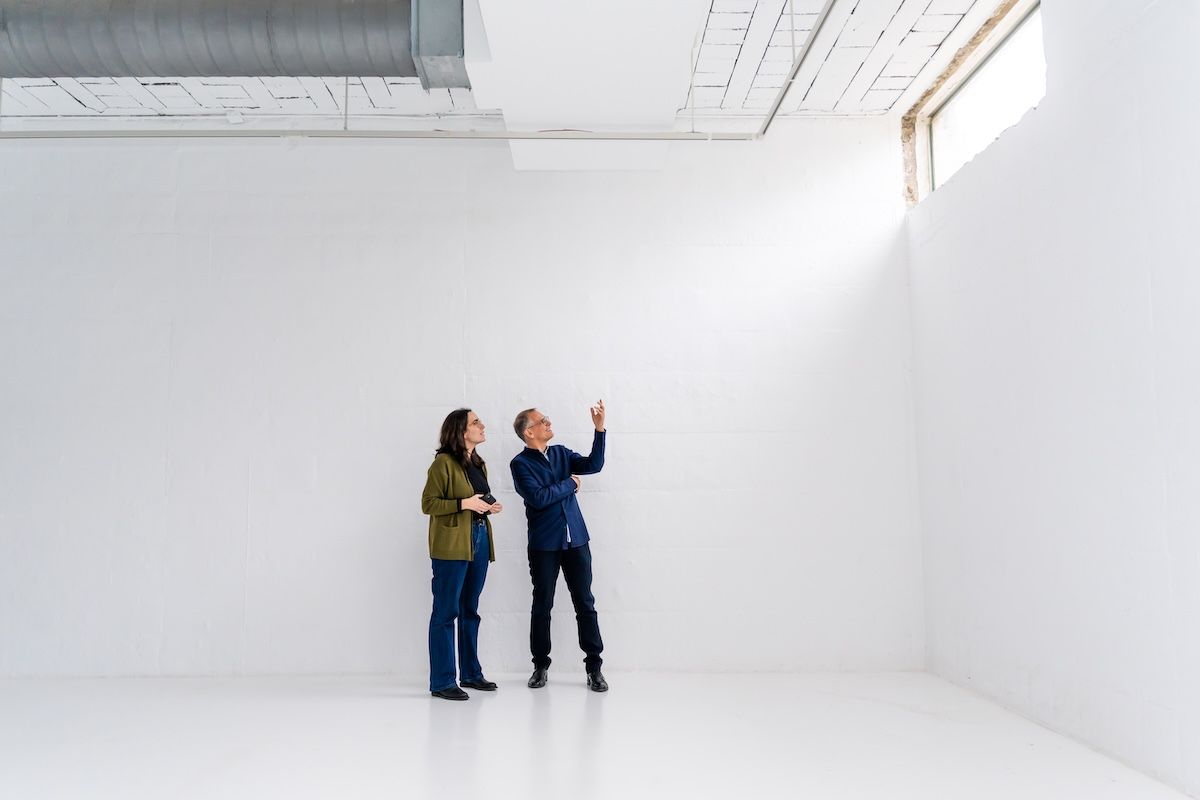
--- We are working to be a natural light museum. The foundation was created by Miró and Sert with more windows than a greenhouse. Museums are no longer built this way, at least not in recent decades. But, 50 years ago, it was absolutely logical to create a building that was aesthetically and architecturally open with transparent walls, with the aim of welcoming citizens and allowing Miró's art to be seen with light. For conservation reasons, many of these windows have been closed, with bricks or plasterboard, and now we are opening them. Light is dangerous and destroys works of art. We say this to preserve them, but artists want light. Miró's studio in Mallorca was by the same architect and was a space of light. That's why Miró wanted to recreate this atmosphere here.
--- When did you start opening windows?
--- For two or three years now. It's a reminder: natural light is important. We do it to let it in again and to make this transparency and openness look better. These are not only aesthetic or architectural values but also social and political ones. A window allows you, while inside, to relate to the outside world. This makes us breathe in a more relaxed way: you get a bath of nature at the same time you get one of culture. This juxtaposition allows us to see that a museum is not a shoebox or a closed space, that it is not totally isolated from the rest of the world. Art can be a refuge and a space for disconnection, but it also allows for critical reflections on our relationship as individuals with other people, society, or the world. We know that being in this building, located in Montjuïc park and overlooking the city, completely changes your attitude.
--- Why?
--- I've been here for seven years now, but every time I go up the entrance ramp of the foundation, I have a feeling of elevation. It's a very light ramp, not even a climb, but it elevates you a little. And, when you reach the doors, through the different layers of windows, you see directly, before entering, the city in the background. Every day I feel like I enter a space of calm. There is serenity and, at the same time, an effervescent buzz of ideas and creativity, with infinite possibilities to create new possible futures. An integration of everything inside the foundation with everything outside; behind us, there is the park and, in front of us, the city. This relationship is very powerful, because we are here, in Barcelona, for its citizens and for people who come from outside to get to know us better. All these relationships are very present.
--- Which works need to be protected most from the sun?
--- It depends on its nature. A tapestry is very sensitive to direct light, but a sculpture is not so much. An engraving or a work on paper are very sensitive, while an oil painting is much less so. Therefore, to assess the opening of new windows, we also have to work a lot on the relationships with space. Looking ahead to next year, in spring, we will open access to the cypress garden to continue with this integration of indoor and outdoor spaces and create more connection. You enter the foundation and you can go out to see the city. There are entrances and exits everywhere. It is a visual and experiential opening.
--- All this with the celebration of the foundation's first half-century in the background.
--- The fact of reaching 50 can only mean one thing: things are no longer the same as 50 years ago. We are implementing these changes to help the foundation meet the needs of the moment and to work for the future. We always think that we are here for the people of tomorrow, not for those of the past. Transparency and openness are values that are also very significant because we celebrate 50 years the same year that marks 50 years since Franco's death. Our life and that of democratic Spain coincide. This link with society is very important to us.
--- And now Miró in Japan.
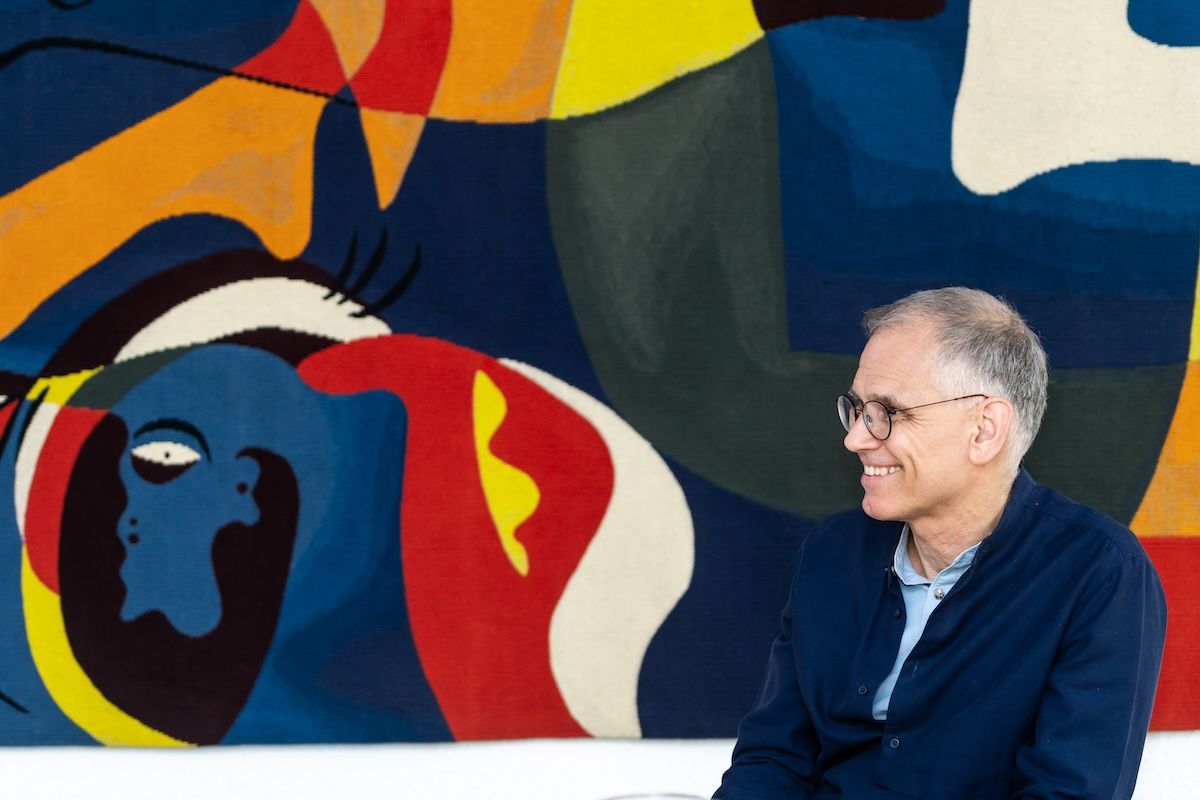
--- Miró visited it in 1966 to hold a large retrospective exhibition in Tokyo and Kyoto. Afterwards he returned because he was commissioned a large project for the Osaka Exhibition of 1970, where he made an enormous ceramic mural that is now in the National Museum of Art in Osaka. This is the physical connection between Miró and Japan. But all this began much earlier because Miró was very interested in Asian thought and Zen Buddhism. When he visited the country, he had accumulated a curiosity of almost three decades. The first book dedicated entirely to Miró published in the world was written by a Japanese poet and artist in the 1930s. Given all these contacts between Miró and Japan, it is absolutely surprising to be able to hold the largest exhibition ever held in Tokyo since 1966. That no such important exhibition has been organized in all this time is a miracle. But it also means that there is enormous curiosity to see Miró's work.
--- Before, you spoke of Montjuïc and the centenary of the 1929 International Exhibition is approaching, with all the changes that are expected.
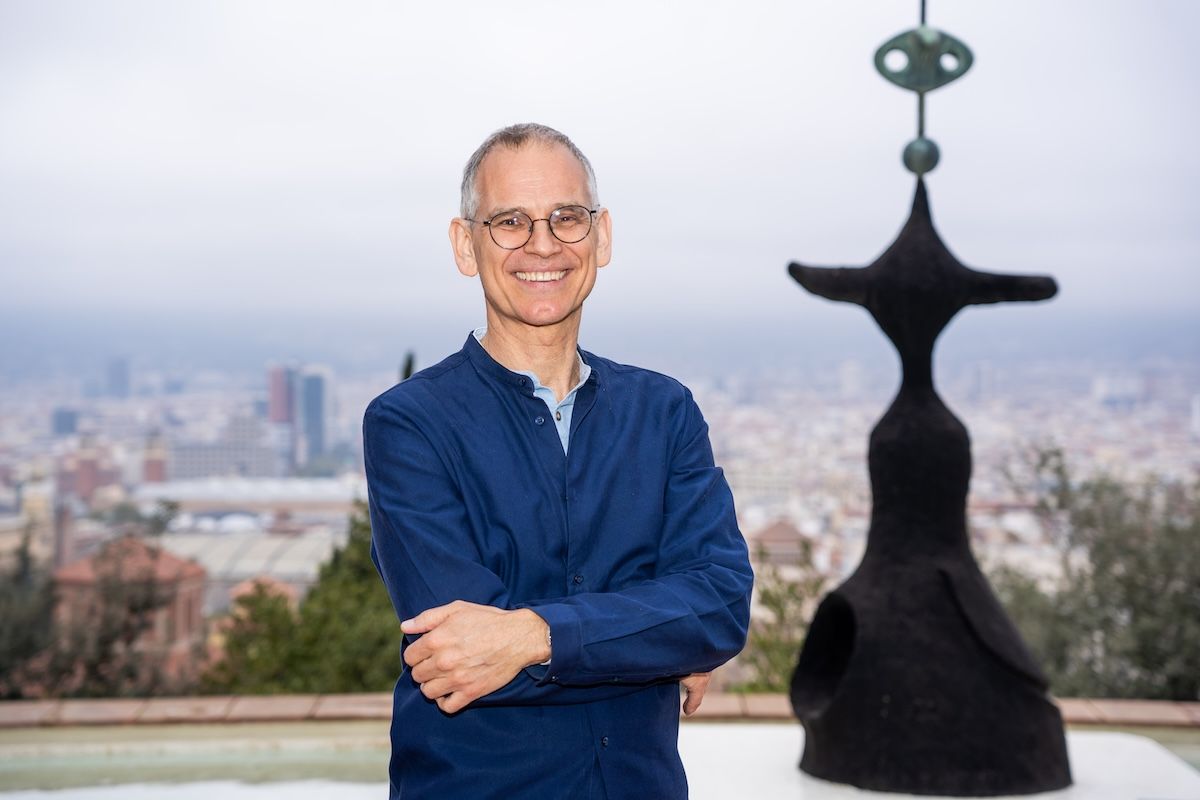
--- It's a great opportunity for us. Fira de Barcelona is a consequence of this great exhibition, and the vision that existed almost 100 years ago was already to open the city to its natural surroundings. If you take the train from Maresme or come from the south, Montjuïc is that rock you see on the horizon. When you are here and you see how Barcelona grows, not only the city but the entire metropolitan area, Montjuïc is becoming more and more central. For me, it is in the center of the city, and in the years to come, we will see it even more. This green space here is an enormous asset for Barcelona, a city that doesn't have much green. Montjuïc is the Central Park of Barcelona.
--- And you always say it's not a mountain.
--- It's not, it doesn't even qualify as a mountain geographically. It's a small hill, but above all, it's a park. We have many sports, scientific, and cultural facilities... The diversity of the offerings is very important, as is the biosphere. What do we need? For communication to work very well. Visitors arrive by public transport, and we want it to work well, with more frequencies, but also for people to have the confidence that they can get here by public transport. We have a circular bus that goes from Plaça Espanya to all the facilities. It's the 150, why isn't it called the "Montjuïc Cultural Bus"? But there are other things. At night, the park is very dark. Many paths need to be fixed and clarified. Everyone must be able to come with dignity; in winter, people shouldn't be afraid to go out in the evening. Perceptions are very powerful. That's why, when it's called a mountain, it seems like an excursion and it doesn't help. Here you don't need boots or a tent. It's a green lung that makes us breathe differently.
Add The New Barcelona Post as your preferred Google source for free
Stay informed with the latest news.
