
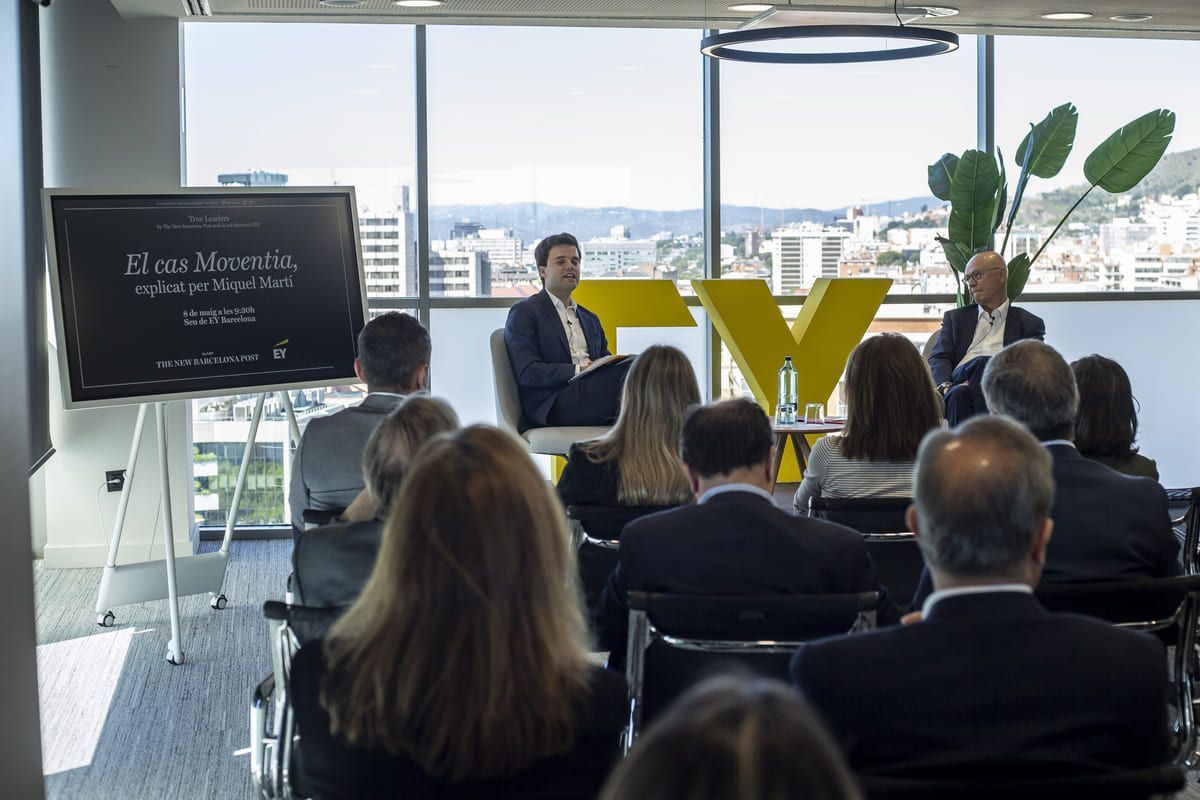
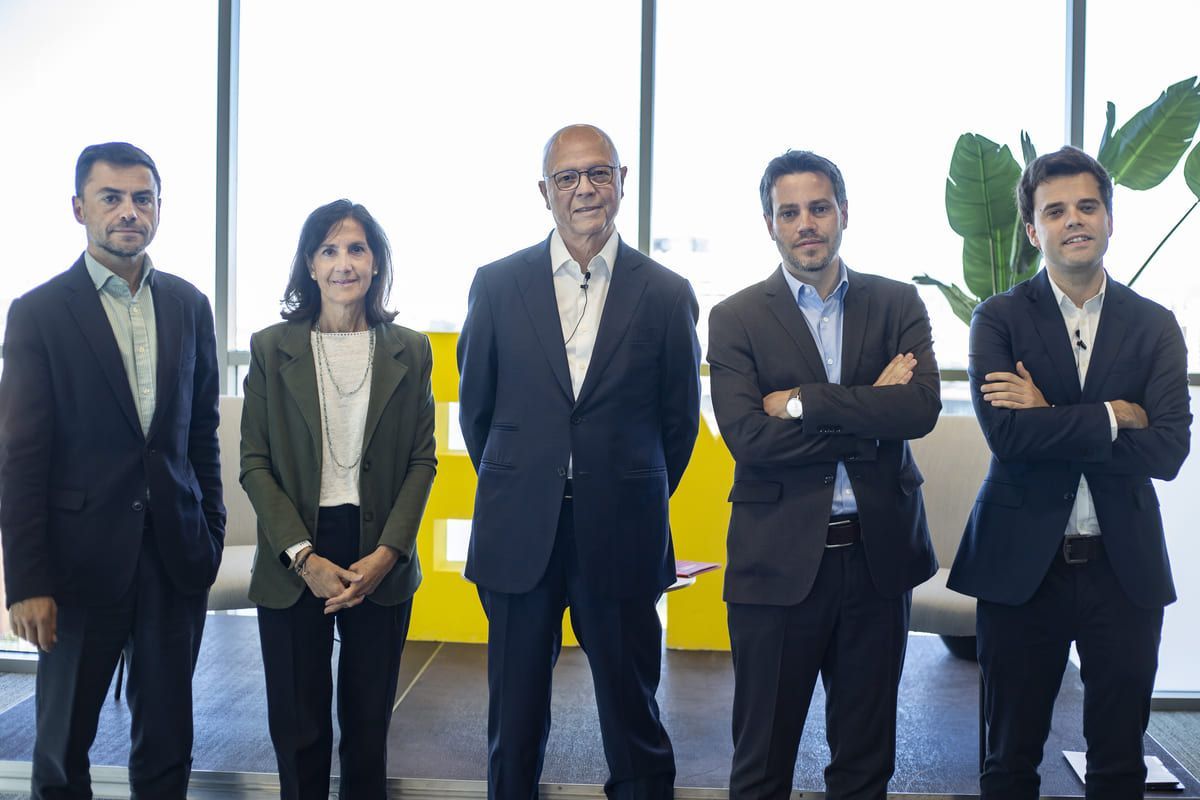
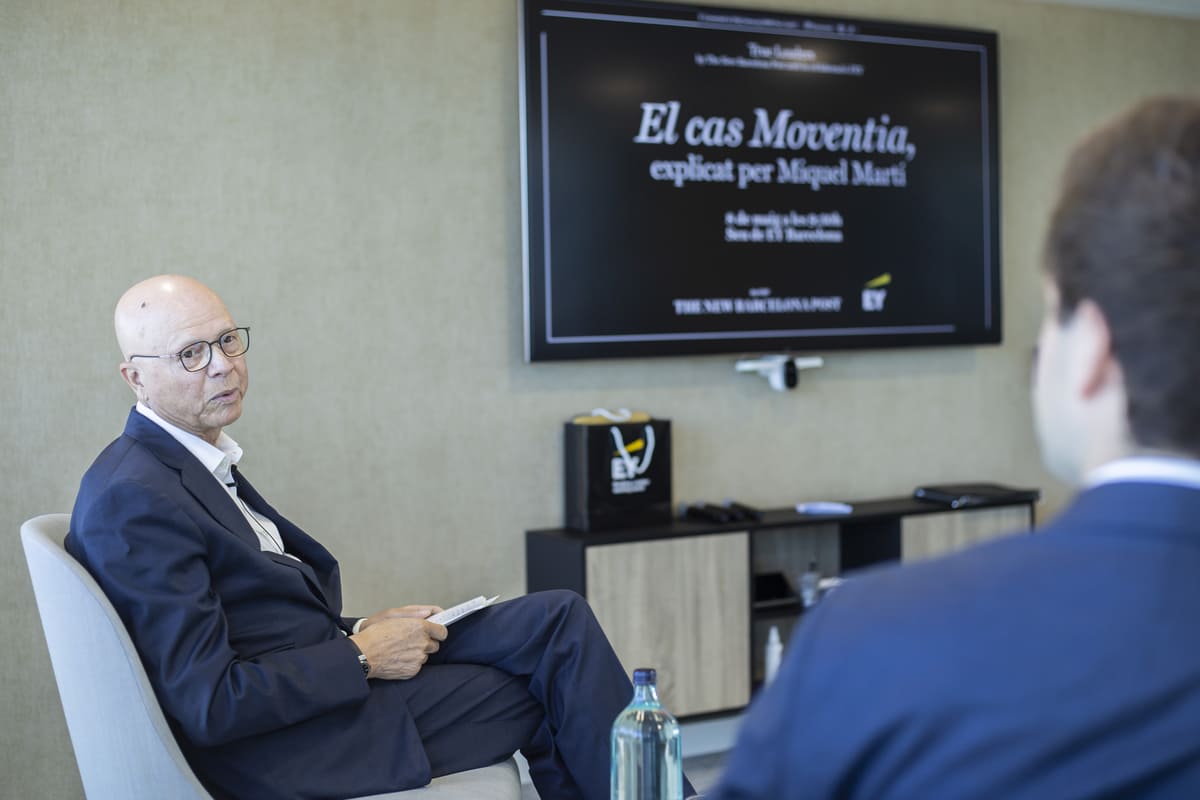
Destiny or chance? Many have spoken and written about the ups and downs of a path, but few have done so with a legacy on wheels of 100 years of history. The president and CEO of Moventia, Miquel Martí Escursell, assures that "leadership is the ability to move people and movement is proven by walking" in a new session of the True Leaders cycle organized by The New Barcelona Post and EY to learn firsthand about different business leaders and their success stories in an exclusive environment with different presidents, CEOs, and CFOs. This is the Moventia case.
Miquel Martí Escursell was born in Sabadell, studied Law and Business Administration, and since 1978 he combined his studies with work in the family business.He is a member of the third generationof Moventia and has received different awards from Cecot, the Rotary Club of Sabadell, Aijec and the Chamber of Commerce of Sabadell. The first seed of Moventia began in 1923 with Miquel Martí Adell ---a native of Morella (Castelló)---, an urban bus in Sabadell and a small vehicle repair shop. Its foundational mission was and is to provide collective and private mobility services to people. Miquel Martí remembers as if it were yesterday the lessons from his grandfather, with whom he shares a name and surname: "He did the most difficult thing, which is to start. He was an orphan of both father and mother. He bet on motorized traction. He worked at night in the textile factory and drove a bus during the day in Sabadell."Overcoming obstacles
The spark of resilience or nonconformity has been a constant driving force for Moventia throughout its centenary history. "We have known how to get back up when we had to face risks that could make us disappear," recalls Miquel Martí.
The first major setback was the Civil War when the company, which already had 50 workers and 15 buses, was collectivized. The founder managed to recover ownership and part of the confiscated vehicles to rebuild it almost from scratch. The second hard blow came in the 80s when the Martí family lost the concession for urban transport in Sabadell due to the municipalization of urban buses and, again, the risk of disappearing returned.Martí: "We have known how to get back up when we had to face risks that could make us disappear"
The company merged in 1985 with its lifelong competitor to survive, thus creating the Sarbus Group between the Martí and Renom families. "The young people carried it forward," he adds. It was the time of the third generation led by Miquel, Josep Maria and Silvia Martí Escursell who wanted to be main players in two disruptive sectors such as passenger transport and car sales.
However, destiny still had a third "stumble" in store for them to test them when their partner in the Sarbus Group wanted to sell their share: "We were heavily indebted. It was not an easy decision, but we bought their shares. We were again a 100% family business, without partners, and we approved the first strategic plan and the first family protocol," he recalls. A new turning point overcome.
The fourth generation of Moventia is present and future. Miquel Martí Pierre has led Movento since early 2023 and has been working in the family business for fifteen years alongside his cousin Santi Colomer Martí. "They have a vocation for expansion and internationalization. We suffered the risk of the pandemic with 600 buses and a thousand drivers stopped. Without income. We faced it thanks to ICO loans," points out the president of Moventia.The family (multinational) company
The multinational family company currently has two major business branches, Moventis and Movento, with a presence in Europe, America, and Asia, and employs more than 7,300 professionals.
The key to Moventia's success has no secrets: the value of honesty and commitment, believing in the team, training and retaining talent, diversifying both in brands and territory, commitment to society, and the always longed-for and decisive family unity, among others. "We have the right to make mistakes and we have to make the team aware of the company's direction. People follow you if they know where you are going. You have to have a long-term vision," he explains.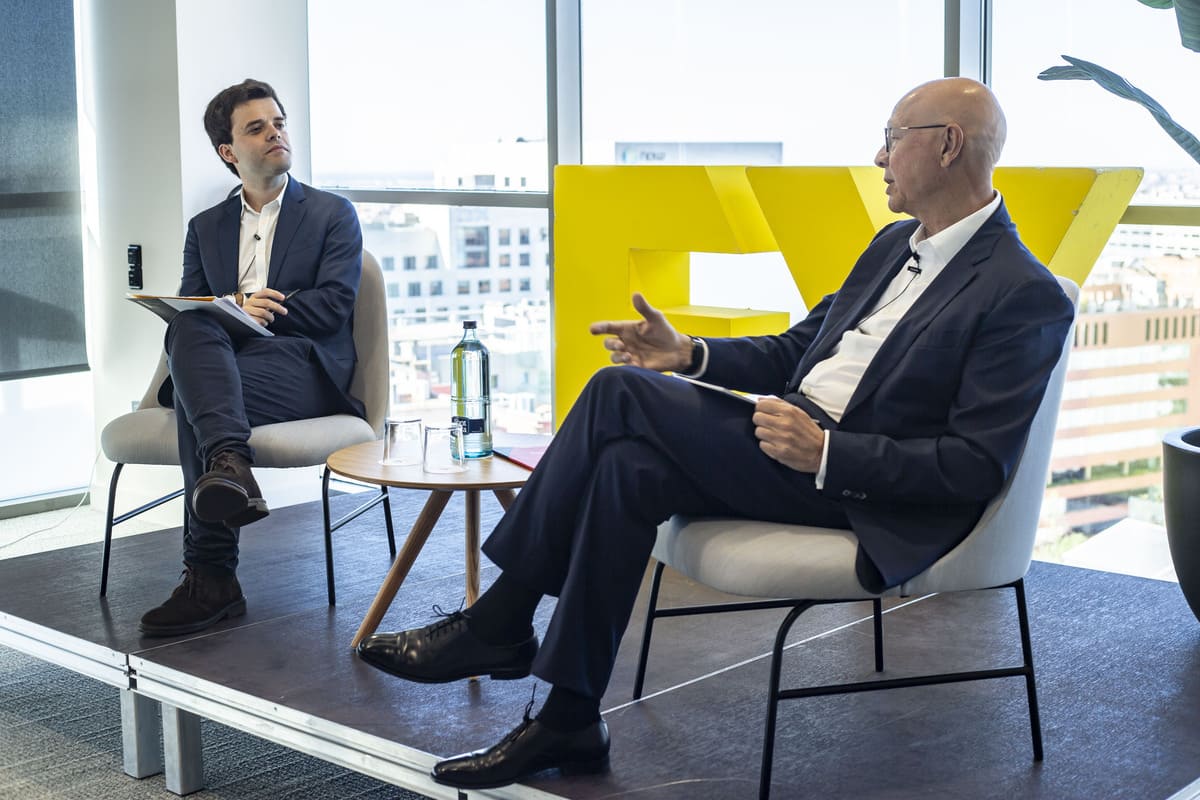
In this regard, Miquel Martí also asserts that "Moventia is a family business that puts the company first because if the company does well, the family will do well. As a family, we have done our homework quite well, but we have not yet been able to structure the family board," he acknowledges.
Martí: "Moventia is a family business that puts the company first because if the company does well, the family will do well. As a family, we have done our homework quite well, but we have not yet been able to structure the family board"
Some questions now take on more prominence than ever: How can the whole family be brought closer to the reality of the company? How can family members be linked to the company and have responsible shareholders in the future? How can they be made to feel the company is also theirs? The answers are multiple, but everything points to the family protocol.
Over the last 15 years, Moventia has approved three strategic plans governed by the foundational purpose of"facilitate economic development through connecting people."Permanent innovation and environmental and economic sustainability have been part of its winning hand. "You have to have a strong balance that gives you credibility with banks so they can support you," insists Martí.A historic opportunity
The Next Generation Funds deserve a separate chapter. According to Miquel Martí, "they are a historic opportunity despite the difficulties in accessing them." In their case, they have submitted more than 300 applications in digitalization, decarbonization, fleet renewal, electric recharging, and photovoltaic panels. Specifically, the company has requested 10 million euros and has received 5, despite having invested more than 120 million in decarbonizing its fleet, reducing driver fatigue risk, enhancing accident detection systems, driving simulators, and facial recognition, among others. "The Next Generation Funds have a multiplier effect," he adds.
Martí: "Internationalization is not an easy path. You have to know how to choose local partners and work very hard to have a successful project. You have to be humble in your ambitions"Moventia's internationalization strategy goes through Portugal and France, but especially through Saudi Arabia where in 2018 they secured the urban transport contract for Mecca. The first phase lasted five years, executing the deployment in Mecca with the manufacturing of buses, the implementation of technology, the hiring of workers, and the construction of depots with a workshop, control center, offices, and housing for workers. In the second phase, operations began, which have improved the mobility of Mecca's inhabitants and the millions of pilgrims who go there.Moventis has a subsidiary in Saudi Arabia that involves a deployment of 1,200 workers,12 lines and 400 vehicles with which they transport 360,000 passengers on days of maximum affluence.
A historic challenge: metropolitan mobility
Miquel Martí is also president of the Tramvia Metropolità de Barcelona and Besòs society, of the airport management and promotion society, vice-president of the Barcelona Chamber of Commerce, founding patron of Femcat, and a member of the Fira de Barcelona board, among others. Prominent positions within civil society that allow him to have a very clear vision of the challenges of mobility in Catalonia. We start the engines.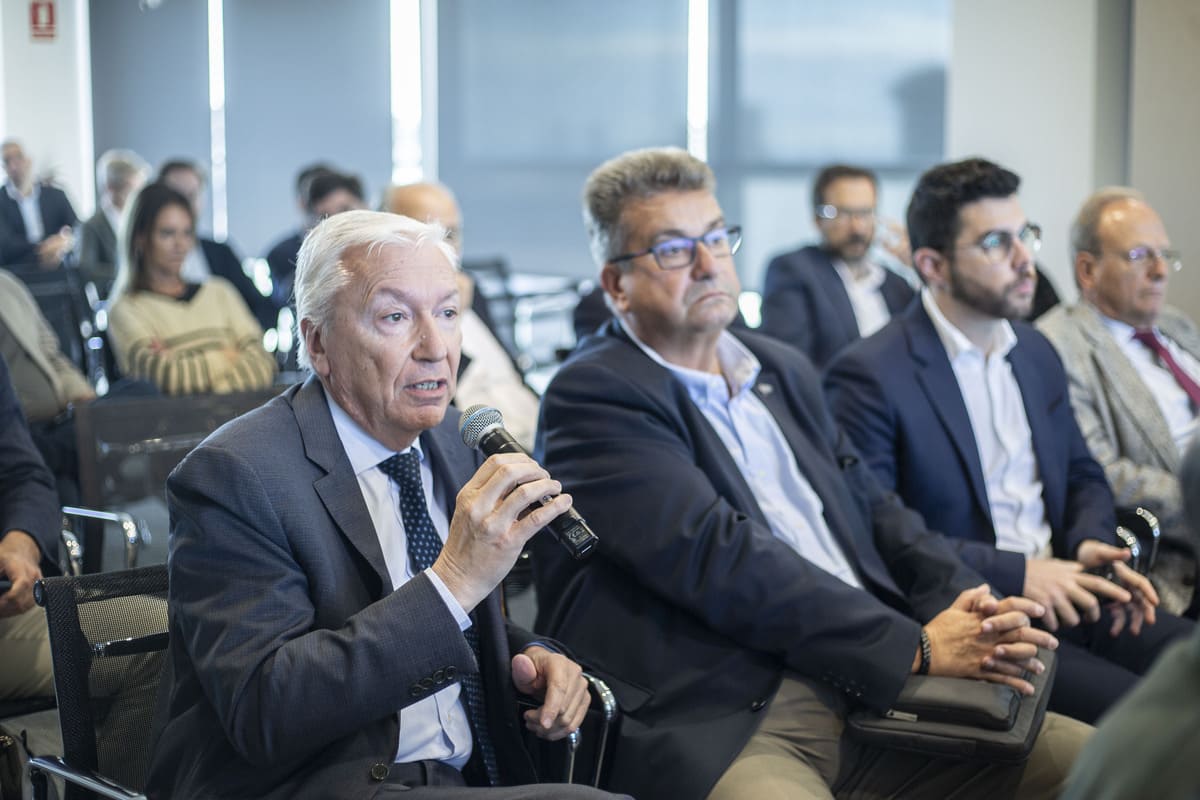
"The challenge of mobility is essentially metropolitan with the Barcelona of 5 million. If we want to decongest the city, we have to bring the public transport usage rate in Barcelona closer to the second metropolitan ring. Private vehicles must be clearly complementary to public mobility," he reflects. Martí details that public transport has a 60% share in the first ring, which reduces to 20% when going beyond Collserola, and that it should be increased to 35%. How? His answer, as it could not be otherwise, is with buses, due to their capillarity. "Capillarity must be resolved with buses or trams. More frequencies and more buses," he demands.
Martí: "The challenge of mobility is essentially metropolitan with the Barcelona of 5 million. If we want to decongest the city, we have to bring the public transport usage rate in Barcelona closer to the second metropolitan ring. Private vehicles must be clearly complementary to public mobility"
The businessman is very clear that "without mobility, wealth is not generated, and therefore, mobility has a direct correlation with GDP." It seems that Barcelona's GDP is in luck, as it has exceeded 100,000 million euros for the first time, thus accounting for 35% of the Catalan economy. Among Miquel Martí's priority notes, we can also find the expansion of Barcelona Airport and the satellite terminal, or the renewal of the private vehicle fleet to decarbonize the country's mobility.
According to the president of Moventia, "without international connectivity, we will not have growth or the capacity to attract and retain talent.If we want a city connected to the world, we need the expansion of Barcelona Airport.It has to be done well, but the commitment has to be clear and it is inexplicable that the rulers do not see it that way."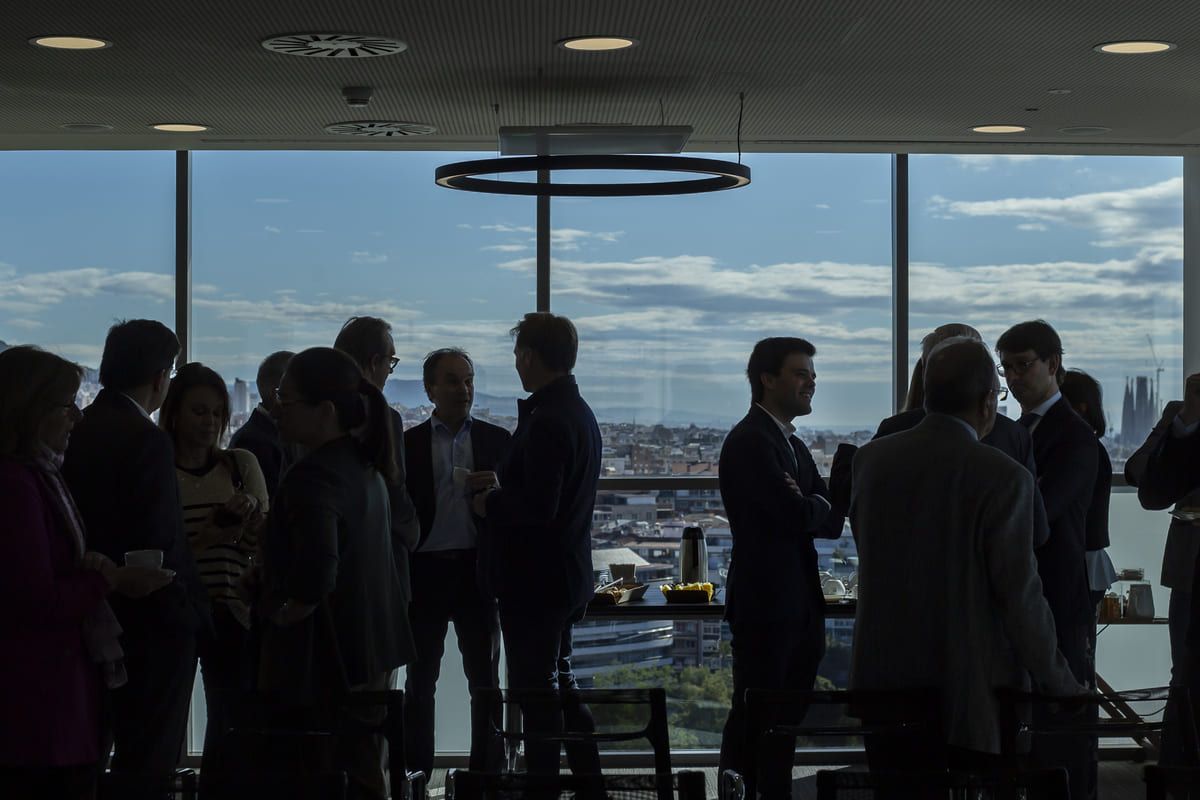
The success of the Tram and Fira de Barcelona
During the colloquium, the businessman also defended the efficiency of private companies over public ones and praised the benefits of public-private collaboration
The audience's questions
It's time for questions from the business audience, and to keep it brief, I'll share a schematic summary of the session's major highlights:
-A Tale of Two Cities:"Madrid and Barcelona? I like to flee from comparison. We have to work and move forward. It's not easy to compete with Madrid, but we have to be able to push encouraging projects that give a sense of belonging. We are not doing badly in investments. Barcelona's great asset is its brand and I have blind faith in youth. In Barcelona we have more entrepreneurship and capacity to attract talent."-A double fiscal classic: The fiscal deficit must be solved if we want to remain competitive. There cannot bedumpingfiscal. Taxation has to be equal everywhere."-The businessman: "He has to stop being the bad guy in the movie. Businessmen create wealth and without businessmen, there are no taxes and therefore, there can be no public and social policies either."-Politics:"Public money does not exist. It is our money and we put it for four years in the hands of some rulers. We have quality education and healthcare thanks to the generation of wealth. A good politician must be aware of this."-The industry:"We have to boost industrial GDP, at least to 25%. Industrial companies are doing things well and the mentality that industry needs is back. We missed opportunities with electric batteries, but the arrival of Chery is very good news."-The workers:"We have serious difficulties finding qualified labor. It's dramatic, considering the unemployment levels we have. There is a misuse. We have to promote training to encourage employment. The path is dual training, copying the German model and giving prestige to Vocational Training." Moventia's business philosophy states: "We believe that moving is, above all, connecting. Uniting emotions, knowledge, and experiences. To be with you in your everyday moments, but also in the most extraordinary ones." A good reflection of life that moves and advances in the blink of an eye from the everyday to the extraordinary. And vice versa. Destiny or coincidence? We conclude with a famous verse by the writer and poet Antonio Machado: Walker, your footprints are The path and nothing more; Walker, there is no path, One makes a path by walking.Add The New Barcelona Post as your preferred Google source for free
Stay informed with the latest news.
