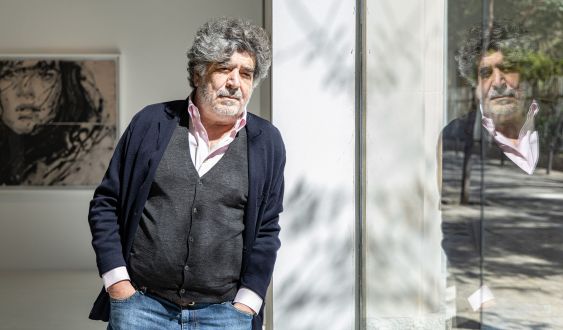
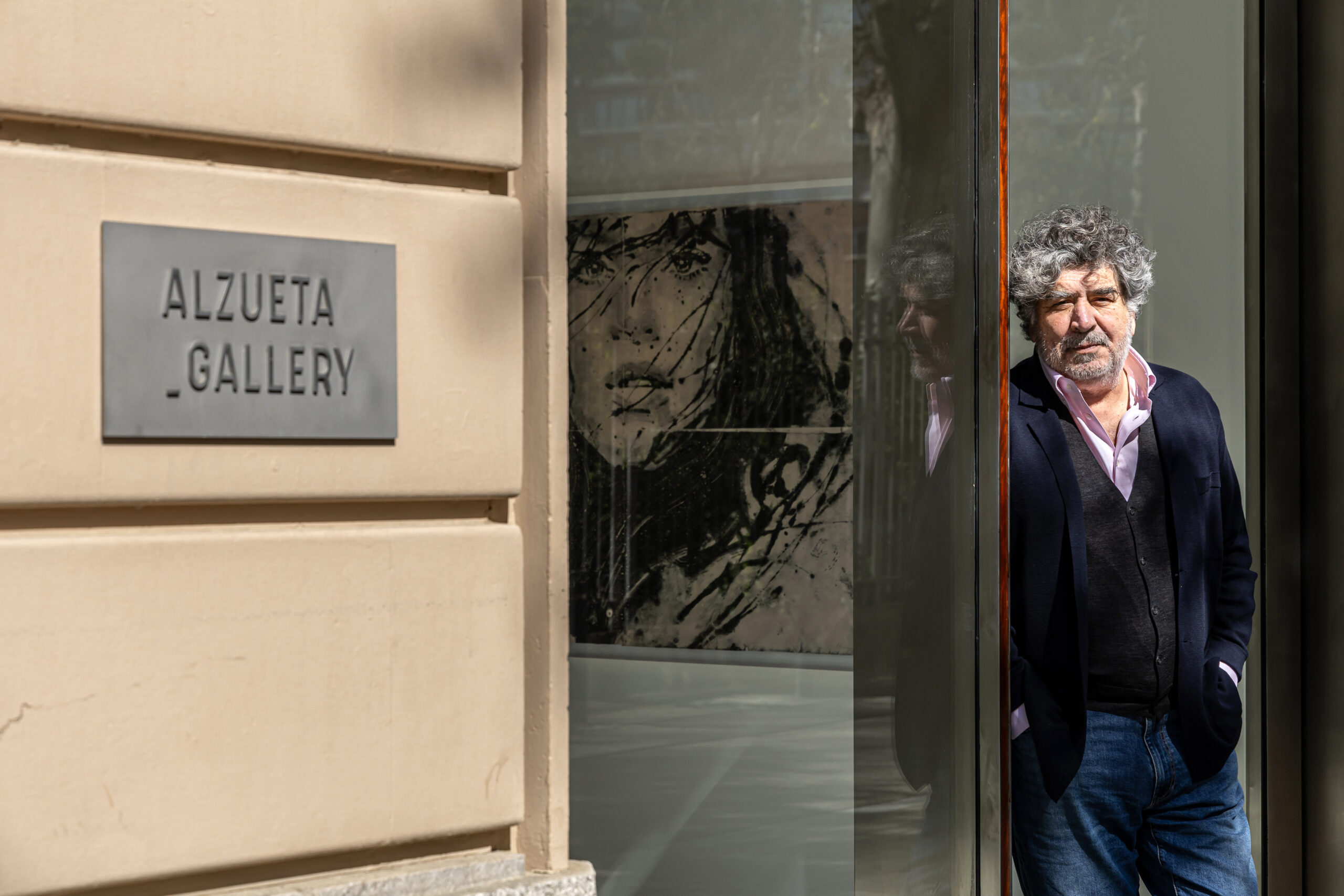
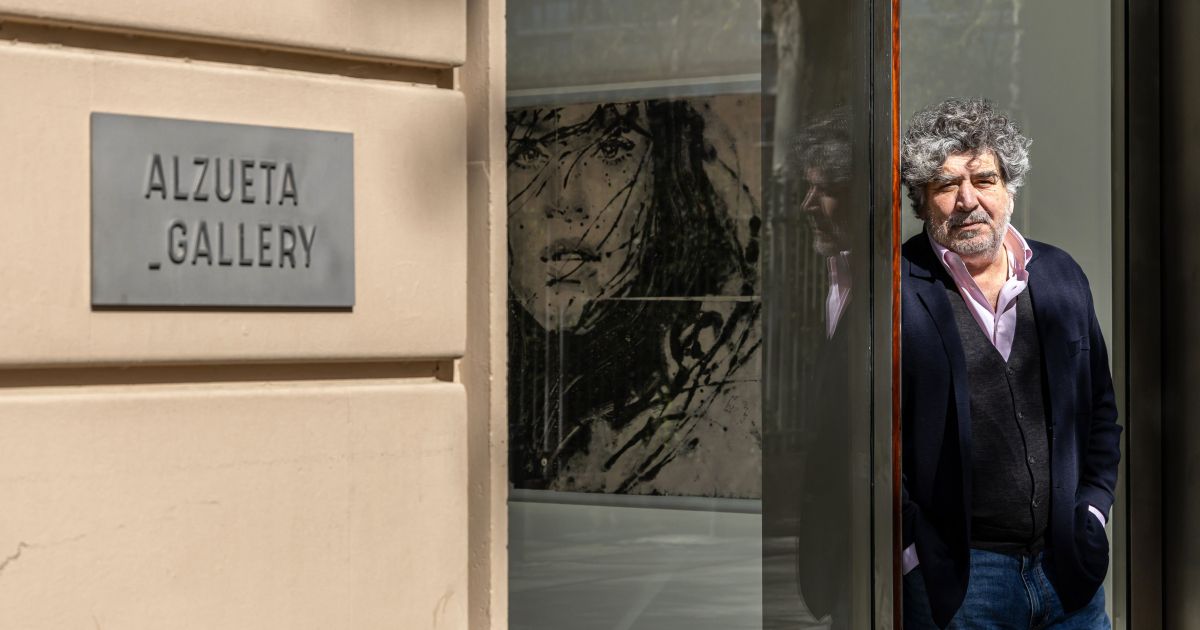
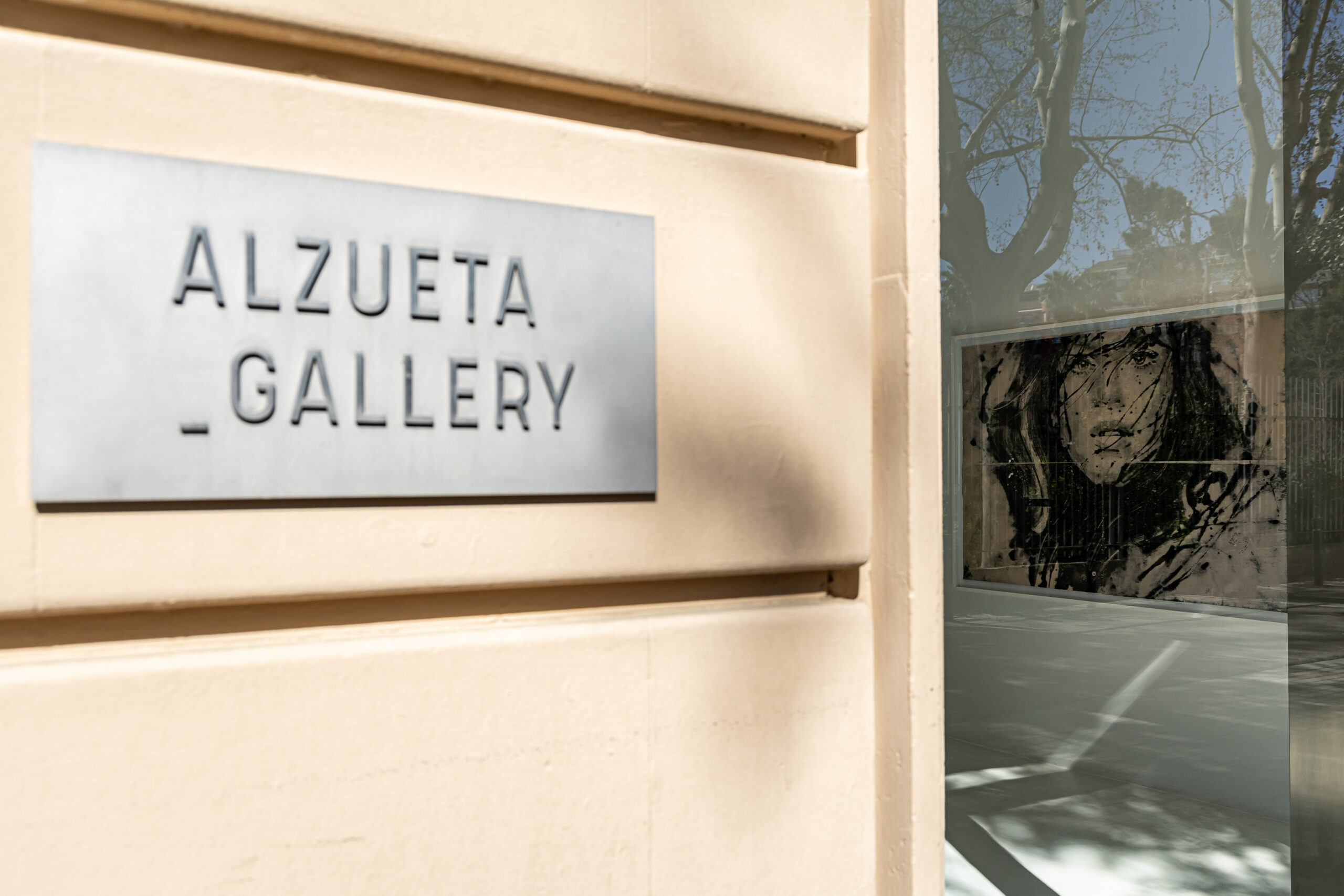
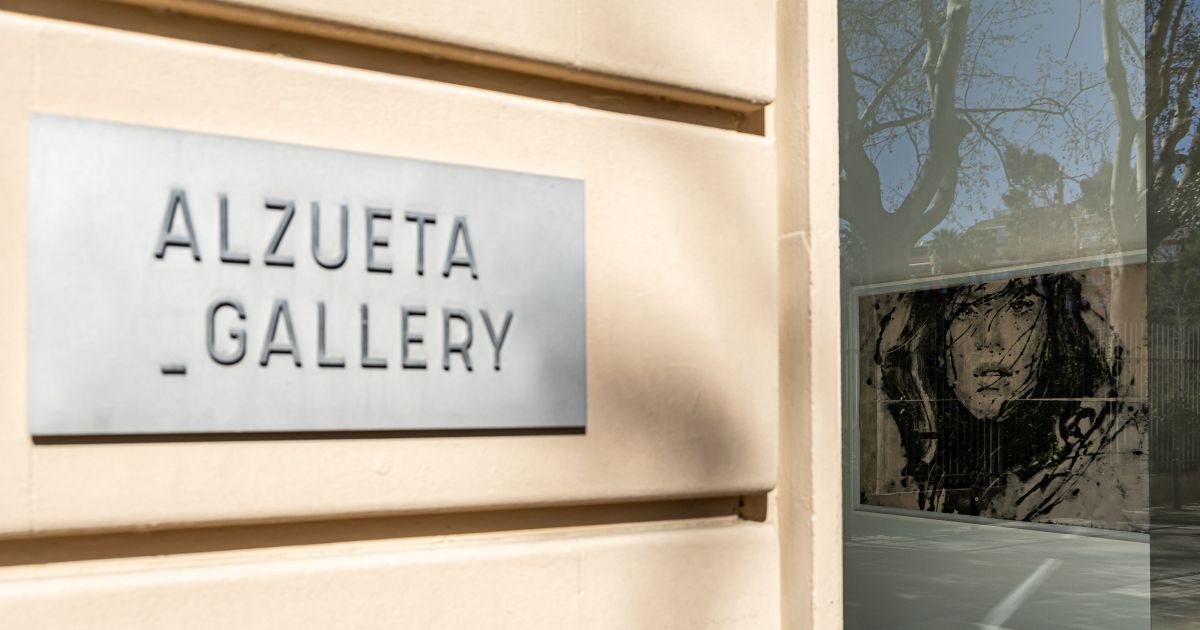
There are galleries where the works impose themselves. And there are others where the first thing that imposes itself is the light. At Galeria Alzueta's headquarters in front of Turó Park, light enters with the same intention as a well-placed work: it is not decorative, it is discursive. It crosses the windows, bounces off the walls, and orders the space with an almost curatorial logic. Before looking at any piece, one already senses a way of understanding art — and also business.
Behind this way of ordering space is Miquel Alzueta (Barcelona, 1956), an editor before he was a gallerist and founder of a project that has grown to become a structure with several venues — Barcelona, Madrid, Paris, and Empordà — and a clear international vocation. Today, with his daughter Júlia at the helm of artistic direction, the gallery is transitioning to a second generation that not only ensures continuity but also transformation. It is in this balance — between vision and business, between intuition and structure — where many place their model as a success story within contemporary gallery practice. A label he approaches with a certain distance.
— I don't see you entirely comfortable when I say you are a successful art gallery model.
— No, no, not at all. On the contrary, I am delighted that it can be considered that way. And it is true that we are a somewhat atypical gallery within the panorama. Now in its second generation, with my daughter leading the content, we have built a project focused on contemporary art, but with the will to be serious, transversal, and international.
— What exactly does a "serious, transversal, and international" gallery mean?
— Serious means rigor in selection. Transversal, that we don't pigeonhole ourselves into a single line: we work with sculpture, painting, photography, very radical artists and others who perhaps are less so. And international because the market has changed a lot: today more than half of the pieces we sell go abroad, to the United States, to Asia, to Europe… The business has become completely globalized.
— You spoke of an "atypical" gallery. Is it still?
— I suppose it was much more so at the beginning. I created a very personal gallery, with my quirks, mixing architecture, design, painting… it was almost an outsider gallery, more underground. Over the years, this has evolved. Today we are probably more recognizable within the European contemporary art circuit, but maintaining this idea of not pigeonholing ourselves completely.
— Are galleries a profitable business or do they respond to another logic?
— They are a difficult business in which making money is very complicated, but losing it is too. You need a lot of time, because clients are built over the years. And there are no entry barriers: anyone can open a gallery. However, the complicated part is making it last. Making a project last 25, 50, or 100 years is the real challenge.
— You previously spoke about finding artists. Is it luck, intuition, or numbers and statistics?
— It's all intuition. There are no possible statistics. An artist who works in Germany might not work here. The artists we have, even if they are very different from each other, are chosen by the same eye. They respond to the same sensibility.
"If there's nothing that quickly moves me, I don't get into it"
— And what is that eye like? What is Alzueta's gaze like?
— The first thing we look for is continuity. That it's someone who won't leave painting to do something else in two years. And then there's something very immediate: if there's nothing that quickly moves me, I don't get into it. It's not just beauty, but there has to be something that connects me.
— Does art have to be uncomfortable?
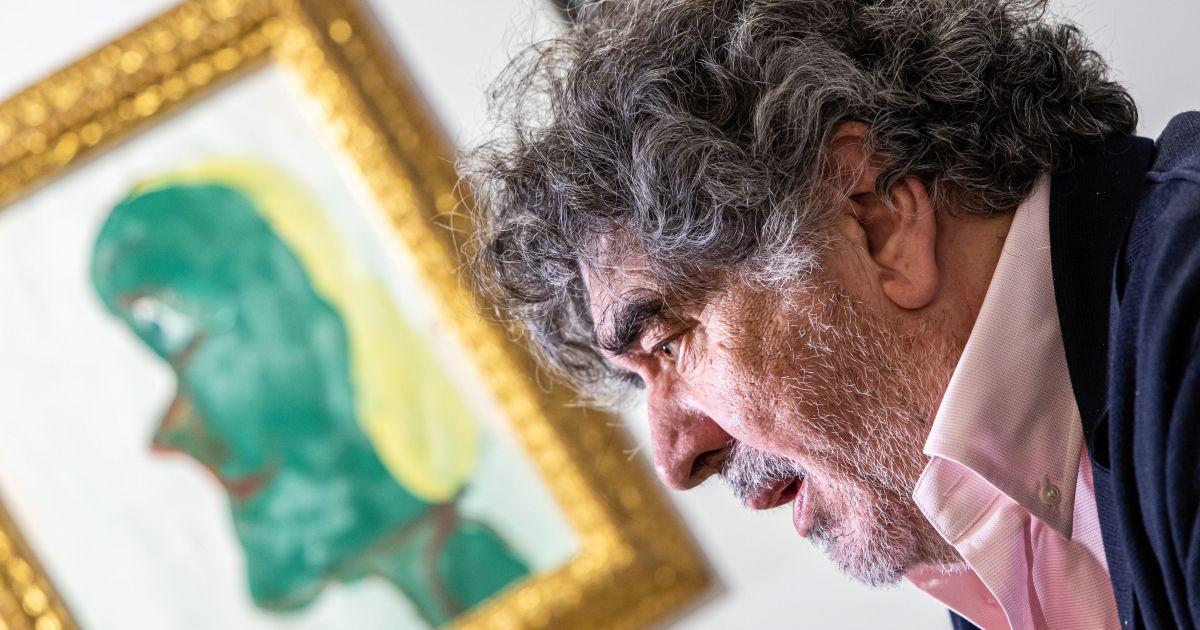
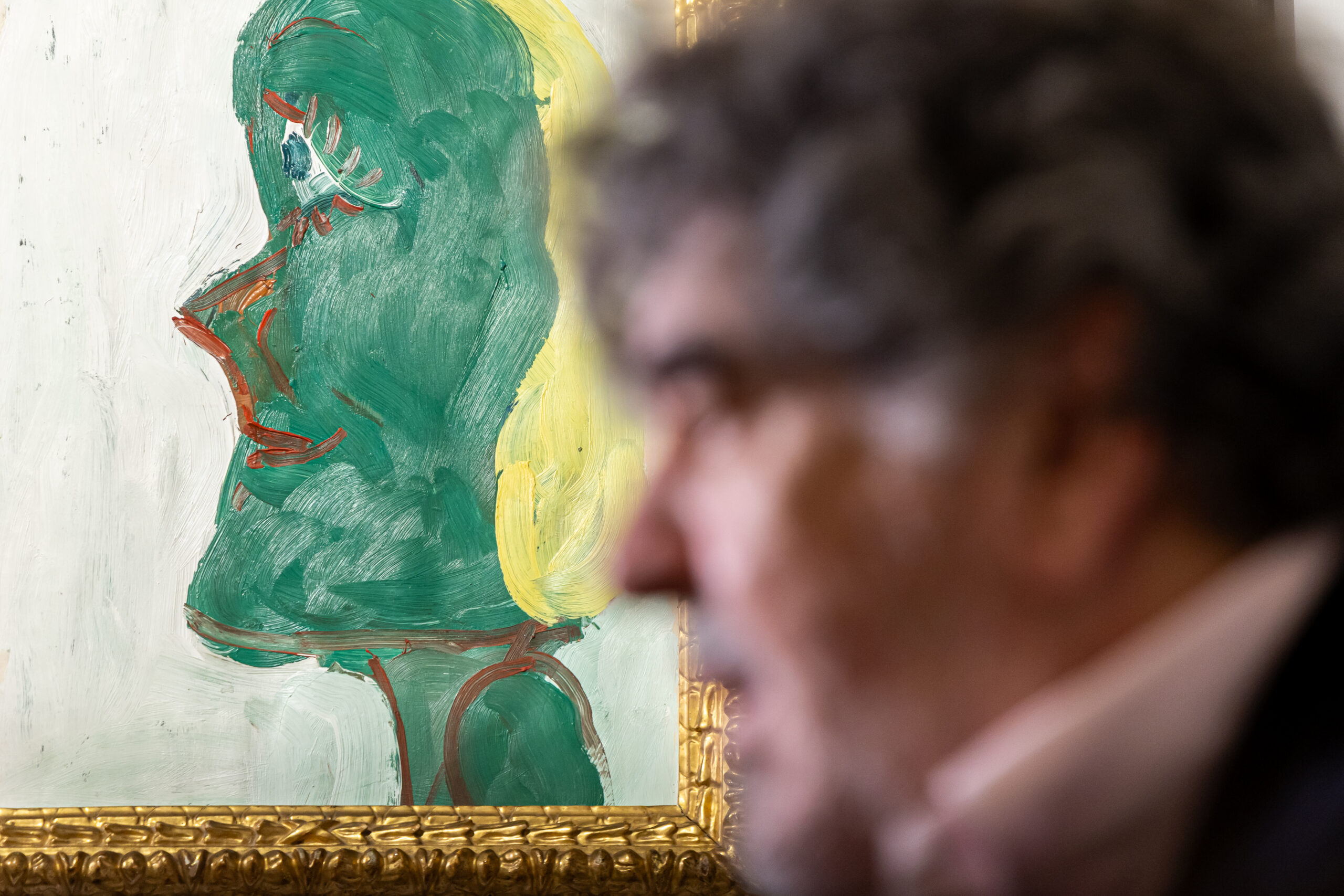
— I like it when sometimes a work makes you question whether you can live with that piece or not. I work with artists who are difficult for many people, but not at all for me. I can have in the same space a work by Rose Wylie, a drawing by Torné Esquius, and a sculpture by Jordi Alcaraz, which have nothing to do with each other, but there is a thread. And that thread is what I look for.
"If I find something I want and I believe it fits with the gallery, I don't care if it will be easy or difficult to sell. We work with artists who sell a lot and with others who sell very little"
— And how are these artists found today?
— It has changed a lot. At first, everything was very local, one artist led you to another. Now we work with artists from all over the world. The internet, fairs, biennials... all of this is key. But it's also more difficult. There's a lot more noise and finding someone who truly fits is more complicated than before.
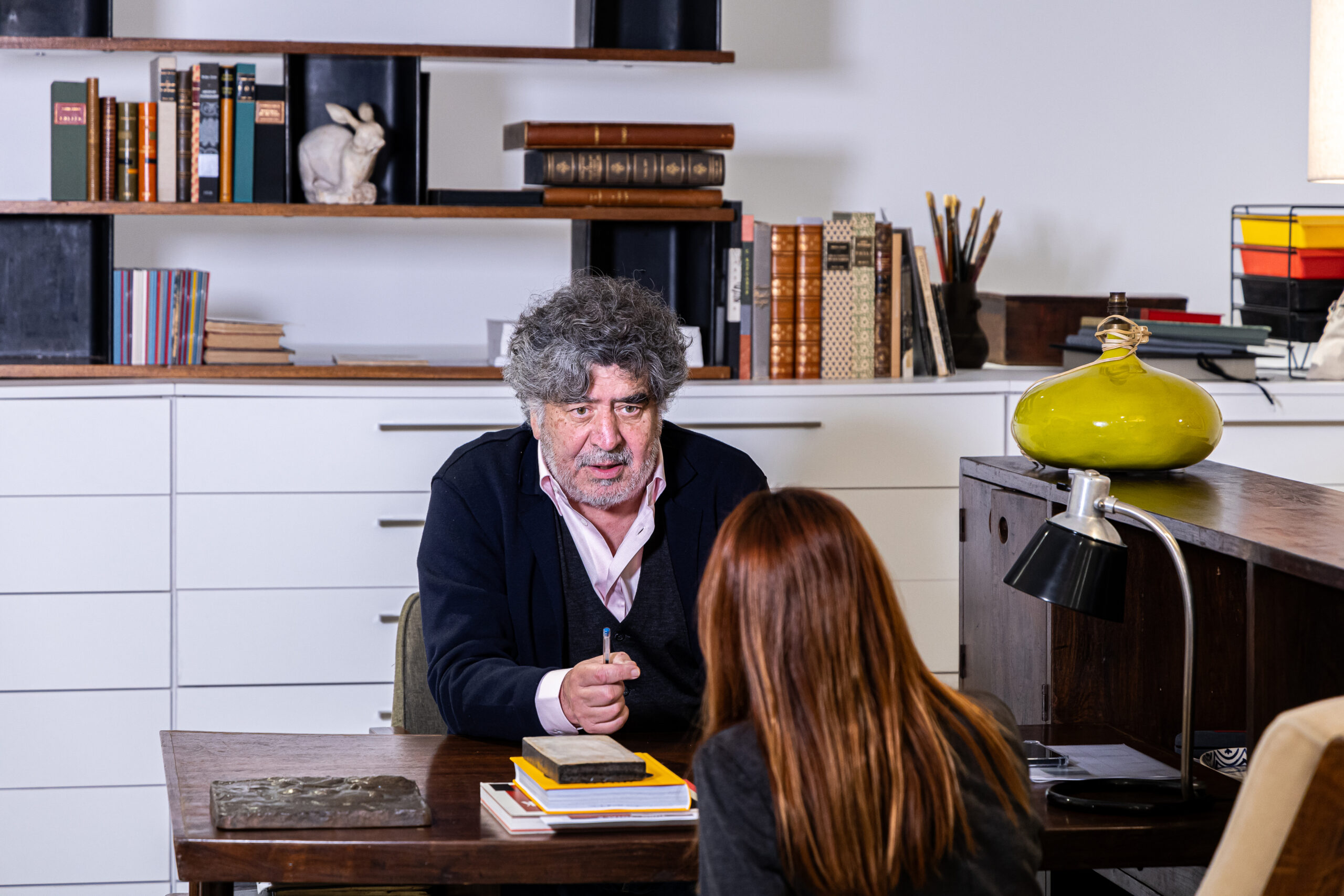
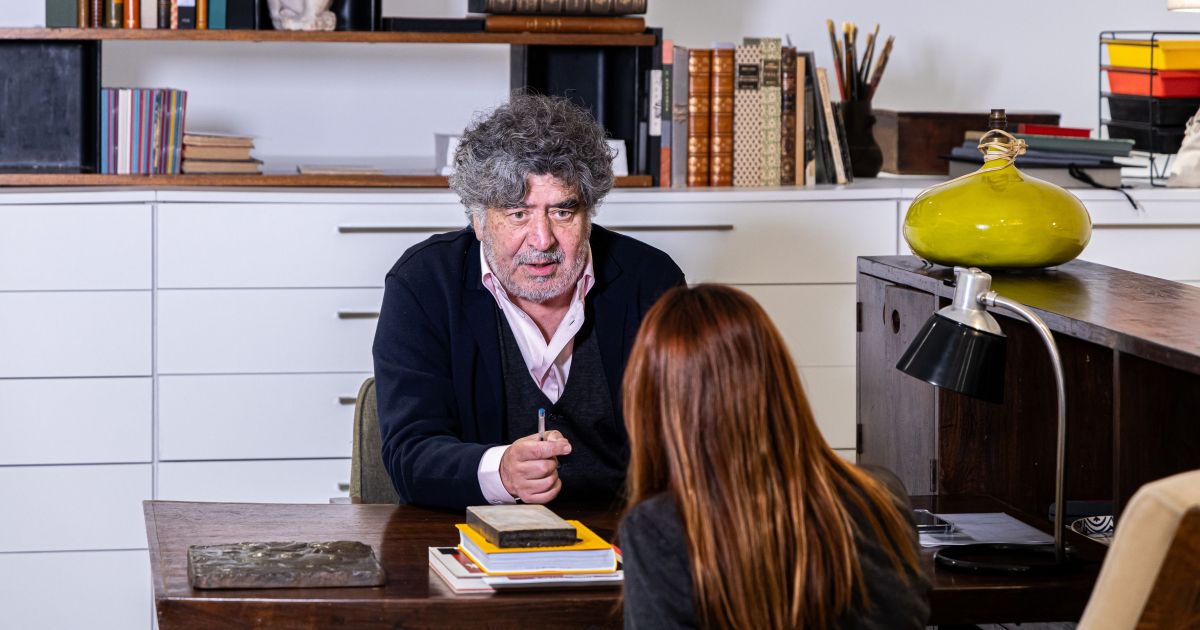
— In this context, where do you place the risk?
— I don't place it in the economic realm, but in taste. In desire. If I find something I want and I believe it fits with the gallery, I don't care if it will be easy or difficult to sell. We work with artists who sell a lot and with others who sell very little. And that's okay.
— But an balance is needed, right?
— Yes, and common sense. If you only think about what will sell, you are wrong. And if you only think about what you like, you are also wrong. It's about having a certain intuition, but also common sense.
— Did the 2008 crisis test this balance?
— It was very tough. Just then my daughter, Júlia, joined. Suddenly, the market stopped. And we made a very clear decision: not to change anything. We had a line, we had artists, and we said "we'll hold on as long as we can."
— And how long could you hold on?
— Almost three years. We continued programming, maintaining the structure, even though economically it was going badly. And just when we were reaching the limit, the market recovered. But we didn't make any strategic shift, we didn't change the location or the type of artists, or our proposal. We continued.
— What role do fairs play today in the business model of an art gallery?
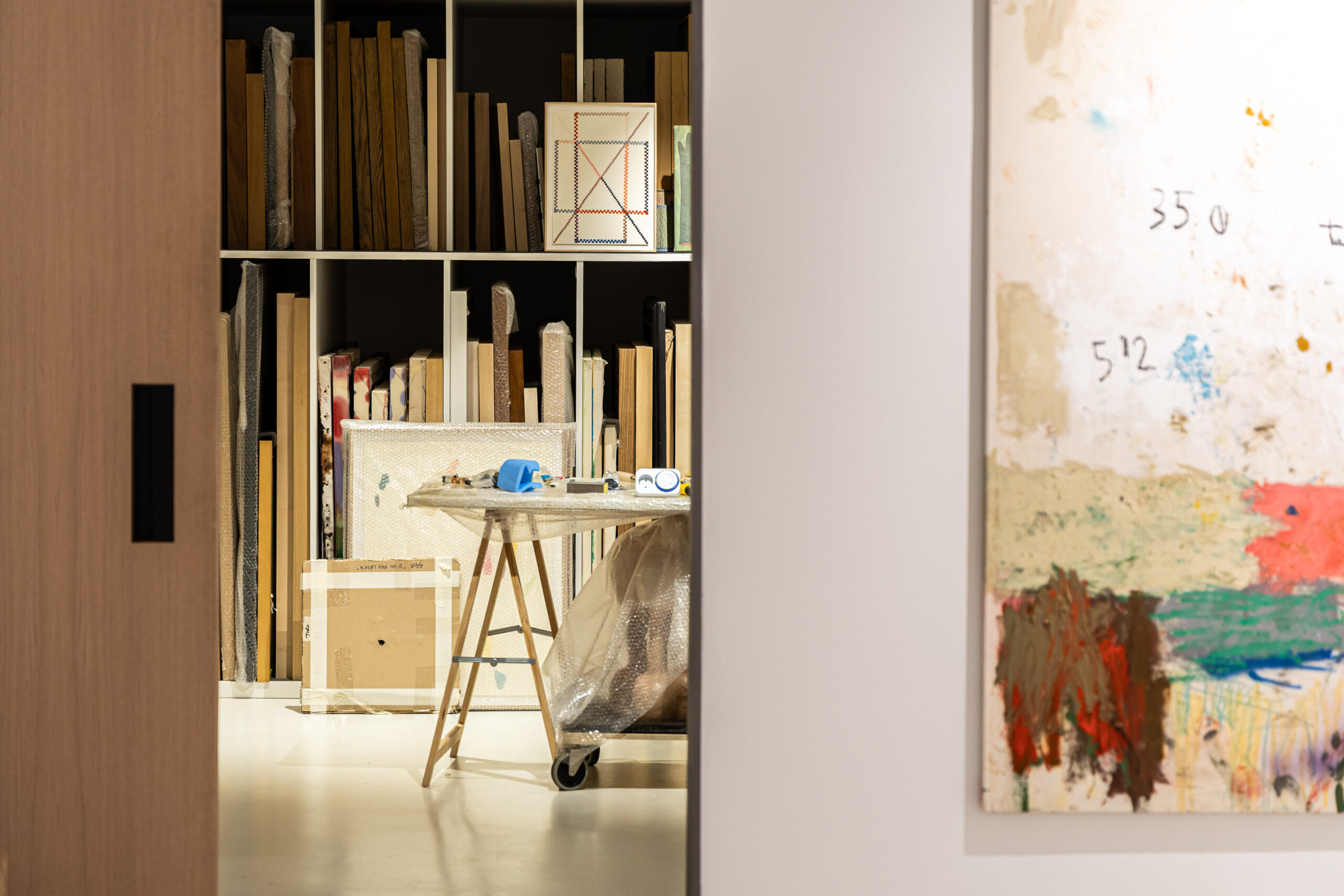
— They are essential, but they have changed a lot. Before, they were a key part of turnover. Without fairs, we wouldn't have been able to live, but today that is no longer the case.
"You can't live without fairs, but you don't live off fairs either"
— In what sense?
— Today you go to a fair and, at most, you break even. You don't make money. The costs are very high —you can easily spend 50,000, 60,000 or 70,000 euros— and with the prices we work with, it's very difficult to recover it.
— So, why keep going?
— Because it gives you visibility and confidence. People see the work live, identify the artist, and then, when they see it again online or through an advisor, it's much easier for them to buy. You can't live without fairs, but you don't live off fairs either.
"Art is physical. We are not an application. We are, in a way, artisans of paintings and frames"
— Where is art sold today, then?
— More and more, outside the physical gallery: fairs, online platforms, art advisors, decorators… all of this weighs heavily. But we continue to bet on the physical space, on the in-person gallery, and more than one.
— In such a digital moment?
— Yes, because art is physical. We are not an application. We are, in a way, artisans of paintings and frames. It's true that there was a technological revolution —around 2016, 2017— and we made that leap. And that helped us a lot, especially with covid-19. But the center continues to be the work and the space.
— How do you see the current moment of gallery ownership in Barcelona?
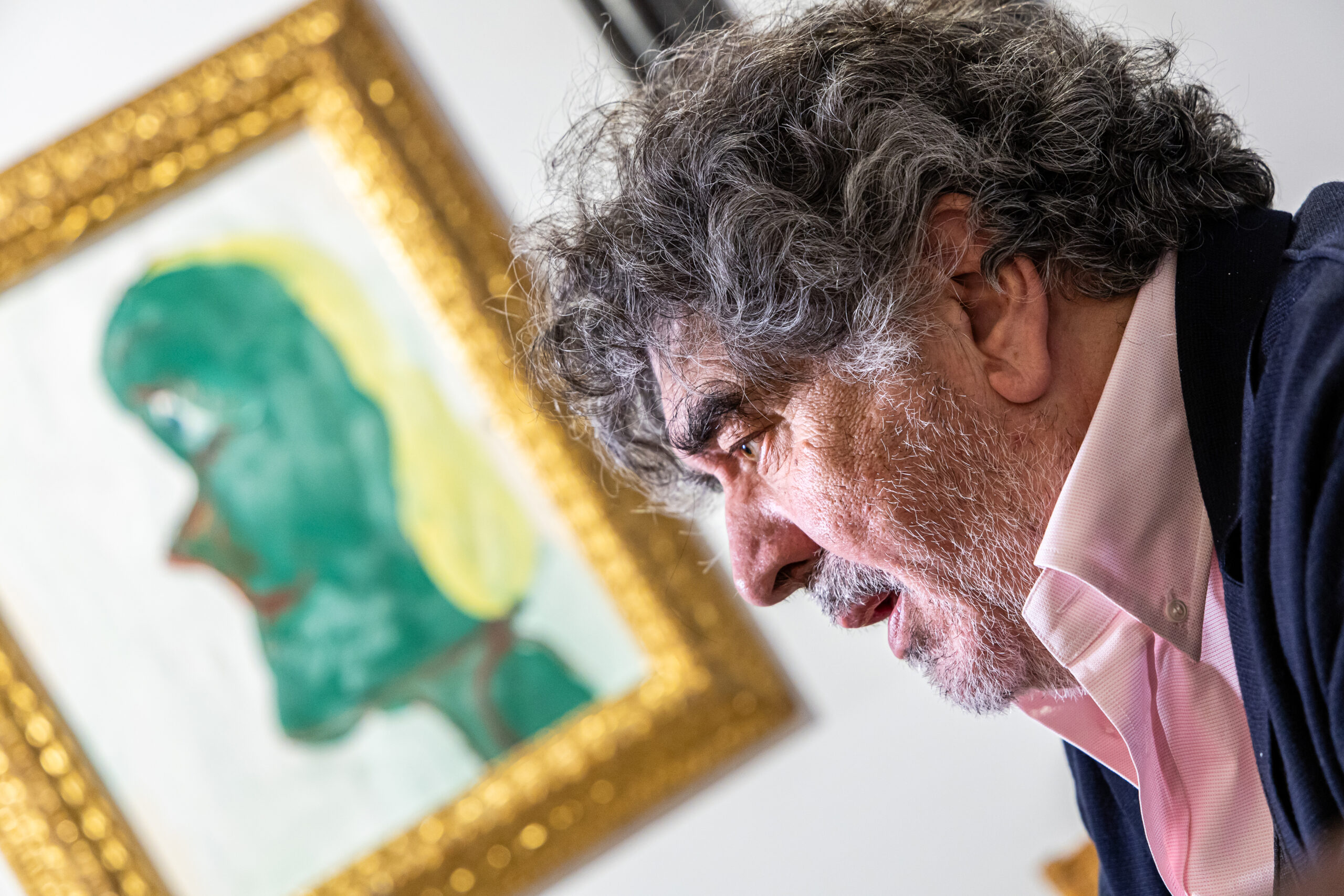
— We are in a very clear generational change. I retired five years ago because I believe that now is the time for those who are 30 years old, not for those of us who are 70. This is happening everywhere: in Madrid, in Barcelona… the big names of my generation are disappearing or stepping aside. It's natural.
— Does this generational change also imply a change of model?
— Yes, because galleries with new approaches are appearing, and this also requires new collecting. And this is where Barcelona has a problem.
— Which one?
— That we haven't managed to create a large core of constant collectors. The market exists and works, but it's not solid enough. In Madrid, for example, this happens less. And in the United States, even less.
"If young people have trouble making a living, how do you expect them to spend 3,000 euros on a painting?"
— How to make this young collecting emerge?
— It's very difficult. If young people have trouble making a living, how do you expect them to spend 3,000 euros on a painting? Before there was young collecting. Now it's much more complicated.
— Is it a matter of price or context?
— Of context. We have made a world more difficult for young people than the one we received. Before it was easier to start, save, buy. Now everything is more expensive and more unstable.
— Does this also affect the gallery?
— Yes, because we ourselves have been raising prices with artists, but we have lost the lowest segment of the market. And this was the entry point for new collectors. Now we have to rebuild it, but it's not easy.
"If you buy well, with criteria, you won't lose money. But you shouldn't buy thinking that you will multiply the value. That's a mistake. You have to buy because you like it"
— When someone buys, do you detect if they do it for investment or for conviction?
— I always say something a bit sarcastic: if it were a good investment, I would keep it myself. (laughs) It's clear that there are artists who revalue, but that happens very rarely. Normally it's for conviction.
— Yes, but behind it there is a market, there are numbers that have to add up...
— If you buy well, with criteria, you won't lose money. But you shouldn't buy thinking that you will multiply the value. That's a mistake. You have to buy because you like it, because you will live with that work.
— Do you remember the first artist you bet on?
— Regina Giménez.
— And one of the last?
— An artist named Klas Ernflo.
Questionnaire
— A contemporary art fair?
— Frieze.
— An emerging artist we should know?
— I'll tell you one that isn't mine: Miguel Marina.
— And one that you do have in the gallery?
— Bruno Ollé.
— A work you would like to have at home?
— A small Picasso painting that is in the permanent collection of the Guggenheim in New York.
— An exhibition you recommend?
— Rose Wylie's in London.
— A lesson you have learned from the art world?
— That humility is an enduring value.
Add The New Barcelona Post as your preferred Google source for free
Stay informed with the latest news.