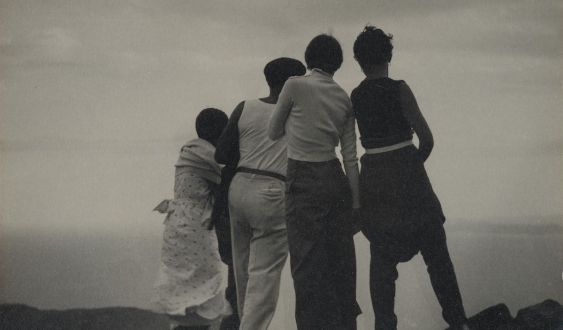
We know many names of men in the world of photography who lived in the same era and context as Mey Rahola. The artistic boom brought by the republics, the abrupt cut of the Civil War's irruption and its consequent exile, the adaptation to a new landscape, and the rebirth that harbors an artist's sensibility. They have been exhibited in the most relevant museums and galleries of the cultural scene. And it's not that there weren't women doing the same, but their work has remained hidden and undervalued for a long time, precisely in the same sphere to which they have been relegated: the domestic sphere, in drawers, attics, and in the best cases, in family archives.
Approaching Rahola's photography is traveling to the past through the eyes of a person who knew how to look and capture the spirit of her time, from that distinct perspective: that of being a woman. Perhaps that is why the work carried out for almost a decade by the photographer's great-grandson, Lluís Bertran, and the photography historian Roser Martínez, who, together with conservator Roser Cambray, have curated the anthological exhibition that occupies the rooms of the Modern Art collection of the Museu Nacional d'Art de Catalunya, has greater value.
Born into a wealthy family, the Raholas were promoters of the first railways. She inherited her father's passion for photography, which would not only accompany her for much of her life but with which she would achieve recognition, and thanks to which she could support her family during the complex years of exile in France.
In a very short period, between 1934 and 1936, Rahola managed to make this hobby acquire an unprecedented public dimension that would bring her awards, publications, and exhibitions, the admiration of Catalan photographic circles of the Second Republic, and become part of the Agrupació Fotogràfica de Catalunya, considered the reference institution of the time. Furthermore, she was a woman of her time who had the courage and ability to forcefully break into spaces that, until then, had been exclusively reserved for men, an example of the ideal of a "modern woman" who challenges traditional gender roles of the moment.
Despite the setback that the outbreak of the Civil War meant for her career, she knew how to adapt her knowledge to the needs of the moment and professionalized herself to survive, thus overcoming the vicissitudes of exile during the years that World War II lasted. It was not until the end of it that she was able to resume the artistic path with which she had allied herself at the beginning of her career, participating in a certain avant-garde influence. Although it is this later photography that adds professionalism to her creative freedom.
The exhibition hosted by the Museu Nacional d'Art de Catalunya until June 22, structured anthologically, is articulated in two main areas. The first, focused on her beginnings, her irruption into the public sphere and the publications in which she participates; and the second, focused on the outbreak of the Civil War, her exile to France and the posthumous period. In addition, simultaneously, an exhibition has been presented at the Museu de l'Empordà, which gathers one of the key themes in Rahola's production, such as the marine genre, influenced by her passion for sports navigation.
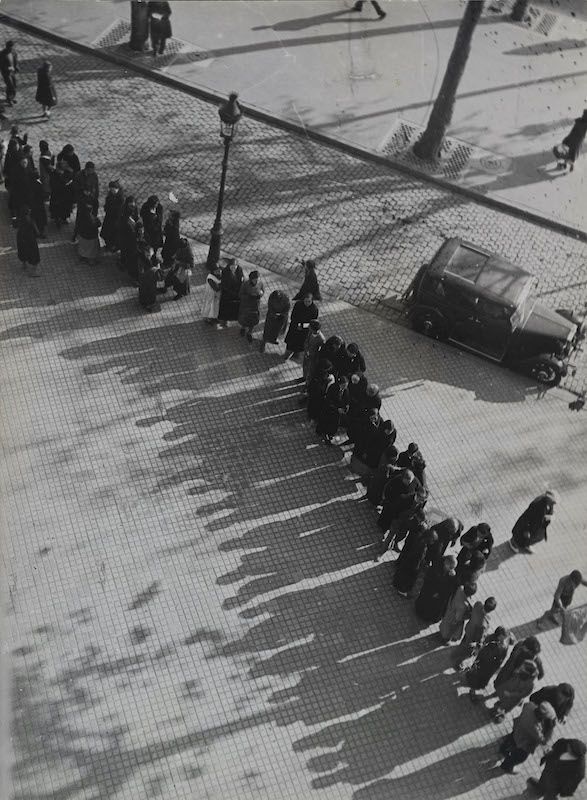
On August 17, 1959, a stroke cut short Rahola's life, and as her curators well say, "the adverse circumstances of history and her condition as a woman, mother, and wife condemned her to an undeserved and long silence, despite her continued passion for photography and her evident ability to adopt and renew the visual languages of her time".
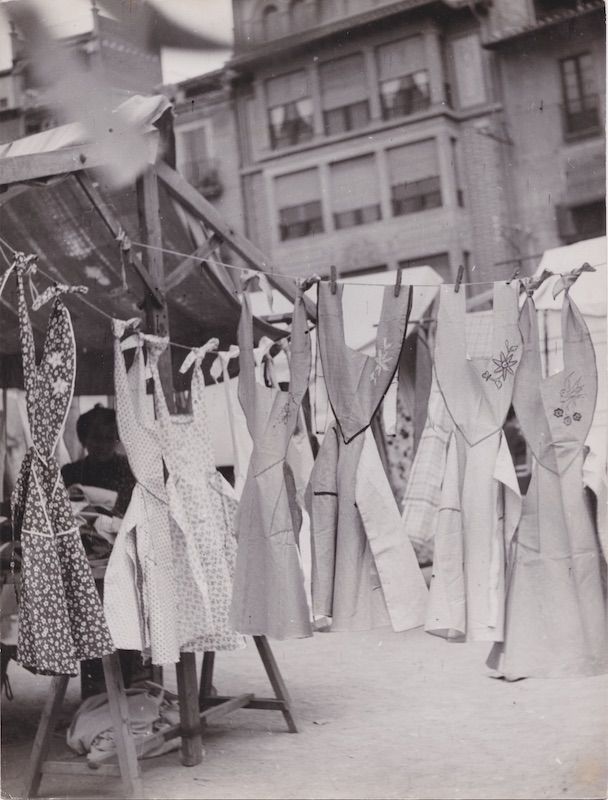
Walking through the exhibition halls, there is something in the images of this photographer that is not alien to us, and that clashes head-on with our reasoning as women of 2023 when we realize that these are photographs from more than eighty years ago. That sensibility of a marked humanist character, the beauty of the everyday, situated in spaces and objects traditionally linked to the feminine gender... the woman is her great protagonist, whether she appears directly or indirectly in her photos. And then, her intimacy, her life, the photos of her children growing up. Especially her daughter Maria Teresa, a reflection of a new femininity. And Cadaqués, sailing and the sea.
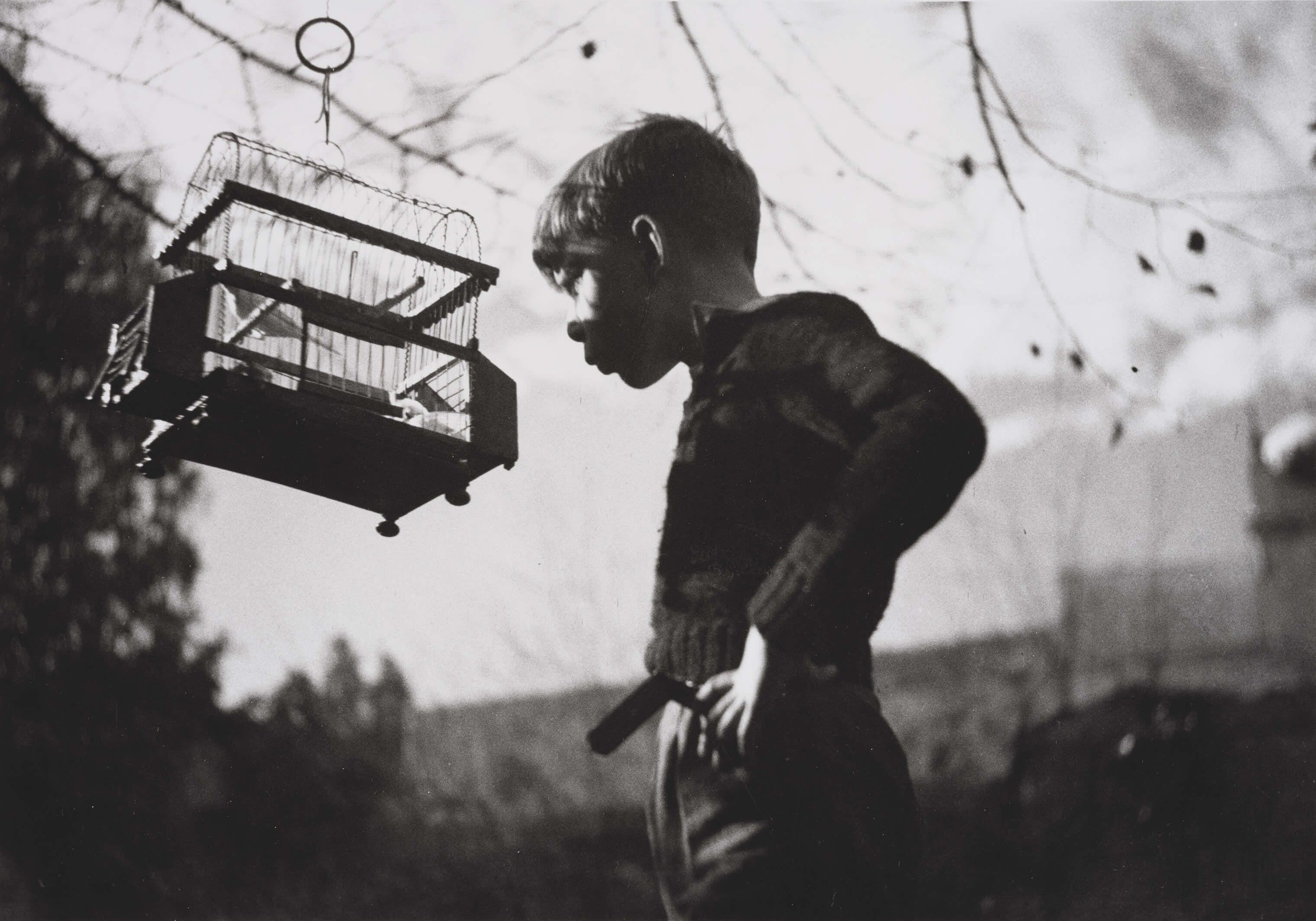
Rahola is a photographer to be reclaimed after all these years of oblivion. The Catalan Marianne Breslauer, as curator Roser Martínez and essayist Cristina Masanès say. And one thinks of those photographers of the intimate, like the Catalan Sara Costa, the Instagram account Documenting Women, or the documentary project Women & the Wind, a wild catamaran trip starring three women.
To value her as an amateur photographer is to continue undervaluing her when it is totally proven that her gaze is pioneering, avant-garde and feminine. So, perhaps it is more worthwhile to paraphrase the poet Nayyirah Waheed and say "Mey Rahola was a brutally soft woman".
Add The New Barcelona Post as your preferred Google source for free
Stay informed with the latest news.
