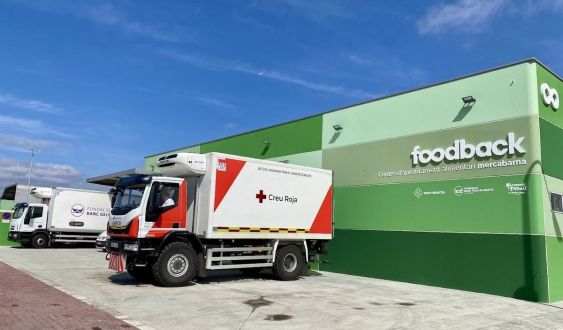
It is important for Barcelona to celebrate in the same week the attraction of a global event like the America's Cup of Sailing and also the inauguration of a reference center in the fight against food waste and the promotion of the circular economy. With the commissioning of the Foodback food recovery center, in five years Mercabarna aims to multiply by 2.5 the number of tons of fruits and vegetables that will be saved from ending up in the trash and that will gain a new life by being distributed among hundreds of beneficiary families of the Banc dels Aliments and other social entities such as Cruz Roja, Cáritas, and the La Caixa Foundation.
This center, absolutely pioneering in the sector of large central food markets, is the central piece of a new model of organic waste management in Mercabarna that aims to minimize the volume of waste in line with the fight against climate change and, in parallel, prevent any non-marketable food, but suitable for human consumption, from being destroyed. It is estimated that waste is the second cause to which greenhouse gas emissions derived from the food system can be associated, which as a whole accounts for a third of global emissions.
In the last five years, Mercabarna has reduced food waste by 69%, since in 2015, 9,400 tons of food ended up in the trash, while in 2021, it closed with the destruction of 3,000 tons. Thanks to the commissioning of Foodback, the goal is that by 2026 not a single ton of food suitable for consumption will be wasted, as the challenge is to move towards zero waste.
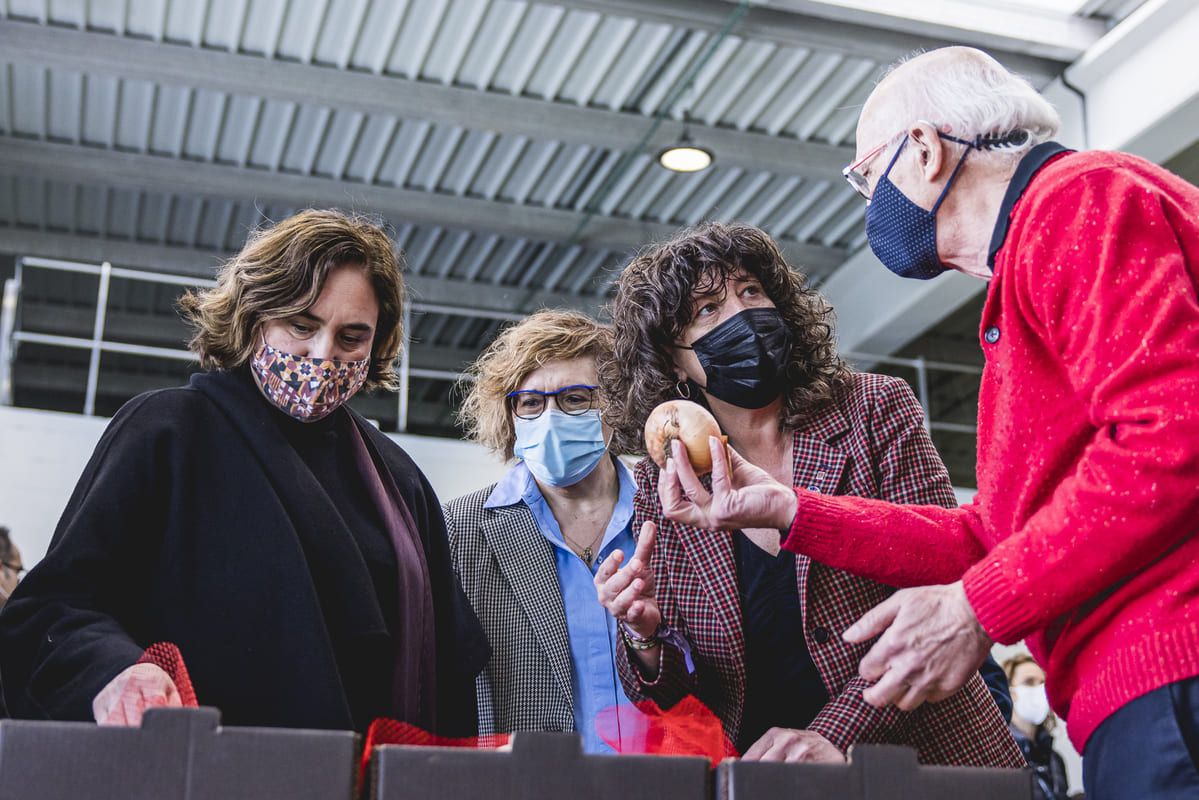
The idea is to recover all these tons that are now rejected for not being marketable and reuse them, that is, make them available to those citizens who live in poverty and who often suffer from serious nutritional deficiencies. "20% of the population has an unbalanced and hypercaloric diet, lacking essential plant-based products in their diet," highlights the president of the Banc dels Aliments, Lluís Fatjó-Vilas. According to him, this 20% of the population with lower income has a food expenditure of only 2.80 euros per day, far from the 4 euros/day considered necessary to achieve a healthy diet. For this reason, it is essential that these fruits and vegetables are not lost and that they reach the citizens who present these deficiencies.
Lluís Fatjó-Vilas: "20% of the population has an unbalanced and hypercaloric diet, lacking products of plant origin"In 2015, Mercabarna utilized about 1,000 tons of food per year that would otherwise be destroyed, a figure that currently reaches about 1,500 tons.With Foodback, the goal is to more than double this volume and reach between 3,000 and 4,000 tons recovered by 2026."The Foodback is a very well-rounded project that we should be very proud of, as we bring together the fight against the climate emergency, the right to food, and social justice," emphasized this Thursday the mayor of Barcelona, Ada Colau, who thanked the degree of involvement and sensitivity of Mercabarna's entrepreneurs.
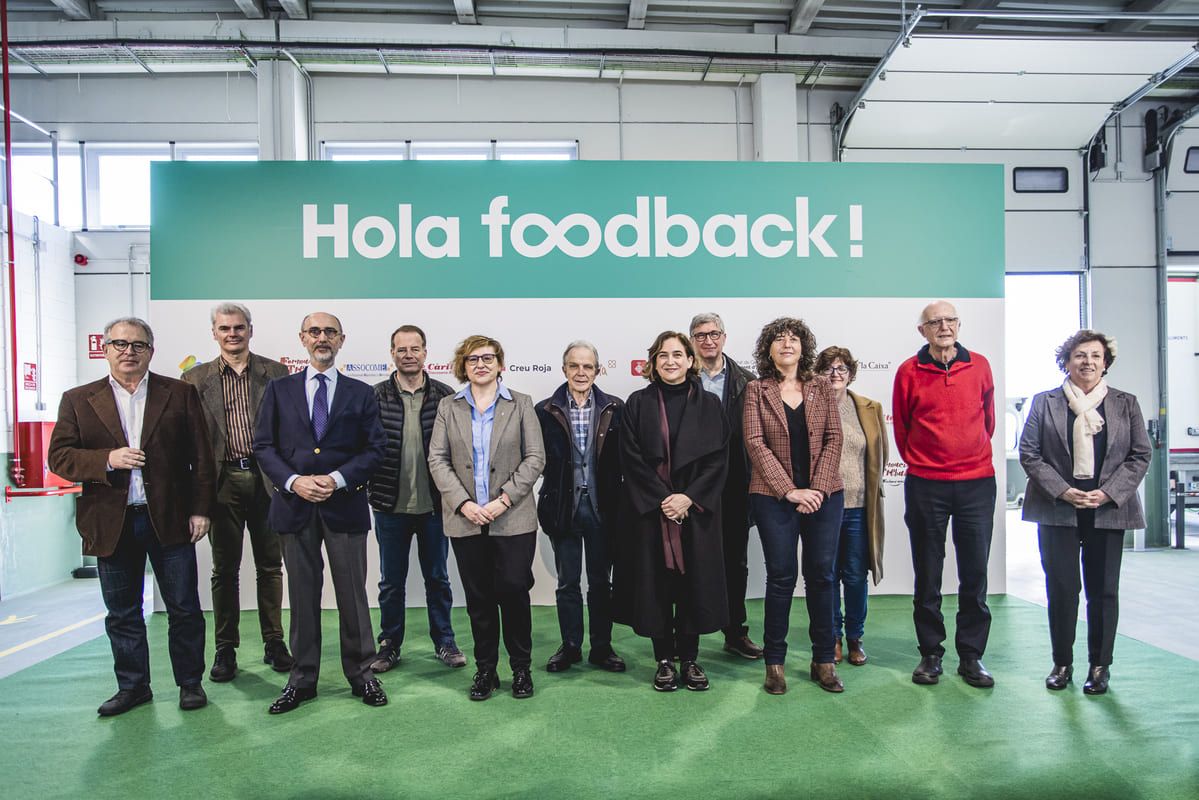
According to the president of Barcelona's large central market, Montserrat Ballarín, "food waste is a collective shame" and, for this reason, Foodback is a strategic project for Mercabarna and an example of unity, "of the sum of efforts and collaboration between Administrations, social entities, and private companies. Thus, this initiative is the result of the collaboration of the almost 600 companies that work in Mercabarna and the involvement of ten entities such as the Alimenta program of the Barcelona City Council, the Banc dels Aliments, Cáritas Diocesana, Cruz Roja Barcelona, Formació i Treball, Fundación La Caixa and Assocome, the association of wholesale companies.
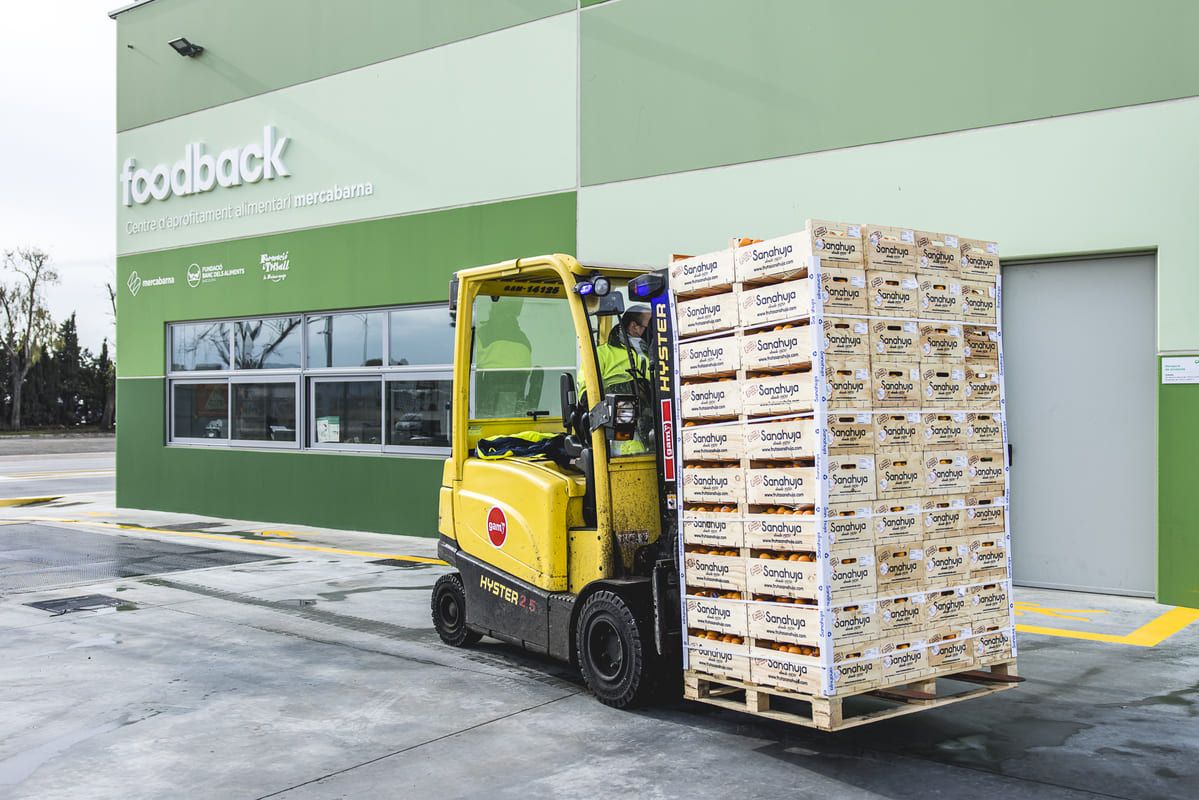
The new center for the reuse of non-marketable fruits and vegetables occupies a newly built warehouse of 900 square meters located next to Mercabarna's Punto Verde, that is, the waste management and recycling area of the food complex. It has involved an investment of one million euros and its design has had the participation of volunteers from the College of Engineers. In addition to promoting the circular bioeconomy and food utilization, Foodback is also a job placement center, since thanks to the collaboration with the Formació i Treball foundation, for now, five jobs have been created for people in vulnerable situations.
It is estimated that Foodback will have annual operating expenses of 400,000 euros, a figure that will be assumed by Fundación La Caixa, the Department of Climate Action, Food and Rural Agenda of the Generalitat and Mercabarna. According to Minister Teresa Jordà, this center "should be quickly copied by everyone," as it allows "to convert waste into resources" and avoids the waste of products that have required a lot of effort from the farmers who produced them.
WHAT CHANGES WITH FOODBACK?
Until now, any fruit and vegetable wholesaler in Mercabarna had two options to deal with unsaleable surpluses: take them to the warehouse that the Banc dels Aliments has had on the same premises since 2002 or destroy them, by throwing them into a compacting container or taking them to the Green Point. It was a completely voluntary decision to choose one of the two options, with the handicap that the Green Point is closer to the central fruit market than the Banc dels Aliments.
Now, this system changes completely, as it is no longer possible to directly dump at the Green Point and the use of compacting containers is very limited, because, thanks to an investment of 700,000 euros, new smart containers have been installed in February that allow for exhaustive control of all organic matter deposited by stallholders. Each wholesale company can now only put a maximum of 400 kilos per day and 2,000 kilos per week into the container, provided they are damaged fruits or vegetables that are no longer suitable for consumption.
As the use of these containers is very limited, operators must now take all goods that they cannot sell to Foodback, where technicians centrally decide which products should go to the Green Point and which should enter the recovery center because they are still suitable for consumption. Once inside Foodback, these foods undergo a triage process to ensure their optimal condition and, thanks to the coordination of the Banc dels Aliments, they are distributed among different social entities.
Once Foodback has been inaugurated, Mercabarna now has pending the renovation of the Green Point, which was launched in 2002 and recycles 75% of the waste generated by all companies. These modernization works, already started, will involve an investment of 3.5 million euros and will be completed by the end of 2023.
Add The New Barcelona Post as your preferred Google source for free
Stay informed with the latest news.
