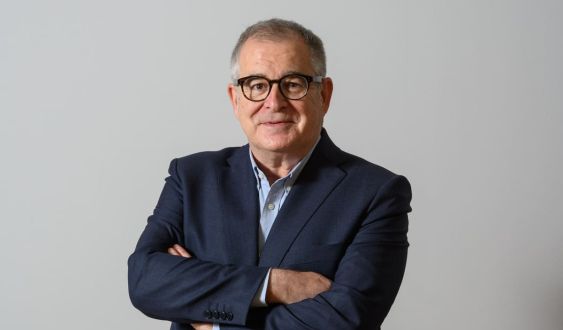
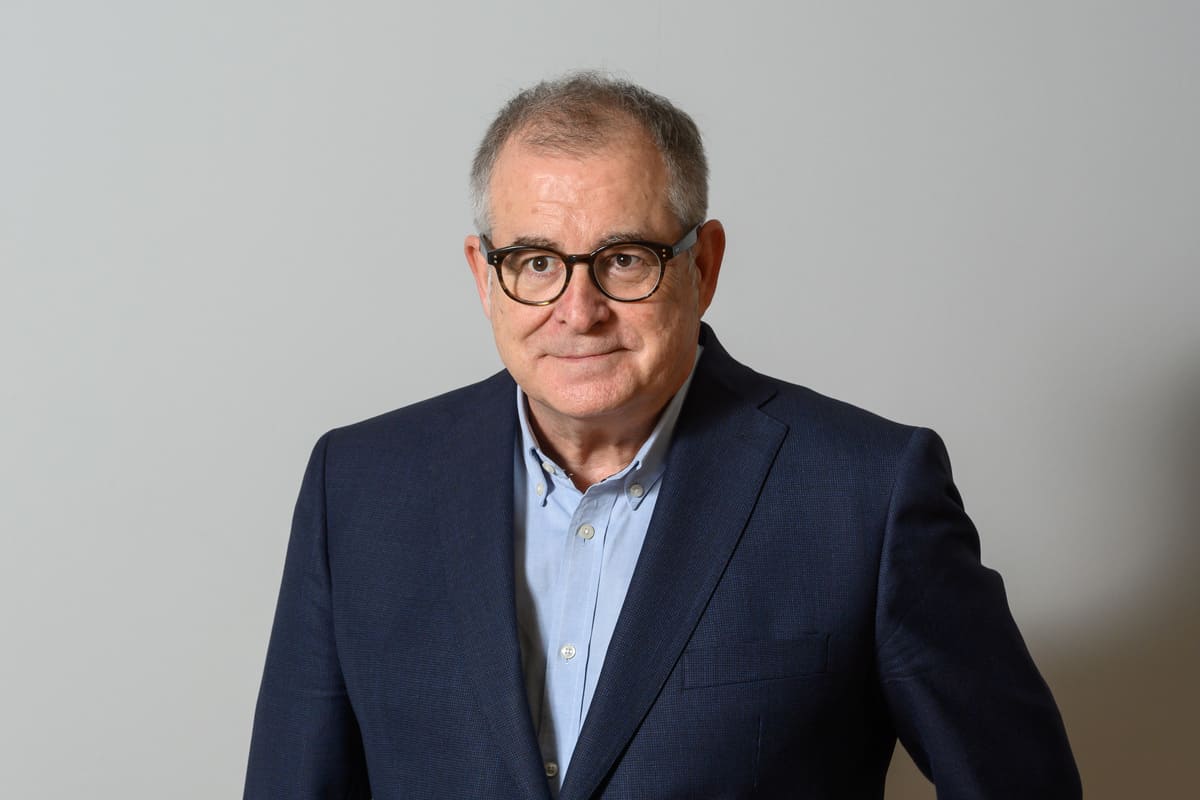
Jordi Valls Riera (Manresa, 1960) closes his first year as general director of Mercabarna, with a host of projects on the table budgeted at almost 200 million euros. After a decade in the private sector ---he was a senior executive of the Agbar group in the United Kingdom, Chile and Mexico---, the executive has returned to the public sector with the aim of leading an ambitious transformation plan for Barcelona's large central market, which faces a quadruple challenge in terms of energy transition, digitalization, food reuse and expansion of the food hub's surface area.
After managing to unblock the purchase of the plot that allows the expansion of Mercabarna, the former president of the Port of Barcelona (2007-2011) and also former Minister of Labor of the Generalitat (2006) and former mayor of Manresa (1995-2006) is finalizing the details of an innovative public tender to select a private operator that will allow the installation of 120,000 m² of photovoltaic panels and offer green energy at a competitive price to concessionary companies. Mercabarna is home to some 500 companies that bill 5,000 million euros and employ 7,500 workers.
--How did you find Barcelona after a decade living abroad?
--I returned to Barcelona from Mexico in the middle of the pandemic, closing a very interesting international stage. I have found a Barcelona that is paying the price of investing a lot of energy for eleven years in a specific project that has not responded to the concerns and emotions it generated at the time. Society is somewhat exhausted from an energy point of view for having made this effort, but I believe that now we are at a very attractive moment, because people want to do things and there are common projects beyond what each one thinks and their political project. The change is so accelerated, so brutal, that either we all start working in the same direction or that wave of changes will bring us a lot of bewilderment. But the good news is that there is a desire to develop projects together, because the situation is complicated.
--What is your assessment of Mercabarna after this first year?
--I found a company that is very clear about its function. Mercabarna throughout this pandemic has seen with a point of pride its importance, it has guaranteed the supply of food at all times and this function has begun to be publicly recognized. We are an extraordinary export hub and we have a very important role in the framework of food distribution in Southern Europe; no joke with Mercabarna! However, as a commercial company, we also have it very clear that in the next five years we must carry out substantial changes in terms of modernization, efficiency, sustainability, circular economy, digitalization, and strengthening of local producers...
--Let's talk about these priorities. What are the challenges you are working on to face this wave of changes?
--We must do many things at once. On the one hand, strengthen our economic capital. We must generate results and capital to be able to make the necessary investments. Secondly, we must generate natural capital; our activities, directly or indirectly, have an impact on the Planet and that is why we must minimize this impact by introducing elements such as green energy or the promotion of the circular economy. On the other hand, we must improve our social capital and human capital, betting on training and strengthening, for example, the ties we have with universities. And we also have to grow physically, because our clients need space and we must provide it, and that is why we have reached an agreement to buy from the Consorcio de la Zona Franca de Barcelona (CZFB) a plot of 173,194 square meters that will increase the available surface by 22%. Another challenge from the point of view of resilience and adaptability is, for example, defining the role we must have in the field of population health, in strengthening local production, in new trends in the food sector or in the rise of vegetable protein or foodtech that innovate in new disruptive models in this sector.
--What investment will all these projects require?
--In the 2021-2026 period, Mercabarna plans to make investments of between 175 million and 200 million euros. Of these, 75 million correspond to the expansion of 22AL, that is, to the purchase and conditioning of the CZFB plot. About 60 million will be allocated to Mercabarna's annual investment plan, endowed with about ten million per year. And the rest to other projects, such as the energy transformation plan, the reform of the Punto Verde or the digital transformation project.
--The European Union's Next Generation funds, what part of that budget could they contribute?
--Our goal is to seek about 28 million from the Next Generation fund, which we will allocate to the circular economy plan, the new Punto Verde infrastructure, and the new food recovery center, which we have called Foodback. We have already submitted a first application for two million for one phase of the Punto Verde.
--What does this new food recovery center consist of?
--Projects in the field of the circular economy are key for Mercabarna. Until now there was no culture of reuse, but rather a model of donation to the Banc dels Aliments or of destruction and valorization through the Punto Verde that we launched in 2000 and that works very well, with a recycling rate of 75%. Now we want to launch a new system in which everything is integrated and with a model of penalties and incentives that allows us to minimize waste and that no longer depends only on voluntariness. It is an important project that requires an investment of about 6 million euros and is already in the execution phase.
--How will this model of bonuses and penalties work?
--We will place smart waste containers everywhere to know who and what quantities are thrown away at all times. These containers will go to the Green Point and, therefore, a fee will have to be paid for this generated waste. What we want is for the maximum volume of food to be diverted to the new Foodback Food Repurposing Center, and there it will be decided whether these surpluses should go to the Green Point or can be used by social entities. If so, there will be an incentive or tax bonus. In addition to the Banc dels Aliments, from now on there will be other social entities involved with the aim of doubling the food repurposing of fruit and vegetables. Of the six million euros, 3.5 million are allocated to the remodeling of the Green Point, 1.1 million to the construction of the repurposing center, and 900,000 euros to the purchase of smart industrial containers to be able to establish penalties.
--What is Mercabarna's commitment to green energy?
--We want to develop a project to install photovoltaic panels on all public buildings and create an energy community together with the private sector. The objective is that thanks to photovoltaics we can generate between 20% and 25% of the energy needs of the food unit, which is one of the most important concentrations of cold in Spain. In parallel, we must prepare the infrastructure to incorporate electric vehicle charging systems and also the use of hydrogen as fuel for trucks.
---How will they manage to make solar energy generate 25% of the necessary energy?
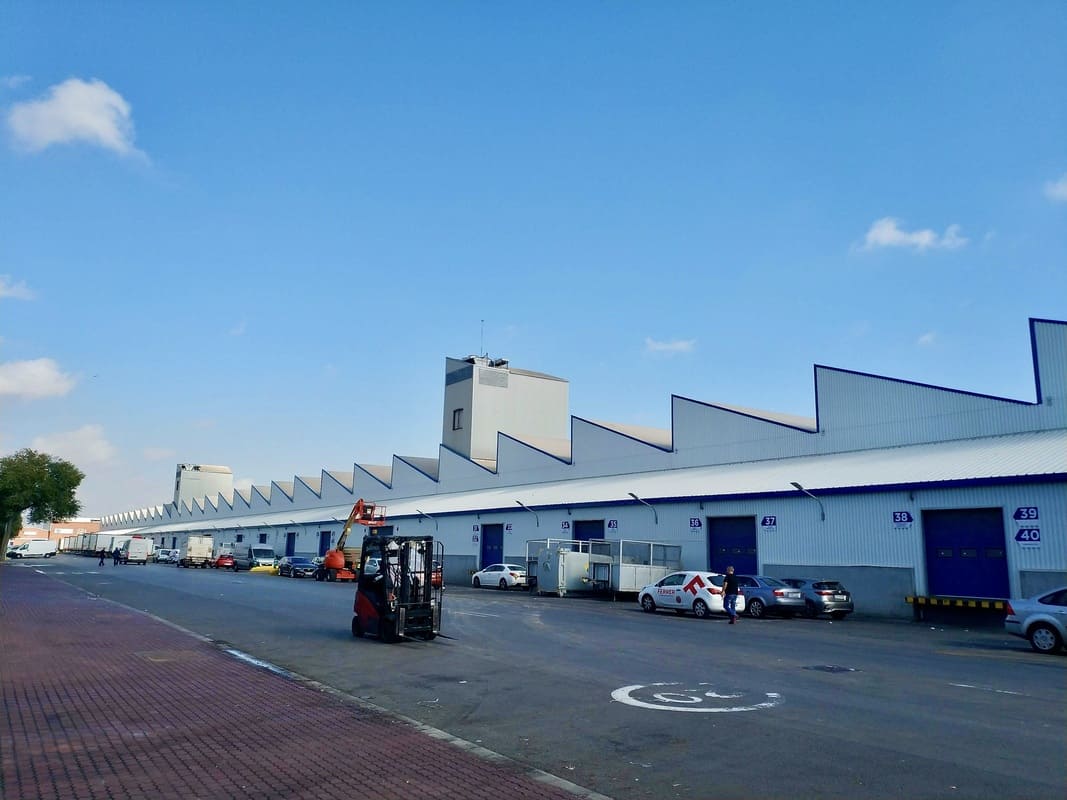
---In this first semester of 2022, we will launch a public tender to find a private partner that allows us to install, all at once, 123,000 square meters of photovoltaic panels on the roofs of the fish and fruit markets and other buildings owned by Mercabarna. It is a key project, very relevant for us, with an investment of 5 million euros that we want to carry out hand in hand with the Barcelona Sustainable Energy Mechanism (MES Barcelona) promoted by the Barcelona City Council.
---How will this initiative be financed?
---What we will do with the call for this tender will be to seek not only an installation and management company for the photovoltaic panel park, but also a financier. The idea is to create an SPV (special purpose vehicle), a company that will have Mercabarna as a client and that will be able to incur debt. The private partner that wins the tender, in principle, will have the majority of the shareholding of the SPV, where the Barcelona City Council, through MES Barcelona, could have 30% of the capital. We are evaluating whether Mercabarna would also have a stake in that vehicle. The objective is to be able to offer a competitive rate to our operators, that is, to the companies that work under the roofs where we will place the solar panels. It is a matter of environmental commitment but we also want to add competitiveness to Mercabarna companies with a new energy source that we will have available in a context of high energy prices.
--Currently, Mercabarna already has solar panels in some buildings such as the Biomarket and corporate offices, right?
--Yes, in public buildings, including the Mercat de la Flor, we now have 316.42 kWp installed, with an estimated production of about 380MWh/year. In parallel, there are already private operators who have also made investments and who would add 1,782.94 kWp more.
---The 123,000 m² new that are now planned to be installed on the roofs of the markets, what energy will they generate?
--The first phase would be 6,376 kWp and the second (in anticipation of new buildings) 1,338.36 kWp. The energy produced in the first phase would be about 7,710 MWh/year and in the second phase approximately 1,618 MWh/year.
--And the idea is to encourage private operators to also cover their buildings with photovoltaic panels?
--Yes, we want to accompany private companies in this process with the aim of creating an energy community, so that surplus energy from one place can be consumed in another, exported to the grid or even stored in batteries. The photovoltaic potential in private properties would be around 13,515 kW, with a total producible energy of about 16,342MWh/year.
--What digitalization plan does Mercabarna foresee carrying out?
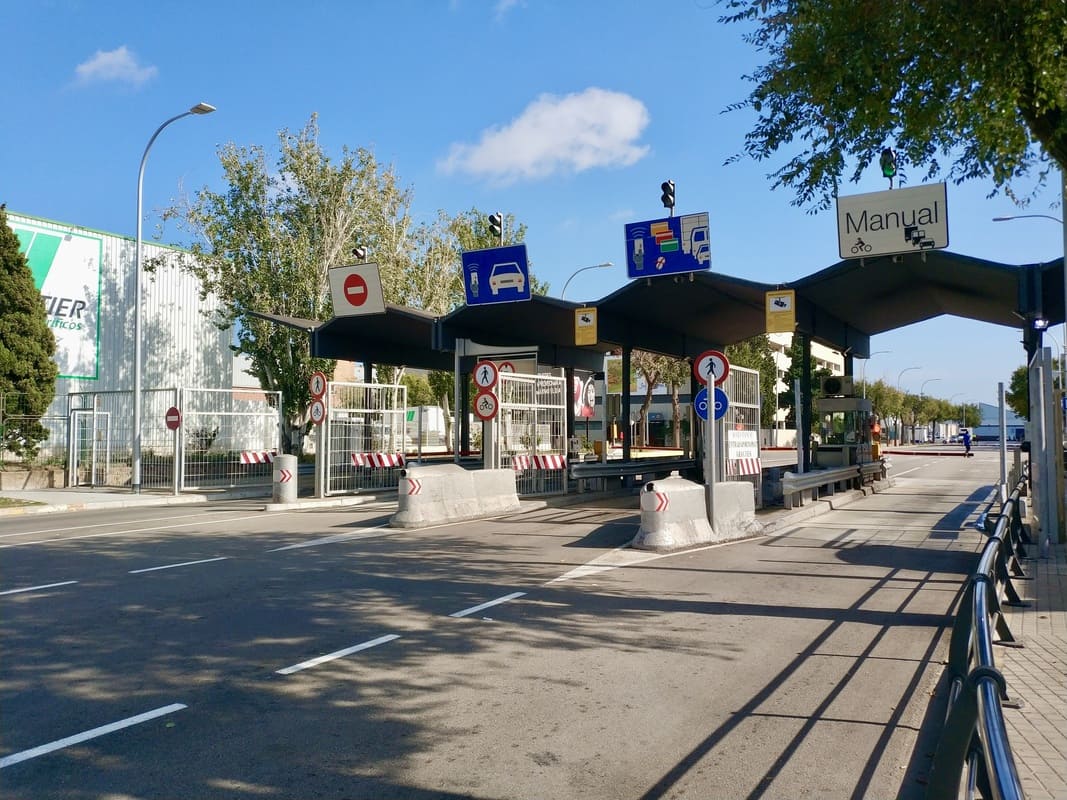
--Mercabarna, Barcelona, and all major cities must make a radical leap in the digitalization of last-mile distribution. The key is to have data that allows us to help with this city challenge and make real-time decisions. We plan to invest 15 million euros to modernize and digitalize our entrances, to have greater control over all vehicles entering and exiting, and to implement a smart mobility and smart parking model with intensive use of technology, sensors, and artificial intelligence. This is one of the projects we will work on this 2022 and for which we are currently seeking funding.
--Will you participate in the new railway terminal project at the Port of Barcelona?
--Yes, we have been invited to participate in the new intermodal terminal at the Port, and we have expressed our interest in being one of the promoters of one of the four terminals, the ferrotage one, meaning the one that allows placing trucks on the train. The Port of Barcelona must now issue a tender, and we would be interested in having a minority shareholding because, as a public company, we must support a mode of transport that can remove many trucks from the road and thus contribute to reducing emissions. Mercabarna registers a very high volume of traffic from southern Spain to northern Europe, and that is why I believe incentivizing ferrotage is important.
--Mercabarna decided to close the slaughterhouse because it was unprofitable, and that has freed up a significant plot of land. What plan do you have for that area?
--Yes, the slaughterhouse was closed, and by February it will be completely demolished. We are left with a plot ---called MB15--- with a total area of 27,556 square meters (42,980 m² buildable) that we want to start commercializing this 2022 and that could host between three and four projects. We already have some interested companies, although I cannot name them for now. In addition to these third-party projects that we already have on the table, we are also thinking of building a new multipurpose pavilion from Mercabarna where we could locate a sandbox, that is, a testbed for startups in the food sector.
--What demands have the concessionaire companies made to you in this first year?
--Concessionaires are concerned about the price of energy and its impact on costs and inflation. But they have also already informed me that they want a new extension of the concession period to be approved. A short while ago, an extension came into force that prolongs the current concessions until 2037, but now there is already talk of beyond that, and it is something we must understand. Companies, in order to make the necessary investments, must be able to work with long periods, and we are studying it. It is not easy, but we are legally assessing what can be done.
--There's no rush, right?
--We will see it in due course, but, yes, operators are in a hurry, they are pushing, and it must be understood. If Mercabarna is what it is, it is thanks to them, who want to have a clear future projection.
Add The New Barcelona Post as your preferred Google source for free
Stay informed with the latest news.
