Juan Marsé, in Últimas tardes con Teresa, is probably the one who best depicted the atmosphere of Barcelona's bars in the last century through literature. Let's take this fragment as an example: "He spent entire afternoons in the Delicias bar playing cards near the stove with the old men, he would see her come in and order a coffee with milk at the counter; she drank very slowly, standing, with her empty eyes half-closed and fixed on the card table." Marsé displays his mastery by evoking the Delicias and the café con leche without detailing specifics. And despite the absence of details, it is easy for us to compose our own version of the place.
[subscribe_newsletter_esp]
Over the years, bars have served, above all, as a refuge for men. Confessionals, for women. Both caverns served to intone one you know what I mean after another with the added sorrow of having to accept that whoever absolved you from the other side had an advantage in quality of life. In most establishments, coffee had, and still has, little value. Even so, we paid and continue to pay a premium for it due to the high difference compared to its negligible cost. Especially when its function is limited to being the base for a carajillo and, therefore, on which to pour a shot of brandy, cazalla, or rum. Whether it's coffee, whether it's a perfumed coffee, whether it's sipped standing at the bar, abstracted or unbridled with loud laughter resulting from teasing a neighbor, coffee is a parenthesis ---often longer than one anticipates--- before returning to the framework of the construction site, the factory, or the office.
We don't stop to savor the coffee. Quite the opposite. Often a coffee is an excuse to stop. It accompanies us during a break or after-dinner conversation. It has accompanied soldiers in the trenches and escorted peace agreements. We have shaped it to have it instantly available with a couple of spoonfuls or in capsule format. And, recently, in Barcelona, it is a trend through a new way of understanding the virtue of this ancient product.
The mystical origin of coffee
So ancient that in the 17th century it was banned because it was believed to stimulate debate and critical opinion. For this reason, for fear of social destabilization and possible revolts, in some places they forced coffee shops to close, such as in Cairo, where at that time there were already over a thousand establishments. Even Pope Clement VIII was urged to ban the beverage among parishioners, although he, upon delighting in it, concluded that limiting such pleasure to infidels would be a shame.
The origin of coffee is not known exactly. A good part of the historiographical lines point to present-day Ethiopia. One of the legends is based on a mystical traveler who observed how a type of birds ate the red fruits of the plant and that made them more energetic. Another tells that it was a shepherd who observed the revitalizing power when the fruits were ingested by the goats of the flock.
One of the legends is based on a mystical traveler who observed how a type of birds ate the red fruits of the plant and that made them more energeticIn any case, archaeological datathey do not clarify when the transformation from fruit to beverage takes place. On one hand, one theory defends that it was after the 15th century. Another states that, in Arabia, coffee had been consumed since the 12th century. Again, we must refer to mythological content to find a common thread that explains how such a discovery takes place. Specifically, to that of the mystic traveler who observed birds, mentioned a few lines above. Apparently, the mystic took a sample of the leaves and fruits of the plant to a monastery. The monks, curious about the mystic's explanation, agreed to cook the samples. But the taste seemed so unpleasant to them that they threw the potion out and the grounds, which contained coffee beans, into the fire. Then, as these were roasting, the aroma captivated them. This is how the monks thought of repeating the process, but this time with the already roasted beans.
Specialty coffee arriving in Barcelona
Coffee spread to other lands through merchants, explorers, and invaders. And in a similar way, thanks to travelers, this rebirth of coffee that achieves a remarkably superior flavor and aroma, has arrived in Barcelona.
It is specialty coffee. A denomination adopted to refer to a coffee treatment that takes detail into account from moment zero. With the planting, because it is necessary that they be seeds of the Arabica variety, which require a special climate and a certain altitude. With the harvesting, because it is not done in mass as happens with supermarket coffees or those from the usual Delicias; specialty coffee requires harvesting the fruit at its optimal point of ripeness.
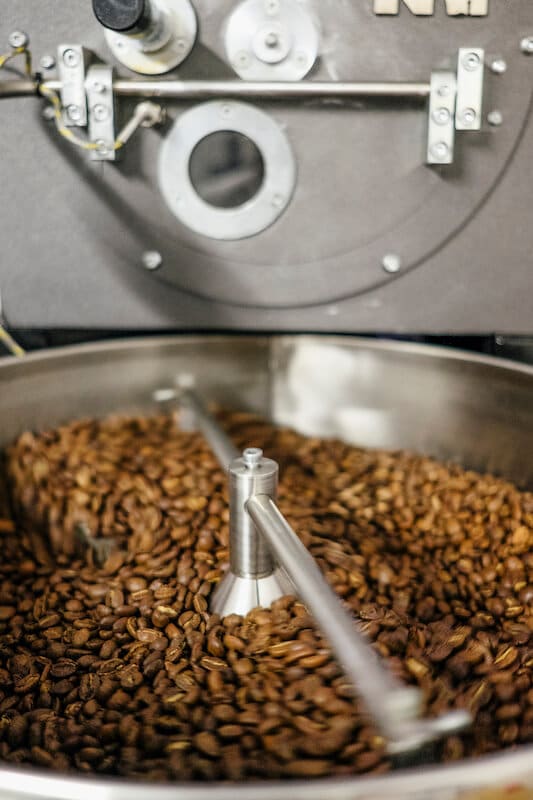
Specialty coffee is the denomination adopted to refer to a coffee treatment that takes detail into account from moment zeroSubsequently comes the selection, which involves discarding those beans that are considered defective through a manual and delicate process. The next step is to roast the coffee in controlled doses; at this point, the roaster's sense of smell will be key to determining when the coffee releases the aromas and nuances to be enhanced. And finally, in the preparation, the barista comes into play, who, it is probable, has actively participated in the roasting process.
I have spoken with three of the new barista families in Barcelona, the architects of this new concept of coffee service.
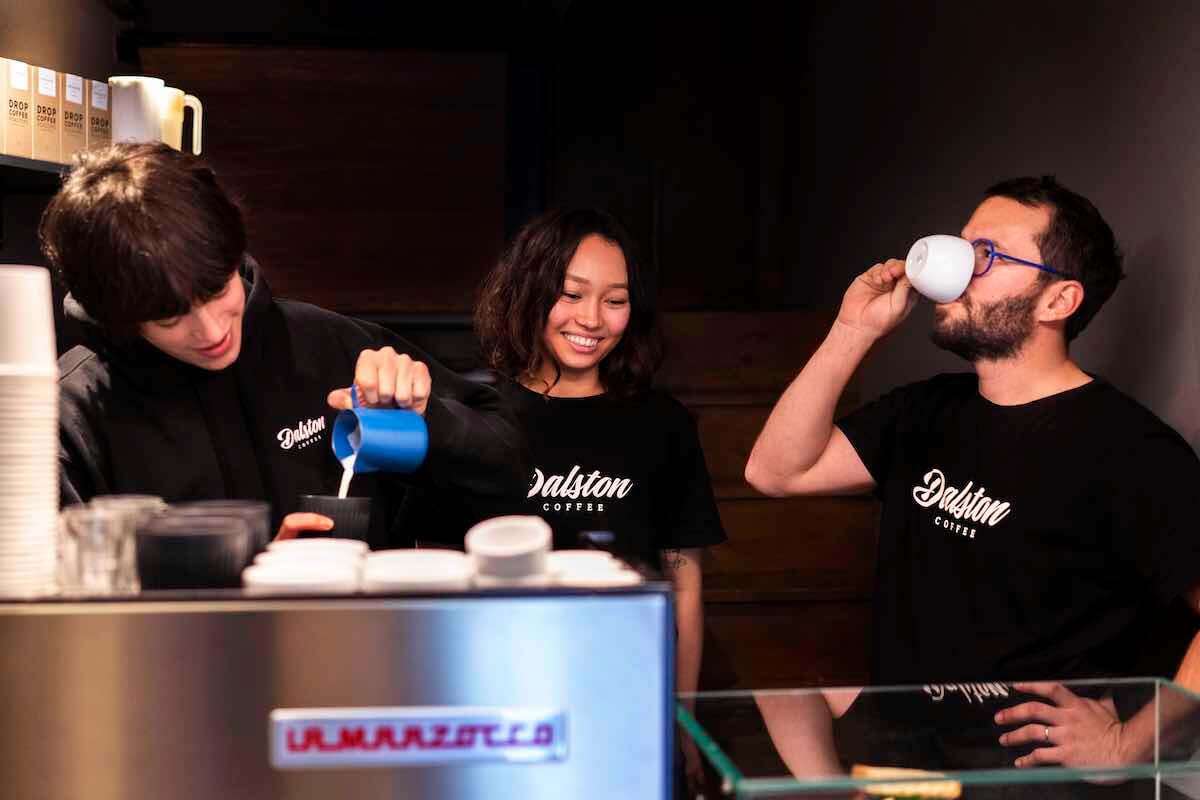
Borja, from Dalston Coffee (Carrer Ramalleres, 16. In El Raval)
In 2005, Borja, along with his partner, Alícia, decided to try their luck in London. The stay, in addition to deepening his language skills, led Borja, a trained chef, to connect with specialty coffee. Borja equates his first experience with specialty coffee to his first contact with author's cuisine. At that moment, he was surprised and wondered why, in certain restaurants, this coffee philosophy was not taken into account.
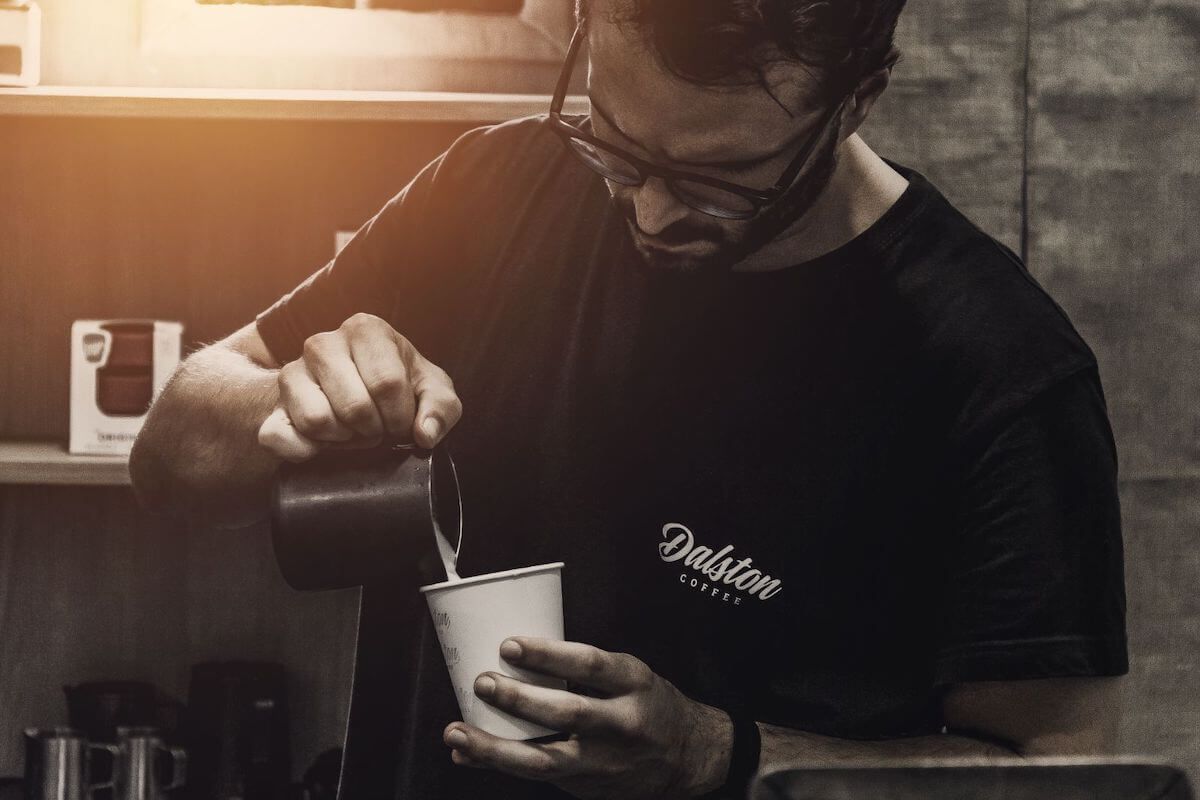
The barista from Dalston reveals to us that the main difference between specialty coffee and the usual coffee that most coffee shops have accustomed us to, lies, on the one hand, in the raw material. And on the other, in the origin and the roasting process. The latter, the degree of coffee roasting, is often used to mask defective or low-quality batches. Water also plays its role, as it should be filtered. And in appropriate cases, the milk, which should be fresh and properly heated, not like the half-liter metal pitchers that are reheated again and again.
At the same time, the seasonal variability of the planet means that, depending on the season, coffee should be imported from one country or another. And to be more exact, from one farm or another. In this sense, when Borja returns to Barcelona and decides to open Dalston, he takes into account a coffee culture that allows him to choose and identify the complete traceability of the product.
François and Carmen, from SlowMov (Carrer Luís Antúnez, 18. In Gràcia)
Carmen worked as a consultant for a multinational. But after a while, she didn't see it clearly and decided to reorient her life. She pursued a master's degree in anthropology and approached the slow movement. In parallel, while studying, she found work at a specialty coffee roaster in Paris and discovered the correlation with the slow movement.
This way, they were presented with the opportunity to move to Barcelona, where specialty coffee had not yet taken root, and open a space focused on caring for nutrition through healthy, sustainable food and beverage products, and alternatives to industrialized products. This is how SlowMov was born, a proposal that pays attention to detail to the point of serving the product with compostable packaging. Packaging that took them six months to find, given that there was only one company in Canada that had it.
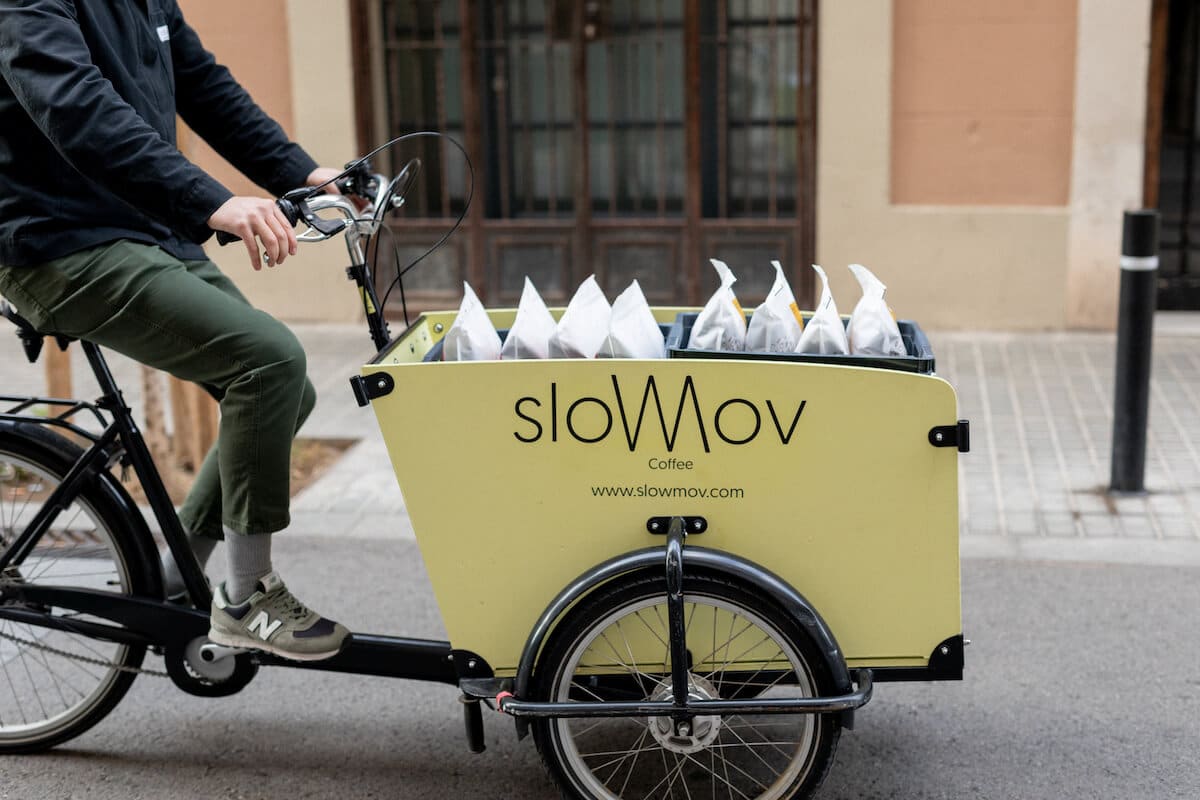
François emphasizes the effort that this treatment of the product as a whole entails for the business. The cup and the take-away glass, for example, are also compostable. As one can imagine, the cost that this gesture represents is notably higher than the millions of non-biodegradable paper cups offered by well-known commercial brands, which have an enormous environmental impact.
SlowMov is a service for professionals. It receives periodic samples of coffee from up to eight different origins. This allows them to maintain a close relationship with producers and, at the same time, offer a wide range of coffees, training, events, and tastings.
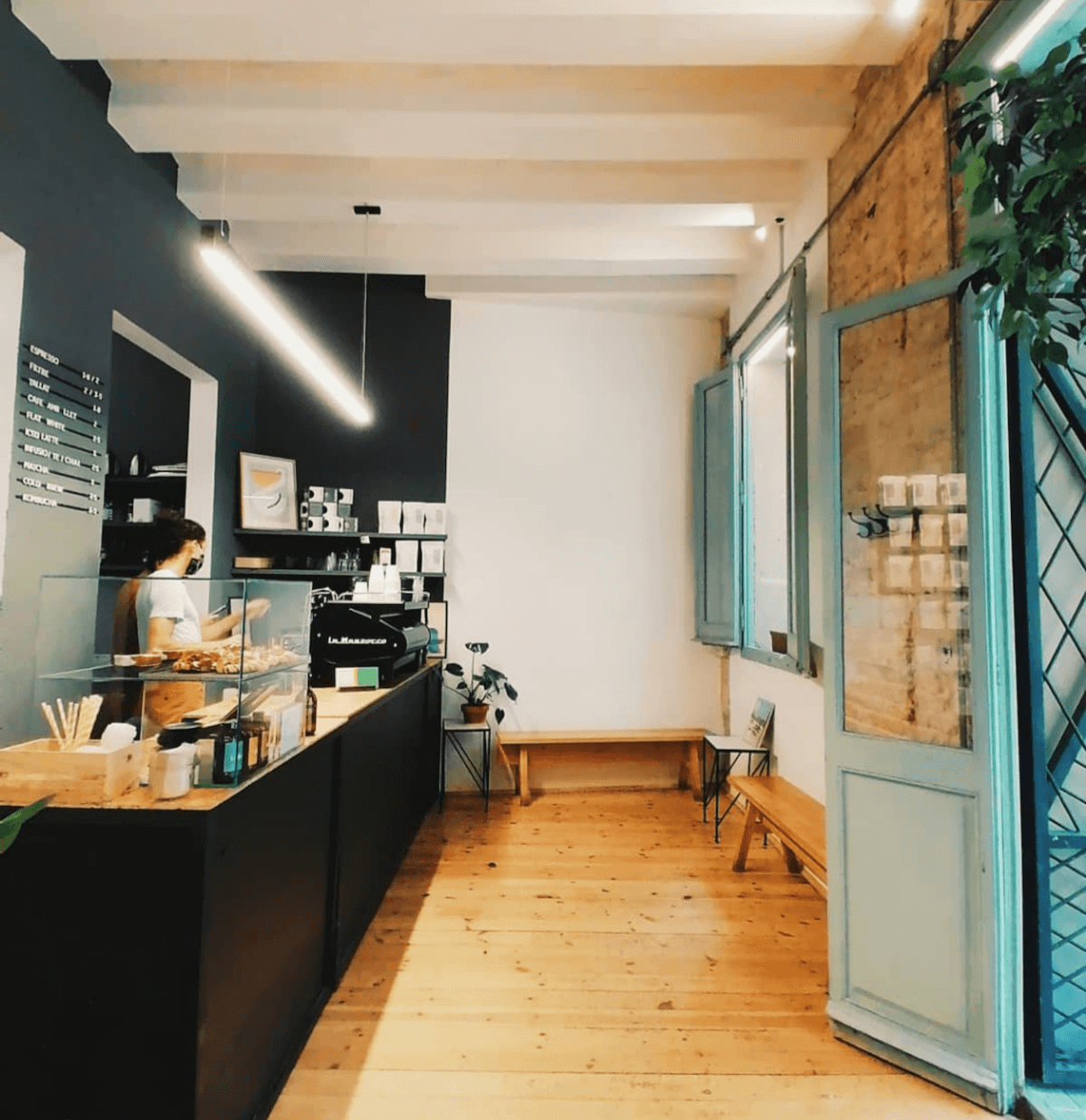
Iker, from Roast Club (Carrer de València, 190. In Eixample)
Iker highlights that a good part of Barcelona's specialty coffee baristas have a common denominator: having lived abroad. Iker's first contact with the world of specialty coffee took place twelve years ago in Australia, in a coffee shop where the owner, anecdotally and following the travelers' label, was of Greek origin.
Iker compares specialty coffee to the philosophy of craft beer or natural wines. After a failed attempt to consolidate a coffee shop in New York, when he was twenty-six, he decided to return to Barcelona, where he had lived before, and open a first establishment of thirty-five square meters. He knows the specialty coffee process well because he spent a year and a half on plantations in Costa Rica.
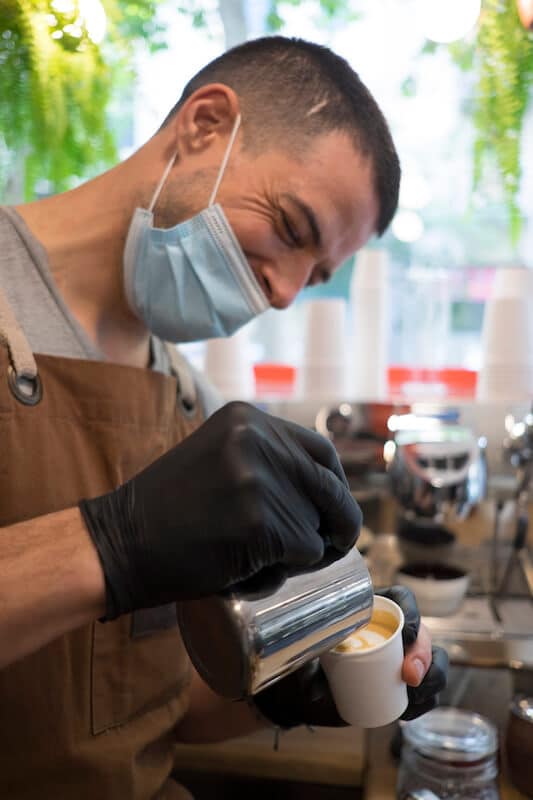
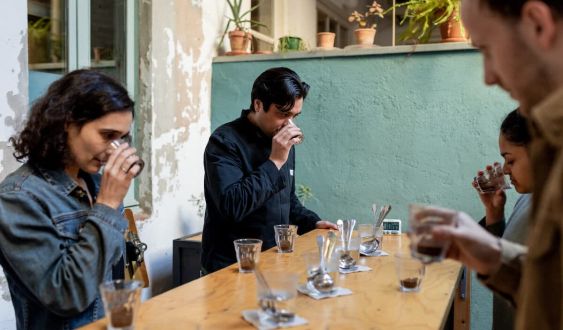
Iker reveals to us what makes older audiences also interested in specialty coffee when, a priori, the target seems oriented towards a nomadic and entrepreneurial audience. The reason, according to Iker, is that when they see the queue forming at the doors of the establishment, curiosity strikes them. Initially, accustomed to the usual bar coffee, the price surprises them. But Iker detects it and immediately invites them to an inaugural cup. While he prepares it, they ask about the process: the scale to obtain the optimal amount of coffee, the stopwatch... Why does it take so long? They get the answer immediately upon tasting it.
Melbourne first, then London, Paris, and now, Barcelona, have incorporated a new and welcome rarity. A carefully prepared coffee, whose elaboration requires technique, patience, and skill. From now on, stopping to have a good coffee, to taste the wide variety of contrasts and not allowing it to be simply an excuse, depends on us.
Add The New Barcelona Post as your preferred Google source for free
Stay informed with the latest news.