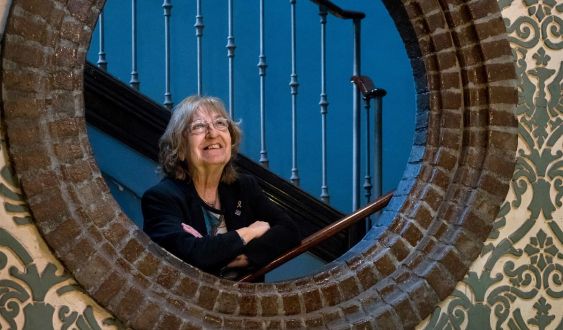
She arrives in the afternoon, despite being more of a morning person, a habit she acquired from her partner, the poet, translator, critic, and linguist Gabriel Ferrater: "He would wake up every morning at six. One day I decided to try it, I liked it, and now I've been waking up early for over fifty years."
She leans against the bar, with her dog, Queta, at her feet, allowing herself to be seen and admired like a vedette.
--- What will you have?
--- I don't usually drink alcohol, but since I'm at the Bar today, I'll ask for a Negroni, which they introduced me to at Boadas as an infallible remedy for headaches.
She likes to think of herself as a poet ---"mind you, not a 'poetess,' which is a word that for me has a cheesy undertone. Poet. Like athlete"---. A profession that Marta Pessarrodona has combined with countless jobs in the publishing world, from biographer of figures like Maria Aurèlia Capmany, Montserrat Roig, and Frederica Montseny, to translations of poets like Simone de Beauvoir, Marguerite Duras, Erica Jong, Doris Lessing, or Susan Sontag; as well as various works on Virginia Woolf and the Bloomsbury Group.
Recently awarded the III Special Poetry Prize by the Jesús Serra Foundation, which adds to a list of accolades that includes the Creu de Sant Jordi, the Premi Nacional de Literatura de la Generalitat de Catalunya, and the Premi d'Honor de les Lletres Catalanes, the poet has also been a lecturer at the University of Nottingham between 1972 and 1974 ---from where it is to be assumed her taste for Dunhill cigarettes comes, or, failing that, the John Player ones manufactured in that town---, and has coordinated the International Commission for the Dissemination of Catalan Culture. But what she is most proud of is "having reached 80 and still writing poetry, despite the moments when I might have thought my career was over."
--- Obviously, you're still here, fighting the good fight. What are you working on now?
--- For years I've been compiling a personal anthology of translations of poets, exclusively for my own use and enjoyment. Also, I'm working on a new book with the provisional title of Admiracions.
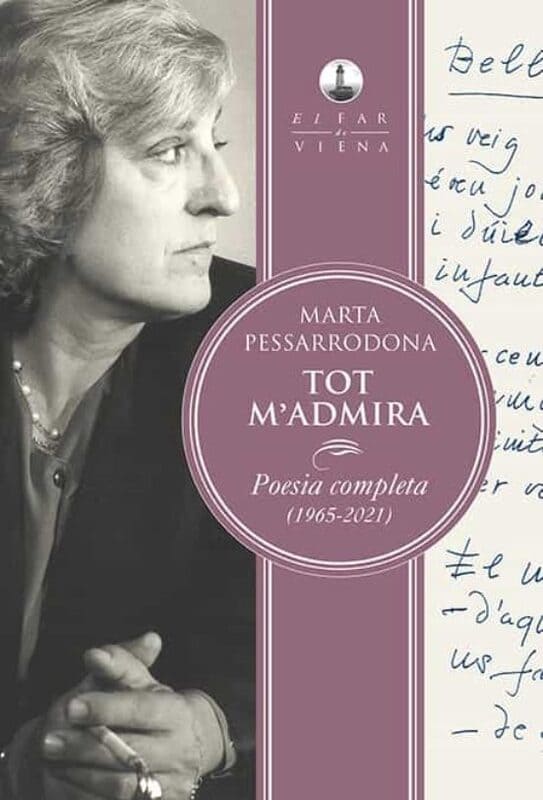
This volume joins the recent Tot m'admira (Viena), a work that compiles her complete poetic production until 2021, and Sobre Marta Pessarrodona (Comanegra), which brings together critical works, interviews, and reflections about her figure by more than thirty authors, including Montserrat Roig, Antònia Carré, Anna Maria Moix, Sam Abrams, and Pere Ballart.
An education in self-sufficiency
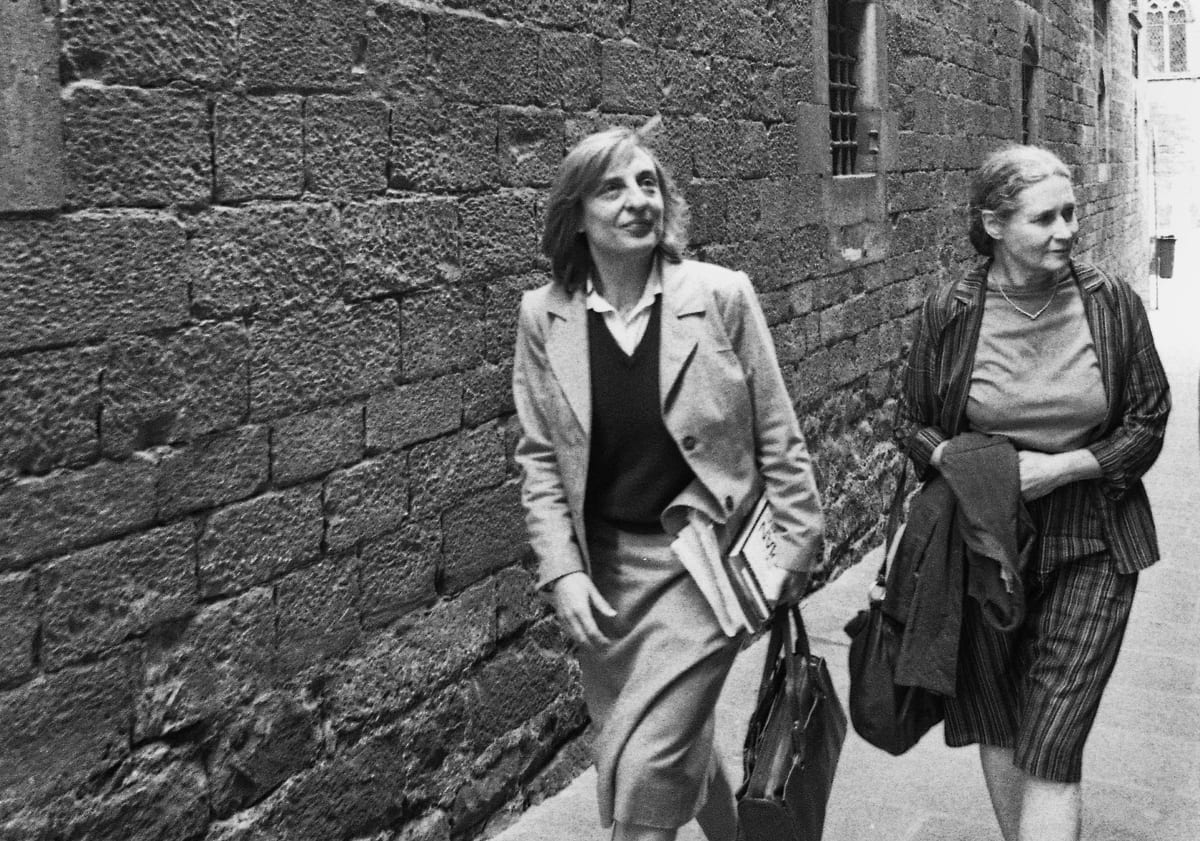
Born in Terrassa in 1941, when she was 13, her parents made a decision that would greatly shape Marta's character. "Back then there were no high schools in Terrassa, so they enrolled me in Maragall in Barcelona. And every day I went there alone, ate alone in the restaurant next door, did many things alone. This self-sufficiency, this ability to do things by myself, comes from that decision to enroll me in Barcelona and make me go to high school every day on my own."
Later, the family plan was for her to study to be a pharmacist. "Thank God, I was inoculated with a vaccine that had, as a side effect, pleurisy that made me lose a year. That was good for me, because during my convalescence I reflected and decided that for nothing in the world would I study science. From there I went on to study Philosophy and Letters. And, since I don't have a great pedagogical vocation, beyond doing short courses, I immersed myself in the publishing world, which was the option that career offered so I wouldn't have to be a teacher." That happened in the early 60s, a time when Marta Pessarrodona the poet was already fully forming.
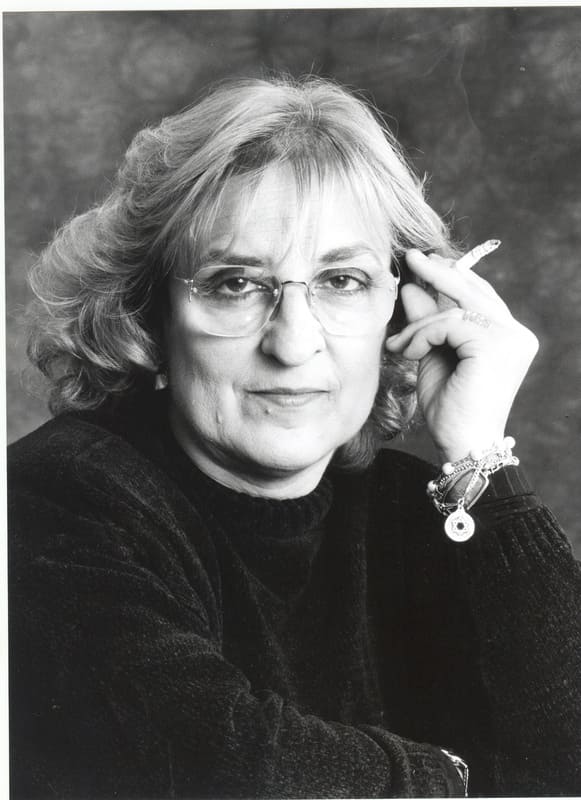
The next moment of utmost importance came when, while she was in England, her friend Marià Vancells, who would die prematurely, presented a collection of her poems. "And word started to spread that I wrote. I was very shy and didn't move, I was embarrassed. I remember Esther Tusquets trying to arrange a meeting with Carles Barral and me being glad he wasn't there, because I didn't know what to say to him. Even so, spurred on by my friends from Terrassa, who were like my particular Bloomsbury, we made a first book, 8 poemes, of which very few copies came out, but they sold in five minutes. This was followed by Els primers dies del 68. And then Setembre 30, my first serious book, was published. In addition, Gabriel Ferrater, who was already my partner then, wrote the prologue for it, which is why I didn't want him to write that prologue, but someone told me 'love lasts five minutes, a prologue lasts forever' and I accepted."
She and Ferrater would remain together until his death in 1972.
The great enchantress
"For me, Barcelona will always be important for being the capital of my country, which is Catalunya. In fact, I believe that the mayor of Barcelona should be voted on throughout Catalunya," proclaims the parishioner, unable to contain memories that beat in her memory, such as seeing herself go up the escalators of the Plaça de Catalunya station, when they came with her parents from Terrassa, or memorable meals at Set Portes with her father, before returning to the character of a city of which she likes to think "that the Consell de Cent was the first democratic parliament in the Western world."
Established between Barcelona and Sant Cugat ---"I still have a Vallès heart"---, the poet sees in the city "that great enchantress that Maragall spoke of in his Oda nova a Barcelona."
--- What you will also love is our gastronomic offer, based on set menus, tapas, portions or dazzling combined dishes.
Marta Pessarrodona takes a moment and a sideways smile, before laying down culinary law:
--- I have always liked combined dishes, and I make some myself at home.
--- Do you like to cook?
--- Yes, I even cook for my dog!
And then, the little dog Queta, who smells the incipient joy, emits a bark that corroborates her owner's words and reveals the appetite of both.
Add The New Barcelona Post as your preferred Google source for free
Stay informed with the latest news.
