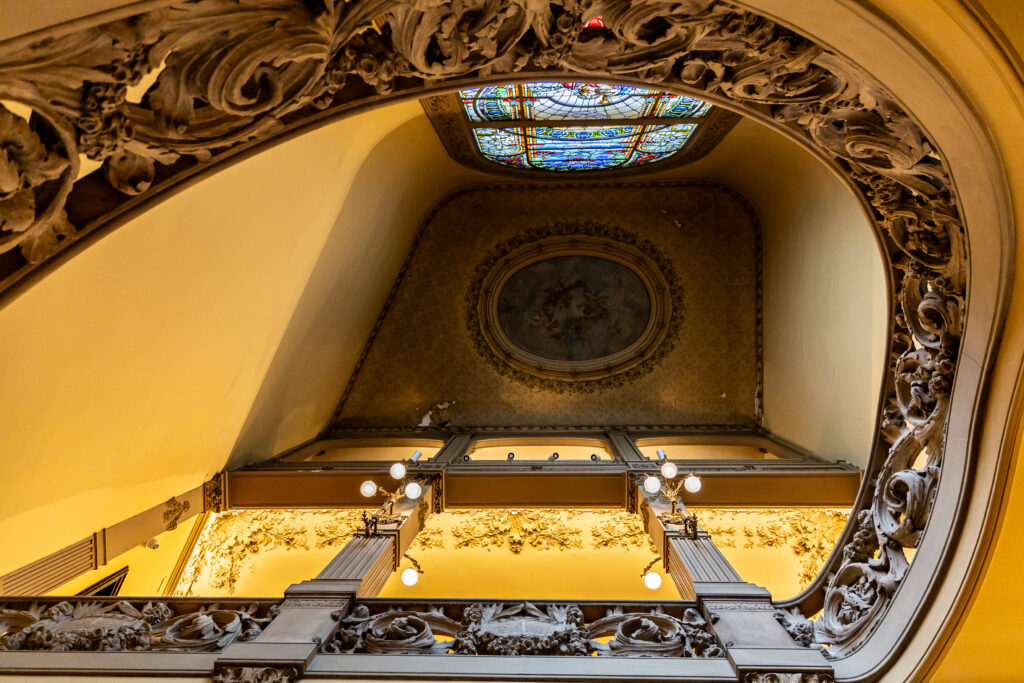
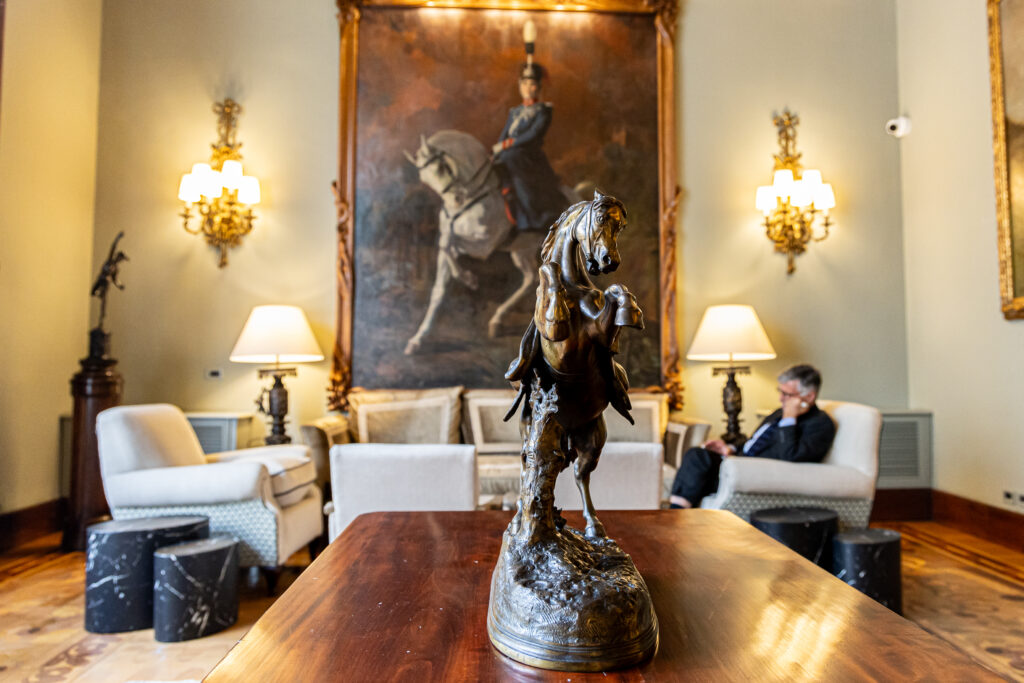
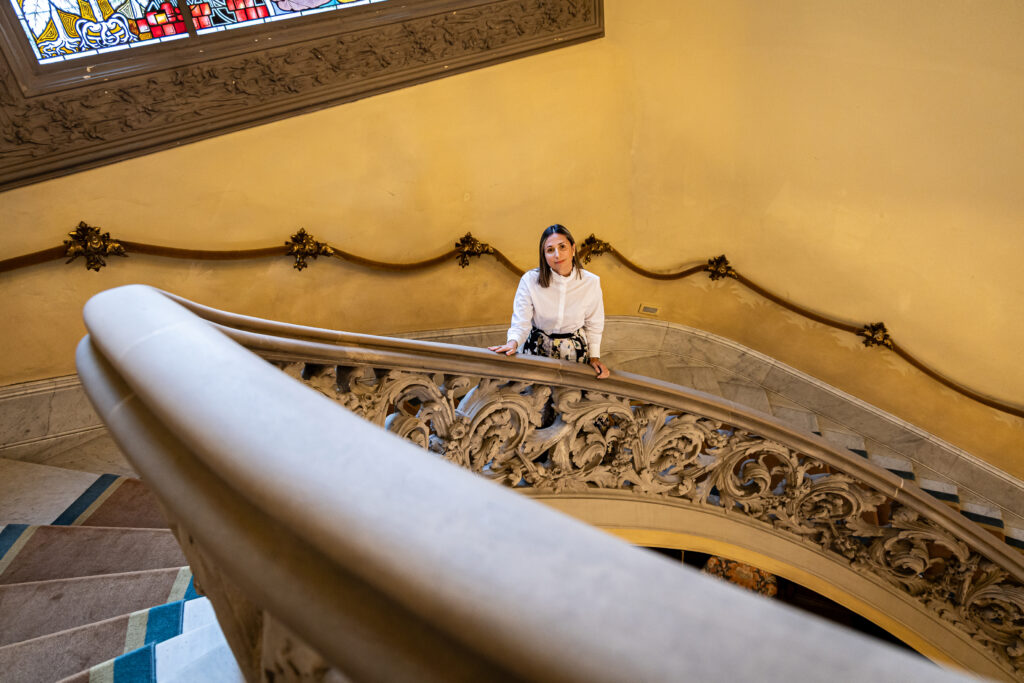
They receive me in the hall with an imposing staircase and majestic salons. At the entrance, a sculpture by Gonzalo Guzmán coexists with Ramón Casas's work Julia en grana; around, some people read the newspaper, others meet or telework. It's hard to imagine that in these salons and noble floors, every November for six years, By Invitation, a fair that occupies the mansion of the Círculo Ecuestre and transforms it into, surely, one of the most unique spaces to host modern and contemporary art in the world, is celebrated.
By Invitation was born in 2020 as an initiative of the club's president, Enrique Lacalle, and since the 2024 edition, the salon has entered a new stage under the artistic direction of Mariella Franzoni, cultural manager and doctor in art history.
Last year, 10,000 people visited it, and it has consolidated itself as one of the important events on Barcelona's artistic calendar.
— Why hold an art fair at the Círculo Ecuestre?
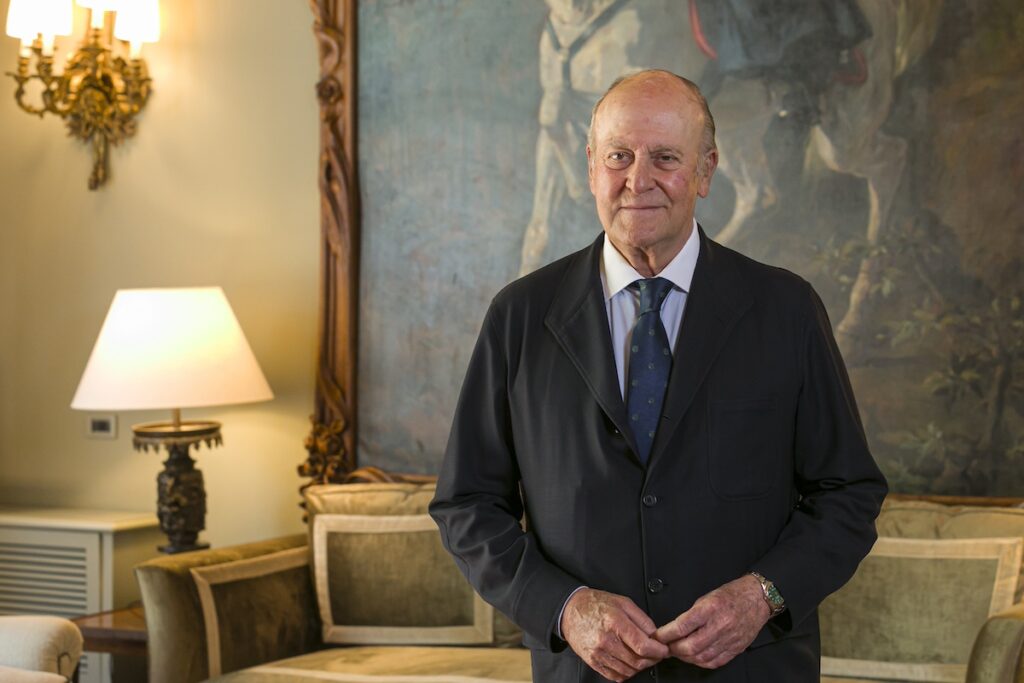
— Enrique Lacalle: Why not? It was born from a clear vision: to offer Catalan society a meeting place for gallerists, artists, collectors, and art lovers. In the first edition, in the midst of the pandemic, we created a modern and contemporary art salon that would restore Barcelona's creative pulse.
— What makes By Invitation a different fair?
— E.L: What makes By Invitation unique is the incomparable setting offered by the Círculo Ecuestre in Casa Pérez-Samanillo.
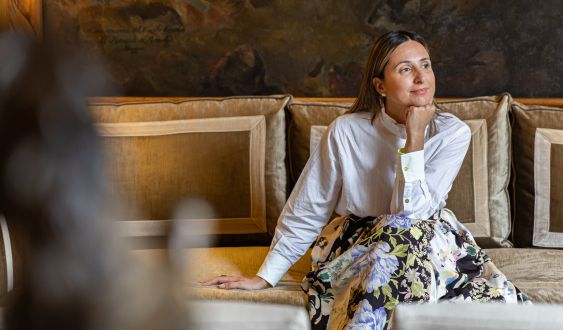
— Mariella Franzoni: In fact, we refer to By Invitation as a salon, not an art fair. The idea of calling it a salon responds to its almost domestic and close character, which eliminates that feeling of inaccessibility, despite being held in one of the city's most exclusive private clubs.
Personally, I am interested in the term referring not only to the first exhibition formats of the 17th century but also to those spaces for meeting, intellectual exchange, and cultural construction among artists and thinkers that contributed to shaping modern artistic life.
The fact that it is a compact proposal—last year, 23 exhibition projects participated—means it can be covered in two hours and is digestible and accessible.
— The word By Invitation can suggest a certain elitism
— E.L: In the first editions, as its name indicates, access was exclusively reserved for members of the Círculo Ecuestre and guests. However, over time it has opened up to the public and is now completely free, unlike many fairs where an entrance fee is required.
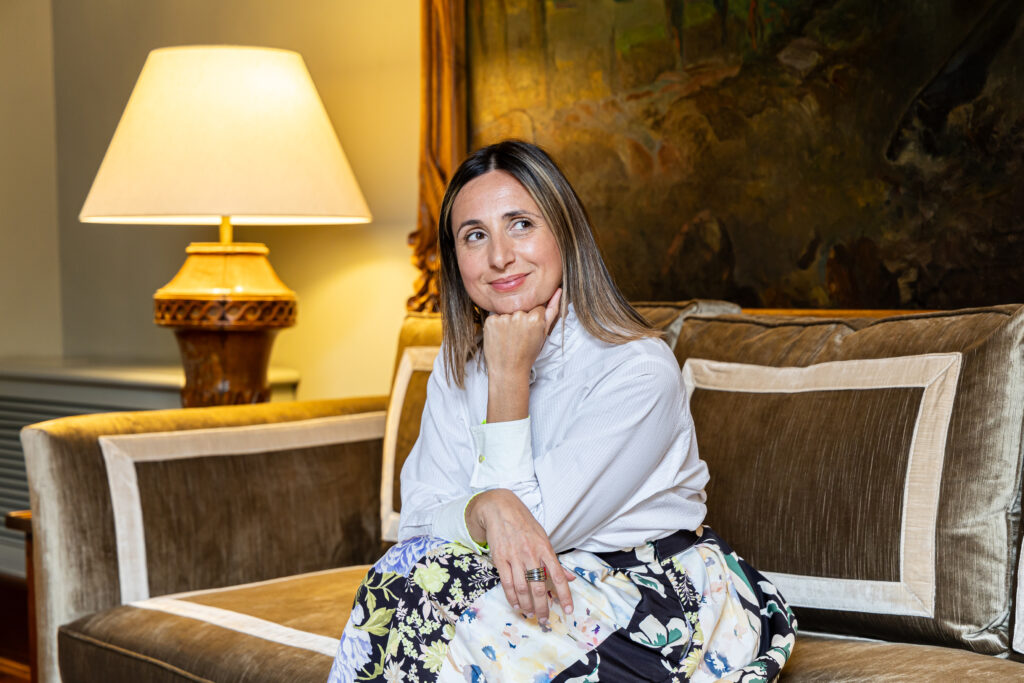
— M.F: When I joined as artistic director in 2024, my mission was to professionalize it and reimagine what the fair could be, turning the concept of by invitation around.
It was about extending this invitation to the galleries, not to the public. The public doesn't need it: it's one of the few free fairs open to everyone. In contrast, the participation of galleries is structured by invitation, which distinguishes us from other models based on open calls. Our aim is to invite galleries with specific and contextualized proposals.
Lacalle: "The idea is to cultivate collecting across generations and generate an enthusiasm for collecting"
— How is the selection of galleries and proposals made?
— E.L: From the beginning, our priority has been to support Barcelona's art galleries and offer them a space to share their proposals in an environment different from that of the gallery, a unique platform for interaction between collectors, artists, and galleries.
— M.F: Our mission is to continue supporting the city's galleries, while incorporating proposals from other national and international galleries. Unlike the first editions, we organize the fair with a clearly curatorial intention: we not only select galleries, but we articulate a meaningful exhibition program.
Last year, in my second edition, we introduced a theme: “Timelines.” We sought to work on intergenerational dialogue, understanding time as a set of lines that connect generations and generate productive frictions. Thus, I invited the galleries to think in terms of intergenerational dialogues and they had to present proposals that reflected this concept.
Franzoni: "This is the great success: making possible dialogues that would be difficult in other contexts"
Very daring and wonderful proposals could be seen, such as, for example, the dialogue between Mariona Berenguer and Ana Peters presented by the Marc Domènech gallery, the Palmadotze gallery with Joan Hernández Pijuan together with Violeta Mayoral, as well as Teresa Gancedo with Lúa Ribeira presented by the RocíoSantaCruz gallery.
This is the great success: making possible dialogues that in other contexts would be difficult.
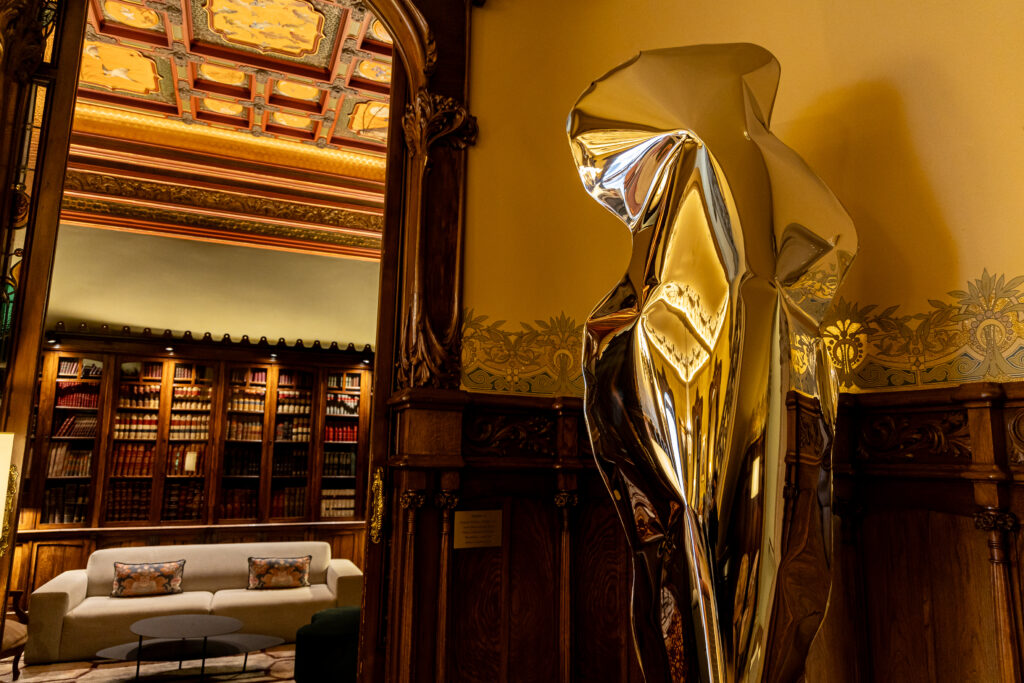
— So, the fact that the fair is held in a building with so much history and decorative elements, rather than being a problem, is a virtue?
— E.L: By Invitation is not a conventional fair, but an artistic experience where each exhibition is conceived in dialogue with the architectural environment of the mansion.
— M.F: We set out to rethink the dialogue between artistic projects and the building. The socio-political identity of the space is imposing, and by introducing contemporary art, this dialogue with history becomes very present.
Lacalle: "Fairs are often the first place where people feel comfortable starting to acquire works of art"
— One of the changes you introduced when you took over the artistic direction was the exhibition design of the proposals and the professionalization of the setup
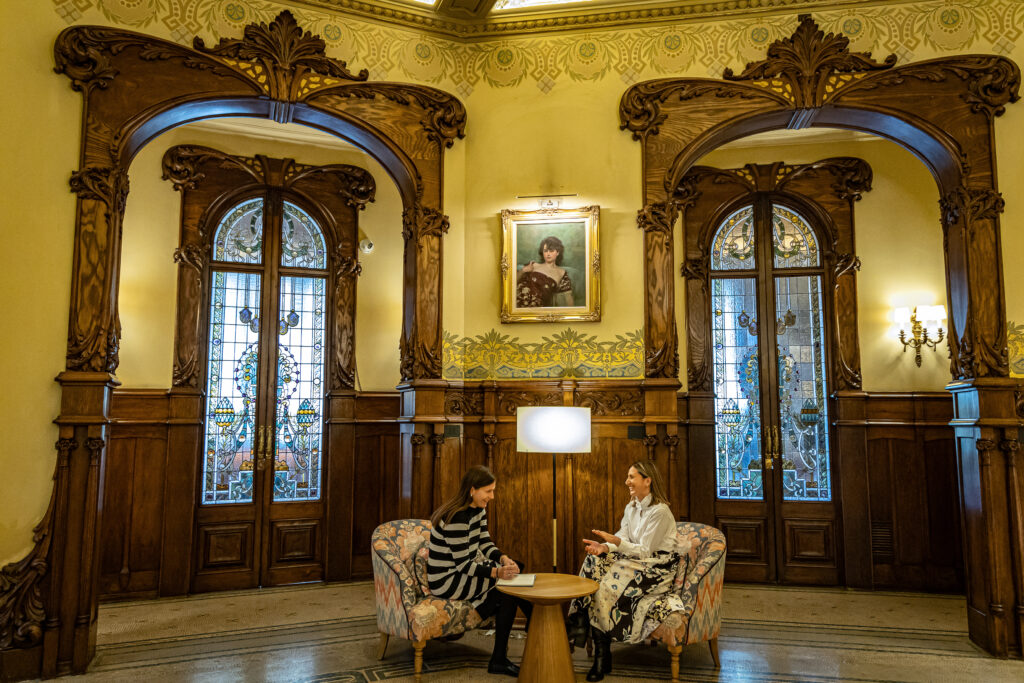
— M.F: It was fundamental to take care of how the works were exhibited. We collaborated with an expert in exhibition design, Andrea Isola, to generate a true dialogue with the architecture. The exhibition design is meticulously cared for, and in recent editions, the installations consisted of ephemeral structures that dialogue with the architecture instead of imposing themselves on it, generating a careful and professional exhibition language.
— Also, being a boutique fair, you feel more welcome
— M.F: I prefer to speak of a fair with a human dimension. Unlike other fairs held in exhibition centers, at By Invitation, the small committee format allows prioritizing proximity, curation, and excellence. Furthermore, this format allows us to better accompany the galleries and listen to their needs.
— Speaking of the human aspect, what role does collecting play within By Invitation?
— E.L: The idea is to cultivate collecting across generations, attract young people with potential, and generate enthusiasm for collecting. We understand collecting as a practice that is transmitted and enriched through dialogue between generations, placing art and artists at the center of the cultural experience.
I started this way, collecting at 23, and without a large capital, I have built a collection. Fairs are often the first place where people feel comfortable starting to acquire artworks, and we want that first step to happen here, at By Invitation.
— M.F: Fostering a new culture of collecting is one of the fair's missions; we want to build a community of committed local collectors and establish bridges between generations to promote the culture of acquisition and support for artists and galleries. The artistic program is complemented by a program aimed at collectors and sector professionals, a patronage program, and a series of talks.
Franzoni: "It is important to find a balance between supporting the local ecosystem and fostering collecting in the city"
— What are some of these initiatives?
— M.F: In collaboration with Art Run Agency, we organize a very special and dynamic program dedicated to collectors and art-buying entrepreneurs, which includes dinners, meetings, and exclusive activities inside and outside the fair, as well as visits to private collections and museums. Furthermore, last year we introduced acquisition awards from collectors and foundations.
On the other hand, some collectors from Barcelona acted as hosts at the fair. In the last edition, we introduced a formula where they themselves invited their network and selected the projects and works that interested them most.
We also have a program of talks that addressed the social commitment of collecting, a topic that generated a lot of interest from the artistic community.
— Can everyone buy at By Invitation?
— M.F: Yes, absolutely. Price is not an excuse!
The three programs allow covering different ranges: in Vértigo, the youngest section, there are works starting from €500; in Palacete, with more established artists, up to €20,000; and in Espuela, focused on the secondary market, prices can reach one million euros.
By Invitation has consolidated itself as one of the important events on Barcelona's artistic calendar.
— What role can the fair play in positioning the city in the European circuit?
— M.F: It is important to find a balance between supporting the local ecosystem and fostering collecting in the city, while also opening up to other related geographies, that is, to international audiences who can appreciate our proposals.
Franconi: "Sometimes, growth implies compromising quality, except in cases like ARCO"
For example, Italy: some galleries showed interest and we found proposals that dialogued with the city, such as the connection between Italian and local artists. Last year, BKV Fine Art (Milan) and Shazar (Naples) galleries participated.
For me, internationalizing means creating real affinities, not just growing in number. It is also important to invite international collectors who already have a relationship with Barcelona and feel comfortable in this context.
— What is the future of By Invitation?
— E.F: By Invitation is destined to become an increasingly important reference, not only in the local art scene, but also in Europe. In life, only with disproportionate ambitions can great things be achieved.
— M.F: Barcelona has all the conditions to have a great fair, but a great fair does not have to be large in size. Sometimes, growing implies compromising quality, except in cases like ARCO, which has managed to maintain a high level.
Our priority is to consolidate the format, reinforce the identity and continue to elevate artistic quality.
From November 5 to 8, the sixth edition of By Invitation will be held at the Círculo Ecuestre. The concept of the 2026 edition is "Open Weaves". It proposes thinking of art as a space where new forms of social relationship, imaginaries of the present and narratives of the future are woven and intertwined.
Add The New Barcelona Post as your preferred Google source for free
Stay informed with the latest news.