[dropcap letter="E"]
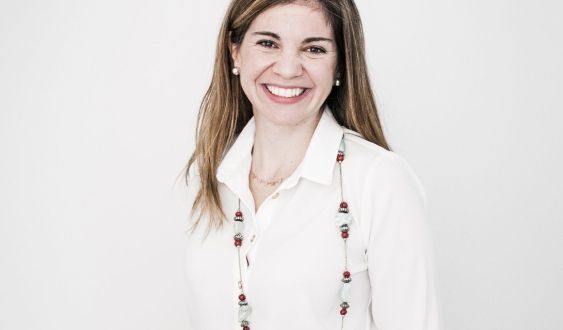
he unstoppable process of digitalization of the economy has accelerated as a consequence of the pandemic, which has not only generalized teleworking, but has also digitized many professions. This process makes us more efficient, but it can also take a toll on the brain, according to psychiatrist Marian Rojas, who will be one of the twelve Inspirational Speakers at the Barcelona New Economy Week (BNEW), a disruptive event aimed at reactivating the economy from five strategic areas: logistics, e-commerce, real estate, the digital industry, and economic zones.
According to the expert in emotion management, "the multiplicity of screens generates a great impact on our society" and causes "brain alterations," to the point that some scientists have already coined the term "digital dementia." "The human brain finds it increasingly difficult to focus attention, filter what is or is not important, and connect in a healthy way with real life," she explains, after noting that the main goal of social networks and Internet companies "is to get you to spend as many hours as possible in front of the screen."
"The more screen, the less wonder. The more screen, the less creativity. The more screen, the less memory. There are already scientists who claim that we are becoming a less intelligent society. We have a problem when one connects better with a screen than with a person or with the nature that surrounds us," warns Rojas.
She justifies her participation in BNEW, an event with a high technological load, to help raise awareness of the problem. "To understand is to alleviate; one must realize what is happening in their life and always be in control," she argues. "It is clear that technology is here to stay, but you must be the one to master technology and not let it master you. Many people can no longer live without the constant click, it is a drug; social networks are like an automatic dispenser of affections, which irremediably leads us to frustration."
Social networks are like an automatic dispenser of affections, which irremediably leads us to frustrationMarian Rojas invites us to perform a self-examination to determine "what our relationship with the screen is." She also offers two pieces of advice that she considers basic: remove all mobile phone notificationsto prevent it from distracting us when we are paying attention to something else or to a person and to activate airplane mode at night, and also at certain times of the day, to "be able to connect with the real world."
She assures that parents have a great role; they must set an example for their children to avoid having a frustrated generation that sees the screen as the "only escape route". "We are generating a society -Rojas points out- that has zero tolerance for frustration. We don't know how to suffer. We don't know how to have a bad moment. We only seek happiness at the click of a button, the happiness of instant gratification, which is not really happiness, they are dopamine sparks that we generate in the brain. Then a great void is generated."
The path to authentic happiness
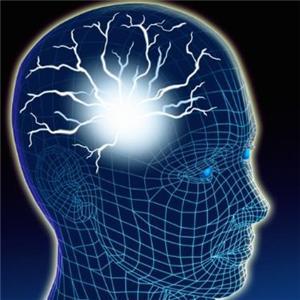
And, what is, so we don't forget, authentic happiness? "Happiness consists of connecting in the best possible way with what happens to us every day; it is being able to enjoy life daily despite the thousand ups and downs and problems that arise. The screen, on the contrary, turns off the brain's ability to solve problems: the more screen time, the less prefrontal cortex."
[subscribe_newsletter_esp]
The psychiatrist says she daily observes in her practice the problems caused by social media or improper use of technology. She regrets that the mood of many people already depends on what they receive through devices, so it is time to stop and reflect and avoid living "in a constant state of alert due to the screen."
The screen turns off the brain's ability to solve problems: the more screen time, the less prefrontal cortex"Technology is a wonderful tool, but it cannot replace everything in life. What makes us human beings happiest in this life -she reminds us- is managing human relationships well, loving each other, and doing our work in the best possible way."
Marian Rojas will give her inspiring talk at BNEW next Friday, October 9. BNEW, organized by the Consorci de la Zona Franca de Barcelona, will also host other Inspirational Speakers such as Marc Vidal, Elsa Punset, Pilar Jericó, César Piqueras, Mario Picazo, and Alicia Asín. The economic revitalization event, one hundred percent professional in nature, will address five thematic areas over five days and will have a unique disruptive format, as it will be like a big television show broadcast through six live streaming channels. More than 7,000 people from Europe, Africa, and America have already registered to participate in BNEW.
Add The New Barcelona Post as your preferred Google source for free
Stay informed with the latest news.
