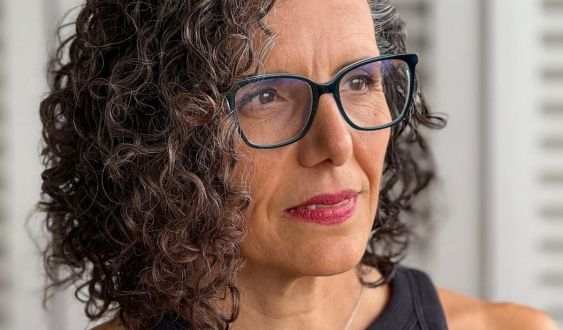
"We have two lives, and the second begins when we realize there is only one." The writer and musician Maria Escalas reflects aloud at the bar, the freshly brewed rooibos tea ("in natural water, not from the tap") still steaming, while the atmospheric chords of Razão de viver, by Nana Caymmi, fill the space of the Bar. Driven by an energy as innate as it is contagious, enthusiastic by nature, she smiles remembering the day "I realized I was already 50 and couldn't continue being a weekend writer." Then, for this Mallorcan, vintage '69, resident in Mataró, everything changed.
A confessed allergic to comfort zones, for years she combined steady jobs with classical music concerts as a piano or oboe performer. "I worked for a long period at the Municipal Music School of Premià de Mar, and it suited me very well, until a change in its dynamics led me to a routine I felt I had to leave. The birth of my two children was the final impetus to leave that position and start teaching music to ESO students at the Gem school in Mataró. I was there for nearly two decades, wonderful, very intense years, in which I taught, but also learned a lot of things. But, after years, that also ended up becoming a comfort zone, that feeling of non-happiness that is a bit like a slice of Bimbo bread, crustless, not too much flavor, that goes well with everything, but doesn't shine. That neither excites you nor sinks you."
In parallel, a private, intimate activity, as writing was for her, became "increasingly bigger." And she went from the stories and experiences she published on her blog to daring with a novel "that was a tribute to my grandparents, written in Mallorcan, and whose protagonist was a priest. Something I thought no one would publish under such premises. Therefore, I wrote with absolute freedom."
But she finished the book and, after all the work, hours, and enthusiasm she had put into it, she said to herself: "And why not?", and submitted the manuscript to several publishers. "And, to my surprise, there were immediately three who were interested in publishing it." Thus, in 2016, Abans que el teu record torni cendra saw the light, winning the Llança de Sant Jordi prize. And perhaps we could say that Maria began to live her best life, that second one that begins when we realize there is only one. And that it's better to make the most of it.
Rescuing Matilde Escalas from oblivion
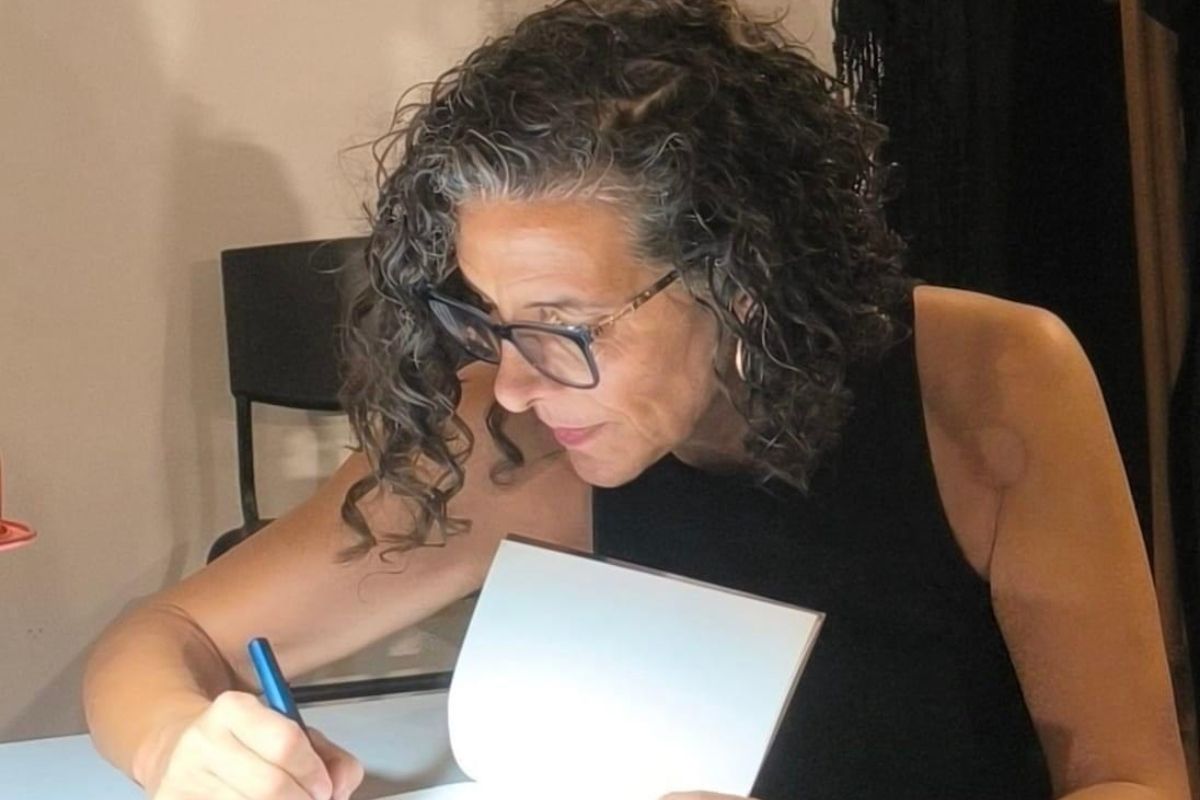
"I am proud to have the family I have. Without my children and my husband, I would not have had the courage to leave a stable job to fully dedicate myself to writing." In the last eight years, the parishioner has not stood still. Two years after her debut, she published Sara i els silencis, nominated for the Premi Millor Novel·la de Òmnium Cultural, followed shortly after by her third novel, Estimada Mirta. A work she has combined with her creative writing workshop, and collaborations as an editorial reader and as a cultural journalist in various media. "Which is what helps me make my activity viable, although, of course, that takes time away from documenting and writing fiction, which is what I really think all of us who write want to do. We don't lack ideas or inspiration, we lack time and money!", she laughs.
Fortunately, she has had the time to give depth and form to her new work, Matilde E. (La Campana), which has won the Llorenç Villalonga Ciutat de Palma novel prize in Catalan, and which investigates the life of the Mallorcan Matilde Escalas. "She was a totally unknown Mallorcan composer from the late 19th century, despite being at the heart of the cultural world of her time, straddling Mallorca, Barcelona, and Paris, working with Isaac Albéniz and Erik Satie, among other great musicians of the era."

Through the life of this artist of the first magnitude, the author questions the place of women in art. Or how Matilde Escalas continued to live in the shadow of Santiago Rusiñol, her lover, without ---beyond the well-known niche--- posterity knowing and appreciating her work and legacy, despite her undeniable artistic and cultural relevance. Of her unquestionable talent.
Inaccessible city
In love "with the drive and effervescence of Barcelona," with its conspicuous concert activity in spaces like the Palau de la Música, "which I've been lucky enough to experience as an audience member at the foot of the stage and as a performer on it," Maria Escalas laments how difficult it is to access the city from its metropolitan area. "For me, living in Mataró, it's impossible to come see a play and return home by public transport. And what they can't do is punish private transport the way they are, without proposing good alternatives. This city is inaccessible."
A problem compounded by the feeling of handing over the city to tourists and wealthy foreigners. "My advice, as a Mallorcan who has already seen what happens in these cases, is not to sell the city, because otherwise you will end up losing your essence," she warns, as she sips the first mouthful of the infusion, which has already cooled.
--- The essences that are impossible to lose are those of our delicious breakfasts, in case you want to accompany that rooibos with something tasty to eat.
Something lights up in Maria Escalas's active and inquisitive gaze, and she nods.
--- Of course! A small sandwich of good bread with good ham. I'm always hungry! All the time!
--- I'm not surprised, given how energetic you are.
The writer smiles. Nana Caymmi's Cançao em modo menor plays. The rooibos tastes good to her.
--- Yes, yes! I'm one of those who, on Christmas Day, after the family banquet, has an afternoon snack!
Add The New Barcelona Post as your preferred Google source for free
Stay informed with the latest news.
