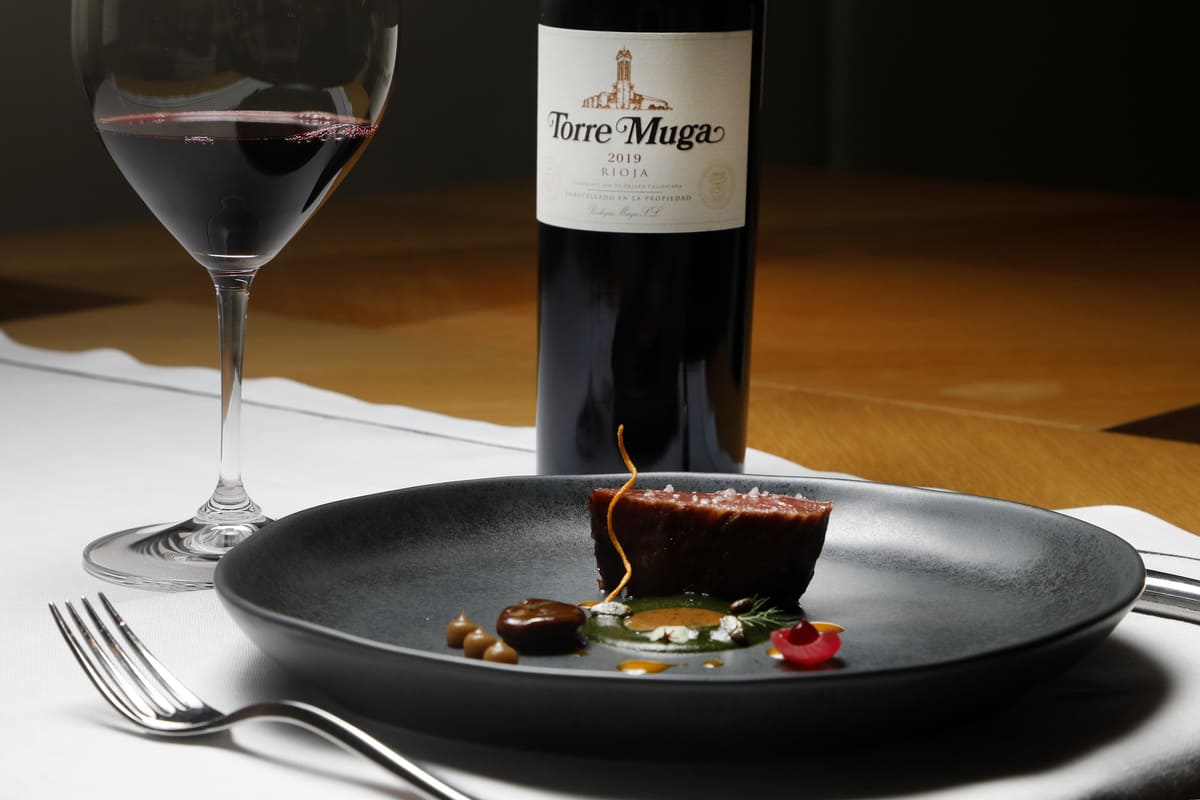
Aro and Torre Muga are the highest-value red wines produced by the Riojan winery Muga. They are not made every year, as the climate and grape quality determine the decision to bottle or not these two wines that make up the company's highest range, along with the renowned gran reserva Prado Enea. In this decade, for example, only four vintages of Aro have been released to the market, while six vintages of Torre Muga have been bottled.
In mid-October, the Aro 2019 and Torre Muga 2019 vintages began to be commercialized, priced at 270 euros and 75 euros, respectively. It had been two years since Muga's customers could enjoy these wines, as the last vintage commercialized was 2016. Made with Tempranillo and Graciano ---Torre Muga also contains the Mazuelo grape variety---, both are aged for 18 months in new French oak barrels and, before bottling, are subjected to clarification with fresh egg white, one of the house's hallmarks.
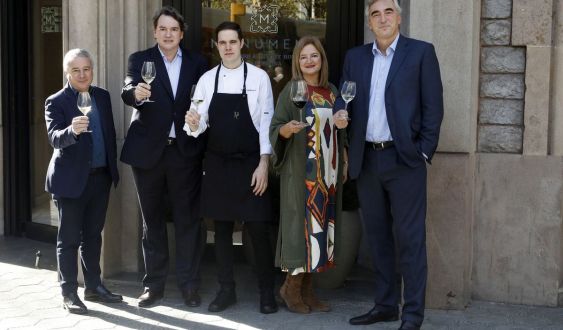
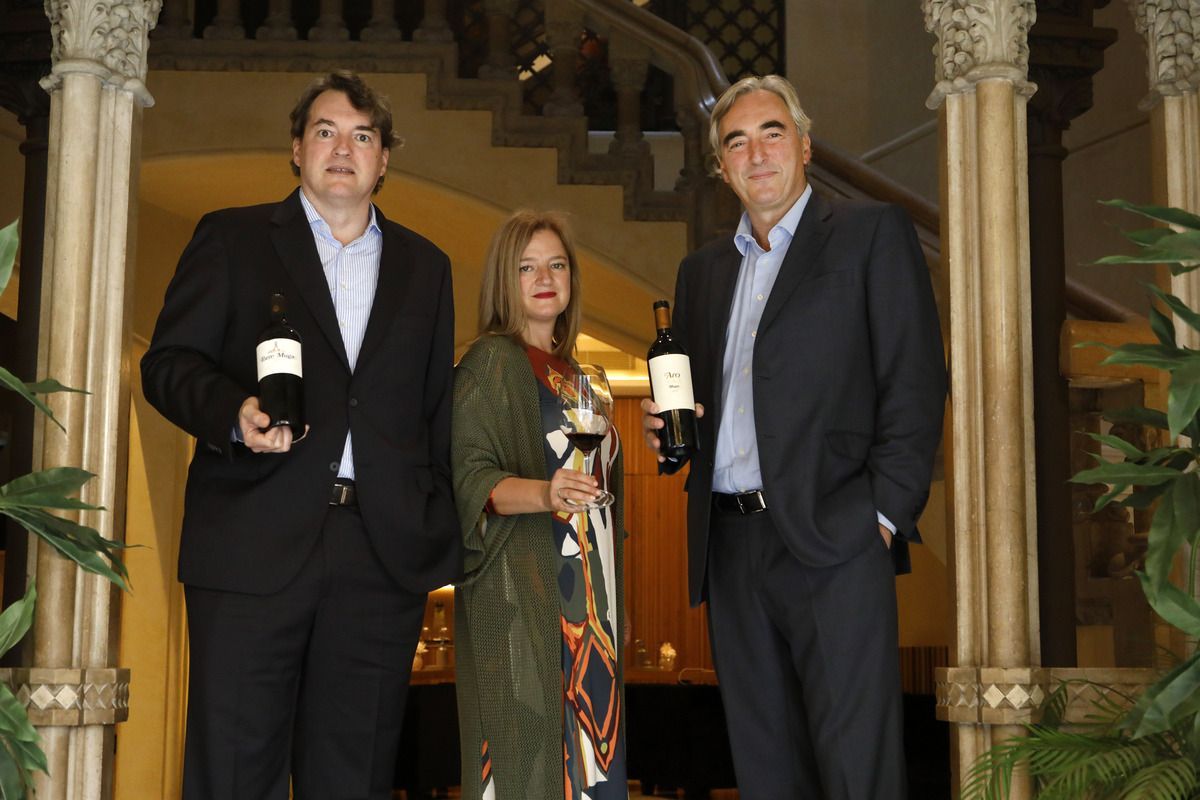
Brothers Manu, Eduardo, and Ana Muga presented these two iconic high-end wines from the winery this Tuesday in Barcelona, which they paired with a menu designed by the Oria restaurant, by Martin Berasategui and holder of a Michelin star, located in the Hotel Monument on Paseo de Gràcia. Quim Vila, co-owner of Vila Viniteca, also participated in the meeting, as one of his group's companies, Calidoscopi, has been Muga's exclusive distributor in Barcelona for fifteen years. "We always come to Barcelona when we have good news to share, such as the market arrival of Aro 2019 and Torre Muga 2019. Catalonia is a very important market for Muga and is especially key for our highest ranges," says Manu Muga, vice president of the winery.
According to the businessman, the Catalan market generates 10% of the company's national sales, but this percentage reaches 15% in the commercialization of higher-priced wines. "For Muga, Catalonia is especially interesting due to the product mix we sell. Red wines are the most famous Rioja wines, but here we sell a lot of white wine and, especially, rosés."
Specifically, Manu Muga points out, 70% of sales in the Catalan market correspond to red wines and the rest to rosés and whites, a proportion that is not common in all autonomous communities. "It's not easy to sell premium rosés like Flor de Muga, but in Catalonia there is much more culture. Barcelona, the Costa Brava, Ibiza, and Malaga are good places for these types of products," he adds.
Based in the emblematic Barrio de la Estación, in Haro, Bodegas Muga produces around two million bottles a year, of which one and a half million are red wines and the rest are white and rosé wines, as well as cavas (50,000 bottles) under the brand Conde de Haro. In the last fiscal year, which closed last August, the company invoiced around 30 million euros, in a year marked by product scarcity. "We didn't have more wine to sell," he assures.
Muga sells 50% of its production in the domestic market and the other 50% is exported to some 80 countries, with the United States, the United Kingdom, and Canada leading the way. Germany, Scandinavia, and Asia are also important markets for the winery, currently managed by the third generation, made up of 7 cousins from two family branches.
The family ownership, closely linked to a long-term vision, has led Muga to be one of the wineries that has invested the most in the purchase of vineyards in Rioja. Thus, since 2014 the company has acquired 200 hectares and today owns 420 hectares that allow it to supply 60% of its grapes. The remaining 40% is bought from other winegrowers. Another characteristic of the firm is that it has its own cooperage.
The company is currently 100% focused on DO Rioja wines, but Manu Muga admits that the family would like to establish itself in other wine regions, as some of the main wineries in the sector have done. "Yes, we have this concern, we want to do things outside of Rioja," he acknowledges. According to Muga's vice president, the company has already been forced to raise prices due to the rising cost of energy and supplies such as glass, and will soon implement a new increase.
Add The New Barcelona Post as your preferred Google source for free
Stay informed with the latest news.
