--- Thanks to you, "I am that little black boy from Tropical Africa" no longer sounds...
--- Yes, it was quite a challenge to adapt this song.
--- It's part of the collective imagination of several generations. Did you say yes quickly?
--- I said yes quickly because I like to get involved in these kinds of stories. I really liked the brand's initiative, to want to change many of the expressions that are politically incorrect today and make the song more inclusive. And I was very excited that they proposed it to me.
--- Is it hard for you to say no to things you are offered that have to do with your work?
--- The truth is, less and less. Because I'm increasingly clear about what I want to do.
--- And what do you want to do?
--- Enjoy more and not work so much. And when I work, do things I enjoy and that have to do with music, especially composition. Now I'm doing soundtracks for TV series and theater. I love creating and inventing things.
--- Does your head never rest?
--- Yes! I think people think I work more than I actually do ---laughs---.
--- What do you do when you're not working?
--- Since I turned 40, I imposed the rule of stopping work at seven in the evening. Before, I didn't look at the clock and could stay in the studio until three in the morning, but now I go home.
--- Being a father of two children must have had something to do with it.
--- Everything came together. Turning 40 and having two children I wanted to have dinner with, put to bed, tell a story, and sing songs to. I wanted to prioritize family. The famous work-life balance.
--- What kind of father are you?
--- ?... I don't know. I think I'm a cool dad. I like being with my children, making them laugh a lot, and also yelling at them when I have to yell at them. The truth is, I'm still discovering myself as a father. I admit that until they turned four, I didn't enjoy them. The life they gave me in their first years was a very difficult, very hard life. A life where you say: "this is shit!".
--- You are a composer, director, singer, actor, teacher, producer, you do radio, TV... Can you be all these things and do them all well?
--- What do I know. I'm self-employed, you know? ---laughs---
--- And you have to pay bills!
--- Of course! I started working when I was fifteen and I remember my father was still alive. When I said at home that I wanted to quit classical music because I couldn't stand studying Chopin and Beethoven anymore and that I preferred to make modern music, my father took me to the notary and we set up a company. It's the company I have today.
--- A visionary father!
--- Yes. That company created with my father when I was fifteen is today Medusa, a recording studio I have in Barcelona, which works very well and where world artists come to record.
--- Your father died when you were only 20 years old. Losing your father figure so young must have been very hard.
--- Yes, and I haven't gotten over it. I think of him every day. He was my number 1 fan. What made me most excited in the world was composing a song and coming home for my father to listen to it.
--- Was he the first person to listen to your songs?
--- Yes. And suddenly, my father disappeared. But everyone has their dramas and you adapt to life and you keep going. But it is true that with him, everything started.
--- Virtuoso in music. In non-musical studies too?
--- I wasn't a good student, but I was a very good child. I was very attentive in class, I never skipped school. But studying and sacrifice have always been very hard for me.
--- What did you learn at Paul McCartney's school?
--- It was in '99. We had done El somni de Mozart with the company El musical més petit and I wanted to go and further my studies abroad. I discovered that there was the LIPA (Liverpool Institute of Performing Arts) school founded by Paul McCartney and that it offered courses in modern music, dance, theater, and show business. I took entrance exams and the Generalitat gave me a scholarship to study there for a year. One of the best years of my life!
--- Why is the world of performing arts so little studied in schools in this country?
--- I don't know. There is much less respect in general for this type of education. In other countries, music teachers are a very respected figure, whereas here music is the "María" subject. When I arrived in Liverpool I realized that all the actors and all the dancers there, ALL of them, sang wonderfully. Here it was very difficult to find actors who sang and danced well. Fortunately, in the last 20 years, this has changed a lot.
--- What musical would you have liked to compose?
--- I'm very much into classics. Jesus Christ Superstar is one of the greatest, no doubt!
--- How is it that El Petit Príncep is not being performed in London and New York theaters?
--- I wish! ---he laughs---
--- Why not?
--- In fact, it should already be showing in London, but the pandemic appeared and stopped everything. We have been working for many years on the internationalization of the project. So far, we have only been able to take it to Lisbon, where we have been for three seasons and it will continue. And we were about to premiere it in Belgium, Holland, Germany, Luxembourg, and also England, but the pandemic arrived. We keep dreaming.
--- El Petit Príncep has become a true phenomenon.
--- With Àngel (Llàcer) we always say: "look, this one turned out well for us!". And it's true that we have managed to make it a kind of Christmas classic. I meet a lot of people who tell me "it's the ninth time we've come!".
--- You met Sting.
--- It was very intense, because he also knew my name was Manu. And when he greeted me by my name, I wanted to die. I will never forget it in my life.
--- Why did Sting know your name was Manu?
--- It was when he came on tour with the London Symphony Orchestra to Palau Sant Jordi. The day before, his guitarist, Dominic Miller, was playing with his trio at the Luz de Gas venue, but due to an air traffic controllers' strike, his keyboardist couldn't make it. And Gemma Recoder called me saying she needed me for that night's concert. And I said: "I'm going!". In principle, I only had to play two songs, and in the end, he made me play the whole concert with him. The next day he invited me to Sting's concert at Sant Jordi, and during halftime, he came to find me and introduced me to him.
--- And how did he receive you?
--- I remember being in a room full of mandala tapestries and with the entire floor covered in candles. And Sting was there, in the center.
--- Like an apparition.
--- And he came and said: "Ah, you're Manu!". I shook his hand and then I knelt down. He laughed.
--- And how did it end?
--- The security guards came in and told us that those of us from outside had to leave because they were resuming the concert. And I went back to the stands and started crying like an idiot. I was on cloud nine for 15 days.
--- Sting, Elton John, and Stevie Wonder. Which of the three would you write a song for?
--- Don't do this to me! They are my three favorites!
--- That's why I'm asking you.
--- Well, look, I would tell you Elton John because it was through him that I started to discover the music that interested me. One summer my sister brought a cassette of those you recorded with the songs you liked and on that tape was Your Song by Elton John. I must have been seven or eight years old and I thought: "I want to do this!"
--- Could it be that I've heard you say you want this song to play at your funeral?
--- I always say it. The day I die, let them have a party and let this song play.
--- Who do you want to sing it to you?
--- Let them play it recorded ---he laughs---.
--- Many people, when you ask them about their funeral, are horrified...
--- Because there are many taboos. Like in the world of parenthood. It's like when they ask me: "How are you?", and I tell them "well, the first few years are a mess". And it's fine. These are things that very few people dare to say.
--- If you hadn't dedicated yourself to music, what would you have liked to do?
--- The only thing my parents told me so that I could dedicate myself to the world of music was to finish COU and Selectividad. And I did it. And then I enrolled in Art History, but I never went to class. At that time, the only thing that interested me was making music. And now, as the years have passed, I think I would have been a good architect. I would have liked it a lot, but I was very bad at math.
--- On what stage would you like to perform?
--- At the Grec
--- The Grec?
--- Yes, what did you think, that I would say the Royal Albert Hall?
--- Well, yes. Have you never performed at the Grec?
--- Yes, but not as Manu Guix. I performed doing Little Shop of Horrors and other things. But I've always thought: "here I want to do a concert with the piano".
--- Why don't you let your musicians chew gum?
...
--- You didn't expect that one.
--- You have inside information! Look, these are quirks I have. I've always thought that chewing gum denotes distraction, that your head isn't where it needs to be.
--- In general, chewing gum looks bad.
--- Correct.
--- Do you have any quirks or rituals before going on stage?
--- A shot of whiskey
--- To warm up the vocal cords?
--- For the nerves.
--- Do you get nervous before starting?
--- Always! And the smaller the concert, the more nervous. For example, when they hire me to play at a wedding, I have a terrible time. On the other hand, I can play at Razzmatazz in front of 2000 people and I'm calm or with controlled nerves.
--- Do you remember the performance where you were most nervous?
--- When I did the first show of El Petit Príncep as an actor, playing the aviator. I wanted to die. I had never been so nervous in my life. I guess because I was doing something I had never done before. Think that it's a spoken role where the first twenty minutes of the play depend on you. You can't go blank. And I remember my mouth being dry.
--- And how was that performance?
--- A disaster. I did it terribly. The second one, not anymore.
--- But do you say that or have you been told?
--- I say it ---he laughs---.
--- Do you have a best time of day to compose?
--- The truth is, no. It happens at any time. When I made my first album, which was produced by Nacho Mañó ---bassist of Presuntos Implicados--- he told me: "our job is like that of an office worker. We are not special. And what we need to do it well is to have a routine." And it's true. What it takes to compose music is to have regularity.
--- And what regularity do you have?
--- Well, I wake up at 8 in the morning. I drop the kids off at school. I go for a run or do some exercise and at 10 I start working. And so every day. And there are many days when nothing comes out, or something crappy comes out, and another day a good idea comes out. Sometimes I'm in bed sleeping and I wake up because an idea comes to me. And I get up and record it on my phone. It happens, but very rarely.
--- What's the best part of your job?
Seeing that I dedicate myself to doing something that makes people very happy, that moves them, that can modify people's mood. Also, that through my profession, my family and friends experience very beautiful moments with me, like theater premieres, or my mother coming to see me play at the Liceu, or at an awards ceremony.
--- And the worst?
--- Surely that you always have to be very sure of yourself and that's not always easy. I go through many moments where I think I'm not good enough or that what I do isn't liked. I have periods of doubting myself a lot. And I'm also getting older. I see 18-year-old guys coming up and doing things that I say: "wow!" And I'm starting to feel a bit like there are trains passing by me that I no longer feel are mine.
--- Maintaining self-esteem, how difficult.
--- It's the most complicated thing. Because there are times when you can't. I always say that I think I had a beginning of depression when we were confined. I saw around me that my fellow musicians used the confinement to do live concerts from their homes, or that they explained that they were creating something and I was stretched out on the sofa, like an amoeba, with no desire to do anything. I only thought about sleeping, I had no energy to do things. I had a very bad time.
--- Tell me about The Producers.
--- Well, I can tell you very little because it's a show that we are just at the beginning of. We haven't even done castings yet! We only know that we will premiere in October at the Tívoli. It's a show with a very fun score. Directed with Àngel Llàcer's sense of humor, it can be a blast.
--- Well, tell me about some other project you have in hand.
--- I really like this one. A children's book, a story about my history that will come out for Sant Jordi. It will have music. But I can't tell you anything else, because at the publishing house ---Penguin--- they'll kill me!
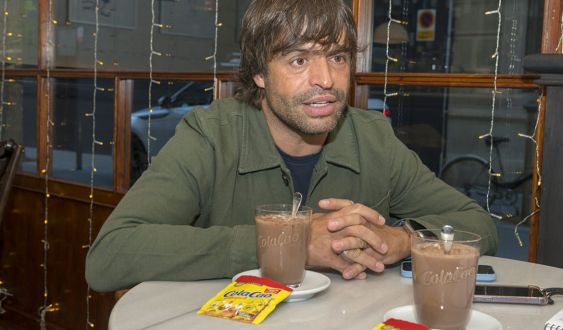
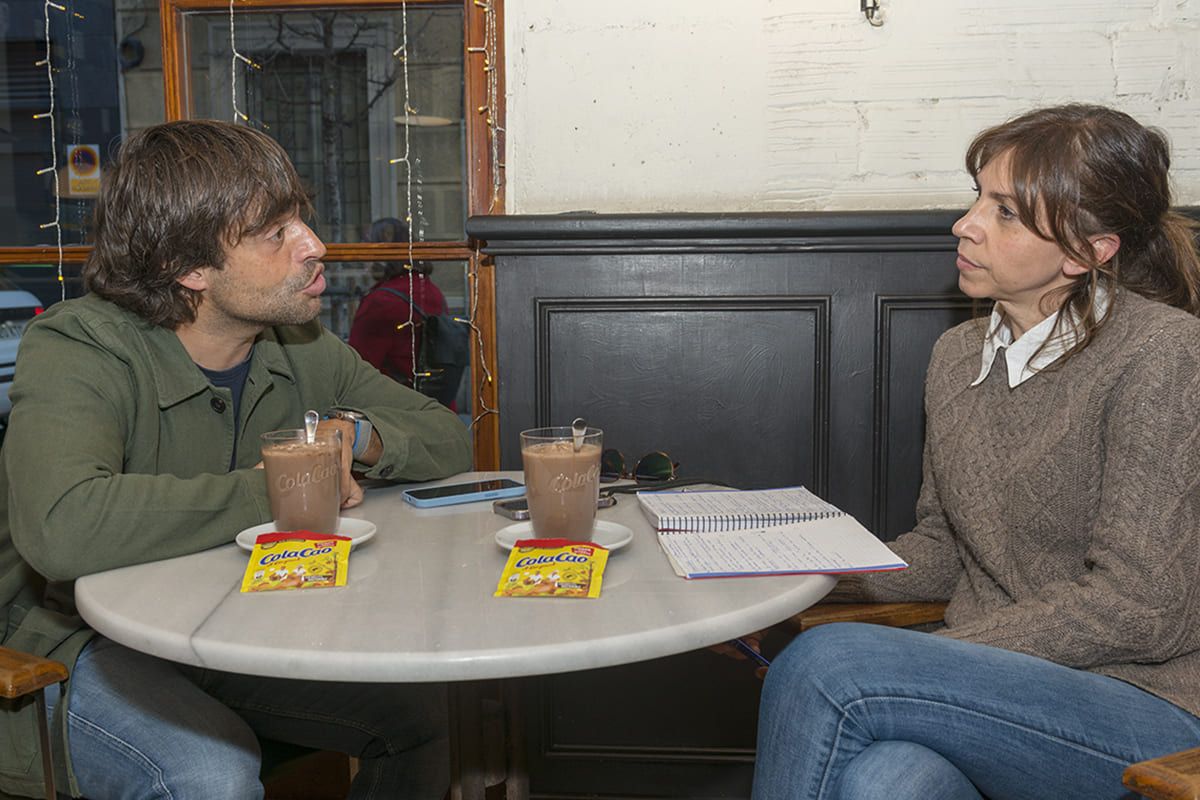
--- How do you drink your ColaCao at the bar?
--- Cold! Very cold! And many spoonfuls of ColaCao to make many lumps.
Add The New Barcelona Post as your preferred Google source for free
Stay informed with the latest news.