
Almost a year ago I published a book, Madrid DF, edited and presented in Barcelona, which offers a very personal overview of the current situation of the city, its emergence as a great metropolis, and the challenges this poses for itself, its inhabitants, and the country as a whole. This is not new. We have been saying for many years that this is the century of cities, but the reality is different. In the West, the urban population surpassed the rural many decades ago, and the consequences are beginning to be evident in all aspects.
Above all, the tension generated between large cities, which become self-referential and sociologically diverse, regarding the rest of the territories, which decline in a spiral of demographic decrease, emptying, external competition, and identity denaturalization. It is systemic: France votes against Paris, Brexit was an England vs. London, Eastern Germany against Berlin and the Rhenish cities, and little by little it can happen (if it isn't already happening) with Madrid.
Therefore, the first half of this "century of cities" is when nations, states, and nation-states are trying to ensure that their large cities do not alienate themselves from their responsibilities towards others. That they are not the beginning and end of themselves. The measure of all things. That they do not understand the rest of the country as a Hanseatic Hinterland, as internal colonies, or as those "fly over states" with which the Democratic elites of the urban coasts disdained the world of the redneck hicks of the interior. Because these will defend themselves. Because they have a voice and a vote and because, for now, they are winning. And if not, ask Trump.
The great global city of Southern Europe, and the great attractor and retainer of resources in Spain is not Madrid but "Madrilona"The "Tractorias" of the West harbor resentment because their world is dying, and that resentment threatens to drag us all down. That's whyMadrid DFit was an attempt to turn it around. To understandhow Madrid could become a decentralized socioeconomic system of about 10 million inhabitants that, in the first instance, would make everything happening within 250 km of the capital a participant in its positive synergies.Be the sun that heats the most and not a black hole. And subsequently, weave synergies with other metropolitan areas instead of alienating itself from the rest of the country. Thus, be one of its best levers of prosperity. Be the best showcase and the best client. And be a great global city from which economic resources enter Spain, and not from where they leave.
The best critique of Madrid DF is by Javier Burón. A person well-known in Barcelona, given that he was responsible for the city's housing policy during the Colau years. And his fundamental point is that in my book, although I advocate for two global cities, I didn't fine-tune it. According to him, the great global city of southern Europe, and the great attractor and retainer of resources in Spain is not Madrid but "Madrilona." He is right.
Madrid DF talks about this, but it would have been worth dedicating an epigraph titled as such, because that is our great competitive advantage: going out into the world with two global cities that are very complementary to each other. Two cities, allow me the expression, fucking awesome. Neither Great Britain, nor France, nor Italy, nor many other small European countries can sit at the table with two such good cards. Two balanced cities, with much hope and quality of life, modern, beautiful, intelligent, and complementary. Some with space, others with a beach. Two cities whose close connections make them the main poles of the same system. A system that needs redundancies and varied and differentiated options.
Barcelona needs to improve. And above all, it needs a narrative and objectives.I repeat,Madrid DFtalks about it, but I should have been more obvious, given that many have interpreted it as a plea in favor of a large centralist city capable of definitively unseating its rival. In any case, its publication had a strong impact in Barcelona. And it got on more than one person's nerves. Harsh articles came out, very harsh and too hasty, where it was clear that their authors had neither read the book nor intended to do so. There was even someone who accused me in the magazineNúvolto be the herald of the mentality that had caused the deaths of the DANA in Valencia... Anyway, Andrés Trapiello said thatBarcelona has brought out the best in Madrid and Madrid has brought out the worst in Barcelona.It must not be easy to have to deal daily with such riff-raff, who think so much and so badly.
Also in The New Barcelona Post, none other than Oriol Estela and Pau Solanilla have written about the topic. These articles, respectful but critical, I like more for many reasons. The first is because those who sign them are referents in the world of city governance and it is an honor that, although I do not agree with everything they say, these two professionals dedicate their time to talk about one's work. I also like them because they are serving as a necessary counterpoint for Barcelona to begin to think about what its place should be in this uncertain new world.
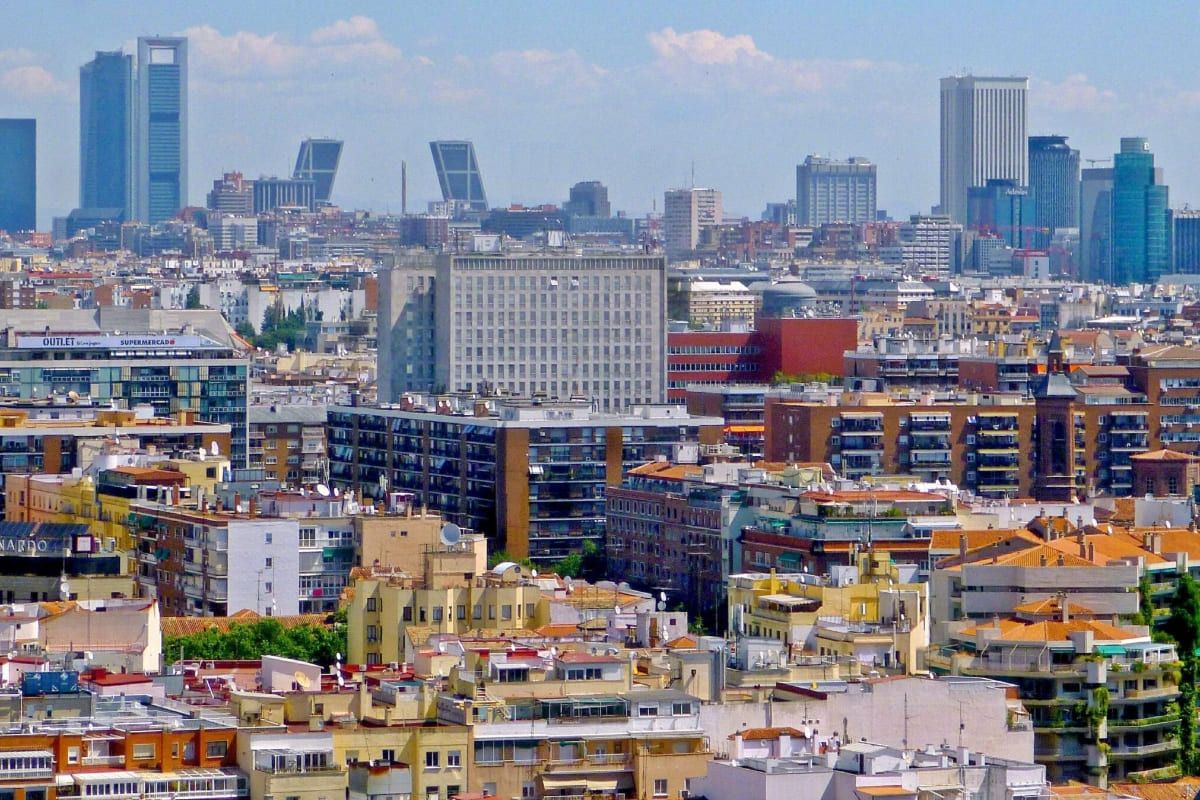
Anyway, and by way of allusion, I have my counter-arguments, which I will certainly write. I anticipate that for me they give off a whiff of "Figo complex" in their criticisms. A certain sting and lack of originality that is certainly not due to the lack of intelligence of their authors, quite the opposite, but, I believe, to the classic prejudices held about the capital. These are readings that seek to feed the usual confirmation biases: there go the Madrilenians, neoliberal and centralist, believing themselves the cream of the crop, so puffed up in their big city ego, unwilling to see the problems that surround them and ignoring that their success is due to being fed by the State.
But we have come here to contribute. And Estela's and Solanilla's articles appeal to me because they will help me point out the main weaknesses that I believe a good narrative about Barcelona faces. Weaknesses that are very easy for outsiders to identify, but very complicated for locals to see. I would love to publicly debate with Pau Solanilla about this topic and about his "Barcelona Republic", because it is not a bad narrative, but it falls short.
Starting with the next article, I will begin to talk about your city. Let's say it amuses me greatly that a Madrilenian, with all their swagger (but from the respect and affection they have for a place they know well) comes to talk to you about Barcelona and its problems. However, think about one thing. From time to time it's good, because it helps to think and to think about oneself from another perspective. I say this from personal experience. After all, I am from a city whose only intelligent and serious narrative was, until now, the one imposed by Pascual Maragall with his "Madrid is leaving". A narrative that was fueled over the decades with other articles and books and more articles and more books. Since that of 2001, Madrid is the only large city that has been thought about, criticized, and defined much more from the outside than from within. And rarely constructively and often with completely unfair doses of bile.
When Barcelona has closed in on itself, it has been and always will be a failed project, because going it alone is complicatedMy articles about Barcelona, although sometimes critical, will be constructive. Fundamentally because criticism should serve to help accept problems as a prerequisite for being better.And Barcelona needs to improve. And above all, it needs a narrative and objectives.
One of the essential points to improve is how it is perceived from the rest of Spain. As with Madrid or Paris or London, it is not a singular problem. It is a systemic challenge in our time. And getting others to see you favorably is not an easy task when recent history is what it is and when others have the feeling that a very important part of the city's brilliance has been at the expense of decades of unfair competition, from privilege and with the invaluable help of the State. Or do you perhaps think that only you feel that way about the booming Madrid? We will develop this in a future article.
The virtuous competition/relationship (Madrilona) is what we must work on and what we must extend to other cities and places in the countryIn any case, this perception, which exists, is one of the things that must change. Barcelona is the other side of a coin whose "synchronies" (Félix Riera dixit) can make us more prosperous and just; and its future dynamism inevitably involves being a place that contributes to and improves all of us. Since I'm from Atleti, I don't mind saying it, the best thing that can happen to Real Madrid is for Barça to occasionally give them a thrashing at the Bernabéu.We enjoyed it a lot. But it also represents a necessary boost.
Real Madrid cannot be explained without talking about Barça and vice versa, because both need each other. Both need the other to win the league from time to time, to then improve and get revenge. This virtuous competition/relationship (Madrilona) is what needs to be worked on and what needs to be extended to other cities and places in the country. Of Spain. And Barcelona has the potential and the responsibility to weave, together with Madrid, a network of functional and balanced cities and territories.
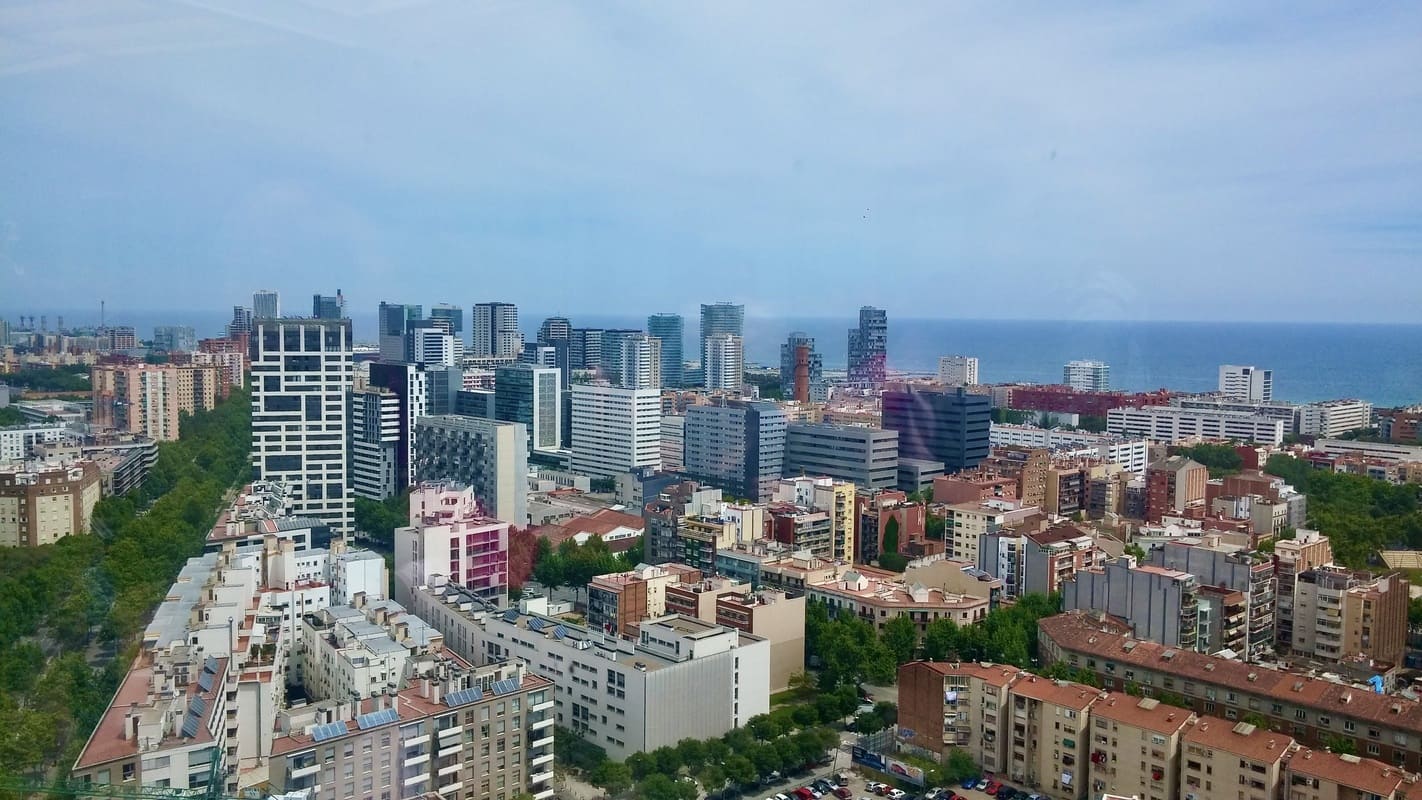
I said at the beginning that the challenge of our time is to ensure that global cities are not the beginning and end of themselves. That they are not a Hanseatic city-state. That they are not Singapore. That is what it is about because, when Barcelona has closed in on itself, it has been and always will be a failed project, because going it alone is complicated and what the rest of us perceive, those of us who must generate synchronicity and virtuous relationships from other places, is that we are left aside, that, beyond the bile, there is no will to contribute anything to us.
And how to be a lever of prosperity that contributes and helps, dear readers, is the only starting point on which to propose a fair, exciting, and intelligent project and narrative for cities like Madrid or Barcelona.
Add The New Barcelona Post as your preferred Google source for free
Stay informed with the latest news.