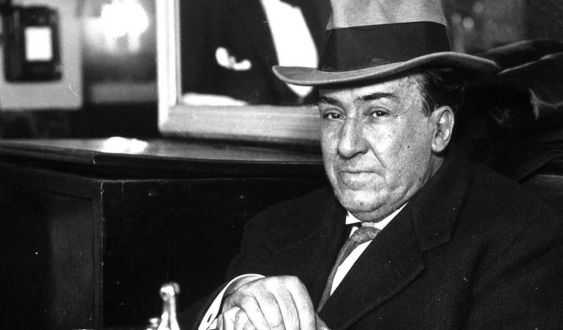
Passing through a city often leaves an indelible mark on the visitor. Even more extraordinarily, someone can reverse this rule, and leave their trace and memory in the place that has temporarily hosted them. This was the case of the poet Antonio Machado. Barcelona was for Machado the eternal farewell to the country he tried so hard to embrace through the symbolism of his work.
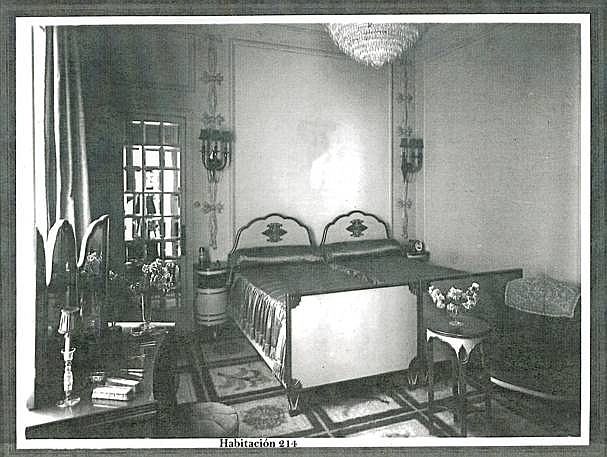
When in the spring of 1938 the unbalanced scale of the Civil War pointed its last movements towards the Francoist army, the poet left his residence in Rocafort, Valencia, to settle in Barcelona. Upon their arrival in the Catalan capital, the family initially settled in the Hotel Majestic, then seized by the government of the Spanish Republic to host different intellectuals arriving from all over the country.
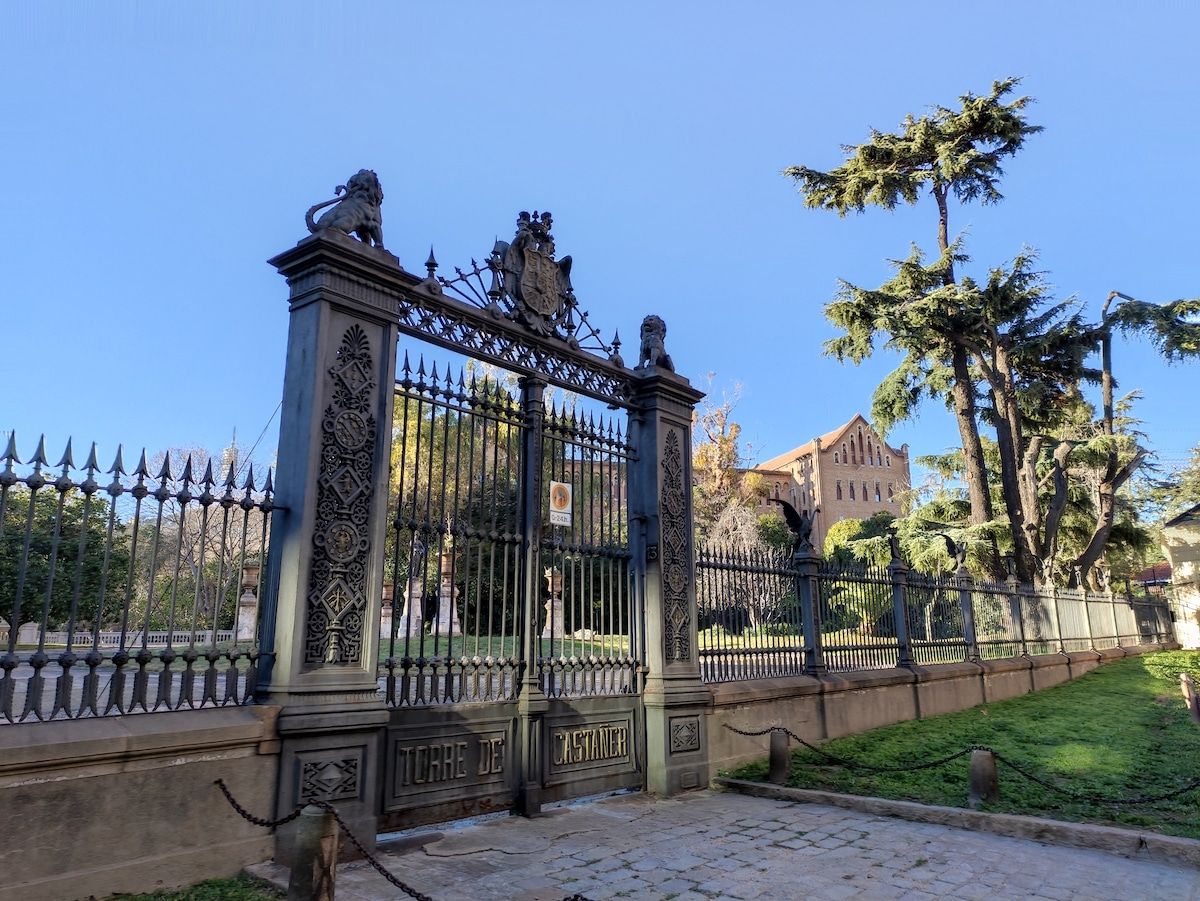
This first residence was not to the family's liking, so a few weeks later they moved to Torre Castanyer, in Sant Gervasi, which would be Machado's last home before leaving for exile. It seems that the poet never led a particularly public life in the city, because despite his constant activism in favor of the Republic, the poet's spirits were already at their lowest.
The estate, which had been requisitioned from the Marchioness of Moragas, housed the Machado family during the almost ten months they lived in the city. Despite being a magnificent palace, the ravages of war conditioned the life of the Machado family at all times due to restrictions on supplies and food.
[subscribe_newsletter_esp]Throughout this time, the poet not only continued his collaboration with the newspaper La Vanguardia, which began in 1937, but also intensified the relationship. Machado's journalistic activity during his time in Barcelona left a total of twenty-nine articles in which he shows his vision of the Spanish war conflict and international interferences in a pre-world war context.
The two buildings that hosted the family, along with the old headquarters of La Vanguardia at number 28 Pelayo Street, are the places that the Network of Machadian Cities has marked as enclaves of main interest to understand the poet's relationship with the city. In fact, since 2014, the Hotel Majestic offers the possibility of staying in a suite dedicated to Machado. In it, the most curious guest will find a space that recreates the poet's time at the hotel, a complete sensory contextualization of his figure and work. An experience that appeals to the most faithful followers of Machado and his work.
The Barcelona City Council, aware of the importance of the mark left by the poet in the city, in the session of March 20, 2019, approved an institutional declaration through which public recognition was expressed for the figure of Antonio Machado, as a person committed to freedom, democracy, and universal culture. In this same declaration, the City Council requested its incorporation into the Network of Machadian Cities. Said request was approved on April 29, 2020.
This decision is great news for the city of Barcelona, which will see its role in the life of the Sevillian poet internationally recognized. Likewise, the Councilor for Tourism and Creative Industries, Xavier Marcé, has represented the Barcelona City Council in the ordinary assembly of the Network of Machadian Cities in which the city has been received as a new member, thus joining the cities of Seville, Soria, Baeza, Segovia, Rocafort, Collioure, and Madrid. The Barcelona City Council has announced that this 2021 it will publish a book that compiles the articles signed by Machado during his stay in the city, as well as the creation of a literary route dedicated to the poet.
It is difficult not to observe the relationship between the city and Machado without doing so with a certain melancholy. Barcelona was for the Sevillian poet that path that should never be trodden again, because on January 23, 1939, Machado, along with his family, left the city for an exile from which he would never return.
Add The New Barcelona Post as your preferred Google source for free
Stay informed with the latest news.